
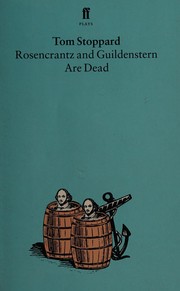
Reading options
What's inside (12 sections)
I first read this play in a classroom where most of us had just finished Hamlet and were not sure what to do with it. Hamlet is a play about a prince who cannot make up his mind. Rosencrantz and Guildenstern Are Dead is a play about two men who do not have enough information to make up their minds about anything. They are minor characters in someone else's tragedy, and they know it, or at least they suspect it. That is the joke, and it is also the terror.
Tom Stoppard wrote the play in the early 1960s. It was first performed at the Edinburgh Festival Fringe on August 24, 1966, and published by Faber and Faber in 1967. It moved to Broadway and won the Tony Award for Best Play in 1968. It is usually described as an absurdist tragicomedy, and it owes a clear debt to Samuel Beckett's Waiting for Godot. Two men wait, talk, play games, and fail to understand what is happening to them. The difference is that Stoppard gives them a script they do not know they are in.
The Coin Toss
The play opens with Rosencrantz and Guildenstern betting on coin flips. Rosencrantz calls heads. He wins. He wins again. And again. By the time he has won ninety-two times in a row, Guildenstern is no longer amused. The laws of probability say this cannot happen. Something is wrong with the world, or with them, or with the rules.
That opening is a perfect statement of the play's central anxiety. The universe may be random, or it may be rigged. Either way, the two men are not in control. Guildenstern tries to reason his way out of the impossibility. He talks about the nature of reality, about whether an event becomes more real when more people witness it, about the possibility that they are "within un-, sub- or supernatural forces." Rosencrantz keeps flipping the coin.
The scene is funny, and it is also a thesis statement. The play is about people who have been written into a story they cannot read. They can see the edges of the stage, but they cannot see the script. They know something is happening. They do not know what.
The Troupe
A troupe of traveling actors arrives, led by a character called the Player. They perform death scenes. They are willing to perform anything, for a price. The Player is one of the play's most interesting figures because he understands the rules. He knows that actors are always at the mercy of a script, and he has made peace with it. He tells Rosencrantz and Guildenstern that life is too chaotic to understand, and that they should stop asking questions.
The troupe also provides the play's structure. They perform a version of The Murder of Gonzago, the play within Hamlet. In Stoppard's version, the performance includes a scene that resembles the sea voyage and the deaths of Rosencrantz and Guildenstern. It is a warning, but the two men do not recognize it. They are watching their own fate as entertainment and missing the point.
The debt to Beckett is obvious, and Stoppard has never hidden it. Waiting for Godot is also about two men who talk to pass the time while they wait for something that may never come. But Stoppard adds a layer that Beckett does not have: the characters are inside a known story. The audience knows Hamlet. The protagonists do not. That asymmetry is the source of both the comedy and the dread. We are watching them walk toward a death we have already read.
The Hamlet Scenes
The play is built around fragments of Hamlet. Claudius and Gertrude appear and ask Rosencrantz and Guildenstern to find out what is wrong with Hamlet. Hamlet appears and toys with them. Polonius appears. Ophelia appears. The scenes are performed in the style of the original, which makes the contrast with the two main characters even sharper. The court speaks in verse and knows what it wants. Rosencrantz and Guildenstern speak in prose and know nothing.
Stoppard's innovation is to keep the camera on the two men while the important action happens offstage. Hamlet's grief, Claudius's guilt, Ophelia's madness: these are events that the audience knows about but the protagonists do not. The play makes the reader feel what it is like to be a background character in a story that is not about you. That is a very modern feeling, and Stoppard captures it without ever using the word.
Language
The play is full of wordplay. Rosencrantz and Guildenstern play Questions, a game in which they answer every question with another question. They misunderstand each other. They repeat phrases until the words lose their meaning. They argue about whether they are Rosencrantz or Guildenstern, and neither of them is sure.
The language games are not decoration. They are the play's way of showing that the two men have no stable identity. They are interchangeable to the court, to Hamlet, and sometimes to themselves. The names are almost the only thing that distinguishes them, and the names are the first thing everyone gets wrong. When Guildenstern says "I don't know who I am," it is a joke and a diagnosis.
The Questions game is worth paying attention to. The rule is that you cannot make a statement. Everything has to be a question. The game is a machine for avoiding commitment, and it is also a machine for generating comedy. The two men play it because it passes the time, but it also reveals something about them. They are more comfortable asking than answering. They would rather keep the conversation going than risk saying something true.
Stoppard is also interested in the limits of language. The Player tells them that words are not enough to capture death. Guildenstern tries to argue with him, but the argument collapses. The play keeps circling the idea that some things cannot be said, and that the attempt to say them is both necessary and ridiculous.
The Ship
Act Three takes place on a ship carrying Hamlet to England. Rosencrantz and Guildenstern have a letter from Claudius ordering Hamlet's death. Hamlet steals the letter and replaces it with one ordering their deaths instead. The two men do not know this. They spend the act in a barrel, or on the deck, trying to figure out what is happening.
The ship is the play's most claustrophobic setting. There is nowhere to go. The stage is small. The characters are trapped with a prince who is smarter than they are and a letter they have not read. The audience knows what is coming. The two men do not. The gap between knowledge and ignorance is where the tragedy lives.
The letter is also a neat symbol of their position. They are carrying a message that will kill someone, and they do not know what it says. They are messengers, not authors. Hamlet rewrites the message, and they become the victims of a sentence they never wrote. The play is full of documents, instructions, and orders that other people have written. Rosencrantz and Guildenstern spend their lives delivering other people's words.
When they finally read the letter, they discover that they are the ones condemned. Guildenstern is furious. Rosencrantz is confused. They have done nothing wrong, or at least they cannot remember doing anything wrong. That is the point. In Hamlet, they are disposable. In their own play, they are still disposable.
The Deaths
The ending is one of the most famous in modern theater. The Player stages a mass death scene. The actors die and get up again. Guildenstern stabs the Player with a knife, and the Player dies, then rises and reveals that the knife is fake. The actors applaud. The Player says that the only deaths people believe in are stage deaths.
Then Rosencrantz and Guildenstern disappear. They do not die onstage. They simply vanish, one at a time, while the lights dim. Guildenstern cannot remember whether he is Rosencrantz or Guildenstern. He says they will do better next time. Then he is gone. The English ambassador arrives and announces that Rosencrantz and Guildenstern are dead. Horatio begins to explain what happened, and the music drowns him out.
The ending is ambiguous on purpose. Did they die? The title says they did. The ambassador says they did. But the audience never sees it, and the play has spent two hours teaching us that what happens onstage is not the same as what happens in life. Stoppard leaves the question open, and that is the point. The men who were never the center of the story do not even get a death scene.
What the Play Is About
On the surface, the play is a clever reversal of Hamlet. It takes two minor characters and makes them the protagonists. It is also a meditation on fate, chance, identity, and the nature of theater. The coin toss asks whether the universe is random or determined. The Hamlet scenes ask what it means to be a supporting character in someone else's life. The ending asks whether death is real if no one sees it.
The play is often read as an existentialist work. The two men are free, in the sense that nothing they do matters, and they are unfree, in the sense that they cannot escape the script. That paradox is the play's engine. It is also why the play has lasted. The specific jokes about Hamlet are funny, but the underlying feeling of being trapped in a story you did not write is universal.
What Works
The dialogue is extraordinary. Stoppard can make a joke out of a philosophical problem and then turn the joke into a genuine question. The coin toss, the Questions game, the argument about death: these scenes are funny and unsettling at the same time. The play is also very stageable. It does not require elaborate sets. It requires two good actors and a strong supporting cast.
The Player is a great character. He is a ham, a philosopher, and a survivor. He understands that theater is a lie that tells the truth, and he is comfortable with the contradiction. The scenes between him and Guildenstern are the intellectual heart of the play.
What Doesn't
The play is more interested in ideas than in people. Rosencrantz and Guildenstern are charming, but they are not deeply individuated. That is partly the point, since they are interchangeable, but it also means the emotional stakes are limited. The play can feel like a brilliant exercise, especially in the middle sections where the wordplay takes over.
The female characters are barely present. Gertrude and Ophelia appear as fragments from Hamlet, and they have no interiority. That is a consequence of the source material, but a modern reader may notice it. The play is a product of the 1960s, and its concerns are the concerns of a certain kind of educated male writer.
The 1990 film version, directed by Stoppard and starring Gary Oldman and Tim Roth, is worth watching if you want to see how the play works when it is performed. It makes the visual comedy clearer and gives the ending a physical weight that the text only suggests. It is not a substitute for reading the play, but it is a good companion.
Should You Read It?
Yes, if you like theater, wordplay, or Hamlet. It is short, funny, and formally daring. It is also a good introduction to Stoppard's work, which gets more complex from here. If you have never read Hamlet, read it first. The play works without it, but it works much better with it.
The image that stays with me is the coin. Ninety-two heads in a row. Rosencrantz keeps flipping, and Guildenstern keeps talking, and neither of them can stop the game. That is the play in one gesture: two people trying to make sense of a pattern that may be chance, may be design, and may be neither. They never find out. Neither do we.
FAQ
Do I need to know Hamlet first?
It helps. The play works on its own, but most of the jokes and the ending depend on Hamlet's plot.
What happens at the end?
Rosencrantz and Guildenstern vanish one by one without a staged death, and an ambassador announces that they are dead.
When was the play first performed?
It premiered at the Edinburgh Festival Fringe on August 24, 1966, and was published by Faber and Faber in 1967.
Similar books
Twelfth Night
Viola disguised as Cesario woos Olivia for Orsino while a forged letter ruins Malvolio in Illyria.
2,546-word summary · 11 min read
The Merchant of Venice
Antonio borrows from Shylock to fund Bassanio, Portia picks suitors by chests, and a courtroom bond comes due.
2,950-word summary · 13 min read
A Midsummer Night's Dream
Four lovers flee to a forest where fairies mix them up, while workmen rehearse a play for a duke's wedding.
2,597-word summary · 12 min read
A Raisin in the Sun
Lorraine Hansberry's 1959 play follows the Younger family as a $10,000 insurance check, a house in a hostile neighborhood, and a stolen investment test their…
2,444-word summary · 11 min read
Pygmalion
Higgins bets he can pass flower girl Eliza off as a duchess.
2,521-word summary · 11 min read
Faust, Part One
A restless scholar bets his soul against one perfect moment, then ruins an innocent girl in Goethe's 1808 verse tragedy.
2,568-word summary · 11 min read
The Glass Menagerie
Tom Wingfield recalls St. Louis life with his mother Amanda and shy sister Laura, until a gentleman caller comes to dinner.
2,953-word summary · 13 min read
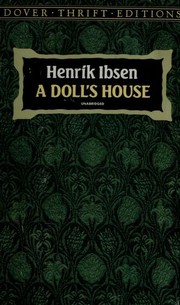
A Doll's House
Nora forges a loan to save Torvald, then walks out on doll life at Christmas.
2,468-word summary · 11 min read
The Taming of the Shrew
Petruchio woos sharp-tongued Kate while suitors scheme for sweet Bianca in Shakespeare's rowdy early comedy of marriage and disguise, first printed in 1623.
3,605-word summary · 16 min read
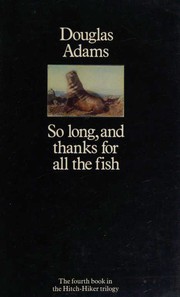
So Long, and Thanks for All the Fish
Arthur Dent finds Earth back again and meets Fenchurch, who sensed the planet's odd moment, in Adams's softer fourth Hitchhiker novel from 1984.
2,448-word summary · 11 min read
Waiting for Godot
Two tramps wait by a tree for Godot who never comes, with jokes, boots, and silence.
2,045-word summary · 9 min read
The Tempest
Prospero raises a storm to wreck his enemies on his island, where his daughter meets a prince and old wrongs face trial.
2,890-word summary · 13 min read
Julius Caesar
Brutus joins Cassius to kill Caesar for Rome, then loses Rome to Antony words and Octavius swords.
1,916-word summary · 9 min read
The Plague
Oran is sealed after plague breaks out, and Dr Rieux treats the dying while neighbors face exile, fear, and small acts of care.
3,177-word summary · 14 min read
A Streetcar Named Desire and Other Plays
Blanche DuBois moves in with Stella and Stanley in New Orleans while her past closes in, plus two more Williams plays.
2,902-word summary · 13 min read
The Trial
Josef K. is arrested one morning on an unknown charge and pulled into an endless court he can never leave.
2,318-word summary · 10 min read
The Importance of Being Earnest
Jack and Algernon invent Ernest to court Gwendolen and Cecily until fiction collapses.
2,538-word summary · 11 min read
Othello
Iago's lies drive the Moor of Venice to murder his innocent wife in Shakespeare's tragedy of jealousy.
2,409-word summary · 11 min read
The Stranger
Meursault buries his mother, kills a man on an Algiers beach, and faces trial for seeming to feel nothing.
2,417-word summary · 11 min read
Macbeth
Macbeth hears witches hail him king and murders Duncan with Lady Macbeth pushing him on.
4,056-word summary · 18 min read
Hamlet
Hamlet sees his father's ghost in Elsinore and pretends madness to test Claudius and Gertrude while Denmark slides toward duel and death.
2,996-word summary · 13 min read
Romeo and Juliet
Shakespeare's Romeo and Juliet retold: Verona feud, balcony, Friar's plan, and why the last minutes collapse.
2,531-word summary · 11 min read

Fathers and Sons
Arkady brings the nihilist Bazarov home to his father's estate, and a generational argument turns into love, a duel, and an early death.
2,192-word summary · 10 min read
Naked Lunch
Burroughs's banned 1959 collage novel follows Bill Lee through addiction, Tangier, and the nightmare bureaucracy of the Interzone.
2,082-word summary · 9 min read
The Dharma Bums
Ray Smith rides freight trains, climbs Matterhorn Peak and argues about Zen with the poet Japhy Ryder in Kerouac's 1958 road novel.
2,729-word summary · 12 min read

Out of the Silent Planet
A Cambridge philologist is kidnapped and taken to Mars, where the natives are civilized and the humans are the dangerous invaders.
2,612-word summary · 12 min read
Beyond Good and Evil: Prelude to a Philosophy of the Future
A guide to Friedrich Nietzsche's Beyond Good and Evil: its attack on moral prejudice, the will to power, master and slave morality, and the philosopher of the…
2,597-word summary · 12 min read
If on a Winter's Night a Traveler
You, the Reader, chase a defective novel through bookshops and translators while ten other novels keep interrupting. Calvino's famous puzzle about the act of…
2,173-word summary · 10 min read
Leaves of Grass
Free verse songs of self, America, bodies and democracy.
2,240-word summary · 10 min read
A Canticle for Leibowitz
After nuclear war, monks save books across centuries while the world rebuilds and falls again.
2,381-word summary · 11 min read