
Reading options
What's inside (8 sections)
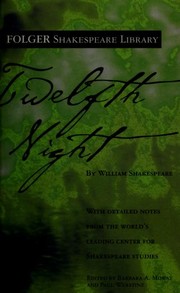
I came to Twelfth Night right after rereading Hamlet, and the change of weather felt wonderful. Hamlet keeps everyone waiting for five acts while the court rots. This play throws a shipwreck, a set of twins, a drunk uncle, and a forged love letter at a seaside court and somehow lands almost everyone safely by the end. It was first printed in 1623 in the First Folio, the big collection printed in London by Isaac Jaggard and Edward Blount that saved half of Shakespeare's plays from disappearing. For this summary I followed the Folger edition text as printed in the Simon and Schuster paperback, the one listed at 272 pages. The Folger is built directly on that Folio text, and since the play never appeared in any earlier quarto, what we read is essentially what Shakespeare's own company kept in its playbooks.
A duke who loves love, a countess who refuses it, and a wreck
The play opens in Illyria, a coastal dukedom, with Duke Orsino asking his musicians for more music because music feeds love the way food feeds hunger. He is in love with love itself as much as with any person. The person in question is Olivia, a countess with her own household, who has lost her father and then her brother and has decided to mourn behind a veil, refusing every suitor for seven years. Orsino sends messages. Olivia sends them back unopened. The whole court knows the suit is hopeless, which does not slow Orsino down at all.
Then the sea rearranges everything. A ship breaks apart off the Illyrian coast in a storm, and the survivors include a young gentlewoman named Viola. She believes her twin brother Sebastian has drowned. The ship's captain, who pulled her from the water, tells her about Illyria, about Orsino and his hopeless wooing of Olivia, and about Olivia's closed house. Viola cannot present herself as a gentlewoman alone without protection, so she makes the practical choice that drives the whole plot. She will dress as a boy, call herself Cesario, and take service as a page with Orsino. The captain helps her with clothes and keeps her secret.
Meanwhile Sebastian has survived too, rescued by a sea captain named Antonio who followed him out of the wreck at the risk of his own life. Antonio is wanted in Illyria for fighting against Orsino's ships, so he cannot walk the streets freely, but he refuses to leave the boy he saved. The two of them make for Orsino's city by different roads. Nobody in Illyria knows Sebastian is alive. For most of the play, neither does his sister. Shakespeare sets the twins up as mirror images, alike enough in face and voice that strangers will keep mistaking one for the other, and then he lets that likeness do the work of four acts.
Cesario goes wooing
Viola settles into Orsino's service fast. She is quick, well spoken, and musical, and Orsino takes a liking to his new page within days. He starts confiding in Cesario about Olivia, describing his devotion at length, and Viola listens with a face that must ache, because she has fallen in love with Orsino herself. Then Orsino gives her the worst possible job. Go to Olivia, he says, and plead my case. Refuse to leave until she hears you. Viola goes, because pages do not argue with dukes, and tells herself the mission is hopeless, which makes it safe.
It is not safe. Olivia has turned away every messenger for months, but something about this one gets through. Cesario speaks boldly, refuses to be dismissed by servants, and when Olivia finally lifts the veil, the two young people stare at each other and the play tilts. Olivia, who has sworn off men, finds herself thinking about the messenger all evening. She invents an excuse, sending her steward Malvolio running after Cesario with a ring the page supposedly left behind. It is a transparent excuse and everyone on stage understands it except perhaps Viola, who walks home turning the ring over in her hands and works out the truth. Olivia loves Cesario. Cesario is Viola. Viola loves Orsino. Orsino loves Olivia. She says as much to the audience in plain terms. Nobody can have what they want, and the knot pulls tighter every time Orsino sends her back.
I love these wooing scenes because Shakespeare keeps them funny and painful at once. Olivia drops her dignity in stages, first the ring trick, then longer private talks, then open confessions that Cesario has to deflect without giving away the disguise. Viola parries with speeches about what she would do if she loved Olivia, describing a devotion so intense it sounds like her own feelings for Orsino wearing a mask. Olivia hears a love speech and takes it for herself. The audience hears Viola talking about Orsino and breaking a little. It is a triangle where every line lands on the wrong person, and it runs for three acts without ever feeling cruel, because Viola never means to deceive Olivia. She is trapped by orders and clothes.
The drunk uncle, the thin suitor, and the fool
Olivia's house would be worth the ticket even without the love plot. Her uncle, Sir Toby Belch, lives with her and drinks through her stores with a permanent guest, Sir Andrew Aguecheek, a thin-voiced knight with more hair than sense who imagines himself Olivia's suitor. Toby keeps Andrew around because Andrew pays for the drink and makes an excellent audience. Their late-night singing and carousing shakes the house, and Olivia's gentlewoman Maria, who runs the household in practice, scolds them with a sharpness that suggests she enjoys the fight.
Opposite this crew stands Malvolio, Olivia's steward, a sober strutting man who tells himself the house would fall apart without him. He lectures Toby about drinking, lectures Maria about laughing, and clearly nurses a private dream that Olivia might one day look past his station and marry him. The household fool, Feste, drifts through all of this singing for coins and needling everyone with jokes that land a little too well. Feste is technically employed by Olivia but seems to belong to no one, and Shakespeare gives him the kind of lines that sound like play until you think about them later.
What I admire here is how Shakespeare builds the subplot out of the main plot's leftovers. Toby and Andrew are parasites on Olivia's grief, spending her money while she mourns. Malvolio polices everyone's pleasure while secretly wanting the biggest pleasure of all. Maria watches everything and waits. None of them care about Orsino or Cesario. They care about drink, status, and who gets to laugh at whom. That selfishness makes them perfect engines for the letter trick, because each of them has a reason to want Malvolio brought down, and Maria has the wit to write the trap.
A fair warning, though. Sir Andrew is funny for about two scenes and then becomes a single joke repeated. His cowardice, his mangled dancing, his willingness to pay Toby for friendship, it all lands the first time and thins fast. On the page I found myself skimming his longer exchanges. On stage a good clown can save him with physical business, but Shakespeare the writer gives Andrew no interior life at all. He exists to be fleeced and mocked, and after a while the mockery feels like the play picking on someone who cannot fight back.
Yellow stockings and a dark room
Maria's trick is the most famous practical joke in all of Shakespeare, and it works because she knows her victim completely. She forges a letter in Olivia's handwriting, seals it with Olivia's seal, and leaves it where Malvolio walks. The letter speaks in riddles about a secret admirer, hashes over the letters M, O, A, and I as clues to the beloved's name, and then turns direct. It tells the reader that greatness can be seized by the bold, and orders him to smile constantly, to wear yellow stockings crossed and tied above the knee, and to be sharp and haughty with Toby and the other hangers-on. Every instruction is the exact opposite of Malvolio's nature and position, which is why he obeys each one with joy. He finds his own name in the riddle because he wants to find it there.
Toby, Andrew, and a sensible newcomer named Fabian hide behind a hedge and watch Malvolio read the letter, and the scene is pure delight on the page. Malvolio rehearses smiling, practices being haughty to gentlewomen, vows to follow every order including the stockings. When he appears before Olivia beaming and cross-gartered in yellow, babbling about his greatness, she is horrified and concludes he has gone mad. Toby and the rest keep up the pretense, solemnly agreeing that the poor man is possessed, and Olivia orders him looked after. They lock him in a dark room and leave him there.
This is where the comedy curdles, and I think Shakespeare means it to. Feste dresses as a priest and visits the dark room to torment Malvolio with fake theology, calling him a madman and refusing to bring light or writing materials. Malvolio begs sanely and clearly for release, and the scene goes on long enough that the laughter sticks in the throat. Toby crows over the torment, Maria collects her reward, and the audience is left watching a proud man broken for the crime of being proud. Shakespeare will bring Malvolio back for a reckoning in the last act, and the play is honest enough to let him have his anger. But nothing in the finale undoes the dark room. If you laugh all the way through this stretch without a qualm, you are harder hearted than I am.
A brother walks in and doubles everything
While Malvolio sits in the dark, Sebastian walks into town and the mistaken identity machine starts up. Sir Andrew, prodded by Toby into proving his courage, challenges Cesario to a duel he does not want, and before Viola can talk her way out of it, Antonio steps in with drawn sword to defend the boy he believes is Sebastian. Officers arrive and arrest Antonio on old charges of piracy against Illyria. Antonio asks his friend for the purse he lent him, and Viola, baffled, says she has no purse and no friend. Antonio stares at her and calls her ungrateful to her face. He saved Sebastian's life, gave him money, followed him into danger, and now the boy denies him. Viola hears enough in his reproaches to understand the truth underneath the confusion. Her brother may be alive.
Then Sebastian himself blunders into the same streets and everyone mistakes him for Cesario. Andrew strikes him and gets soundly beaten for it. Toby jumps in and gets beaten too. Olivia arrives with attendants, sees what she thinks is Cesario brawling, and drags the young man inside, scolding him and forgiving him in the same breath. Sebastian, who has never seen this commanding beautiful woman before, follows her mostly out of astonishment. Within the scene she proposes marriage, or as good as, and produces a priest. Sebastian, who has liked what he has seen for about ten minutes, agrees. They are wed quickly and quietly before he has told her his name.
I find this the hardest stretch to believe and the easiest to enjoy, which is probably the correct response. Nothing about Olivia marrying a stranger within the hour makes sense in life. On stage it makes the only sense that matters. Olivia has spent the play wanting Cesario, and here is Cesario's face offering itself without riddles. Sebastian has spent the play following Antonio's lead, and here is a lady offering a home. Shakespeare rushes them to the altar because the plot needs the knot tied before the finale, and he trusts the actors to sell the speed with charm. It helps that Olivia has been starved of kindness for years and Sebastian is genuinely sweet. Still, if you stop to think about it, a countess has just married a boy whose surname she does not know, and the play never quite pauses over that.
The unmasking and the ones left out in the rain
Act five gathers everyone in front of Olivia's house and unties the knots fast. Orsino arrives with Cesario and meets Olivia, who greets the page with an intimacy that enrages the duke. Antonio is brought in as a prisoner and tells his story of the wreck and the rescued boy, and Viola finally hears it confirmed. Her brother lives. Then the priest arrives with news of Olivia's secret wedding, Olivia produces her new husband, and Sebastian walks out to stand beside a page with his own face. The twins stare. Sebastian asks about parents and birthmarks. Viola answers. Brother and sister take each other's hands while the whole stage rearranges itself around them.
The lovers sort themselves in pairs. Olivia keeps Sebastian gladly, having married the face she wanted with a better nature inside it than she expected. Orsino studies Viola, sees through the page's clothes to the woman who has served him faithfully, and claims her for his wife, promising she will be his mistress and his fancy's queen once she changes into women's clothes. It is romantic if you do not examine it, a duke pivoting from one beloved to another in a single scene. Shakespeare gives Viola almost nothing to say about this sudden promotion. She accepts, and the play moves on, and I always feel a small pinch there. Viola has been the cleverest person on stage for five acts. At the end she becomes a prize handed over in verse.
Then Malvolio returns, thin and blinking from the dark room, with his letter of complaint. Olivia reads Maria's forgery, recognizes the hand, and understands at last that her steward was gulled. Fabian confesses the whole plot and begs pardon, explaining it was sport meant to humble a proud man. Toby has already married Maria as her reward and fled the scene rather than face the reckoning. Olivia offers Malvolio peace and favors, Orsino promises satisfaction, but Malvolio wants none of it. He denounces the whole company and stalks out. Shakespeare gives him the last real sting of the play, and no wedding talk covers it.
Feste closes the evening alone with a song about childhood, manhood, and the rain that falls every day, a plain tune that puts the weddings back in proportion. I like this ending more each time I see it. The marriages are real, the joy is real, and the rain keeps falling on Malvolio walking home and on Antonio, whose devotion to Sebastian earns him handshakes but no partner. Shakespeare lets the music admit what the plot hurries past. Mischief has costs, rank protects the jokers, and the fool who watched everything gets the final word because he is the only one paid to tell the truth. If Hamlet left me wrung out, Twelfth Night left me thoughtful in a lighter key, turning over how a comedy can feel kind and sharp at once, and how the sharpest edge is the one it refuses to blunt.
FAQ
When was Twelfth Night first printed?
It appeared in print for the first time in the 1623 First Folio, printed by Isaac Jaggard and Edward Blount. This summary follows the Folger edition text as printed in the 272-page Simon and Schuster paperback.
Why does Viola pretend to be Cesario?
She believes Sebastian drowned and needs protection and work in Illyria. Orsino hires the page, then sends her to woo Olivia, which traps all three.
Is Malvolio forgiven at the end?
No. Olivia and Orsino offer redress, but he rejects it and stalks out. The play lets his anger stand beside the weddings.
Similar books
The Merchant of Venice
Antonio borrows from Shylock to fund Bassanio, Portia picks suitors by chests, and a courtroom bond comes due.
2,950-word summary · 13 min read
A Midsummer Night's Dream
Four lovers flee to a forest where fairies mix them up, while workmen rehearse a play for a duke's wedding.
2,597-word summary · 12 min read
Rosencrantz and Guildenstern Are Dead
Stoppard's 1966 play retells Hamlet from the wings, where two minor courtiers wait, joke, and walk toward a death they cannot see.
2,021-word summary · 9 min read
The Taming of the Shrew
Petruchio woos sharp-tongued Kate while suitors scheme for sweet Bianca in Shakespeare's rowdy early comedy of marriage and disguise, first printed in 1623.
3,605-word summary · 16 min read

The Tempest
Prospero raises a storm to wreck his enemies on his island, where his daughter meets a prince and old wrongs face trial.
2,890-word summary · 13 min read
Julius Caesar
Brutus joins Cassius to kill Caesar for Rome, then loses Rome to Antony words and Octavius swords.
1,916-word summary · 9 min read
Othello
Iago's lies drive the Moor of Venice to murder his innocent wife in Shakespeare's tragedy of jealousy.
2,409-word summary · 11 min read
Macbeth
Macbeth hears witches hail him king and murders Duncan with Lady Macbeth pushing him on.
4,056-word summary · 18 min read
Hamlet
Hamlet sees his father's ghost in Elsinore and pretends madness to test Claudius and Gertrude while Denmark slides toward duel and death.
2,996-word summary · 13 min read
Romeo and Juliet
Shakespeare's Romeo and Juliet retold: Verona feud, balcony, Friar's plan, and why the last minutes collapse.
2,531-word summary · 11 min read
The Importance of Being Earnest
Jack and Algernon invent Ernest to court Gwendolen and Cecily until fiction collapses.
2,538-word summary · 11 min read
Sonnets & Poems
154 sonnets plus Venus and Adonis and other poems on time, love, and fading beauty.
2,341-word summary · 10 min read
The Gift of the Magi
A young couple with almost no money each sells the thing they treasure most to buy a Christmas present for the other.
1,978-word summary · 9 min read
A Raisin in the Sun
Lorraine Hansberry's 1959 play follows the Younger family as a $10,000 insurance check, a house in a hostile neighborhood, and a stolen investment test their…
2,444-word summary · 11 min read
Pygmalion
Higgins bets he can pass flower girl Eliza off as a duchess.
2,521-word summary · 11 min read
Faust, Part One
A restless scholar bets his soul against one perfect moment, then ruins an innocent girl in Goethe's 1808 verse tragedy.
2,568-word summary · 11 min read
The Glass Menagerie
Tom Wingfield recalls St. Louis life with his mother Amanda and shy sister Laura, until a gentleman caller comes to dinner.
2,953-word summary · 13 min read

A Doll's House
Nora forges a loan to save Torvald, then walks out on doll life at Christmas.
2,468-word summary · 11 min read
So Long, and Thanks for All the Fish
Arthur Dent finds Earth back again and meets Fenchurch, who sensed the planet's odd moment, in Adams's softer fourth Hitchhiker novel from 1984.
2,448-word summary · 11 min read
Hamlet: Screenplay, Introduction and Film Diary
Kenneth Branagh's 1996 book pairs his full four hour Hamlet screenplay with an intro on staging it uncut and a diary from the 70mm shoot at Blenheim Palace.
2,903-word summary · 13 min read
Waiting for Godot
Two tramps wait by a tree for Godot who never comes, with jokes, boots, and silence.
2,045-word summary · 9 min read

Life, the Universe and Everything
Arthur in slippers must stop cricket robots from rebuilding the Wikkit Gate.
2,216-word summary · 10 min read
The Restaurant at the End of the Universe
Arthur Dent flees Vogons, dines at Milliways at the end of time, and strands on prehistoric Earth in Adams' sharp 1980 sequel.
2,749-word summary · 12 min read
A Streetcar Named Desire and Other Plays
Blanche DuBois moves in with Stella and Stanley in New Orleans while her past closes in, plus two more Williams plays.
2,902-word summary · 13 min read
A Confederacy of Dunces
Ignatius J. Reilly, jobless and full of opinions in New Orleans, meets work, his mother, and the law in Toole's posthumous Pulitzer winner.
3,089-word summary · 14 min read
Emma
Emma Woodhouse matchmakes Harriet Smith in Highbury while missing Mr Knightley beside her.
3,369-word summary · 15 min read

The Hitchhiker's Guide to the Galaxy
Douglas Adams' Hitchhiker's Guide retold: Earth's end, Ford, Zaphod, Marvin, and the answer 42.
2,253-word summary · 10 min read
King Lear
An old king divides his realm by flattery, and learns too late which daughter loved him in silence.
2,123-word summary · 9 min read
Much Ado About Nothing
Beatrice and Benedick are tricked into love in Messina while Don John ruins Hero and Claudio's wedding with a cruel window trick.
2,275-word summary · 10 min read
The Long Winter
Dakota Territory, 1880: seven months of blizzards cut a town off from the railroad, and a family survives on twisted hay, ground wheat, and a dangerous wheat…
2,210-word summary · 10 min read