
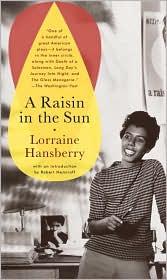
Reading options
What's inside (10 sections)
The first sound is an alarm clock. It goes off in a dark Chicago apartment before dawn, and Ruth Younger lies there a moment before she gets up to wake her son. That ordinary noise is a useful way into the play, because the whole story is about people waking to the same cramped morning and trying to find a way out of it. The apartment has two bedrooms for five people, one small window, and a bathroom down the hall shared with neighbors. Hansberry's stage directions keep the place dark and worn, and she keeps the audience in that room for nearly the whole evening.
A family on the edge of a check
Ruth works as a domestic for white families, and she comes home tired. Her husband, Walter Lee, drives a limousine, though he would rather be in business for himself. Their son, Travis, is a boy who wants a little money for school and does not entirely understand why there is never any. Lena Younger, whom everyone calls Mama, is Walter's mother and the moral center of the household. She is religious, stubborn, and tired in a way that has settled into her bones. Walter's sister, Beneatha, is a college student with plans for medical school and a sharp tongue that she uses on almost everyone.
The engine of the plot is a life insurance check for ten thousand dollars, due after the death of Walter Lee Sr., Mama's husband. The family has been waiting for it, and each of them has already spent it in his or her head. Walter wants to put his share into a liquor store with two men he knows, Willy Harris and Bobo. Ruth wants something quieter: a little security, a home without landlords and roaches, maybe a chance to stop working so hard. Beneatha wants tuition. Mama wants a garden and a house where Travis can play outside, and she wants her children to have more than she did.
That difference is the play's real argument. The money is concrete, but what each person wants from it is a picture of a life. Walter's picture is about ownership and respect. Ruth's is about rest. Beneatha's is about work that uses her mind. Mama's is about roots and dignity. Hansberry lets all of them be right enough to hurt.
Walter Lee and the liquor store
Walter talks about the store constantly. He has a pitch, and it is the pitch of a man who has practiced it on himself for years. He describes the profits, the way a man can walk into his own place and be somebody, the way his son would see him differently. His job as a chauffeur puts him at the wheel of other people's cars, overhearing other people's conversations, and the contrast eats at him. He feels he is a grown man asking permission to live.
The play is honest about how difficult he is. He snaps at Ruth. He drinks. He makes promises he cannot keep. He treats his mother's money as if it were already partly his, and he cannot see why she hesitates. He also has a case. He has been a servant all his life, and the store seems like the one opening he can reach. The men he wants to go into business with are not obviously trustworthy, but Walter is not stupid; he is desperate, and desperation makes a bad partner look like a door.
Ruth, meanwhile, is pregnant. She is exhausted, and she considers ending the pregnancy. That choice is one of the play's hardest pieces of material, and it is not treated as a scandal. It is treated as a symptom of a life with no room in it. Later she decides to keep the child, but the decision does not make the pressure disappear. Ruth and Walter love each other, or at least remember loving each other, and the money has become the language they use to argue about everything else.
Mama buys a house
When the check finally arrives, Mama does something no one expects. She takes three thousand five hundred dollars and puts it down on a house in Clybourne Park, a neighborhood on Chicago's South Side that is white and does not want her. The house is cheaper there, which is part of why she can afford it. It has a yard, and she imagines Travis in it. She imagines flowers. She has been living in that dark apartment for years, and the house is her answer to the life she has watched her family settle for.
Walter is devastated. In his mind, the money was the family's chance to move up, and she has spent a large piece of it on a house that will make them outsiders. Ruth is thrilled and frightened at once. Beneatha is distracted by her own troubles. Mama, who has been careful with money all her life, has made the largest and most impulsive decision of the play, and she has made it out of hope.
She does not stop there. She gives Walter the remaining six thousand five hundred dollars and tells him to put three thousand aside for Beneatha's tuition. The rest is his to manage. It is an extraordinary act of trust, especially because Ruth does not fully share it. Mama knows what the money means to her son. She also knows that if she does not let him try, he will always believe she chose his sister and the house over him. She chooses to give him the chance to be the man he says he wants to be.
The money disappears
Walter gives the whole amount to Willy Harris. He does not keep the three thousand for Beneatha. He does not put anything aside. He hands it over in the belief that the store is real and that his partners are solid. Then Bobo arrives at the apartment with the news that Willy has gone, taking the money with him. Bobo is shaking. Walter does not want to understand what he is hearing. The scene is one of the most painful in American drama, because it does not let Walter explain or defend himself. He simply sits with the fact that he has lost his sister's future and his mother's trust.
Beneatha's reaction is furious. She calls him a child. She says there is nothing left to love in him, or something close to that, and the line lands because she has been watching him perform his own importance for weeks. Mama's reaction is quieter and worse. She does not scream. She asks him to leave the room, and then she goes to her plant, that tired little plant she has kept alive on the windowsill through everything. The plant is not a subtle symbol. It is a living thing in a poor place, and she has kept it going by attention.
The loss changes the shape of the play. Until then, the family has been arguing about how to use a future. Afterward, they are arguing about whether they have one. Walter, who wanted to be a man of property, has become the man who lost the property. The buyout offer from the white neighborhood association, which seemed insulting when it was first made, now looks like a way out. That is exactly the kind of pressure the play wants the audience to feel.
Two versions of the future
Beneatha's story runs alongside the money plot. She is seeing two men, and they represent two ways of imagining her life. George Murchison is rich, confident, and assimilated. He goes to the theater and the right parties, and he thinks Beneatha's interest in Africa is embarrassing. He mocks her for reading about her heritage and for the way she dresses. He wants a wife who fits into the world he is trying to join. Beneatha enjoys his attention and dislikes what it costs her.
Joseph Asagai is a Nigerian student from the Yoruba people. He is poorer than George and much more serious. He brings Beneatha a robe from home and talks to her about Nigeria, about the history she has been taught to think of as distant. He tells her that her straightened hair is a kind of mutilation, a way of making herself look less like herself. That comment stings because it is partly true and partly unfair. Beneatha has been trying on identities all along, and Asagai gives her one that feels larger than the one George offers.
Asagai eventually asks her to come with him to Nigeria and practice medicine there. It is a proposal of marriage, but it is also a proposal about where her life should happen. Beneatha does not answer immediately. She is grieving the tuition money, and she is grieving the version of herself that was going to be a doctor in a clean American hospital. Asagai's offer is generous, but it is also a test. He can see her future more clearly than she can, and that is both attractive and a little frightening.
The contrast between the two men can feel too neat. George is a snob, Asagai is a teacher, and the play sometimes uses them as positions in an argument rather than as people. Still, Beneatha's scenes give the play its second center. She is the character who asks what it means to be free when you have been told your whole life what you are supposed to want.
Lindner comes to the door
Karl Lindner is a representative of the Clybourne Park Improvement Association. He visits the Younger apartment with a nervous smile and a folder of papers. He says he is there to help. He explains that the neighborhood has certain traditions, that the association is concerned about property values, and that the family might be happier somewhere else. Then he offers to buy the house back at a profit. He calls it a friendly gesture. He never quite says the word he means.
The family tells him to leave. Walter is particularly angry, and the scene gives the audience a moment of solidarity before the bottom falls out. Lindner is written as a small man with good manners and a bad job, and the play is clear that his politeness is the point. He is not a cartoon villain. He is a man who believes he is being reasonable while asking a family to give up a home because of their race.
After the money is stolen, Walter calls Lindner back. He tells Mama he is going to take the buyout. He is not joking. He has been beaten down, and the offer has become the only evidence that he can still make a deal. Mama refuses to let him do it quietly. She makes Travis stay in the room. She wants Walter to see his son watching him, and she wants Walter to see himself.
The last scene with Lindner is the play's emotional climax. Walter stands in front of the man and says that the family has decided to move into the house. He says his father earned it, and he says they are proud of who they are. The words are simple, and they are not a solution to anything. The family will still need money. The neighborhood may still be hostile. But Walter has chosen to be seen rather than to hide, and that choice changes the room.
What the production made possible
A Raisin in the Sun opened on Broadway in 1959. It was the first play by a Black woman to be produced there, and the first Broadway play with a Black director, Lloyd Richards. Sidney Poitier played Walter Lee, Claudia McNeil played Mama, Ruby Dee played Ruth, and Diana Sands played Beneatha. It ran for 530 performances and won the New York Drama Critics' Circle award for best play of the year. A film version followed in 1961, and the play has been revived many times since.
The title comes from Langston Hughes's poem "Harlem," which asks what happens to a dream deferred. Hansberry's family had lived through a version of the housing fight in the play. Her father, Carl Hansberry, challenged a restrictive covenant after the family moved into a white Chicago neighborhood, and the case went to the Supreme Court in Hansberry v. Lee in 1940. The play is not a transcript of that case, but the legal history is in its bones.
One scene that is often cut in production is Mrs. Johnson's visit. She is the nosy neighbor who brings gossip and then warns that the family might be bombed in Clybourne Park. The warning is not a joke. Hansberry kept the scene in print because the threat of racial violence was part of the reality of moving into a white neighborhood. Cutting it makes the play more comfortable than the play wants to be.
The play's argument with itself
The criticism that has followed the play is fair in places. It is built like a well-made play, with a rising action, a crisis, and a final scene that resolves the emotional question. Some of the minor characters are types. Walter's turnaround can feel sudden, as if one speech has undone years of self-pity. Lindner is easier to condemn than to understand. The ending does not tell us how the family will pay the mortgage or what happens when they arrive.
And yet the play survives those objections because the family is so specific. Mama's plant, Ruth's tired hands, Beneatha's hair, Travis's small requests for money, Walter's endless talk about the store: these details do not feel like illustrations of a theme. They feel like a household. The social forces are large, but they enter through a door and sit on a worn sofa.
The ending is not a triumph. It is a decision. The family chooses to move, and the choice is made in front of a man who has offered them money to disappear. Hansberry does not pretend that dignity pays the bills. She shows that dignity is still a form of power, and that a family can refuse a definition of itself even when it is badly frightened.
What stays with me is the plant. Mama carries it out of the apartment, and it is a poor, stubborn thing that has somehow stayed alive in a window that barely gets light. The play does not say the plant will flourish in the new house. It only says she is taking it with her. That seems like the right size of hope for this family, and for the audience.
FAQ
What happens to the $10,000 insurance check in A Raisin in the Sun?
Mama uses $3,500 as a down payment on a house in Clybourne Park and gives Walter $6,500, including $3,000 intended for Beneatha's tuition. Walter gives all of it to Willy Harris, who steals the money.
Why does Walter Lee change his mind about Lindner's buyout?
After losing the money, Walter initially plans to accept Lindner's offer, but Mama makes him face Travis and his own sense of self. He then refuses the buyout and tells Lindner the family will move into the house.
Is A Raisin in the Sun based on a true story?
It is fictional, but it draws on Lorraine Hansberry's family experience. Her father challenged a restrictive covenant after the family moved into a white Chicago neighborhood, leading to the 1940 Supreme Court case Hansberry v. Lee.
Similar books
The Glass Menagerie
Tom Wingfield recalls St. Louis life with his mother Amanda and shy sister Laura, until a gentleman caller comes to dinner.
2,953-word summary · 13 min read
Rosencrantz and Guildenstern Are Dead
Stoppard's 1966 play retells Hamlet from the wings, where two minor courtiers wait, joke, and walk toward a death they cannot see.
2,021-word summary · 9 min read
Native Son
Richard Wright's landmark novel follows Bigger Thomas through one panicked night in Chicago and the manhunt, trial and reckonings that follow, exposing the…
2,265-word summary · 10 min read

Pygmalion
Higgins bets he can pass flower girl Eliza off as a duchess.
2,521-word summary · 11 min read

Song of Solomon
Milkman Dead leaves Michigan to hunt for family gold and finds instead the old song of his ancestor Solomon.
2,465-word summary · 11 min read
Roll of Thunder, Hear My Cry
In Depression-era Mississippi, nine-year-old Cassie Logan learns what her Black family's land costs and why they keep it.
2,273-word summary · 10 min read

All We Ever Wanted
A Nashville photo of a drunk boy over a passed out girl splits three families along money and race lines.
2,278-word summary · 10 min read

A Doll's House
Nora forges a loan to save Torvald, then walks out on doll life at Christmas.
2,468-word summary · 11 min read

A Streetcar Named Desire and Other Plays
Blanche DuBois moves in with Stella and Stanley in New Orleans while her past closes in, plus two more Williams plays.
2,902-word summary · 13 min read
A Tree Grows in Brooklyn
Francie Nolan grows up poor in 1910s Williamsburg, reading on fire escapes while her family scrapes by, and learns how schooling can lift her out.
2,485-word summary · 11 min read
Little Women
Alcott's Little Women retold: Meg, Jo, Beth and Amy March through the Civil War years and beyond.
2,487-word summary · 11 min read

The Long Winter
Dakota Territory, 1880: seven months of blizzards cut a town off from the railroad, and a family survives on twisted hay, ground wheat, and a dangerous wheat…
2,210-word summary · 10 min read

Revolutionary Road
A Connecticut couple who believe they are too good for the suburbs plan to move to Paris, and the plan slowly exposes everything they cannot say to each other.
2,085-word summary · 9 min read
Make Way for Ducklings
A pair of mallards raise eight ducklings on the Charles River and lead them across Boston to the Public Garden, with a little help from a friendly policeman.
2,044-word summary · 9 min read
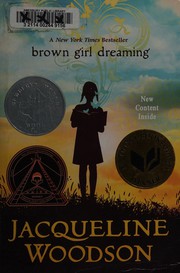
Brown Girl Dreaming
Jacqueline Woodson retells her childhood in verse, moving from Ohio to South Carolina to Brooklyn while the civil rights movement reshapes the world around her.
2,727-word summary · 12 min read

Little Town on the Prairie
In the spring after the Long Winter, fifteen-year-old Laura sews shirts, studies for a teaching certificate, and helps send her blind sister Mary to college.
2,071-word summary · 9 min read

Howards End
Forster's 1910 novel follows two families, a house in Hertfordshire, and a burned note, asking whether money and feeling can ever be connected.
2,187-word summary · 10 min read

James
Percival Everett retells Huckleberry Finn from Jim's side, giving him a library, a hidden school, and a voice the novel lets loose.
2,211-word summary · 10 min read

Fathers and Sons
Arkady brings the nihilist Bazarov home to his father's estate, and a generational argument turns into love, a duel, and an early death.
2,192-word summary · 10 min read
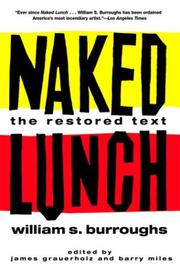
Naked Lunch
Burroughs's banned 1959 collage novel follows Bill Lee through addiction, Tangier, and the nightmare bureaucracy of the Interzone.
2,082-word summary · 9 min read

The Chosen
A shattered pair of glasses in a 1944 Brooklyn softball game starts a friendship between a Hasidic boy and his Orthodox neighbor, and their fathers pull them…
2,443-word summary · 11 min read
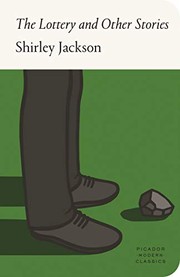
The Lottery
In Jackson's 1948 story, a village draws lots to keep the corn heavy, and the chosen person is stoned by her neighbors.
3,080-word summary · 14 min read

Wide Sargasso Sea
Jean Rhys gives the first Mrs. Rochester a Caribbean childhood, a marriage built on money and suspicion, and a voice that Charlotte Bronte left in the attic.
2,021-word summary · 9 min read

This Is How You Lose Her
Yunior cycles through love affairs and betrayals in nine linked stories, tracing the damage he does and the family history behind it.
2,195-word summary · 10 min read
The Last of the Mohicans
During the French and Indian War, Hawkeye and two Mohican warriors try to save two British sisters from a Huron chief whose revenge will end the Mohican line.
2,017-word summary · 9 min read
The Borrowers
A family of tiny people live under the floorboards of an English house, borrowing what they need until a lonely boy and a suspicious housekeeper change…
2,164-word summary · 10 min read

On the Come Up
Bri Jackson, a sixteen-year-old rapper in Garden Heights, chases a record deal while a viral song turns her into a symbol she never wanted to be.
2,034-word summary · 9 min read

The Complete Poems of Emily Dickinson
Thomas H. Johnson's one-volume edition gathers all 1,775 of Emily Dickinson's poems in their restored texts, the standard reading edition since 1960.
2,191-word summary · 10 min read
We Were the Mulvaneys
After a rape following a school dance, the Mulvaneys, a family that believed it was blessed, comes apart over fifteen years. Narrated by the youngest son.
2,094-word summary · 9 min read
On the Banks of Plum Creek
The Ingalls family trades their horses for a dugout on Plum Creek and bets a single wheat harvest on a house above ground, in Wilder's fourth Little House book.
2,090-word summary · 9 min read