
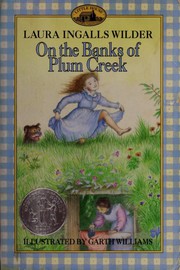
On the Banks of Plum Creek
2,090-word summary 9 min read 339 pages in the book
- First published
- 1937
- Publisher
- Harper & Brothers
- Pages
- 339
- ISBN
- 9780064400046
- Series
- Little House (#4)
Reading options
What's inside (9 sections)
The Little House books were the first chapter books anyone read to me, and I have gone back to them every few years since, which means I have now met Nellie Oleson as a child, as a teenager, and as an adult. Each time, the same scene gets me: the grasshoppers. As a kid, the grasshoppers were a cool disaster chapter. As an adult, they are the part of the book where I can feel the ground disappear under a family that has bet everything on one field of wheat.
On the Banks of Plum Creek came out in 1937, the fourth of the nine Little House books, and it covers roughly five years of Wilder's childhood, from about 1874, when the Ingalls family arrived in Minnesota and settled near Walnut Grove, in what is today Redwood County. It won a Newbery Honor in 1938. That was the first of five Newbery Honors in a row for the series, which tells you what the children's librarians of the era made of it. Kirkus gave it a starred review and called it, if anything, better than Little House in the Big Woods. For once, the marketing was underselling it.
A dugout on the creek
The book opens with the family arriving by covered wagon from Kansas, where the previous novel left them. Pa finds a piece of land on the banks of Plum Creek and trades their two horses, Pet and Patty, along with Pet's colt Bunny, for a dugout and a stable. A dugout, for anyone who has never pictured one, is a house hollowed out of the creek bank, with a door in the ground and a sod roof where the grass keeps growing. Laura's description of the place is one of the best pieces of scene-setting in the whole series: a dark, cool cave of a home that is also, somehow, cozy. She makes the dugout feel like an adventure and, once the family has settled, like a hearth.
The creek is the other character in these chapters. It is where Laura wades when she has been told not to, where the girls catch fish with their hands, and where the family's animals drink. It nearly kills Laura once, in the leech chapter, and it provides the only connection to the town of Walnut Grove, which is close enough now that the girls can walk to it. This matters. In the first three books the Ingalls family lives at the edge of the known world. Here, a town exists, and with it schools, shops, church, and neighbors, which is to say it brings the girls their first experience of society outside the family, in all its kindness and pettiness.
The house above ground
Pa has a plan, and the plan is wheat. The first crop will pay for lumber, and the lumber will pay for a proper house above the ground, with real windows and an actual door, which is what Ma wants and what Pa has promised her. The family moves in stages: the dugout first, then the new house on the rise above the creek. Reading this as an adult, the whole middle section of the book is an economic story: a family betting two years of labor on a single harvest, with no safety net and no insurance. Wilder writes it without a word of complaint, which somehow makes it worse.
The house gets built, the wheat comes up green, and the family starts to think of the place as theirs. This is where the book earns its reputation for honesty. You can see the good year coming, and if you know anything about the history of the American plains in the 1870s, you know what is coming with it.
School, parties, and Nellie Oleson
For the first time in the series, Laura and Mary go to school. The schoolhouse chapters give the book some of its funniest material, and the arrival of Nellie Oleson, the storekeeper's daughter, is the moment the series discovers its best minor villain. Nellie makes fun of Laura and Mary for being country girls, which stings harder because the Ingalls girls are genuinely proud of the house Pa built and embarrassed by the dugout they started in.
The party chapters are Wilder at her most observant. The Olesons hold a party, and Ma, who has her own quiet sense of pride, insists on paying it back with a party of her own, even though the family can barely afford it. At the Ingalls party, Nellie mistreats the family dog, Jack, and speaks rudely to Ma, and the reader feels the same helpless fury Laura does. Then the girls go wading in the creek and Nellie gets covered in leeches. Laura's vindication is petty and perfect, and the book is smart enough to let the reader enjoy it without pretending it makes anything right.
What I notice now is how much of this is Ma's story. The party, the household standards, the refusal to be shamed by people with more money: Ma holds the family's dignity together in a way that the prairie books often bury under the log-splitting and the blizzards.
The grasshoppers
The Locust Plague of 1874, usually called the grasshopper year in the book, destroys the wheat. Wilder's account of it is careful and calm and awful: a cloud on the horizon that is not a cloud, a wind that turns out to be wings, and then every green thing on the farm gone down to the dirt. The insects eat the wheat, the garden, the clothes on the line, and each other. The family's entire year of work disappears in days.
Then the second year's crop fails too, because the grasshoppers lay their eggs in the ground and come back. Pa cannot farm his way out of this, so he does the thing that defines him in the series. He walks. Three hundred miles east, twice, to find paying work on other farms, sending money home and coming back when he can. The school closes because the disaster leaves the whole community unable to keep it open, which quietly ends the girls' one year of formal education for a while. Laura does not editorialize about what it means that a child has to be told school is over. She reports it and moves on, and the reader does the editorializing.
The pattern of the Little House books is that Pa's optimism drives the family, and Ma's realism holds it together, and this is the book where you can best see both operating under real strain. Pa never says out loud that he was wrong to trust the wheat. He does not have to. The empty field says it for him.
A blizzard and a hat
The last stretch of the book is a snowstorm. A four-day blizzard keeps Pa from getting home, and Ma holds the household together with games and stories, refusing to let the girls see how frightened she is. When the storm finally clears, it turns out that Pa had been within shouting distance of the house the entire time and could not see or hear his way to it. That detail is the whole book in miniature: these people surviving not by heroics but by inches, and by luck.
The novel ends with the family reunited on Christmas Eve. Pa has been trading along the way, and there are two new horses for the girls, which Laura and Mary name Sam and David, and it is worth pausing on how small a miracle the ending actually is. Nobody has been saved. The family is still broke, the farm is still ruined, and the next book, By the Shores of Silver Lake, will open with the family moving on again. The Christmas is the reward for endurance, not for victory, and that is exactly the right note for a series about people who kept starting over.
What the book is really doing
The publication history adds a layer. Wilder first wrote Pioneer Girl, a blunt adult memoir of the same events, and could not sell it. Her daughter Rose Wilder Lane pushed her toward a children's series, and the books soften and shape the real story, sometimes moving events across years, sometimes leaving out the worst of it. On the Banks of Plum Creek is one of the books where you can feel the seams if you squint. The dugout, the grasshoppers, the walk east, the blizzard: all of it is real. The way it is arranged into a story with a warm Christmas ending is craft, and it works.
The series does have a real problem, and it is bigger in the books that sit alongside this one. The 1997 challenge aimed at this title came from Winnipeg, where two parents objected to its brief references to Native Americans, including Mary's warning that Laura will get as brown as an Indian and a line where Laura wishes she could be one. The complaint was withdrawn, and by the standards of its era the book is not cruel, but the pages where Native people appear are thin and often about the Ingalls family's earlier time in Indian Territory rather than anything lived in Minnesota. Reading it now, the silence is as noticeable as the words. That is a conversation worth having with a kid, and the book is sturdy enough to survive it.
None of that changes what the book does best, which is to make daily work feel like stakes. A trip to town, a Sunday dress, sugar for the tea: these are the events a third grader can understand, and Wilder writes them with enough texture that an adult can feel the ledger underneath. It is not my favorite of the series, that would be The Long Winter, but it may be the one I reread most often, because the grasshoppers never stop being the best kind of trouble in a children's book: a disaster with no villain, survived by a family with no choice but to walk on.
The real story underneath
The books feel like memory, and that is a carefully built effect. Wilder did not sit down as an old woman and write down exactly what happened. The publication trail tells a different story. After the family's farming years failed in the Dakotas, the Ingallses ended up in the Ozarks, and Wilder eventually wrote columns for a regional farm newspaper. Her daughter, Rose Wilder Lane, was a working writer, and it was partly financial pressure and partly ambition that pushed the two of them toward a memoir of the frontier years. Wilder wrote it as Pioneer Girl, and it was blunt and adult and could not find a publisher. Rose suggested reworking the material for children, and the Little House series grew out of that second attempt.
That history matters when you read On the Banks of Plum Creek, because you can see both versions of the family in it: the one that lived through the events and the one that shaped them for young readers. Some episodes were softened, some were moved across years, and some of the worst of it, the illness and the poverty that did not resolve on schedule, was left out or rearranged. The grasshoppers are real. The four-day blizzard is real, or close enough. The Christmas Eve ending is the shape of a satisfying story resting on top of a season that, in real life, would have been slower and more frightening and less tidy. Wilder and Lane were not lying to children. They were doing what storytellers do, and the seams are visible now in ways that make the book more interesting rather than less.
It is also worth noting where the family goes from here, because Plum Creek is not a landing so much as another departure. The series continues in By the Shores of Silver Lake, and the years in De Smet that follow hold the hardest material in the whole saga, including Mary's blindness and the winter that nearly starved the town. The goodness of the Plum Creek years, when the wheat was growing and the fish were biting, is deliberately placed in the series as the stretch of ordinary luck before everything gets worse. Rereading it, I understand its lightness differently. It is the sound of a family resting. It is never the whole truth, and it is the truest kind of story anyway.
FAQ
Can On the Banks of Plum Creek be read on its own?
Yes. It is the fourth Little House book, but it opens with the family arriving in Minnesota and stands alone as a story. Reading Little House on the Prairie first explains how they got there.
Why did Pa walk 300 miles in On the Banks of Plum Creek?
Two wheat crops in a row were destroyed by the grasshopper plague of 1874, so he took harvest work on farms to the east to support the family while the Minnesota claim recovered.
Why has On the Banks of Plum Creek been challenged by some schools?
A 1997 complaint in Winnipeg objected to the book's brief references to Native Americans, including a line in which Mary warns Laura that if she does not wear her sunbonnet she will get as brown as an Indian. The complaint was withdrawn, but the series' treatment of Native people remains a fair subject of criticism.
Similar books
More from Little House first, then related titles.
Little House in the Big Woods
The Ingalls family spends a full year in a Wisconsin log cabin, filling the attic, marking Christmas, and sugaring maples in spring.
3,884-word summary · 17 min read
Little House on the Prairie
The Ingalls family leaves Wisconsin for Kansas, builds a log house, and faces wolves, fire, and fever.
3,002-word summary · 13 min read

The Long Winter
Dakota Territory, 1880: seven months of blizzards cut a town off from the railroad, and a family survives on twisted hay, ground wheat, and a dangerous wheat…
2,210-word summary · 10 min read

Little Town on the Prairie
In the spring after the Long Winter, fifteen-year-old Laura sews shirts, studies for a teaching certificate, and helps send her blind sister Mary to college.
2,071-word summary · 9 min read
The Borrowers
A family of tiny people live under the floorboards of an English house, borrowing what they need until a lonely boy and a suspicious housekeeper change…
2,164-word summary · 10 min read
Anne's House of Dreams
Newlyweds Anne and Gilbert start in a seaside house with kind neighbors.
2,465-word summary · 11 min read
Song of Solomon
Milkman Dead leaves Michigan to hunt for family gold and finds instead the old song of his ancestor Solomon.
2,465-word summary · 11 min read
Roll of Thunder, Hear My Cry
In Depression-era Mississippi, nine-year-old Cassie Logan learns what her Black family's land costs and why they keep it.
2,273-word summary · 10 min read

The Good Earth
Wang Lung, a poor farmer in 1920s China, rises with his wife O-lan through famine and wealth, holding to land above all else.
2,125-word summary · 9 min read
The Red Tent
Dinah retells Genesis from the women's tent, loving Jacob's wives and surviving Shechem and Egypt.
2,014-word summary · 9 min read

The Japanese Lover
A Polish refugee and the son of a Japanese gardener fall in love in San Francisco in 1939, then keep the affair secret for nearly seventy years.
2,286-word summary · 10 min read
Make Way for Ducklings
A pair of mallards raise eight ducklings on the Charles River and lead them across Boston to the Public Garden, with a little help from a friendly policeman.
2,044-word summary · 9 min read

The Shadow Sister
Star D'Apliese steps out of her sister's shadow and follows a bookshop clue into the Edwardian life of Flora MacNichol, a woman who gave up love for duty.
2,260-word summary · 10 min read
Amelia Bedelia
A literal-minded housekeeper follows her employer's list to disastrous and funny effect in the 1963 picture book that made wordplay a children's staple.
2,038-word summary · 9 min read
Mrs. Everything
Two Jewish sisters in Detroit grow up, apart and together, across seven decades of American life, from the 1950s to the 2016 election.
2,362-word summary · 10 min read

Howards End
Forster's 1910 novel follows two families, a house in Hertfordshire, and a burned note, asking whether money and feeling can ever be connected.
2,187-word summary · 10 min read
The Agony and the Ecstasy
Irving Stone turns Michelangelo's seventy years of carving, painting, and arguing with popes into a novel about the cost of making something that outlives you.
2,260-word summary · 10 min read

Sophie's Choice
A young Southern writer in 1947 Brooklyn befriends a brilliant, unstable couple and slowly learns the story of the Polish Catholic woman at the center of their…
2,798-word summary · 12 min read

Fathers and Sons
Arkady brings the nihilist Bazarov home to his father's estate, and a generational argument turns into love, a duel, and an early death.
2,192-word summary · 10 min read

The Chosen
A shattered pair of glasses in a 1944 Brooklyn softball game starts a friendship between a Hasidic boy and his Orthodox neighbor, and their fathers pull them…
2,443-word summary · 11 min read

Ivanhoe
A disinherited Saxon knight, a great tournament, a besieged castle and a trial by combat. Scott's most famous novel, set in England in 1194.
2,834-word summary · 13 min read

Wide Sargasso Sea
Jean Rhys gives the first Mrs. Rochester a Caribbean childhood, a marriage built on money and suspicion, and a voice that Charlotte Bronte left in the attic.
2,021-word summary · 9 min read
What the Wind Knows
Annie scatters her grandfather's ashes on Lough Gill and is pulled into 1921 Ireland, where she becomes the missing Anne Gallagher and falls for Dr. Thomas…
2,056-word summary · 9 min read
The Last of the Mohicans
During the French and Indian War, Hawkeye and two Mohican warriors try to save two British sisters from a Huron chief whose revenge will end the Mohican line.
2,017-word summary · 9 min read
Sideways Stories from Wayside School
Thirty stories, one class per floor, and a teacher who turns students into apples: Louis Sachar's absurd school classic.
2,045-word summary · 9 min read
Old Yeller
Travis Coates takes in a stray yellow dog that protects his family on the Texas frontier, and learns about loyalty and loss.
2,165-word summary · 10 min read
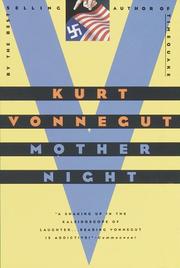
Mother Night
Howard W. Campbell Jr., a Nazi propagandist and American spy, tells the story of his double life from an Israeli prison cell while waiting to be tried for war…
1,988-word summary · 9 min read

Doctor Zhivago
A doctor and poet lives through revolution, war, and love in Pasternak's novel of private life under the pressure of Russian history.
2,213-word summary · 10 min read
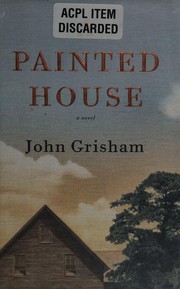
A Painted House
In 1952 Arkansas, seven-year-old Luke Chandler picks cotton with his family and learns how quickly poverty, violence, and adult secrets can end a childhood.
2,060-word summary · 9 min read

The Storm Sister
Ally D'Aplièse loses her father and her lover within weeks, then follows a brass frog and a Norwegian biography into Anna Landvik's music and the world of…
2,376-word summary · 11 min read