
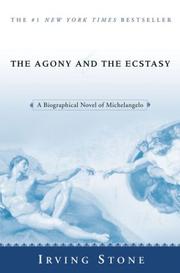
The Agony and the Ecstasy
2,260-word summary 10 min read 784 pages in the book
- First published
- 1961
- Publisher
- NAL Trade
- Pages
- 784
- ISBN
- 9780451213235
Reading options
What's inside (10 sections)
Michelangelo Buonarroti was born in 1475 in Caprese, a small town in Tuscany, and spent his first years in the house of a stonecutter. His father, Lodovico, was a minor nobleman with more pride than money. He did not want his son to be an artist. Art was a trade, and a trade was beneath the Buonarroti name. But the boy grew up among chisels and marble dust, and the stone got into him early.
That is where Irving Stone begins his novel: a child watching a stonecutter work, learning that a block of marble is not a blank. It has a figure inside it. The sculptor's job is to remove everything that is not the figure. The image is famous, and Stone uses it as the book's central metaphor. Michelangelo spends his life freeing people from stone, and the stone fights back.
The Agony and the Ecstasy was published in 1961. Stone spent years in Italy researching it, and he had access to Michelangelo's letters, contracts, and poems. He read the biographies by Vasari and Condivi. He walked the streets Michelangelo walked. The novel is fiction, but it is built on a deep foundation of fact. That combination is both its strength and its weakness. The facts are solid. The inner life is invented.
I picked it up because I wanted to understand how the Sistine Chapel ceiling was actually painted. I got that, and I got a portrait of an artist who was impossible to live with, impossible to employ, and impossible to ignore.
The boy in the garden
Michelangelo's mother dies when he is six. His father sends him to live with a family of stonecutters in Settignano, and the boy learns the feel of marble before he learns to read. He is not a happy child. He is quick to anger, slow to trust, and convinced that he is ugly. Stone gives him a sharp tongue and a habit of withdrawing into himself. The novel's Michelangelo is not a saint. He is a genius with a bad temper and a talent for making enemies.
His father eventually agrees to apprentice him to Domenico Ghirlandaio, a successful Florentine painter. Michelangelo is thirteen. He is already better than most of the boys in the workshop, and he knows it. He copies the masters. He draws from life. He argues with his teacher. Ghirlandaio is patient, or patient enough, and he recognizes the boy's gift.
Then Lorenzo de' Medici, the ruler of Florence and the greatest patron of his age, invites Michelangelo to his sculpture garden. The garden is full of ancient statues, fragments, and young artists. Michelangelo meets Bertoldo di Giovanni, the sculptor who runs the school, and Poliziano, the poet and scholar. He meets Lorenzo himself, who treats him like a son. For a few years, Michelangelo is happy. He has marble, teachers, and an audience. He carves the Battle of the Centaurs and the Madonna of the Stairs. Both are rough, powerful, and already unmistakably his.
The idyll does not last. Lorenzo dies in 1492. Savonarola, the friar who preaches against art and luxury, takes over Florence. Michelangelo flees to Bologna, then to Rome. The garden is gone. The boy is on his own.
The Pietà
Rome is where Michelangelo becomes famous. He is twenty-three when he carves the Pietà, the marble group that shows Mary holding the dead Christ. It is commissioned by a French cardinal for St. Peter's Basilica. Michelangelo works on it for two years, and when it is done, he puts his name on the sash across Mary's chest. It is the only work he ever signed.
Stone describes the carving in detail. The marble is difficult. The figures are large. Mary's face is young and serene, which was unusual for the time. Michelangelo defends the choice by saying that virginity preserves youth. The explanation is theological, but the effect is human. Mary looks like a mother holding a child, not a queen receiving a corpse.
The Pietà makes Michelangelo's reputation. It also makes him arrogant. He believes he has surpassed every sculptor in Italy, and he is not wrong. The cardinals and nobles who commission him are impressed. The other artists are not. Stone shows the rivalry clearly. Michelangelo is not a team player. He does not flatter. He does not share credit. He does not pretend that lesser work is good. The novel makes him difficult, and then asks the reader to admire him anyway.
David and the republic
Michelangelo returns to Florence in 1501. The city has expelled the Medici and established a republic. A block of marble that has been sitting in the cathedral workshop for decades is offered to him. Other sculptors have rejected it. It is flawed, tall, and narrow. Michelangelo accepts it and spends three years carving David.
The David is the book's first great set piece. Stone describes the block, the scaffolding, the dust, the physical exhaustion. Michelangelo works alone, or nearly alone. He does not let anyone see the figure until it is ready. The city watches. The statue becomes a political symbol: a nude boy with a sling, standing in front of the Palazzo della Signoria, ready to fight a giant. Florence sees itself in him.
Stone is good at the politics of art. The David is not just a masterpiece. It is a public statement about the republic's courage. The Medici are in exile, but they are not gone. The pope is not happy. The city is divided. Michelangelo has to navigate all of it while trying to finish the statue. The novel makes the connection between art and power explicit, and it does so without reducing the art to propaganda.
The David is also a technical achievement. Michelangelo has to solve the problem of the block's narrowness. He has to make the figure look powerful without adding width. He has to balance the weight. Stone explains these problems without turning the book into a manual. The reader understands why the statue is remarkable, not just that it is.
Julius II and the tomb
In 1505, Pope Julius II summons Michelangelo to Rome. Julius is a warrior pope, a man of enormous ambition, and a great patron. He wants a tomb that will outshine every monument in Christendom. Michelangelo designs a massive structure with dozens of figures. It will take years. It will cost a fortune. Julius loves it.
Then Julius changes his mind. He wants to rebuild St. Peter's instead. The tomb is postponed. Michelangelo is furious. He leaves Rome, goes back to Florence, and refuses to return. Julius sends soldiers after him. The two men argue, reconcile, and argue again. Stone makes their relationship the heart of the middle section. They are both arrogant, both brilliant, and both convinced that the other is being unreasonable.
The tomb becomes a curse. Michelangelo will work on it, on and off, for forty years. It will be scaled down again and again. The final version is a shadow of the original plan. The novel shows how a great idea can be destroyed by money, politics, and the whims of powerful men. It also shows how Michelangelo kept coming back to it, even when he hated it.
The Sistine Chapel ceiling is the other great commission of this period. Julius orders Michelangelo to paint it, even though Michelangelo insists he is a sculptor. The book's description of the work is the best part of the novel. The scaffolding. The cramped space. The paint dripping into his eyes. The back pain. The loneliness. Michelangelo works for four years, mostly alone, and the ceiling nearly kills him.
Stone does not pretend that the ceiling was a pure inspiration. It was a job. Michelangelo complained about it constantly. He wanted to be carving marble. He thought painting was inferior. He did it anyway, because he could not say no to the pope. The result is one of the most famous works of art in the world, and the book lets the reader feel the cost.
The Medici Chapel and the Last Judgment
After Julius dies, Michelangelo works for a series of Medici popes. He returns to Florence to build the Medici Chapel and the Laurentian Library. The chapel is a memorial to the Medici family, and Michelangelo designs it with a cold, severe beauty. The figures of Night and Day, Dawn and Dusk lie on the tombs. They are heavy, brooding, and more alive than the men they commemorate.
The political situation in Florence collapses. The Medici return. The republic falls. Michelangelo's loyalty is suspect. He has worked for the Medici, but he also believes in Florentine freedom. He is not a political thinker. He is an artist who wants to work, and the factions keep interrupting him.
The Last Judgment, painted on the altar wall of the Sistine Chapel, is the book's late masterpiece. It is darker than the ceiling. The figures are muscular, twisted, and frightened. Christ is a judge, not a shepherd. The dead rise and are sorted. The saved go up. The damned go down. The pope's master of ceremonies complains that the nude figures are indecent. Michelangelo paints him into hell.
Stone uses the Last Judgment to show how Michelangelo's faith changed. He was always religious, but his religion was not gentle. He believed in a God who demanded everything. The book connects that belief to his art. The agony is not just physical. It is spiritual. He is trying to make something that will please God, and he is not sure he can.
Vittoria Colonna
The last third of the novel is quieter. Michelangelo is old, famous, and lonely. He meets Vittoria Colonna, a poet and noblewoman who is separated from her husband and devoted to reform. They become friends. She reads his poems. He writes poems for her. They talk about faith, art, and death. The relationship is intimate without being sexual, or at least without being consummated. Stone treats it as the great love of Michelangelo's later life.
Vittoria gives the book its emotional center. She is one of the few people who can talk to Michelangelo without being intimidated by him. She challenges his self-pity. She encourages his poetry. She dies relatively young, and her death leaves him devastated. The novel does not overplay the romance. It is a friendship between two intelligent people who found each other late. That is enough.
Michelangelo's family is a recurring burden. His father wants money. His brothers want money. His nephew wants money. He supports them all, complains about them constantly, and keeps working. The novel is honest about the gap between the artist's public glory and his private life. He is celebrated by popes and cardinals, and he is still worried about his family's debts.
What works and what does not
The Agony and the Ecstasy is a long book, and it feels long. Stone is a thorough researcher, and he wants the reader to see everything. The novel includes quarries, contracts, papal politics, family arguments, and a great deal of travel. Some of it is fascinating. Some of it is a history lesson with dialogue.
The dialogue is the weakest element. Stone's characters speak in a slightly stilted, formal English that never quite sounds like Renaissance Italy. They explain their motivations too clearly. They make speeches. Michelangelo, in particular, is always ready with a line about art and suffering. The novel tells us he is a genius more often than it shows us.
The psychology is speculative. Stone had letters and poems, but he did not have Michelangelo's inner monologue. The novel invents one. Some of it is convincing. Some of it is a modern artist's fantasy of what a Renaissance artist must have felt. The book is better at describing the work than at explaining the man.
The female characters are thin. Vittoria is the exception, and she is well drawn. The others are mothers, wives, or patrons. The novel is about a male world of popes, cardinals, sculptors, and merchants. That is historically accurate, but it also limits the book.
The art writing is excellent. Stone can describe a statue in a way that makes you see it. He can explain the difference between carving and modeling, between marble and bronze, between a sketch and a finished work. He makes the technical problems dramatic. That is a rare skill.
Who should read it
Read this if you love art history and want a narrative that puts you in the workshop. Read it if you are going to Rome or Florence and want to look at the Pietà, the David, and the Sistine ceiling with more context. Read it if you like big, old-fashioned biographical novels with a lot of research and a lot of weather.
Do not read it if you want a short book. Do not read it if you want a psychologically modern Michelangelo. Do not read it if you are looking for a careful account of the Reformation or the politics of the Italian wars. The novel is focused on the man and the work.
What remains is a portrait of an artist who was never satisfied. Michelangelo finished the David and immediately worried about the next commission. He painted the ceiling and complained that he was a sculptor. He built St. Peter's and fretted about the dome. The agony was the work. The ecstasy was the moment the figure came free. Stone understands that, and he makes the reader feel it.
FAQ
Is The Agony and the Ecstasy a biography?
It is a biographical novel. Stone researched Michelangelo's letters, contracts, and poetry, but he invents dialogue and inner life.
How much of the book covers the Sistine Chapel?
A substantial middle section, from the commission under Julius II through the ceiling's completion, though the novel also covers the Pieta, David, and St. Peter's.
What does the title mean?
It refers to Michelangelo's view of sculpture as a struggle to free the figure from the stone, and to the emotional cost of his work.
Similar books
The Birth of Venus
A Florentine merchant's daughter trains as an artist, marries a man who hides a secret, and survives Savonarola's bonfire of the vanities.
2,404-word summary · 11 min read
Loving Frank
Mamah Borthwick Cheney leaves her family for Frank Lloyd Wright, and their affair becomes a public scandal that ends in tragedy at Taliesin.
2,034-word summary · 9 min read
The Marriage Portrait
Fifteen year old Lucrezia Medici marries Ferrara's duke and sits for a portrait shadowed by menace.
2,031-word summary · 9 min read
Beneath a Scarlet Sky
Pino Lella guides Jews over Alps then drives for Nazis in Milan.
2,271-word summary · 10 min read

The Long Winter
Dakota Territory, 1880: seven months of blizzards cut a town off from the railroad, and a family survives on twisted hay, ground wheat, and a dangerous wheat…
2,210-word summary · 10 min read
The Art Forger
A disgraced Boston painter agrees to copy a Degas stolen from the Gardner Museum, then begins to suspect the original she is copying is itself a forgery.
2,117-word summary · 9 min read
The Only Woman in the Room
A novel about Hedy Lamarr's escape from an arms-dealer husband, her Hollywood career, and the frequency-hopping patent the Navy ignored.
2,067-word summary · 9 min read

Little Town on the Prairie
In the spring after the Long Winter, fifteen-year-old Laura sews shirts, studies for a teaching certificate, and helps send her blind sister Mary to college.
2,071-word summary · 9 min read

Sophie's Choice
A young Southern writer in 1947 Brooklyn befriends a brilliant, unstable couple and slowly learns the story of the Polish Catholic woman at the center of their…
2,798-word summary · 12 min read

Ivanhoe
A disinherited Saxon knight, a great tournament, a besieged castle and a trial by combat. Scott's most famous novel, set in England in 1194.
2,834-word summary · 13 min read
Big Lies in a Small Town
A 22-year-old woman leaves prison to restore a 1940 mural, and Edenton, North Carolina, starts talking.
2,187-word summary · 10 min read

Wide Sargasso Sea
Jean Rhys gives the first Mrs. Rochester a Caribbean childhood, a marriage built on money and suspicion, and a voice that Charlotte Bronte left in the attic.
2,021-word summary · 9 min read
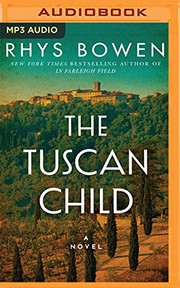
The Tuscan Child
After her father's death, Joanna follows a returned letter to Tuscany and uncovers his wartime love, a hidden painting and a village secret. A dual-timeline…
2,095-word summary · 9 min read
The Last of the Mohicans
During the French and Indian War, Hawkeye and two Mohican warriors try to save two British sisters from a Huron chief whose revenge will end the Mohican line.
2,017-word summary · 9 min read
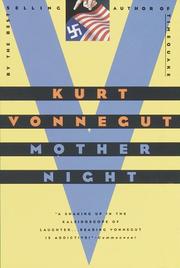
Mother Night
Howard W. Campbell Jr., a Nazi propagandist and American spy, tells the story of his double life from an Israeli prison cell while waiting to be tried for war…
1,988-word summary · 9 min read

Doctor Zhivago
A doctor and poet lives through revolution, war, and love in Pasternak's novel of private life under the pressure of Russian history.
2,213-word summary · 10 min read
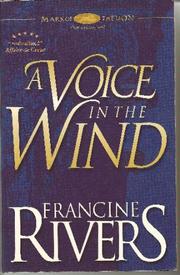
A Voice in the Wind
A young Christian slave in Rome serves a spoiled patrician daughter and catches the eye of her brother, while a captured German gladiator fights for freedom.
2,322-word summary · 10 min read
The Letters of Vincent van Gogh
Vincent van Gogh's letters to his brother Theo, in a Penguin Classics selection edited by Ronald de Leeuw, trace a decade of work, faith, and obsession.
2,611-word summary · 12 min read
The Clockmaker's Daughter
A London archivist finds a Victorian satchel holding a photograph, a sketchbook and a letter, then follows them to Birchwood Manor, where a young woman died in…
2,886-word summary · 13 min read
If on a Winter's Night a Traveler
You, the Reader, chase a defective novel through bookshops and translators while ten other novels keep interrupting. Calvino's famous puzzle about the act of…
2,173-word summary · 10 min read
On the Banks of Plum Creek
The Ingalls family trades their horses for a dugout on Plum Creek and bets a single wheat harvest on a house above ground, in Wilder's fourth Little House book.
2,090-word summary · 9 min read
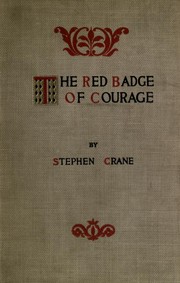
The Red Badge of Courage
Henry Fleming runs at Chancellorsville, then returns to stand.
2,486-word summary · 11 min read
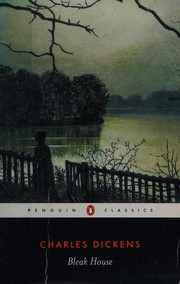
Bleak House
Jarndyce and Jarndyce grinds through Chancery while Esther finds her family.
2,480-word summary · 11 min read
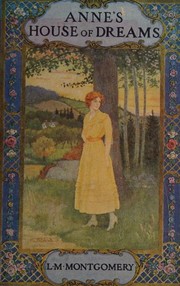
Anne's House of Dreams
Newlyweds Anne and Gilbert start in a seaside house with kind neighbors.
2,465-word summary · 11 min read
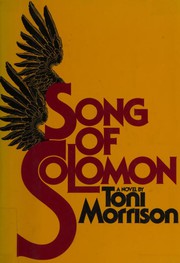
Song of Solomon
Milkman Dead leaves Michigan to hunt for family gold and finds instead the old song of his ancestor Solomon.
2,465-word summary · 11 min read
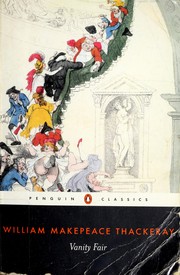
Vanity Fair
Becky Sharp schemes her way up Regency society while loyal Amelia waits, in Thackeray's witty novel without a hero.
2,698-word summary · 12 min read
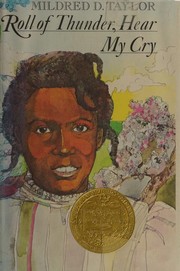
Roll of Thunder, Hear My Cry
In Depression-era Mississippi, nine-year-old Cassie Logan learns what her Black family's land costs and why they keep it.
2,273-word summary · 10 min read
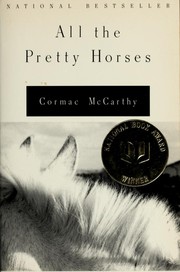
All the Pretty Horses
John Grady and Rawlins ride to Mexico for ranch work, finding love, prison, and a code that costs all.
2,677-word summary · 12 min read
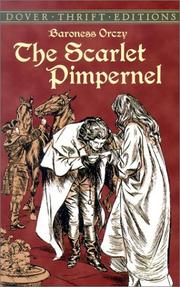
The Scarlet Pimpernel
A foppish baronet rescues aristocrats from the guillotine while his French wife hunts the hero she scorns.
2,980-word summary · 13 min read
The Great Believers
Yale builds a Chicago art collection as AIDS takes his friends, and Fiona searches Paris for her daughter thirty years later.
2,742-word summary · 12 min read