
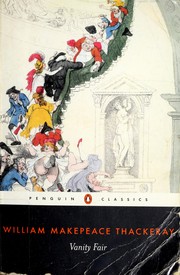
Vanity Fair
2,698-word summary 12 min read 912 pages in the book
- First published
- 1848
- Publisher
- Bradbury and Evans
- Pages
- 912
- ISBN
- 9780141439839
Reading options
What's inside (8 sections)
I put off Vanity Fair for years because of the size. Nine hundred pages of Victorian satire sounded like homework, the kind of book people praise and nobody finishes. Then a rainy week left me stuck indoors, and I finally opened it. By page fifty I was laughing out loud, which I had not expected at all.
The monthly-part origin still shows in the texture. Thackeray wrote most numbers after the earlier ones were already selling, so the story has real cliffhangers built in, including Becky's reveal of her secret marriage to Rawdon, which must have electrified readers waiting a month for the next yellow-covered part. He also drew the illustrations himself, dozens of little woodcuts and full plates, and they are part of the comedy. His grand ladies look absurd on purpose. His heroes slouch. If your edition keeps the pictures, and the Penguin Classics one samples them, slow down for them the way you would for footnotes in a funny friend's letter.
Here are the facts behind this summary. William Makepeace Thackeray published the novel in twenty monthly parts from January 1847 to July 1848, then as a bound volume in London in 1848 through Bradbury and Evans, running to xvi plus 624 pages with his own illustrations. It was the first book he put out under his own name. The edition I followed for page count and cover is the Penguin Classics paperback of 2003, 912 pages, ISBN 9780141439839, with an introduction and notes by John Carey. The full title carries the subtitle A Novel without a Hero, and Thackeray means it. Nobody in these pages is clean enough to admire without flinching.
The book opens with a short address called Before the Curtain. The narrator presents himself as the manager of a puppet show, looking out at the fairground crowd before the play starts. When the story ends, he comes back to shut the box and put the puppets away, with the famous closing lines about vanity and desire. That frame matters. Thackeray keeps stepping on stage throughout, chatting with the reader, judging his own characters, sometimes defending them. Readers who want an invisible storyteller will find him chatty to the point of interruption. I came to enjoy the company, though there were evenings when I wished he would get off the stage and let Becky talk.
Two Girls Leave School
The story starts at Miss Pinkerton's academy for young ladies, where two girls are finishing their education on the same day. Amelia Sedley is sweet, obedient, and rich, the daughter of a prosperous London merchant. Everyone loves her. Becky Sharp is clever, poor, and watchful, the orphaned daughter of a failed artist and a French dancer, kept at the school as a charity pupil who teaches French in return for lessons. Nobody loves Becky, and she knows it.
Becky's farewell is one of the great comic exits in fiction. Miss Pinkerton gives each departing girl a copy of Johnson's Dictionary. Amelia accepts hers with tears. Becky, once the carriage is moving, hurls her dictionary out of the window. It is rude, ungrateful, and completely honest. She has decided that the world's prizes go to people who grab them, and she will not pretend otherwise.
Amelia invites Becky to stay with her family in Russell Square before Becky takes up her post as a governess. There Becky meets Amelia's brother Jos, a stout, shy collector in the Indian service, home on leave, terrified of women, fond of food, drink, and uniforms. Becky goes to work on him at once, singing to him, flattering him, nearly landing a proposal. A drunken night at Vauxhall Gardens ruins it. Jos drinks too much rack punch, makes a fool of himself, and Captain William Dobbin, George Osborne's best friend, hauls him home. Jos sails back to India a bachelor. It is the first of many doors that almost open for Becky and slam in her face, and the pattern never quite stops hurting, even when she brings half of it on herself.
Dobbin deserves a proper introduction, because he carries the moral weight of the whole book. At school he was the awkward grocer's son, bullied and slow with his lessons, and George Osborne, older and golden, once protected him. Dobbin never forgot the debt. He is clumsy in drawing rooms, brilliant on battlefields, and hopelessly in love with Amelia, who treats him like furniture. Old Mr. Osborne and old John Sedley, meanwhile, were neighbors and friends for years, and the George-Amelia match was their joint project back when money made everything simple. Thackeray loves these buried money friendships. Half the disasters in the novel come from men who confused a ledger with a heart.
Ruin, Elopement, and a Secret Marriage
Amelia is engaged to George Osborne, a handsome young officer, vain and selfish in the particular way of good-looking men who have never been refused anything. George's father, old Mr. Osborne, approves while the Sedleys are rich. Then John Sedley speculates badly and is ruined. Old Osborne forbids the match and orders George to marry for money instead. George, to his credit and his doom, marries Amelia anyway, with Dobbin's help. Dobbin loves Amelia himself, hopelessly and silently, and spends half the novel doing favors for a woman who barely notices him while she worships George.
Meanwhile Becky has gone to Queen's Crawley as governess to the daughters of Sir Pitt Crawley, a miserly baronet who counts every candle and writes begging letters to his rich half-sister, Miss Matilda Crawley. The house is full of schemers. Mrs. Bute Crawley, wife of the rector brother, is camped there angling for Miss Crawley's fortune. Becky charms everyone: the children, Sir Pitt, and finally Miss Crawley herself, who carries Becky off to London. Then comes the twist. Becky has secretly married Miss Crawley's favorite nephew, Rawdon Crawley, a dashing young dragoon with no money and no brains for anything but horses, cards, and uniforms. When the marriage comes out, Miss Crawley explodes, disinherits Rawdon, and leaves her fortune to his priggish elder brother Pitt, who marries the gentle Lady Jane Sheepshanks. Sir Pitt himself, widowed by then, actually proposes to Becky, only to learn she has been married to his son for weeks. The scene is farce and heartbreak at once, and Thackeray plays it beautifully.
Give Mrs. Bute Crawley her due as a comic villain. She camps at Queen's Crawley with her brood, flatters the dying, intercepts letters, and still loses everything to Becky's quicker wit. Miss Briggs, Miss Crawley's sentimental companion, and Firkin, her maid, form a whole downstairs comedy of spying and gossiping that Thackeray clearly adored writing. Upstairs, the contrast that matters is between the two brothers. Rawdon is a handsome fool with a kind streak. Young Pitt is a pompous prig stuffed with speeches, but he marries sweet Lady Jane, settles down, and inherits the earth, or at least the Crawley part of it. Thackeray keeps asking which brother got the better deal, and refuses to answer.
Brussels Before Waterloo
Napoleon escapes Elba, and the regiments ship out for Belgium. George, Rawdon, and Dobbin march with them. Amelia and Becky follow their husbands to Brussels. The chapters set in Brussels in June 1815 are the most famous in the book, and they earn it. Panic spreads as the French advance. Rich civilians flee and sell their belongings for nothing. Becky, cool as ice, sells her carriage horses at panic prices and pockets the profit while duchesses weep in the street. It is appalling and magnificent. You disapprove and you admire, which is exactly the response Becky always provokes.
George dies at Waterloo. Thackeray handles it with restraint that surprised me. There is no grand death scene, just absence where a loud young man used to be. Amelia, pregnant, returns to England a widow and builds a shrine to George's memory that lasts for years. She dotes on her son little Georgy and refuses to hear a word against his father. Dobbin, who has loved her since they were young, goes back to India, rises in the service, and quietly sends money to keep Amelia and the boy afloat. He watches from a distance while she wastes her devotion on a dead man who never deserved it. These chapters test the reader's patience on purpose. Amelia's blindness is the point, but living inside it for a hundred pages can feel like being stuck in a room with someone describing a dream.
Brussels also gives us the O'Dowds, and I loved them. Major O'Dowd is a bluff Irish officer and his wife Peggy is a loud, warm, managing woman who mothers Amelia through fear and sickness while the guns sound in the distance. They are the book's proof that ordinary kindness survives inside the vanity fair. Back in England, Amelia sinks into genteel poverty with her ruined parents while little Georgy grows up handsome, spoiled, and adored. Old Osborne, who swore never to forgive, melts for the boy. He takes Georgy up, leaves him money, and is half reconciled to Amelia through the grandchild. It is touching and a little sickening at once, because the old man's love always needed a pretty face to fasten on, and Thackeray knows it.
Paris, Mayfair, and the Marquis of Steyne
Rawdon and Becky settle in Paris after the war, living the way broke fashionable people live: on credit, gambling winnings, and other people's dinners. Rawdon cheats at cards. Becky sings, flirts, and collects admirers. Back in London they climb higher, into the circle of the Marquis of Steyne, a powerful, corrupt nobleman with a red face and a taste for pretty newcomers. Steyne showers Becky with attention, money, and jewels. She is presented at court. She performs Clytemnestra in living-picture charades at Steyne's house and brings the room to its knees. Rawdon struts about, stupidly proud of his brilliant wife, never asking where the money comes from.
The crash, when it comes, is brutal. Rawdon is arrested for debt. He gets word to Becky, who is sitting on funds from Steyne and does nothing. Freed through others, he hurries home and finds Steyne alone with Becky late at night, with diamonds glittering on her that no husband's pay could buy. Rawdon strikes the nobleman, gathers up his little son, and walks out of his wife's life. Steyne, furious and vengeful, arranges for Rawdon a colonial governorship on Coventry Island, a fever-ridden post. Rawdon dies there of yellow fever within a couple of years. Whether Becky was fully Steyne's mistress or only playing a dangerous game for money, Thackeray refuses to settle. He leaves the worst of it in shadow, which is crueller than any plain accusation.
Do not miss what happens to the children while the adults glitter. Becky mostly ignores her own small son, little Rawdon, who is left to servants and then effectively adopted by the kindness of Lady Jane and his uncle Pitt. Rawdon senior, for all his faults, loves the boy fiercely, and their parting scenes are the only moments that crack his cheerful shell. In Paris the couple's whole life runs on the card table. Rawdon plays, and cheats, and wins just often enough to keep the lodgings paid. Becky converts admiration into dinners, dresses, and diamonds. Thackeray, who knew that world from journalism, describes the economics of fashion with an accountant's eye: who owes whom, what the dinner cost, how the carriage was hired and never paid for. It is the least romantic account of glamour I have ever read, and the truest.
Pumpernickel and the Letter
Becky drifts across Europe after Rawdon leaves her: gambling towns, cheap lodgings, card tables, always surviving, always sinking a little lower. Years pass. Amelia, Dobbin, Jos (grown enormously fat and timid), and little Georgy end up taking the waters at Pumpernickel, a small German ducal town. Becky surfaces there too, shabby but undefeated, and attaches herself to the party. Jos, who never got over his youthful infatuation, is putty in her hands again.
Then Becky does the one genuinely generous thing of her life, from mixed motives as always. She shows Amelia a letter George wrote to her days before Waterloo, begging Becky to run away with him. Amelia has spent a decade worshipping a faithful hero. The letter proves the hero was offering to abandon her within weeks of their wedding. It breaks the spell. Amelia is finally free to see Dobbin, who has loved her for fifteen years and has just about given up. They marry. It should feel like a happy ending, and partly it does, but Dobbin knows he has won a tired heart, and Thackeray will not pretend otherwise.
Becky's own ending is darker. She talks the foolish Jos into insuring his life for a large sum, and Jos dies soon after in circumstances Thackeray leaves deliberately unclear. Did she kill him? The narrator raises the question sideways and moves on, which left me cold in a way no open accusation could. Becky lives on comfortably and almost respectably afterward, doing charity work and going to church. The fair goes on. The puppets are put away. Nobody got what they wanted, or found it satisfying when they did.
Thackeray gives the last word to his manager, and it is worth quoting because the whole book folds into it: "Ah! Vanitas Vanitatum! which of us is happy in this world? Which of us has his desire? or, having it, is satisfied? come children, let us shut up the box and the puppets, for our play is played out." Dobbin gets Amelia at last, but he knows, and she half knows, that he has married a woman whose best love was spent on a ghost. Becky survives, which is her talent and her curse. Jos is dead. George is a name on a memorial. I closed the book feeling wrung out rather than uplifted, and then I kept thinking about Becky for days, which tells you who really runs this show.
What Drags and What Lasts
Honest criticism first. The book is too long, and not in a way I can wave away. There are stretches, especially around Amelia's widowhood and Dobbin's Indian service, where the story treads water. Thackeray's narrator intrudes constantly, lecturing, apologizing, nudging the reader with asides. Modern readers used to clean third-person storytelling may find him exhausting. Amelia herself is the hardest sell. Her goodness is real but passive, and hundreds of pages of her meek suffering can feel like being asked to admire a puddle. The book also carries the prejudices of its time in places, and a few minor characters are drawn with a coarseness that stings now.
Set against that: Becky Sharp is one of the great creations in English fiction, funny and frightening in equal measure, and more alive than anyone else in the book. The Waterloo chapters are masterful. The social observation still cuts, because vanity fairs keep opening in every generation with new stalls. And the ending refuses cheap comfort, which I respected more the longer I sat with it.
Two bits of context helped me. The title comes from Bunyan's Pilgrim's Progress, where Vanity Fair is a fairground town of worldly temptation on the pilgrim's road. Thackeray's joke is that his characters never leave the fair. And readers at the time measured him against Dickens, his great rival. Dickens gives you warmth and villains you can hiss. Thackeray gives you a mirror and then stands beside you watching you look into it. If Dickens is your favorite, Thackeray can feel cold at first. Stick with Becky. She is the fire in the cold room.
How to read it. Do not binge. Thirty or forty pages a day, like the original monthly readers, lets the slow parts breathe and the sharp parts land. Keep a light grip on the minor Crawleys, since Thackeray reuses names across generations and it is easy to mix up the Pitts. And when the narrator starts moralizing, treat him as another character at the fair, shouting from his booth. He is selling something too.
FAQ
When was Vanity Fair published and which edition does this summary follow?
Thackeray issued it in monthly parts from January 1847 to July 1848, then as a bound volume through Bradbury and Evans in 1848. This summary follows the Penguin Classics paperback of 2003, 912 pages, ISBN 9780141439839.
Is Vanity Fair part of a series?
No. It stands alone, subtitled A Novel without a Hero. Thackeray wrote other novels about similar society, but Becky and Amelia's story begins and ends here.
Is Becky Sharp the villain?
She is closer to an anti-heroine. She schemes, lies, and uses people, yet she is also the bravest and funniest mind in the book, and Thackeray keeps the worst accusation against her deliberately unclear.
Similar books
The House of Mirth
Lily Bart, beautiful and penniless at twenty-nine, navigates New York's marriage market until a Dorset yacht scandal strips her of the only currency she has.
2,468-word summary · 11 min read
Middlemarch
Idealistic Dorothea marries dry scholar Casaubon while ambitious doctor Lydgate marries Rosamond, and a Midlands town watches both marriages strain.
2,883-word summary · 13 min read
Trust
Four rival accounts of one Wall Street fortune collide: a 1930s novel, a tycoon's memoir, a secretary's story, and a wife's diary.
2,217-word summary · 10 min read
Anna Karenina
Anna leaves Karenin for Vronsky while Levin seeks faith and farming outside Moscow.
3,942-word summary · 18 min read

The Long Winter
Dakota Territory, 1880: seven months of blizzards cut a town off from the railroad, and a family survives on twisted hay, ground wheat, and a dangerous wheat…
2,210-word summary · 10 min read

The Crying of Lot 49
A California woman named executor of her ex-lover's estate follows a muted post horn into a possible centuries-old postal conspiracy, and Pynchon refuses to…
2,003-word summary · 9 min read

Revolutionary Road
A Connecticut couple who believe they are too good for the suburbs plan to move to Paris, and the plan slowly exposes everything they cannot say to each other.
2,085-word summary · 9 min read

Little Town on the Prairie
In the spring after the Long Winter, fifteen-year-old Laura sews shirts, studies for a teaching certificate, and helps send her blind sister Mary to college.
2,071-word summary · 9 min read

Howards End
Forster's 1910 novel follows two families, a house in Hertfordshire, and a burned note, asking whether money and feeling can ever be connected.
2,187-word summary · 10 min read
The Boleyn Inheritance
Three women narrate Henry VIII's fourth and fifth marriages: a foreign bride who survives, a teenage queen who does not, and the widow who opens the door.
2,391-word summary · 11 min read
The Agony and the Ecstasy
Irving Stone turns Michelangelo's seventy years of carving, painting, and arguing with popes into a novel about the cost of making something that outlives you.
2,260-word summary · 10 min read

Sophie's Choice
A young Southern writer in 1947 Brooklyn befriends a brilliant, unstable couple and slowly learns the story of the Polish Catholic woman at the center of their…
2,798-word summary · 12 min read
Naked Lunch
Burroughs's banned 1959 collage novel follows Bill Lee through addiction, Tangier, and the nightmare bureaucracy of the Interzone.
2,082-word summary · 9 min read

Ivanhoe
A disinherited Saxon knight, a great tournament, a besieged castle and a trial by combat. Scott's most famous novel, set in England in 1194.
2,834-word summary · 13 min read
Wide Sargasso Sea
Jean Rhys gives the first Mrs. Rochester a Caribbean childhood, a marriage built on money and suspicion, and a voice that Charlotte Bronte left in the attic.
2,021-word summary · 9 min read
The Sisters Brothers
Two hired killers ride from Oregon to Gold Rush California to murder a prospector, and find their trade, their brotherhood, and the frontier myth coming apart.
2,095-word summary · 9 min read
The Last of the Mohicans
During the French and Indian War, Hawkeye and two Mohican warriors try to save two British sisters from a Huron chief whose revenge will end the Mohican line.
2,017-word summary · 9 min read
The Gift of the Magi
A young couple with almost no money each sells the thing they treasure most to buy a Christmas present for the other.
1,978-word summary · 9 min read
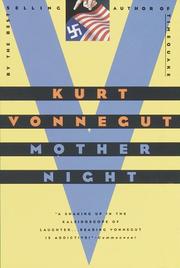
Mother Night
Howard W. Campbell Jr., a Nazi propagandist and American spy, tells the story of his double life from an Israeli prison cell while waiting to be tried for war…
1,988-word summary · 9 min read
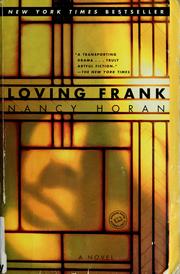
Loving Frank
Mamah Borthwick Cheney leaves her family for Frank Lloyd Wright, and their affair becomes a public scandal that ends in tragedy at Taliesin.
2,034-word summary · 9 min read
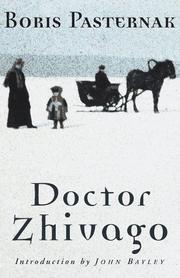
Doctor Zhivago
A doctor and poet lives through revolution, war, and love in Pasternak's novel of private life under the pressure of Russian history.
2,213-word summary · 10 min read
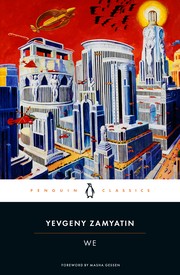
We
In a city of glass ruled by the Benefactor, a state engineer building a spaceship falls for a woman who wants to tear the One State down.
2,247-word summary · 10 min read
If on a Winter's Night a Traveler
You, the Reader, chase a defective novel through bookshops and translators while ten other novels keep interrupting. Calvino's famous puzzle about the act of…
2,173-word summary · 10 min read
On the Banks of Plum Creek
The Ingalls family trades their horses for a dugout on Plum Creek and bets a single wheat harvest on a house above ground, in Wilder's fourth Little House book.
2,090-word summary · 9 min read
A Connecticut Yankee in King Arthur's Court
Hank Morgan, a Connecticut factory man, wakes in King Arthur's England, rises to chief adviser, and rebuilds the kingdom until his own inventions turn on him.
2,193-word summary · 10 min read
The Red Badge of Courage
Henry Fleming runs at Chancellorsville, then returns to stand.
2,486-word summary · 11 min read
Bleak House
Jarndyce and Jarndyce grinds through Chancery while Esther finds her family.
2,480-word summary · 11 min read
Anne's House of Dreams
Newlyweds Anne and Gilbert start in a seaside house with kind neighbors.
2,465-word summary · 11 min read
Song of Solomon
Milkman Dead leaves Michigan to hunt for family gold and finds instead the old song of his ancestor Solomon.
2,465-word summary · 11 min read
The Dispossessed: An Ambiguous Utopia
Physicist Shevek leaves anarchist Anarres for capitalist Urras to share time theory, finding walls both places.
2,288-word summary · 10 min read