
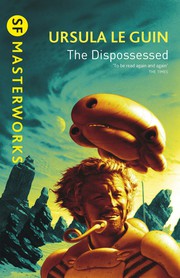
The Dispossessed: An Ambiguous Utopia
2,288-word summary 10 min read 341 pages in the book
- First published
- 1974
- Publisher
- Harper & Row
- Pages
- 341
- ISBN
- 9780060125639
Reading options
What's inside (6 sections)
I put off The Dispossessed for years because anarchist utopia sounded like homework, then read it in four days with a pencil down. Ursula Le Guin's 1974 novel, 341 pages, follows physicist Shevek from the moon Anarres to the planet Urras to share a theory that could unmake walls. It won Hugo, Nebula, and Locus by being both ideas and people. Physics with homesickness. Revolution with dishes to wash.
Shevek on Anarres
Shevek grows on Anarres, dry moon settled 170 years earlier by Odonians who left Urras to live without property or government. Children learn to share handkerchiefs rather than borrow, to ask the DivLab for work rather than apply for jobs, to take what you need and give what you can. No laws, but strong customs that function as law without admitting it. Shevek, bright and odd, shows early gift for temporal physics. Numbers as music. Teachers praise and warn. Praise for insight. Warning not to egoize by claiming credit. He internalizes both and chafes. Wanting to be named for work feels selfish in a world that says self is illusion. Yet desire persists.
Love arrives through Takver, fierce girl who becomes partner through work crews and drought. They share tents, fish, a daughter Sadik, and arguments about whether to have a child when food is short. Their bond is the book's warmest argument for Anarresti life. Free love without jealousy scripts, though jealousy still stings. Partnership as ongoing negotiation rather than vow. When Shevek later goes to Urras, their letters carry ache without possessiveness. Come back if you can. Live well if you cannot. That generosity is Odonian at its best and hardest to practice when beds are cold.
Work shapes all. During drought Shevek does farm labor in desert dust for four years instead of physics because society needs hands. He resents and also learns. Hunger teaches solidarity better than slogans. Sabul, senior physicist who controls publishing, blocks Shevek's work for years from jealousy disguised as collective review. That blockage reveals Anarres's flaw. No bosses in theory, but old men with files become bosses in fact. Custom hardens into power without title. Shevek's decision to go to Urras comes not from rejecting Anarres but from believing his theory belongs to all worlds and cannot grow under Sabul's gatekeeping. Leave to share, not to escape. That distinction matters to him though others call it treason.
What I loved is daily life detail that makes utopia concrete rather than brochure. Kitchens where meals are taken together with menus decided by lottery. Dorms where privacy is curtain, not wall. Work crews that sing while digging. Children who build a prison as game and are horrified to learn what it was for. Le Guin, daughter of anthropologists, builds culture through small rites. Language Pravic that discourages possessives. Say the handkerchief I use, not mine. Those linguistic nudges shape thought without forcing. You feel how hard and good it would be to live there while seeing why a restless physicist might suffocate.
Urras dazzles and disgusts
Urras, twin planet of blue seas and plenty, overwhelms Shevek after desert rations. A-Io, capitalist superpower where he guests at university, offers private rooms with doors that lock, rich food, women in soft clothes, students who call him sir. He enjoys hot showers and hates himself for enjoying while Anarres rations water. Hosts parade him at parties where physicists want his theory for faster than light ships and weapons. He lectures, drinks too much wine that fells him fast after abstinence, and wakes in silk sheets feeling soiled by comfort. Le Guin writes his disorientation with bodily precision. Gravity slightly different aching knees. Smells of meat and perfume nauseating after dust. Plenty as shock.
University politics mirror Sabul with better funding. Physicists flatter, delay publication, and maneuver to own his General Temporal Theory. They offer labs, assistants, and a house if he stays and patents through them. He wants open sharing to all worlds via ansible, instant communication device his math enables. They want property. His public denunciation at a dinner, drunk and furious at materialism, alienates hosts who paid for wine. A disastrous sexual encounter after, with a woman who expects payment he does not understand, deepens shame. He flees to an underground syndicate of anarchists on Urras who hide in shadows. There he joins a protest in Nio Esseia that troops crush with gas and bullets. Blood on pavement teaches what Anarres drought taught differently. States kill to keep plenty for few.
Benbili war in background, A-Io invading Thu backed revolutionaries, shows Urras exporting violence while preaching order. Shevek sees photos of dead children that match drought dead on Anarres though causes differ. One from scarcity, one from plenty hoarded. Both dead all the same. That equivalence complicates easy preference for either world. Urras has hospitals and music, Anarres has solidarity and hunger. Neither is utopia without ambiguity, hence subtitle. Le Guin refuses to pick. She shows a physicist learning that physics without ethics builds ships for bombers. Decide who gets theory by giving to all at once through Terrans at the embassy. That beam, sent to every world including Anarres, is the book's hopeful act. Knowledge as commons rather than property. True journey is return with gift shared, not owned.
Return with ansible
The final flight on the Davenant with Hainish crew frames return as beginning rather than end. Ketho, Hainishman who sympathizes with Odonian thought, asks to disembark on Anarres though outsiders are unwelcome. Shevek, unsure if home will welcome a traitor, agrees to vouch while fearing walls of custom thicker than spaceport's low wall that opens the book. That wall, the only place on Anarres with No Trespassing signs, symbolizes the whole dilemma. Keep out corrupting influence or lock selves in. Shevek crossed it leaving to angry mob that tried to stop. Crossing back will test whether leaving to share was betrayal or fidelity to Odonian sharing itself.
Ansible theory needs a plain gloss because Le Guin weaves math through story without equations. Simultaneity principles argue time as deeper than sequence, allowing instant connection across distance if minds accept signal. In plot terms, a device that lets worlds talk without ships that take years. In theme terms, proof that separation is illusion maintained by power that profits from delay. If Anarres and Urras can speak instantly, they must answer each other now rather than mythologize across silence. Shevek's gift forces conversation empires fear. That is why both Sabul and Urrasti patrons try to own it. Who controls the phone controls revolution. Give everyone the phone and walls fall as surely as spaceport's low barrier stepped over.
Ketho's request to join Anarres closes the book outward rather than inward. Not return to same, but return with stranger who chose. Anarres, often insular despite universalist rhetoric, must decide if it welcomes. Shevek, once chose to leave, now chooses to bring. That choice models utopia as process, not place. Keep crossing walls both ways. Share handkerchiefs and theories. Wash dishes after feasts. The last image of ship descending with two figures at viewport, one returning, one arriving, holds hope without promising success. They may be met with stones or songs. Either way, they go together, which is more Odonian than either going alone. I closed feeling both wrung and steadied, as after good argument with friends who want better worlds and know the cost in daily labor.
Read it if you like science fiction that thinks while feeling, if you argue about anarchism versus order, or if you want one of few books to win Hugo, Nebula, and Locus for reasons that still hold. At 341 pages it demands patience with alternating chapters that flip past and present. Keep the timeline card. Chapters 2,4,6 Anarres past, odds Urras present. Trust the structure to converge on the wall where it started. Step over with Shevek carrying theory like bread to share. Eat together. That is the ambiguous utopia. Not perfect place, but practice of sharing across walls built and rebuilt daily.
Takver, Sadik, and love as work
Takver, partner and mother of Shevek's child, deserves more than supporting status though the book centers him. Fierce fish biologist who chooses postings in hardship zones, funny about bodily functions, loyal without possessiveness. She loves Shevek through long absences for physics and drought labor, without demanding he choose her over work. Letters between cities on Anarres and later across worlds carry erotic charge built on shared jokes about bad food rather than longing speeches. When Shevek leaves for Urras, she stays with daughter Sadik, working and waiting without martyrdom. I will live well if you return and if you do not, she writes in effect. That independence makes their bond stronger than vows. Love as ongoing choice rather than contract is Odonian at its most attractive and hardest to practice when beds are cold for years.
Sadik, daughter born during scarcity, grows through the book from baby to girl who tells father he can share her handkerchief rather than borrow. That line, small and perfect, shows Pravic language shaping thought toward commons. She learns to share without being taught to possess first, a reversal of Urrasti childhoods where toys are mine before sharing is virtue. Her questions to Shevek about Urras, why do they lock doors, why do children own rooms, expose strangeness of property to fresh eyes. Through her, Le Guin defamiliarizes normal for readers who lock without thinking. What if sharing were default and locking required explanation. How would childhood feel. Sadik answers by living it with seriousness kids bring to rules adults forget are made up.
Rulag, Shevek's mother who left him young to work on engineering projects, adds uncomfortable note about Odonian motherhood that feminists debate. She chose work over raising, visiting rarely, arguing society raises children better than possessive parents. Shevek resents and admires in turns. Takver chooses differently, keeping Sadik close while working, proving Odonianism allows both paths. The contrast avoids prescribing one maternal model as correct. Some mothers leave to build dams. Some stay to teach tides. Both can be good if chosen freely and supported communally. That pluralism is the book's feminism at its best, often missed by critics who want heroines centered over heroes. Le Guin centers a male physicist to show how even he needs mothers, lovers, and daughters to think. Care enables theory though theory pretends alone. Remember who washed dishes while Shevek derived. Takver did, and the book says so without footnotes.
Bedel? No,Odo, founder long dead, hovers through sayings on walls and children's lessons. Her writings on mutual aid, read aloud in schools, sound noble until Shevek finds followers quoting to block change. Scripture as cage is a warning Le Guin includes for anarchists tempted by canon. Even Odo would revise, friends insist. That humility about founders keeps utopia critical rather than cultish. Question Odo as she questioned all. The book models that by letting Shevek argue with her lines in his head while walking to walls. Think with founders, not for them. Leave when sharing demands it, return when sharing calls back. That motion is the ambiguous utopia in practice, not place but coming and going for good reasons weighed daily.
Takver, partner and mother of Shevek's child, deserves more than supporting status though the book centers him. Fierce fish biologist who chooses postings in hardship zones, funny about bodily functions, loyal without possessiveness. She loves Shevek through long absences for physics and prison? No, for drought labor, without demanding he choose her over work. Letters between planets? Actually between cities on Anarres and later across worlds carry erotic charge built on shared jokes about bad food rather than longing speeches. When Shevek leaves for Urras, she stays with daughter Sadik, working and waiting without martyrdom. I will live well if you return and if you do not, she writes in effect. That independence makes their bond stronger than vows. Love as ongoing choice rather than contract is Odonian at its most attractive and hardest to practice when beds are cold for years.
Sadik, daughter born during scarcity, grows through the book from baby to girl who tells father he can share her handkerchief rather than borrow. That line, small and perfect, shows Pravic language shaping thought toward commons. She learns to share without being taught to possess first, a reversal of Urrasti childhoods where toys are mine before sharing is virtue. Her questions to Shevek about Urras, why do they lock doors, why do children own rooms, expose strangeness of property to fresh eyes. Through her, Le Guin defamiliarizes normal for readers who lock without thinking. What if sharing were default and locking required explanation. How would childhood feel. Sadik answers by living it with seriousness kids bring to rules adults forget are made up.
Bedel? No, Rulag, Shevek's mother who left him young to work on engineering projects, adds uncomfortable note about Odonian motherhood that feminists debate. She chose work over raising, visiting rarely, arguing society raises children better than possessive parents. Shevek resents and admires in turns. Takver chooses differently, keeping Sadik close while working, proving Odonianism allows both paths. The contrast avoids prescribing one maternal model as correct. Some mothers leave to build dams. Some stay to teach tides. Both can be good if chosen freely and supported communally. That pluralism is the book's feminism at its best, often missed by critics who want heroines centered over heroes. Le Guin centers a male physicist to show how even he needs mothers, lovers, and daughters to think. Care enables theory though theory pretends alone. Remember who washed dishes while Shevek derived. Takver did, and the book says so without footnotes.
FAQ
When was The Dispossessed published?
Harper and Row published it in 1974. The first hardcover runs 341 pages and won Hugo, Locus, and Nebula.
What does the subtitle mean?
An Ambiguous Utopia, Le Guin's subtitle for the anarchist moon versus capitalist planet comparison.
What invention matters?
The ansible, instant communication device whose theory Shevek carries to all worlds at the end.
Similar books

Foundation's Edge
Exiled councilman Golan Trevize hunts for the Second Foundation and the lost world of Earth, and finds a planet with one mind waiting to change the galaxy.
2,335-word summary · 10 min read

Fathers and Sons
Arkady brings the nihilist Bazarov home to his father's estate, and a generational argument turns into love, a duel, and an early death.
2,192-word summary · 10 min read

Out of the Silent Planet
A Cambridge philologist is kidnapped and taken to Mars, where the natives are civilized and the humans are the dangerous invaders.
2,612-word summary · 12 min read
We
In a city of glass ruled by the Benefactor, a state engineer building a spaceship falls for a woman who wants to tear the One State down.
2,247-word summary · 10 min read

A Canticle for Leibowitz
After nuclear war, monks save books across centuries while the world rebuilds and falls again.
2,381-word summary · 11 min read

Solaris
Kelvin reaches a silent station above Solaris and finds grief made solid when the ocean returns his dead wife Rheya, testing memory, science, and the limits of…
2,548-word summary · 11 min read

The Island of Doctor Moreau
Shipwrecked Prendick finds Doctor Moreau shaping beasts into men by pain on lost island.
2,137-word summary · 9 min read
God Emperor of Dune
Worm god Leto II rules 3500 years to force humanity free through his Golden Path.
2,006-word summary · 9 min read

Childhood's End
Silver ships end war and want while Overlords midwife humanity's children into something beyond human.
2,054-word summary · 9 min read
21 Lessons for the 21st Century
Twenty one essays on work, liberty, truth, and meaning when algorithms flood the world with noise.
2,101-word summary · 9 min read

The Communist Manifesto
Marx and Engels trace class struggle from bourgeoisie to proletarians, review rival socialisms, and close with a call to opposition parties. Notes on the 1848…
2,570-word summary · 11 min read
The Republic
Socrates debates justice and sketches a city ruled by philosophers, with the cave and the soul.
2,167-word summary · 10 min read
The Man in the High Castle
In a 1962 America split between Japan and Germany, an antiques dealer, a craftsman, and a judo teacher cross paths over a banned novel claiming the Allies won,…
2,317-word summary · 10 min read
Children of Dune
Leto and Ghanima, Paul's twin children, face plots and prophecy on Arrakis as the desert and the empire change.
2,433-word summary · 11 min read
Starship Troopers
Rico earns citizenship through Mobile Infantry drops against Bugs.
2,071-word summary · 9 min read
Hyperion
Seven pilgrims cross Hyperion telling tales of faith, war, and time while the Shrike waits at the Tombs.
1,996-word summary · 9 min read
Stranger in a Strange Land
A Mars-raised man lands on Earth, learns religion and love, and founds a church that shocks everyone.
2,725-word summary · 12 min read

The Prince
Machiavelli advises Lorenzo on rule through fear and love, fortune, cruelty and mercy.
2,204-word summary · 10 min read

Dune Messiah
Emperor Paul faces jihad fallout as Bene Gesserit and Tleilaxu plot with ghola Duncan to break him.
2,593-word summary · 12 min read
The Unbearable Lightness of Being
Surgeon Tomas loves Tereza yet keeps mistresses, while artist Sabina and professor Franz test freedom around the 1968 Soviet invasion of Prague.
2,427-word summary · 11 min read

Do Androids Dream of Electric Sheep?
Bounty hunter Rick Deckard retires escaped androids in ruined San Francisco while doubting what empathy still means.
2,841-word summary · 13 min read

The Handmaid's Tale
Atwood's The Handmaid's Tale retold: Offred in Gilead, the Commander, Serena Joy, Mayday, and the van.
2,369-word summary · 11 min read
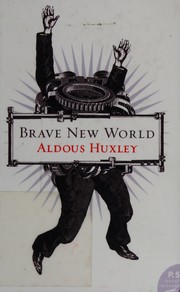
Brave New World
Huxley's Brave New World retold: hatcheries, soma, Bernard and Lenina, John the Savage, and the lighthouse.
2,513-word summary · 11 min read
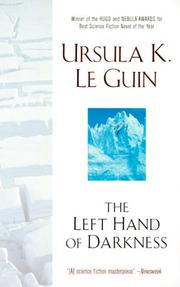
The Left Hand of Darkness
Envoy Genly Ai lands on icebound Gethen, where fluid gender upends his assumptions, and crosses a glacier with Estraven.
2,268-word summary · 10 min read
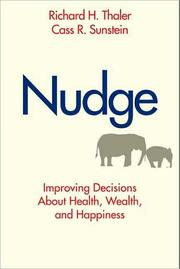
Nudge: Improving Decisions About Health, Wealth, and Happiness
Thaler and Sunstein show how defaults, framing, and social cues steer choices, and argue for choice architecture with an opt-out.
3,146-word summary · 14 min read

Heretics of Dune
Fifteen centuries after Leto II, the Bene Gesserit raise a new Duncan Idaho while the Honored Matres return and Rakis burns.
2,673-word summary · 12 min read
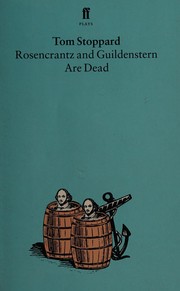
Rosencrantz and Guildenstern Are Dead
Stoppard's 1966 play retells Hamlet from the wings, where two minor courtiers wait, joke, and walk toward a death they cannot see.
2,021-word summary · 9 min read
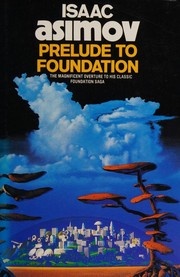
Prelude to Foundation
A young Hari Seldon arrives on Trantor with a theory he cannot yet prove, and a hunt through the planet-city forces him to turn psychohistory into a real…
2,013-word summary · 9 min read
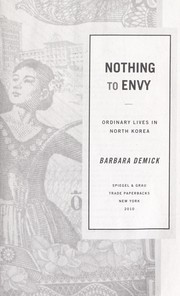
Nothing to Envy
Barbara Demick follows six defectors from Chongjin through the North Korean famine, showing how ordinary people lived, believed, and finally left.
2,068-word summary · 9 min read