
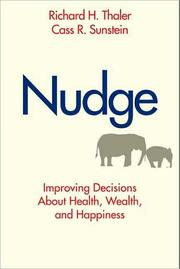
Nudge: Improving Decisions About Health, Wealth, and Happiness
3,146-word summary 14 min read 304 pages in the book
- First published
- 2008
- Publisher
- Yale University Press
- Pages
- 304
- ISBN
- 9780300122237
Reading options
What's inside (10 sections)
- The lunch line is a policy
- Two systems, one predictable mess
- The planner, the doer, and the herd
- Libertarian paternalism, and the toolkit
- Money: enrollment, escalation, and the 1/n trap
- Health, organs, and the planet
- Schools, lawsuits, and marriage
- The objections, and what the book gets wrong
- Key takeaways
- FAQ
The lunch line is a policy
Carolyn runs food service for a large city school district. She has a master's in nutrition and hundreds of thousands of kids to feed. One night a friend who designs supermarket layouts suggests an experiment: keep the menus identical, but change where things sit. Desserts first in some schools, last in others. Fries at eye level here, carrot sticks there. Moving food around changed consumption of individual items by as much as 25 percent.
Carolyn, whom the authors admit they invented, cannot choose whether to arrange the food. Some order has to exist. The only question is which order, and who it serves. Anyone who designs that order is a choice architect, and choice architecture is unavoidable: ballots, benefit forms, menus, web pages.
A nudge is any part of that architecture that changes behavior predictably without forbidding options or changing prices much. Put the fruit where the candy was. Make the good choice the default and let people opt out. If you threaten a fine or remove an option, it is not a nudge. It is a shove, and they spend a chapter later insisting on the difference.
Published by Yale University Press in 2008, the book arrived as behavioral economics was moving from seminar rooms into government offices. Thaler was at Chicago; Sunstein was at Harvard Law. Their argument is that the choice is never between nudging and not nudging. It is between nudging by accident, on behalf of whoever designed the form, and nudging on purpose, with some public account of why.
Two systems, one predictable mess
They borrow the language of dual-process psychology: an Automatic System that is fast, associative, and effortless, and a Reflective System that is slow, deliberate, and easily tired. You duck a thrown ball with the first. You compare two mortgages with the second, or you try to.
The early chapters tour the ways the Automatic System fails in patterned ways. Anchoring: estimates start from a nearby number and adjust too little. Ask about the population of Milwaukee after priming people with Chicago and their guesses drift up; ask after Green Bay and they drift down. Order matters in surveys too. Ask "How happy are you?" before "How often do you date?" and the second answer colors the first.
Availability: we judge frequency by what comes to mind easily. After an earthquake, earthquake insurance sells; a few years later it does not. Homicides feel more common than suicides because they are covered more. Representativeness: we mistake a good story for a likely one, which is why basketball fans see a player get hot in a random run of shots.
Optimism gets its own paragraph. Most people think they are above-average drivers and more likely than average to stay married. MBA students asked which decile they will finish in put themselves near the top; hardly anyone expects to land below the median. That is not simple vanity. It changes what risks people take.
Loss aversion gets more. Losing something stings roughly twice as much as gaining the same thing pleases. That asymmetry produces the endowment effect, the finding that people demand more to give up an object than they would pay to acquire it, and, more importantly, inertia. Change requires giving something up, so we do not change. The status quo becomes sticky for reasons unrelated to its merits.
Framing finishes the job. A surgeon who says "ninety of a hundred patients are alive after five years" gets more consent than one who says "ten of a hundred are dead," though the statements are identical. The Automatic System reacts to the frame. The Reflective System would have to translate.
None of this makes people stupid. It makes them busy. That distinction is the moral center of the book.
The planner, the doer, and the herd
The self-control chapter splits the self into a Planner who cares about the future and a Doer who wants the thing now. The Planner buys the gym membership. The Doer takes the elevator. The Doer often wins not because temptation is strong but because attention is elsewhere.
The popcorn study is the cleanest illustration. Moviegoers got free popcorn, some in medium buckets and some in large. The popcorn was stale. It did not matter. People with the large bucket ate about 53 percent more and did not report enjoying it more. A bottomless soup bowl made the same point: diners ate from a bowl that quietly refilled and underestimated how much they had eaten. We use the plate and the package as a stop signal.
The remedy is not always willpower. Sometimes it is a precommitment device. The book likes Clocky, an alarm clock that runs away so you cannot hit snooze. It likes casino self-bans and separate accounts for rent and for fun. These are not elegant. They work because they put a decision out of reach of the version of you who will be awake at midnight.
Social influence gets a chapter. Solomon Asch's line experiments are the anchor: people endorse an obviously wrong answer about which of three lines matches a target when a roomful of confederates has already endorsed it. Other people's choices give us information, as if they know something we do not. They also exert pressure, because we do not want to look like a fool.
The energy bill example is the one I remember. Households were told how much electricity they used and how it compared with their neighbors. Heavy users cut back. Light users, told they were already below average, used more, a boomerang. When the utility added a smiley face for below-average use and a frowny face for above-average use, the heavy users cut back even more and the light users stopped drifting up. Information alone was not enough. A mild social judgment was.
Priming appears too: a whiff of cleaning fluid makes people tidier, and students asked to plan when they will get a tetanus shot are more likely to go. Context reaches behavior through channels we do not monitor.
Libertarian paternalism, and the toolkit
"Libertarian paternalism" is meant to sound like a contradiction and then stop sounding like one. Paternalistic, because the designer is trying to make your life better, not merely to give you options. Libertarian, because you can opt out, and no option is removed.
The authors are careful about when this is justified. Nudges make sense for choices that are rare, hard, poorly feedbacked, or badly mapped onto what we care about. A mortgage, a Medicare plan, or a retirement contribution fits all four. A sandwich does not need a philosopher. They also concede that markets can exploit the same biases. If consumers believe a useless product works, someone will sell it. Competition does not necessarily discipline bad architecture. Sometimes it rewards it.
The design vocabulary arrives in an acronym the authors seem pleased with: NUDGES. Incentives (who uses, who chooses, who pays, who profits), Understand mappings, Defaults, Give feedback, Expect error, Structure complex choices. The acronym is occasionally forced, but the pieces are useful.
Defaults are the workhorse. They matter because of inertia, and because people read a default as advice. A well-designed default is not neutral, and pretending otherwise is the book's repeated complaint. Error tolerance is the other: the ATM that returns your card before dispensing cash, the email program that asks whether you meant to attach a file. Good architecture assumes the user will be distracted, because the user will be.
The famous small example is a housefly etched into the urinals at Schiphol Airport in Amsterdam. Men cannot resist aiming at a target, and spillage reportedly fell by about 80 percent. Nobody was fined. Nobody lost the right to aim elsewhere.
They also propose RECAP: Record, Evaluate, and Compare Alternative Prices. The point is not to cap prices but to force complex products to disclose a single, comparable number. If a mortgage has six fees, add them up and show the total in a format a normal person can use.
Money: enrollment, escalation, and the 1/n trap
Part II is where the book stops being a psychology tour and becomes a policy brief. It is also where the evidence is strongest.
Defined-benefit pensions, where the employer carries the risk, gave way to defined-contribution plans, where the employee does. That shift transferred a decision to people who mostly did not ask for it. Enrollment forms arrived during orientation, and many workers never filled them out. In the study the book cites, participation among new hires at a large company went from about 37 percent to about 86 percent after automatic enrollment, with the same plan and the same employer match. Nothing about the economics changed. The default did.
If a form can move participation by 49 percentage points, the form is not a detail. That result is the engine of the book's argument.
The follow-up is Save More Tomorrow, designed with Shlomo Benartzi. Employees commit in advance to putting part of each future raise into savings. They never see the money as take-home pay, so the increase does not feel like a loss. In the first implementation, 78 percent of those offered the plan joined, 80 percent of those who joined stayed through the fourth raise, and average savings rates for participants rose from 3.5 percent to 13.6 percent over forty months. The authors admit this was not a randomized trial and that self-selection is a problem, though they argue the pattern is hard to explain away.
Naive investing comes next. Even financial economists, asked to split money between two funds, tend to go fifty-fifty. The 1/n heuristic is not a strategy. It is a way of avoiding one. Worse, the menu determines the allocation. Offer a stock fund and a bond fund and people end up half in stocks. Offer a stock fund and a balanced fund and they end up mostly in stocks, because they split evenly. The number of stock funds in a plan predicts how much employees put in stocks. That is not a preference. It is a design artifact.
Company stock gets a warning. Employees already depend on the employer for a paycheck, then put their retirement in the same place. Enron is the obvious case, and the book uses it. The fixes are unglamorous: diversified defaults, target-date funds, automatic rebalancing, and a cap on company stock.
The credit chapter reads like a message from before the flood. It describes teaser rates, interest-only mortgages, prepayment penalties, and brokers paid for volume rather than for matching a borrower to a loan. The authors do not say subprime lending is inherently bad. They say it can be a second chance and also a trap. Their fixes are disclosure and simplification: a single number for total cost, a clear statement of what the payment becomes when the teaser ends, and independent comparison tools. The book was published in April 2008. It does not contain the collapse, and it is eerie to read the diagnosis without the ending.
Sweden's partial privatization of social security supplies the cautionary tale. The government let people pick among hundreds of funds, with a default for those who did not. Most people picked the default, which was sensibly designed and cheap. Active choosers did worse on average: they concentrated in Swedish stocks, chased past returns, and paid higher fees. More choice did not produce better portfolios. It produced more confident ones.
Health, organs, and the planet
Medicare Part D, the prescription drug benefit passed in 2003, gave seniors a menu of private plans and, for people who did not choose, assigned them at random. The authors are not against the menu. They are against the random assignment and the absence of help. A person with diabetes and five prescriptions needs a plan that covers those drugs. A random plan may not.
Their alternative is intelligent assignment: use the drug histories the government already has to place people in a plan that covers what they take, then tell them clearly that they can switch. It uses information rather than removing choice. They also want the comparison website to be usable, which sounds small until you try to use one.
Organ donation is the chapter people quote. In the United States, consent is opt-in: you have to register, usually at the driver's license office, and only about 28 percent of people do. In countries with presumed consent, where you are a donor unless you register an objection, the rate is close to universal; the book cites figures above 99 percent in Austria and France. The gap is too large to be explained by culture alone. The default is doing the work.
The authors prefer mandated choice for the United States. When you renew your license, you must answer yes or no. That keeps the decision explicit and avoids the political fight over presumed consent. They also suggest making the norm visible, since people donate more when they believe their neighbors do.
The environment chapter is the weakest fit, and the authors seem to know it. They discuss cap-and-trade, carbon taxes, disclosure rules, Energy Star labels, and feedback devices that show what a kilowatt-hour costs. Environmental harm is a choice-architecture problem: the costs are invisible, distant, and shared. A carbon tax is not a nudge by their own definition, since it changes prices, and they say so. The chapter is honest about that. It also shows the limits of a theory that wants to be both gentle and sufficient.
Schools, lawsuits, and marriage
School choice gets a qualified endorsement. Vouchers and charter options can help poor families, but only if parents can compare schools without a research assistant. The nudge is a fact sheet: test scores, graduation rates, class size, and deadlines, in plain language, sorted so a parent can see the tradeoffs. They also like college nudges: require every senior to fill out a financial aid form, meet a counselor, or complete an application to a community college. The point is not to decide for the student. It is to make the next step the path of least resistance.
Medical malpractice is the strangest chapter, and its title gives it away: "Should Patients Be Forced to Buy Lottery Tickets?" The right to sue, they argue, functions like a lottery ticket attached to every medical bill. Most people never sue, most who are injured never claim, and jury awards for pain and suffering are erratic. Doctors' premiums barely respond to individual claims, so the deterrent is weak. Their proposal is to let patients waive the right to sue for a lower price, with the waiver as the default and the right to retain it as a paid option. It is a serious argument, and also where the book's confidence in bargains between sophisticated parties feels most exposed. A patient signing papers before surgery is not a consumer comparing warranties.
Marriage gets a chapter that reads differently now. The authors want to separate the legal package (taxes, inheritance, decision rights, leave) from the word marriage, and they want default rules clear enough to anchor negotiations. Almost everyone knows the divorce rate in general and almost no one believes it applies to them, which is why prenuptial agreements are rare and why defaults matter. They discuss Louisiana's covenant marriage, a voluntary regime with tougher exit rules, as an example of letting people choose a stricter commitment without imposing it.
The objections, and what the book gets wrong
A dozen small proposals fill chapter 16: Give More Tomorrow, a charity debit card, pre-filled tax returns, a website for public precommitment, a savings account for smokers that returns the money only after a clean urine test, motorcycle licenses that require extra training if you ride without a helmet, gambling self-bans, a dollar-a-day program for teenage mothers, a red light that tells you to change the air filter, no-bite nail polish, and a civility check that asks whether you really want to send that email.
Some are clever. Some sound better in a seminar than in a statute. The chapter is the book in miniature: inventive, uneven, and too fond of the sound of its own proposals.
The objections chapter is more substantial. The first is the slippery slope: if you let the state nudge, what stops it from shoving? The authors answer that each proposal should be judged on its merits, that opt-outs remain, and that choice architecture exists whether or not we legislate it. The second is manipulation: nudges work by bypassing reflection, so they can be hidden. Their answer is a publicity principle borrowed from Rawls: a nudge should be one the government would defend publicly. The third is the right to be wrong. They concede it, mostly, and argue that a nudge leaves the wrong choice available.
I find the answers reasonable and incomplete. Transparency is a fine check on a benevolent designer. It is a weaker check on a designer who controls the disclosure. And the line between a nudge and a shove is less stable in practice than in the book's examples. A default plus a confusing opt-out form is a nudge in name and a mandate in effect. The book knows this, but it does not spend enough time on the administrative details that decide which one you get.
The bigger criticism is scope. This is a very American book: 401(k)s, Medicare Part D, Social Security privatization, malpractice law, driver's license organ registries, Louisiana marriage law. Readers elsewhere will find the psychology portable and the policy chapters parochial. The book also arrived before the replication crisis in social psychology, and several effects it leans on have since been found smaller or less reliable than they looked in 2008. That does not sink the core argument, since defaults and enrollment effects have held up well, but the confident tour of priming studies should be read with more caution than the authors brought to it.
Stylistically, it drags in the middle. The policy chapters pile proposal on proposal, and the prose sometimes reads like a consultant's deck with better jokes. The dozen nudges chapter is a list in search of an editor. The cheerful tone can also undersell how much of the program depends on competent, well-intentioned administrators, a species in uncertain supply.
None of that erases what the book did. It gave a name to something that had been happening all along, and it gave people a way to argue about it in public. The cafeteria is still the best place to see the idea: the food has to be somewhere. The only question is whether anyone thought about where.
FAQ
What is a nudge?
A nudge changes behavior predictably without banning options or changing prices much, such as moving fruit to eye level or making retirement enrollment automatic.
Is nudging manipulative?
The authors argue it is not when the choice stays available and the design can be defended publicly. Critics say hidden defaults and confusing opt-outs can become mandates in practice.
Is there a newer edition of Nudge?
Yes. A revised final edition appeared in 2021 with new material. This summary follows the 2008 Yale University Press edition, which runs 304 pages.
Similar books
Freakonomics
Levitt asks why cheating teachers, sumo wrestlers and crime drops share incentives.
4,055-word summary · 18 min read
Nothing to Envy
Barbara Demick follows six defectors from Chongjin through the North Korean famine, showing how ordinary people lived, believed, and finally left.
2,068-word summary · 9 min read

Too Much and Never Enough: How My Family Created the World's Most Dangerous Man
Mary L. Trump's 2020 memoir traces how a cold, zero-sum Queens household shaped her uncle, and uses family tax documents to challenge his self-made story.
2,059-word summary · 9 min read
The Total Money Makeover: A Proven Plan for Financial Fitness
Dave Ramsey lays out seven Baby Steps, from a $1,000 starter fund to a paid-off house, with the debt snowball at the center.
2,663-word summary · 12 min read

Why I'm No Longer Talking to White People About Race
Reni Eddo-Lodge traces black British history and shows how institutions, culture, and everyday assumptions keep producing racial inequality.
2,071-word summary · 9 min read
Prisoners of Geography: Ten Maps That Tell You Everything You Need to Know About Global Politics
Tim Marshall explains how mountains, rivers, coasts, and resources shape the choices of nations, from Russia's flat borders to the chokepoints of the South…
2,328-word summary · 10 min read
All About Love: New Visions
bell hooks borrows a definition of love as an action rather than a feeling, then spends thirteen chapters showing how hard it is to practice.
2,385-word summary · 11 min read

The World Is Flat: A Brief History of the Twenty-first Century
Thomas L. Friedman's 2005 bestseller argues that technology, trade, and open borders leveled the global playing field, and it names the ten forces that did it.
2,369-word summary · 11 min read
The Black Swan
Taleb argues rare shocks shape history more than models admit, and urges safer exposure over prediction.
2,588-word summary · 12 min read

How to Be an Antiracist
Kendi blends memoir and history to argue that fair policy, not self fixing, creates an equal society.
2,513-word summary · 11 min read
SuperFreakonomics: Global Cooling, Patriotic Prostitutes And Why Suicide Bombers Should Buy Life Insurance
Levitt and Dubner apply incentives to prostitutes, suicide bombers, doctors, and climate fixes with cheeky data.
2,007-word summary · 9 min read
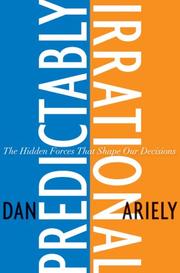
Predictably Irrational
Behavioral economist Dan Ariely shows why we overpay, procrastinate, and misjudge through simple experiments.
2,183-word summary · 10 min read
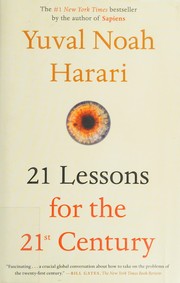
21 Lessons for the 21st Century
Twenty one essays on work, liberty, truth, and meaning when algorithms flood the world with noise.
2,101-word summary · 9 min read
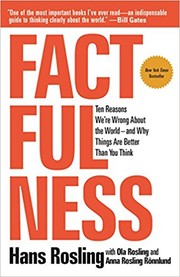
Factfulness
A doctor shows why we misread global trends and offers ten habits for seeing progress clearly.
2,247-word summary · 10 min read
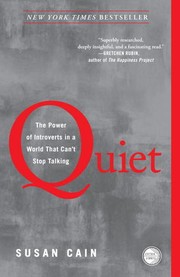
Quiet
Cain traces the Extrovert Ideal from Harvard Business School to open offices and defends the power of quiet.
2,898-word summary · 13 min read
Thinking, Fast and Slow
Kahneman's tour of two minds: fast gut System 1 and slow careful System 2, and how biases, overconfidence, and framing shape every choice.
2,306-word summary · 10 min read

Sybil
A 1973 case study of a woman treated for multiple personalities, and the book that made dissociative identity disorder a household phrase.
2,054-word summary · 9 min read
Long Walk to Freedom
Mandela's account of a Thembu childhood, a law practice, a banned movement, twenty-seven years in prison, and the negotiation that ended apartheid.
2,454-word summary · 11 min read
What Happened to You?
Oprah Winfrey and psychiatrist Bruce Perry explain how early experience shapes the brain, and why asking what happened to someone works better than asking what…
2,238-word summary · 10 min read
The Courage to Be Disliked: The Japanese Phenomenon That Shows You How to Change Your Life and Achieve Real Happiness
A philosopher and an angry young man argue over five nights about Adlerian psychology, trauma, approval, and the freedom to be disliked.
2,054-word summary · 9 min read

In Order to Live: A North Korean Girl's Journey to Freedom
A young North Korean girl crosses the Yalu, survives trafficking in China, and rebuilds her life in Seoul in this unsparing memoir.
2,027-word summary · 9 min read
Moonwalking with Einstein: The Art and Science of Remembering Everything
A journalist spends a year training for the U.S. Memory Championship and discovers that extraordinary memory is mostly technique, attention, and a lot of…
2,027-word summary · 9 min read

Infidel
Ayaan Hirsi Ali's memoir of a Somali childhood, a forced marriage, a Dutch asylum claim, and the political fight that followed the murder of Theo van Gogh.
2,041-word summary · 9 min read
Down and Out in Paris and London
Orwell's account of washing dishes in Paris hotels and tramping through London does not ask for pity, only for a clear look at how poverty actually works.
2,282-word summary · 10 min read
The Girl with Seven Names: A North Korean Defector's Story
Hyeonseo Lee crossed the frozen Yalu River at seventeen, spent years hidden in China, escaped to South Korea, and later returned to rescue her family.
2,404-word summary · 11 min read
Don't Sweat the Small Stuff ... and It's All Small Stuff: Simple Ways to Keep the Little Things from Taking Over Your Life
Richard Carlson’s 1997 bestseller offers one hundred short chapters on lowering the volume on daily irritations, and it is more pragmatic than its title…
2,502-word summary · 11 min read
Made to Stick: Why Some Ideas Survive and Others Die
The Heath brothers break down why some ideas vanish on contact while others lodge in memory, tracing six traits that make a message stick.
2,527-word summary · 11 min read
Four Thousand Weeks: Time Management for Mortals
Oliver Burkeman turns the whole productivity project on its head, arguing that a human lifespan of roughly four thousand weeks is not a problem to optimize…
2,447-word summary · 11 min read
Cultish: The Language of Fanaticism
Amanda Montell argues that the real machinery of a cult is its vocabulary, and she traces how loaded language from 1960s communes to modern wellness brands and…
2,087-word summary · 9 min read

Beautiful Boy: A Father's Journey Through His Son's Addiction
David Sheff recounts watching his son Nic slide into meth addiction, and his own desperate, humbling search for how to help without destroying them both.
2,076-word summary · 9 min read