
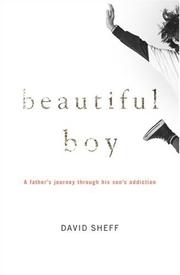
Beautiful Boy: A Father's Journey Through His Son's Addiction
2,076-word summary 9 min read 326 pages in the book
- First published
- 2008
- Publisher
- Houghton Mifflin Harcourt
- Pages
- 326
- ISBN
- 9780618683352
Reading options
What's inside (10 sections)
There is a line near the start of Beautiful Boy where David Sheff describes his son Nic as a little boy with a gap-toothed grin, and then says he will spend the next several years trying to find that boy again. That sentence is the whole book in miniature, and it is also the reason the book is hard to read slowly. Sheff knows exactly what he is doing when he places an image of childhood next to a description of a twenty-something shooting meth into his neck, and he does it over and over, because the gap between those two pictures is the thing he cannot close.
I picked this one up knowing roughly what it was, a father's account of his son's addiction, and expecting something along the lines of a cautionary tale with a lesson attached. What I got instead was a book that refuses to hand over a lesson, or at least refuses to hand over the clean one. Sheff is a journalist by trade, and the reporting instinct is always visible. He interviews researchers. He reads the neuroscience. He talks to other parents. And then he writes the sentence that no amount of research can soften, which is that his son is somewhere in a house he cannot find, using a substance that might kill him before morning.
The reporter who cannot report his way out
The tension that runs through the entire book is between what Sheff does for a living and what his son's addiction demands of him. As a journalist, his instinct is to gather facts, to understand a situation, and then to write about it clearly. Addiction refuses all three. There are no facts you can gather that will tell you whether tonight is the night. There is no understanding that will make the next relapse less likely. And there is certainly no clarity available, because the disease, if that is the right word for it, behaves differently every time and lies about all of it.
Sheff is honest about this in a way that I found genuinely painful. He describes the way he would scour the internet for information about methamphetamine, reading everything he could find, and how the reading gave him the feeling of doing something while changing absolutely nothing. There is a particular kind of helplessness specific to well-read people, the belief that if you can just understand the thing thoroughly enough, you can get some purchase on it. Sheff had that belief and had it dismantled in front of him, repeatedly.
He is also hard on himself, which is more unusual than you might expect in a memoir of this kind. Plenty of accounts of family addiction locate the problem in the addict and leave the narrator essentially blameless. Sheff does not do that. He goes back over his own divorce, his own workaholism, his own occasional drug use in earlier years, and asks, without ever quite answering, how much of the architecture was already in place. The book never concludes that he caused it. It simply refuses to let him off the hook for examining the question.
The science, and its limits
One of the more substantial threads in Beautiful Boy is Sheff's attempt to grapple with what addiction actually is, and here the book is doing something slightly more ambitious than memoir. He reads the work on how drugs reshape the brain's reward systems, and he lays out, for a general reader, why a person who genuinely wants to stop can find themselves unable to stop. The explanation is not new, but it is delivered by a man with an enormous personal stake in whether the explanation is true, which gives it a weight that a textbook cannot match.
The book pushes back specifically against the moral model of addiction, the idea that using is a choice and therefore a character failure. Sheff finds this model both wrong and cruel, and he marshals evidence that the changes drugs produce in the brain are physical and persistent in ways that make the language of choice misleading. This is a live debate and the book is not neutral in it. Sheff is an advocate for the disease model, and a reader who disagrees will find the counterarguments absent, because this is a memoir and not a literature review.
What makes the science sections work anyway is that they are clearly motivated. Sheff is not trying to win an argument. He is trying to understand why his son keeps doing the thing that is destroying him, and he is drawn to the explanations that leave room for his son to be sick rather than bad. You can feel him reaching for that conclusion, which is itself a kind of evidence about how we use research when we are frightened.
Relapse, and the shape of the book
The structure of Beautiful Boy is not linear, and that is deliberate. It loops. Sheff will narrate a period of sobriety, allow a real note of hope to enter, and then deliver the next fall. This happens enough times that by the middle of the book the reader has learned to distrust the good periods, which is of course exactly what the family learned. The form of the book reproduces the experience of loving an addict, where hope becomes something you ration because you know how it ends when you spend too freely.
The relapses are described without flinching and without sensationalism, which is a harder balance than it sounds. There is a version of this book that leans into the horror, that gives you the squalid details and lets you feel superior to the person in them. Sheff mostly avoids that. He gives you the detail you need and then pulls back, partly out of decency toward his son and partly because he knows that the shock is not the point.
What struck me most is how much of the father's suffering is administrative. It is the phone calls that do not connect. It is the waiting for a call from a hospital. It is the lies he tells himself about why Nic sounds strange on the phone. Addiction gets narrated as a series of dramatic confrontations, but the reality, as Sheff describes it, is mostly waiting and guessing, punctuated by moments of genuine terror.
Nic as a person, not a symptom
The most generous thing Sheff does is keep his son a person. Nic is not reduced to his worst moments, and the book takes real trouble to show what he was like, what he was good at, what he wanted, and what he was like to be around when he was well. This is a political choice as much as a narrative one. The dominant cultural frame for an addict is a type, a figure defined entirely by the addiction, and Sheff keeps insisting on specificity.
He also writes about the family's economic strain and about the way the problem colonized every conversation, which is a detail I have not seen handled as honestly elsewhere. There is a particular cruelty to a family gathering where everyone is thinking about the same absent person and no one wants to be the one to say so. Sheff names that cruelty.
The book is stronger for including the other people in Nic's life, the mother, the stepparents, the friends, because addiction is rarely a two-person story. It radiates outward, and each person in the radius develops their own private theory of what is happening and their own private strategy for dealing with it. Sheff is sharp on how these theories conflict, and on how the conflicts themselves become a source of damage.
What the book is arguing
Underneath the reporting and the grief, Beautiful Boy is making an argument, and it is worth naming it plainly. Sheff is arguing that addiction is a disease, that the people who suffer from it deserve compassion rather than contempt, and that the families deserve better than the shame that currently surrounds them. He makes this argument the way good journalists do, by showing you the particular case so vividly that the general claim arrives without being announced.
The book's epigraph is a poem, and its title comes from a Nick Drake song, and both choices signal that Sheff is reaching for something beyond the clinical frame. The disease model gets you a long way, but it does not capture what it feels like to love a person who is disappearing in increments. For that he needs music and poetry, and the fact that a hard-headed journalist reaches for them is itself a small argument about the limits of what facts can do.
The companion volume, and why it matters
It should be said plainly that Beautiful Boy is half of a conversation. Nic wrote his own memoir, Tweak, covering roughly the same years from the inside, and the two books are best understood as a pair. Reading them together is a strange experience, because the same events appear from both sides, and the discrepancies are as revealing as the agreements. Sheff knows this, and he includes his son's voice at points, which keeps the book from becoming a portrait painted entirely from the outside.
There is a risk in the pair, though, and it is worth naming. The Sheffs are white, educated, and comparatively wealthy, and their access to treatment centers and researchers is enormous. Sheff does not hide this, but the book does not dwell on it either, and a reader from a different position may find that the family's resources make their story less representative than it first appears. Addiction is universal. The ability to fly across the country to a facility is not.
Where it falls short
The book's weaknesses are, in a way, the weaknesses of its virtues. Sheff's reporting instinct means the science sections sometimes slow the momentum at moments when you want the story to keep moving. There are passages where the research summary repeats a point the narrative has already made, and in a book this emotionally intense, those passages felt like relief for the author more than for the reader.
The other limitation is that the book ends without resolution, which is honest but also unsatisfying. Sheff stops at a point where Nic is still alive and still in danger, and the reader is left holding the uncertainty. He defends this choice, arguing that any neat conclusion would be a lie, and he is right, but honesty and satisfaction are not the same thing and the book offers only the first.
There is also a question the book raises and never quite answers, which is what the father's role should be after everything has been tried. The literature on enabling is present but thin, and Sheff's own oscillation between intervention and stepping back is described more than it is examined. A reader looking for guidance on that specific question will find the account of the struggle rather than a map out of it.
What stayed with me
Months later, what I remember is not any particular crisis. It is the small domestic details. It is Sheff describing the ordinary sound of his son on the phone, and how he learned to read that sound the way a sailor reads weather, looking for the shift that would tell him a storm was coming. That is the texture of the book, and it is why the book works.
Beautiful Boy does not tell you how to save anyone. That is its honesty and its cost. What it does is describe, with real precision, what it is like to love someone you cannot reach, and to keep reaching anyway. For a reader in the middle of something like that, the book offers the strange comfort of being understood. For a reader outside it, the book offers a plain warning that no amount of love, money, intelligence, or attention is a guarantee against anything.
I finished it and then sat for a while, which is the only review that has ever mattered to me. Sheff set out to explain his son's addiction and, in the process, wrote something closer to a book about the limits of a father's love. It is not a comforting book. It is a true one, and the difference matters more than the comfort would have.
FAQ
Is Beautiful Boy a true story?
Yes. It is David Sheff's memoir of his son Nic's real addiction to methamphetamine, drawn from his journalism and from years of family journals and interviews.
Do I need to read Nic Sheff's Tweak first?
No. Beautiful Boy stands on its own, though Nic wrote a companion memoir, Tweak, covering the same years from his own perspective. Many readers read both.
How does Beautiful Boy portray recovery?
As non-linear. The book documents multiple relapses rather than a single clean arc, and it is candid about how little certainty or control a family is actually offered.
Similar books

Too Much and Never Enough: How My Family Created the World's Most Dangerous Man
Mary L. Trump's 2020 memoir traces how a cold, zero-sum Queens household shaped her uncle, and uses family tax documents to challenge his self-made story.
2,059-word summary · 9 min read

Hidden Valley Road: Inside the Mind of an American Family
The Galvin family raises twelve children while six sons develop schizophrenia across decades of shifting science.
2,492-word summary · 11 min read

The Magnolia Story
How Chip and Joanna Gaines met, closed their first shop, nearly lost everything in a housing development, and built Fixer Upper.
2,994-word summary · 13 min read
Smoke Gets in Your Eyes: And Other Lessons from the Crematory
A young medieval history graduate takes a job at an Oakland crematory and becomes a mortician, confronting the physical reality of death and the funeral…
2,003-word summary · 9 min read
The Choice
Auschwitz survivor and therapist turns prison into a guide for healing.
2,472-word summary · 11 min read
10% Happier
An ABC newsman panics on air, then finds meditation without losing his edge.
2,590-word summary · 12 min read
Open
Tennis star Andre Agassi recalls hating tennis, falling to No. 141, and rebuilding his life on his own terms.
2,352-word summary · 10 min read

Calypso
Sedaris buys a Carolina beach house, grieves his sister Tiffany, tends his aging father, and turns illness and marriage into dry family comedy.
2,835-word summary · 13 min read
The Happiness Project
Gretchen Rubin spends a year testing monthly resolutions on energy, marriage, work, parenting, and play, tracking small habits to build a happier ordinary…
3,516-word summary · 16 min read
Why We Sleep: Unlocking the Power of Sleep and Dreams
A Berkeley sleep scientist explains how sleep shapes memory, mood, and health, and what happens when we miss it.
2,755-word summary · 12 min read
Naked
Growing up odd in Carolina, working bad jobs, and learning to watch people closely and kindly.
2,020-word summary · 9 min read

Dress Your Family in Corduroy and Denim
Sedaris on snow days, rental houses, Dutch Christmas, and the family that made him funny.
3,098-word summary · 14 min read
The Last Lecture
Dying professor Pausch lectures really achieving childhood dreams.
2,579-word summary · 11 min read
Maybe You Should Talk to Someone
Therapist Lori Gottlieb counsels John, Julie and Rita while seeing her own therapist Wendell after a breakup.
2,234-word summary · 10 min read
A Child Called It
Dave survives his mother games of hunger and cold in Daly City until teachers and foster care step in.
2,326-word summary · 10 min read

The Glass Castle
Jeannette Walls's memoir of a childhood spent hungry and moving, from a stove fire at three to a Bronx apartment and parents on the street.
2,255-word summary · 10 min read
Educated
Educated retold: Idaho scrapyard, no school, BYU, Cambridge, break with father and brother.
1,931-word summary · 9 min read

Sybil
A 1973 case study of a woman treated for multiple personalities, and the book that made dissociative identity disorder a household phrase.
2,054-word summary · 9 min read
Nudge: Improving Decisions About Health, Wealth, and Happiness
Thaler and Sunstein show how defaults, framing, and social cues steer choices, and argue for choice architecture with an opt-out.
3,146-word summary · 14 min read

Long Walk to Freedom
Mandela's account of a Thembu childhood, a law practice, a banned movement, twenty-seven years in prison, and the negotiation that ended apartheid.
2,454-word summary · 11 min read
Brown Girl Dreaming
Jacqueline Woodson retells her childhood in verse, moving from Ohio to South Carolina to Brooklyn while the civil rights movement reshapes the world around her.
2,727-word summary · 12 min read
What Happened to You?
Oprah Winfrey and psychiatrist Bruce Perry explain how early experience shapes the brain, and why asking what happened to someone works better than asking what…
2,238-word summary · 10 min read
The Courage to Be Disliked: The Japanese Phenomenon That Shows You How to Change Your Life and Achieve Real Happiness
A philosopher and an angry young man argue over five nights about Adlerian psychology, trauma, approval, and the freedom to be disliked.
2,054-word summary · 9 min read

In Order to Live: A North Korean Girl's Journey to Freedom
A young North Korean girl crosses the Yalu, survives trafficking in China, and rebuilds her life in Seoul in this unsparing memoir.
2,027-word summary · 9 min read
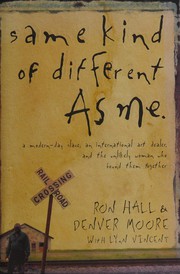
Same Kind of Different as Me
An art dealer and a formerly homeless sharecropper tell the story of the friendship that began at a Fort Worth mission and the woman who insisted on it.
2,023-word summary · 9 min read
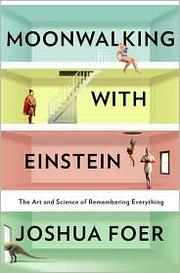
Moonwalking with Einstein: The Art and Science of Remembering Everything
A journalist spends a year training for the U.S. Memory Championship and discovers that extraordinary memory is mostly technique, attention, and a lot of…
2,027-word summary · 9 min read

Infidel
Ayaan Hirsi Ali's memoir of a Somali childhood, a forced marriage, a Dutch asylum claim, and the political fight that followed the murder of Theo van Gogh.
2,041-word summary · 9 min read
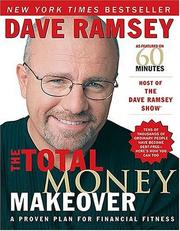
The Total Money Makeover: A Proven Plan for Financial Fitness
Dave Ramsey lays out seven Baby Steps, from a $1,000 starter fund to a paid-off house, with the debt snowball at the center.
2,663-word summary · 12 min read

Down and Out in Paris and London
Orwell's account of washing dishes in Paris hotels and tramping through London does not ask for pity, only for a clear look at how poverty actually works.
2,282-word summary · 10 min read
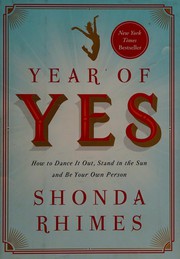
Year of Yes: How to Dance It Out, Stand in the Sun and Be Your Own Person
Shonda Rhimes takes her sister’s accusation seriously and spends a year saying yes to the things that frighten her, from live television to her own reflection.
2,585-word summary · 11 min read