
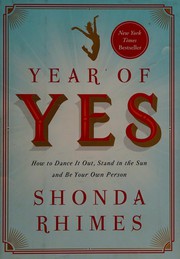
Year of Yes: How to Dance It Out, Stand in the Sun and Be Your Own Person
2,585-word summary 11 min read 311 pages in the book
- First published
- 2015
- Publisher
- Simon & Schuster
- Pages
- 311
- ISBN
- 9781476777092
Reading options
What's inside (10 sections)
The table is set, the family is there, and Shonda Rhimes is doing what she does at gatherings, which is keeping to the edge of the room. Her older sister Delorse looks at her and says six words. "You never say yes to anything." Rhimes writes that the sentence stopped her cold, and I believe her, because it is the kind of thing that only lands when it is true and slightly unfair at the same time. She was, at that point, one of the most powerful people in television. She was also a woman who had built a very comfortable career out of hiding.
I picked the book up expecting a pep talk and got something closer to a confession with jokes in it. Rhimes is not selling a system. She is describing a year, 2014, that she decided to treat as an experiment: for twelve months she would say yes to the things she had been refusing, mostly the things that frightened her. That is the whole premise. No worksheet, no acronym, no morning routine. Just a woman with a calendar and an uncomfortable amount of self-awareness.
The contradiction at the center is why the book works. Rhimes created Grey's Anatomy, Scandal, and How to Get Away with Murder. She writes people who talk constantly about their feelings. And she is, by her own account, an introvert who hugs the walls at parties, dreads press interviews, and has panic attacks before she has to be publicly herself. The voice that produces all that dialogue goes quiet when the cameras point at her.
The ladder out of no
The first chapters are titled "No," "Maybe?," and "Umm, Yes ...?" and that sequence is the most honest thing in the book. She does not jump. She inches. The year starts not with a grand gesture but with her noticing how many decisions she had been making by default, and how many of those defaults were some version of decline.
I have read a lot of books in this genre that begin with the author already brave. This one begins with the author annoyed at herself, which is more useful. She is not proud of the no. She is not even sure it was wrong. She just notices that it had stopped being a choice and become a reflex, and reflexes are hard to argue with because they do not present themselves as arguments.
There is a scene early on where she tries to explain her own behavior and cannot. That inability is the engine of the book. She is a person who is extremely good with words, and the year begins with her discovering a part of her life where words had been doing nothing but covering. The chapters are short, some only a few pages, and the effect is less like a self-help program than like listening to a friend work something out in real time, doubling back, interrupting herself, getting to the point three pages after you thought she had already made it.
She also uses capitals when she wants to shout, and rhetorical repetition when she wants to land a point, and the whole thing has the rhythm of a speech. That is a compliment and a warning. It moves fast. It also means the book sometimes substitutes volume for evidence, which is a trade she mostly gets away with because the scenes are so specific.
Yes to the Sun
The chapter about publicity is where the experiment starts to cost something. Rhimes had avoided press for years, and her publicist, Chris, comes across as genuinely baffled by a client who keeps refusing the thing publicists exist to arrange. Saying yes to the sun means saying yes to being seen, and being seen is the specific terror the whole book is about.
She describes stage fright in physical terms, and she describes going blank in the middle of an interview with Oprah, which is a particularly cruel version of the experience: the thing you wanted for years arrives and your mind empties out. She had turned down Jimmy Kimmel Live repeatedly, and when she finally says yes, the green room becomes one of the book's best set pieces, a small room where a famous person sits and waits and tries not to bolt. Then there is the commencement address at Dartmouth, her alma mater, in 2014, which is a different kind of exposure because it asks her to be wise in public rather than merely present.
What I like about this section is what it refuses to claim. She does not tell you that the fear goes away, or that exposure turns out to be fun, or that she discovered a hidden extrovert. She says, more or less, that avoidance had become a habit she could no longer defend. That is a much smaller and more believable claim than the genre usually makes, and it is the one that has stayed with me.
There is also a funny, slightly uncomfortable thread about how much of her identity was built on being the person who does not do that. Not doing things is a kind of identity. It gives you a story about yourself. Giving it up means giving up the story, which is harder than giving up the behavior.
The mommy war and the nanny named Jenny McCarthy
The chapter with the worst title in the book turns out to be the best chapter in the book. Rhimes had been quietly judgmental about mothers who hired help. Then she adopted her first child, and the judgment collapsed, because the job is impossible without assistance and the only question is what kind of assistance you can arrange.
Her nanny is named Jenny McCarthy, which is not the actress, and Rhimes has some fun with that. But the fun is covering a real shift. She had believed that good mothering meant doing everything yourself, and that belief was doing two things at once: it was making her feel virtuous about a life she had not yet lived, and it was giving her a way to feel superior to women who had already admitted they needed help.
Surrendering the mommy war means giving up the fantasy of the perfect mother and accepting help without shame. Rhimes is clear that this is not a small concession. It is a rewriting of what she thinks a good mother is, and it happens not through argument but through exhaustion and love. She also refuses to pretend the nanny is invisible. Jenny is named, credited, and described as essential, which is more than most books by professional women do.
I found this the most useful chapter because it is the one that is least about saying yes. It is about withdrawing a judgment. The yes is just the door you walk through after you stop needing to be right about other people's choices.
The gown, the toddler, and fifteen minutes
As the year goes on and she accepts more invitations, she is home less, and the book is honest about the bill. One evening her toddler daughter asks her to play while Rhimes is already dressed for an event, in a formal gown. She gets down on the floor and plays for fifteen minutes. She arrives late. She is happy.
That scene gets quoted a lot, and I think it is often quoted badly. The lesson is not that you should always drop everything for your children. The lesson is that she had been treating the gown as the important thing and the request as the interruption, and for fifteen minutes she reversed the order. The outfit was expensive. The fifteen minutes were not recoverable.
From there she makes rules. She says yes when her children ask for her attention. She stops answering email after seven. She stops working weekends. The chapter is about the difference between presence and time, which are not the same resource and are constantly confused by people who believe that being in the building counts.
Here is where the criticism starts to press, though. These rules are easier to make when you employ the people who keep the building running. A single parent working a shift does not get to declare that email stops at seven. Rhimes does not pretend otherwise, exactly, but she also does not spend much time on the difference, and the book's implied reader is a person with control over their calendar.
Mirrors, the gym, and the club
The body chapters are the rawest in the book. Rhimes had avoided photographs and mirrors. She describes the shame of seeing herself in pictures, the way a bad photo can ruin a week, and the specific misery of being a public person who does not want to look at the evidence. This is not the usual fitness narrative, because the problem is not primarily the body. It is being seen.
She works with a doctor and a trainer. She begins exercising and changes how she eats. The book is careful, mostly, not to turn this into a moral victory, and the deeper change it describes is permission: permission to take up space, to be photographed, to exist in an image without flinching. The weight stuff is there, but it is not the point, and the point is better.
The companion chapter, "Yes to Joining the Club," is about the gym as a place she had decided she was not allowed to enter. Health and fitness were a club for other people, people who already belonged, people who knew what the machines did. Saying yes means walking in and being a beginner in public. That connects to the larger theme of belonging, which runs under the whole book: who gets to be in the room, and what you have to become to qualify.
I will say that this material is where the book's privilege is most visible. A trainer, a doctor, a schedule with room in it, a gym that feels safe: none of that is universal. She does not claim it is. But she also does not dwell on it, and a reader without those things may find the chapter aspirational in a way that stings rather than helps.
The correction nobody expects: yes to no
About two thirds of the way through, the book does something smart. It complicates its own premise. The chapters "Yes to No" and "Yes to Difficult Conversations" argue that a real yes requires the ability to refuse, and that a year of accepting everything would just be a year of being used.
This is the most useful corrective in the book, and it is the part I would hand to someone who only has time for twenty pages. Without it, the whole project collapses into agreeableness with better branding. With it, the year becomes a practice of choosing: yes to this, therefore no to that, and the no is not a failure of the experiment but a condition of it.
She also starts having the conversations she had been avoiding. With employees, with family, with herself. The book does not give transcripts, and it should not; what it conveys is the discovery that the dread before a hard conversation is usually worse than the conversation, and that the relief of having said the thing is not the same as getting what you wanted.
"Yes to People" belongs here too. She lets friends and colleagues closer. She stops treating vulnerability as a professional liability. For a woman whose job is to be the calm center of a very large machine, that is not a small rewrite.
Race, beauty, and the cost of being palatable
"Yes to Who I Am" is about race and identity, about being a Black woman running a television empire, and about the pressure to be palatable. Rhimes writes about the work of making herself acceptable to rooms that had not decided she belonged, and about the freedom of refusing that work. The chapter is short. It could have been the whole book.
"Yes to Beautiful" is about photographs, beauty, and aging. She stops waiting to feel beautiful until she meets some external standard, which sounds like a greeting card and is not, because the standard she had been waiting for was never going to arrive. The two chapters sit next to each other for a reason: being seen as beautiful and being seen as legitimate are the same problem wearing different clothes.
I wanted more here. The book is more interested in the publicity chapters than in the identity chapters, and the imbalance is noticeable. The material about being palatable is the most politically interesting thing in the memoir, and it gets a fraction of the space devoted to whether she will go on a late-night show. That is a choice, and I think it is the wrong one, though I understand why a book sold as an inspirational memoir would make it.
What the year did not fix
The book is repetitive. Chapters circle the same insight, the same jokes, the same rhetorical move where she lists things in threes and then undercuts the list. By the last third I could feel the formula. It is also, at times, a branding exercise: the year becomes a phrase, the phrase becomes a platform, and the memoir is aware of this in a way that does not fully inoculate it.
And the structural point stands. The advice is much easier for a wealthy showrunner than for most readers. She has help, money, flexibility, and a career that rewards visibility. A person with none of those things can still say yes to a difficult conversation, and that is real. But the book rarely admits how much of its freedom is purchased.
What saves it is that Rhimes does not pretend the year fixed her. She ends with habits kept and habits lost, with the admission that she is still an introvert, still afraid of some rooms, still capable of saying no out of fear. The change is narrower than the title suggests. She stopped letting fear cast the only vote. That is not a transformation. It is a shift in the balance of power, and for a lot of readers it will be enough.
The last chapters, "Yes to Dancing It Out" and "Yes to Beautiful," are where the tone lifts. Dancing it out is her habit with friends and her team, and the book treats joy as a practice rather than a reward you earn after the work. That is the version of the book I would recommend: not the year of yes as a slogan, but the year of yes as a temporary suspension of a reflex, long enough to find out what the reflex was protecting. She finds out. It was protecting her from being seen, and being seen turns out to be survivable, which is a modest discovery and also the only one that matters.
By the end I did not want to have a Year of Yes. I wanted to audit my own no's, which is a smaller and more durable response. The book is uneven, self-indulgent in places, and far too pleased with its own title. It is also honest about motherhood, ambition, and the specific horror of a photograph, and honesty of that kind is rarer in this genre than any amount of advice.
FAQ
Is Year of Yes a self-help book or a memoir?
It is a memoir built around a one-year experiment. Rhimes describes specific events from 2014 rather than offering a step-by-step program.
What was Shonda Rhimes's year of yes?
For twelve months in 2014 she accepted invitations and challenges she had been avoiding, including press interviews, a commencement speech, and public appearances, while still keeping the ability to say no.
Does Year of Yes cover her television shows?
It mentions Grey's Anatomy, Scandal, and How to Get Away with Murder as context for her workload, but the focus stays on her private fears and family life.
Similar books
Big Magic
Gilbert on creative living past fear: ideas that visit, permission without credentials, daily work, finished over perfect, and trust in curiosity.
2,984-word summary · 13 min read
Love Does
A lawyer and activist tells stories of saying yes, showing up, and loving people through ordinary, often ridiculous actions.
2,411-word summary · 11 min read
The Magic of Thinking Big
Schwartz's 1959 self-help classic argues that success follows from the size of your thinking, supported by sales anecdotes, vocabulary drills and goal setting.
2,579-word summary · 11 min read
Dear Girls: Intimate Tales, Untold Secrets & Advice for Living Your Best Life
Ali Wong's debut collects fourteen letters to her daughters, covering sex, money, work, marriage, Vietnam, and being a working Asian American mother.
2,266-word summary · 10 min read
Lucky
Alice Sebold's memoir of the 1981 rape she survived as a college freshman, the courtroom that followed, and a conviction later proven to be a case of mistaken…
2,091-word summary · 9 min read
Reasons to Stay Alive
Matt Haig's memoir of the breakdown that nearly killed him at twenty four and the three years of unglamorous recovery that followed.
2,065-word summary · 9 min read
Bird by Bird
Anne Lamott's 1994 book on writing and life: shitty first drafts, the one-inch picture frame, and quieting the inner critic so you can take it bird by bird.
2,592-word summary · 12 min read
The Little Book of Hygge
Denmark happiness researcher tours candles, cake and cozy winter light.
2,582-word summary · 11 min read
10% Happier
An ABC newsman panics on air, then finds meditation without losing his edge.
2,590-word summary · 12 min read
Tiny Beautiful Things: Advice on Love and Life from Dear Sugar
Dear Sugar answers letters on love, grief, and work with tough empathy drawn from her own losses.
2,253-word summary · 10 min read
The Happiness Project
Gretchen Rubin spends a year testing monthly resolutions on energy, marriage, work, parenting, and play, tracking small habits to build a happier ordinary…
3,516-word summary · 16 min read
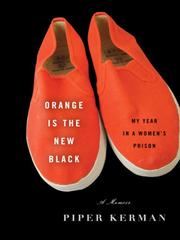
Orange Is the New Black: My Year in a Women's Prison
A Smith graduate serves a year in Danbury for an old drug crime and learns how women share, fight and survive inside.
2,583-word summary · 11 min read
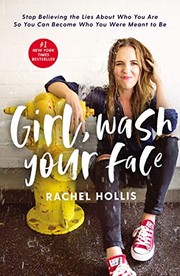
Girl, Wash Your Face
Twenty lies, twenty stories, twenty small habits on body, approval, motherhood, faith, and work.
1,995-word summary · 9 min read
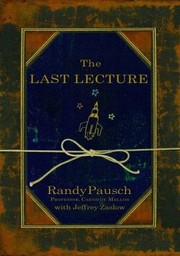
The Last Lecture
Dying professor Pausch lectures really achieving childhood dreams.
2,579-word summary · 11 min read
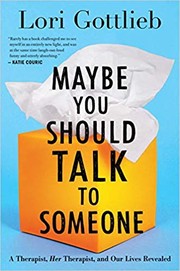
Maybe You Should Talk to Someone
Therapist Lori Gottlieb counsels John, Julie and Rita while seeing her own therapist Wendell after a breakup.
2,234-word summary · 10 min read
Eat, Pray, Love
Eat, Pray, Love retold: divorce, Italy for pleasure, India for practice, Bali for balance.
1,962-word summary · 9 min read

Long Walk to Freedom
Mandela's account of a Thembu childhood, a law practice, a banned movement, twenty-seven years in prison, and the negotiation that ended apartheid.
2,454-word summary · 11 min read
What Happened to You?
Oprah Winfrey and psychiatrist Bruce Perry explain how early experience shapes the brain, and why asking what happened to someone works better than asking what…
2,238-word summary · 10 min read
The Courage to Be Disliked: The Japanese Phenomenon That Shows You How to Change Your Life and Achieve Real Happiness
A philosopher and an angry young man argue over five nights about Adlerian psychology, trauma, approval, and the freedom to be disliked.
2,054-word summary · 9 min read

In Order to Live: A North Korean Girl's Journey to Freedom
A young North Korean girl crosses the Yalu, survives trafficking in China, and rebuilds her life in Seoul in this unsparing memoir.
2,027-word summary · 9 min read

Too Much and Never Enough: How My Family Created the World's Most Dangerous Man
Mary L. Trump's 2020 memoir traces how a cold, zero-sum Queens household shaped her uncle, and uses family tax documents to challenge his self-made story.
2,059-word summary · 9 min read
Same Kind of Different as Me
An art dealer and a formerly homeless sharecropper tell the story of the friendship that began at a Fort Worth mission and the woman who insisted on it.
2,023-word summary · 9 min read
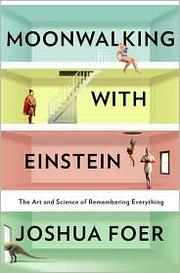
Moonwalking with Einstein: The Art and Science of Remembering Everything
A journalist spends a year training for the U.S. Memory Championship and discovers that extraordinary memory is mostly technique, attention, and a lot of…
2,027-word summary · 9 min read

Infidel
Ayaan Hirsi Ali's memoir of a Somali childhood, a forced marriage, a Dutch asylum claim, and the political fight that followed the murder of Theo van Gogh.
2,041-word summary · 9 min read
The Total Money Makeover: A Proven Plan for Financial Fitness
Dave Ramsey lays out seven Baby Steps, from a $1,000 starter fund to a paid-off house, with the debt snowball at the center.
2,663-word summary · 12 min read

Down and Out in Paris and London
Orwell's account of washing dishes in Paris hotels and tramping through London does not ask for pity, only for a clear look at how poverty actually works.
2,282-word summary · 10 min read

The Girl with Seven Names: A North Korean Defector's Story
Hyeonseo Lee crossed the frozen Yalu River at seventeen, spent years hidden in China, escaped to South Korea, and later returned to rescue her family.
2,404-word summary · 11 min read
Don't Sweat the Small Stuff ... and It's All Small Stuff: Simple Ways to Keep the Little Things from Taking Over Your Life
Richard Carlson’s 1997 bestseller offers one hundred short chapters on lowering the volume on daily irritations, and it is more pragmatic than its title…
2,502-word summary · 11 min read
Made to Stick: Why Some Ideas Survive and Others Die
The Heath brothers break down why some ideas vanish on contact while others lodge in memory, tracing six traits that make a message stick.
2,527-word summary · 11 min read
Four Thousand Weeks: Time Management for Mortals
Oliver Burkeman turns the whole productivity project on its head, arguing that a human lifespan of roughly four thousand weeks is not a problem to optimize…
2,447-word summary · 11 min read