
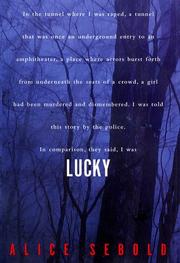
Lucky
2,091-word summary 9 min read 256 pages in the book
- First published
- 1999
- Publisher
- Scribner
- Pages
- 256
- ISBN
- 9780684857824
Reading options
What's inside (9 sections)
Alice Sebold became famous for a novel that begins with a murder, but before The Lovely Bones there was Lucky, a memoir with no distance in it at all. Published in 1999, the book describes the rape she survived as a college freshman in 1981, the trial that convicted a man for it, and the years she spent afterward learning how to live inside a body and a memory that would not cooperate. It is a hard, plain, unusually honest book, and it has become something stranger in the years since, because the case at its center turned out to contain a catastrophic error.
The Tunnel
Sebold was born in Madison, Wisconsin, in 1963 and grew up largely in the Philadelphia suburbs. By the spring of 1981 she was a freshman at Syracuse University, which is where, in May of that year, she was attacked. The location has become part of the book's vocabulary: a pedestrian tunnel near campus, the kind of concrete shortcut students use without thinking. A stranger caught her there, beat her badly, and raped her.
She went to the police. She was examined at a hospital. She cooperated with an investigation that had almost nothing to work with: no suspect, no weapon, no forensic miracle waiting to happen. What she did have was a detail that she would later record in the memoir with grim precision. A police officer told her she was lucky, because a young woman had been attacked and murdered in the same tunnel, and Sebold had survived. That sentence became the title of the book. It is not irony exactly. It is a description of the standard the world was offering her.
The memoir's early chapters do something that courtroom narratives rarely do: they stay inside the aftermath. Sebold writes about the physical injuries, the shame, the way her family and friends reacted and failed to react, the sense of being permanently marked. She returned to school. She dated. She drank. She tried to act like a person who had not been split in two, while privately cataloguing the ways she had been. The attack had taken minutes. The accounting takes chapters, and that ratio is the point.
The Man on the Street
Months after the rape, Sebold saw a man on a sidewalk in Syracuse and believed she recognized him. The police arrested him. The man charged with the crime was Anthony Broadwater, a twenty-year-old Black man who had served in the military and had no connection to Sebold before that day. In the book, Sebold gave him the pseudonym Gregory Madison. She has never pretended that her identification was a clean or certain thing, and the memoir says so on the page: at a police lineup she picked a different man first, then felt immediately that she had made a mistake. The mechanics of how her uncertainty hardened into a courtroom identification are the most troubling passages in the book, and later, outside the book, they would become the entire case.
The question that Lucky explores, decades before the rest of the country caught up to it, is what a memory actually is. Sebold was a survivor of a violent crime, trying in good faith to help police find the man who hurt her. The police were working with the era's tools and the era's assumptions. Everyone involved was certain they were doing the right thing, which is how most wrongful convictions happen.
The Trial
The case went to court in 1982. The prosecution's evidence was largely Sebold herself: her identification of Broadwater, and a hair comparison, a forensic technique that claimed to match hair samples and that has since been discredited across the American justice system. There was no DNA, no confession, no corroborating witness. Broadwater testified that he was innocent. The jury convicted him of rape and sodomy, and the judge sentenced him to eight to twenty-five years in prison.
The trial chapters of Lucky are its second gut punch, because Sebold was re-exposed in public to her own attack, cross-examined about her character and her clothes, made to prove that she had fought and reported and behaved correctly. She was the state's case, and the state needed her to be flawless. The book records how the process trained her to hold her story rigid. It also records the ugliness of the courtroom as a machine that grinds survivors, and how a young woman can win a trial and still feel like a witness to her own destruction. Broadwater was locked up. Sebold went back to being not quite a person.
The Years After
What followed was a long stretch of survival work. Sebold writes about drinking, about drugs, about the complicated dance of telling some people and hiding from others. She finished college and moved to New York, where she took jobs, went to meetings, dated badly and well, and kept the assault in a locked room unless the room opened on its own. She had a diagnosis to put next to the experience, post-traumatic stress, from a therapist who explained why her body behaved the way it did. That explanation helped more than any advice she received from people who loved her. The memoir refuses to turn this section into a redemption arc. Some years she did better than others, and she says so.
The book also documents the specific loneliness of the survivor who is supposed to be over it now. Friends measured her recovery on their own calendars. Her family had its own relationship to the crime, which mostly involved not discussing it. And there was the additional burden that belongs only to survivors who testify: she had, in the state's eyes, gotten justice. Everyone wanted to treat the conviction as the end of the story. The memoir exists because it was the middle.
Writing It Down
Sebold eventually entered the graduate writing program at the University of California, Irvine, where she studied with Geoffrey Wolff and others. Lucky began as a memoir exercise that grew past its exercise size. She has said that writing the rape honestly took years of drafts, and that she could not work on the trial chapters for long stretches. When the book came out in 1999 from Scribner, it arrived into a culture that still preferred its survivors quiet and palatable. The memoir's unsparing detail upset some readers, and Sebold's response was consistent: silence is what does the damage.
Lucky found a large audience and became a bestseller, and its frankness made it a landmark of survivor literature. Then came The Lovely Bones in 2002, a novel narrated by a fourteen-year-old murder victim, which sold in the millions and was adapted into a film by Peter Jackson. Readers who came back to Lucky after the novel discovered the nonfiction source of everything Sebold had been working through, and the two books together made her one of the most discussed American writers of the decade. But the memoir had also become a record that claimed a man had been correctly convicted, and the second half of its life would test that claim.
The reception of the memoir itself is worth remembering. Sebold did interviews in which she had to explain, over and over, why she had written the book at all, and her answer stayed consistent: she wanted the record to exist, and she wanted other survivors to have a sentence to hold on to. Lucky landed at a moment when public conversation about rape was only beginning to shift, years before the phrase rape culture entered ordinary vocabulary, and many reviewers had no template for it. Some readers found it too graphic. Sebold's position was that the graphic part was the truth, and that smoothing it over would have been the actual obscenity. The book's success made her second act possible. The Almost Moon followed in 2007, and then came a long public silence, which itself became part of how readers understood her.
By the time a film adaptation of Lucky was being prepared, the memoir had become a small institution: a classroom staple, a fixture of the survivor canon, and, unavoidably, a public claim about a crime that could now be checked against the record. That is where the story of the book and the story of the case finally collided.
The Case That Did Not End
Broadwater served sixteen years. He was released in 1999, denied parole more than once along the way, and spent the years after his release on the sex offender registry, unable to clear his name. He maintained his innocence the entire time. In 2019, the story took a turn that no one, least of all Sebold, had planned: a film producer named Anthony Mucciante, working on an adaptation of Lucky, noticed what he considered discrepancies between the memoir and the screenplay and began investigating the old trial. He left the project, hired a private investigator, and the findings that emerged were eventually passed to Broadwater's legal team. The identification process, the investigator concluded, had been contaminated, and there was reason to believe the prosecutor had misled Sebold about the lineup in a way that pressured her courtroom identification. The one additional piece of evidence, the hair analysis, was by then widely understood to be junk science.
On November 24, 2021, a judge in Syracuse vacated the conviction. Broadwater was exonerated, more than thirty-nine years after he was charged, and Sebold, who had learned of the situation shortly before, issued a statement a few days later. "I am truly sorry to Anthony Broadwater and I deeply regret what you have been through," she wrote. "I am sorry most of all for the fact that the life you could have led was unjustly robbed from you, and I know that no apology can change what happened to you and never will." Scribner announced within days that it would stop distributing Lucky in all formats while consulting with the author about whether the book should be revised. The planned screen adaptation was abandoned.
What Lucky Means Now
The memoir sits at a strange intersection, and readers tend to arrive with strong opinions about which road to take. One reading says that Lucky is a survivor's account and that Sebold is not responsible for the failures of the investigation or the courts. Another says that a book that names a man, even behind a pseudonym, as her rapist carries obligations, and that those obligations now come with a nightmare attached: the wrong man spent sixteen years in prison, and the victim, who never lied about her uncertainty, was used by the system that did it.
Sebold has not tried to wriggle out of the second reading. The statement she released says plainly that Broadwater's life was stolen. The memoir itself, read in hindsight, is a document of how careful a witness can be and how little that carefulness can matter when the machinery around her wants a different kind of certainty. That may be the most lasting thing in the book: not the attack, not the trial, but the portrait of a young woman doing her best to tell the truth and watching the truth get sanded into something the court could use.
The conversation about what to do with the book is still unresolved, and it is a more interesting question than most people expected. Some readers argue that Lucky should remain available with a new preface explaining the case, so that the miscarriage of justice is part of the record too. Others argue that a book that put an innocent man in prison should stay out of print. Sebold has not made a public push for either outcome, and the last word, for now, belongs to the people living with the aftermath. What the genre of memoir owes a person it has harmed is an open question, and Lucky has become the test case that writing programs use when they teach it.
Lucky remains recommended reading for anyone who wants to understand what sexual violence does to a person over years rather than minutes, and for anyone who wants to understand how a conviction can look like justice from one side of the aisle and like kidnapping from the other. It is a difficult book with a ruined ending that nobody wrote on purpose. Its honesty about the first wound is what made it valuable. Its honesty about the second one is still being worked out, in public, by everyone involved.
FAQ
Is Lucky fiction or nonfiction?
It is a memoir. Sebold wrote it as an account of her own rape, the trial that followed and her recovery, and she appears under her own name throughout.
How does Lucky connect to The Lovely Bones?
The Lovely Bones, Sebold's later novel, grew out of the same experience. The memoir is the factual account; the novel imagines what the world might look like if the dead girl could speak.
Why did the publisher stop selling Lucky?
After Anthony Broadwater's conviction was vacated in November 2021, Scribner ceased distribution of the book while it consulted with Sebold about whether the work should be revised.
Similar books
Just Mercy
A young lawyer defends Walter McMillian on Alabama death row and children in adult prisons.
2,232-word summary · 10 min read
In Order to Live: A North Korean Girl's Journey to Freedom
A young North Korean girl crosses the Yalu, survives trafficking in China, and rebuilds her life in Seoul in this unsparing memoir.
2,027-word summary · 9 min read
Year of Yes: How to Dance It Out, Stand in the Sun and Be Your Own Person
Shonda Rhimes takes her sister’s accusation seriously and spends a year saying yes to the things that frighten her, from live television to her own reflection.
2,585-word summary · 11 min read
Red Notice
An American financier in Moscow exposes a $230 million tax fraud, watches his lawyer die in prison, and turns the case into an international human rights law.
2,008-word summary · 9 min read
Hunger
Roxane Gay traces how assault at twelve shaped her body, appetite, and daily life as a fat Black woman refusing shame.
2,583-word summary · 11 min read
A Stolen Life
Kidnapped at eleven in 1991, Jaycee Dugard survived eighteen years in an Antioch backyard and tells her own story of endurance and motherhood.
2,807-word summary · 12 min read
Orange Is the New Black: My Year in a Women's Prison
A Smith graduate serves a year in Danbury for an old drug crime and learns how women share, fight and survive inside.
2,583-word summary · 11 min read
Know My Name
Chanel Miller reclaims her story after the Stanford assault case, tracing family support, trial strain, her viral 2016 statement, and leaving Emily Doe for her…
3,092-word summary · 14 min read
Sybil
A 1973 case study of a woman treated for multiple personalities, and the book that made dissociative identity disorder a household phrase.
2,054-word summary · 9 min read

Long Walk to Freedom
Mandela's account of a Thembu childhood, a law practice, a banned movement, twenty-seven years in prison, and the negotiation that ended apartheid.
2,454-word summary · 11 min read
What Happened to You?
Oprah Winfrey and psychiatrist Bruce Perry explain how early experience shapes the brain, and why asking what happened to someone works better than asking what…
2,238-word summary · 10 min read

Too Much and Never Enough: How My Family Created the World's Most Dangerous Man
Mary L. Trump's 2020 memoir traces how a cold, zero-sum Queens household shaped her uncle, and uses family tax documents to challenge his self-made story.
2,059-word summary · 9 min read
Same Kind of Different as Me
An art dealer and a formerly homeless sharecropper tell the story of the friendship that began at a Fort Worth mission and the woman who insisted on it.
2,023-word summary · 9 min read

Infidel
Ayaan Hirsi Ali's memoir of a Somali childhood, a forced marriage, a Dutch asylum claim, and the political fight that followed the murder of Theo van Gogh.
2,041-word summary · 9 min read

Down and Out in Paris and London
Orwell's account of washing dishes in Paris hotels and tramping through London does not ask for pity, only for a clear look at how poverty actually works.
2,282-word summary · 10 min read

The Girl with Seven Names: A North Korean Defector's Story
Hyeonseo Lee crossed the frozen Yalu River at seventeen, spent years hidden in China, escaped to South Korea, and later returned to rescue her family.
2,404-word summary · 11 min read
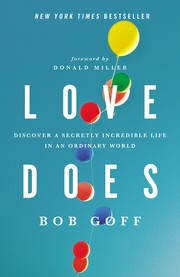
Love Does
A lawyer and activist tells stories of saying yes, showing up, and loving people through ordinary, often ridiculous actions.
2,411-word summary · 11 min read
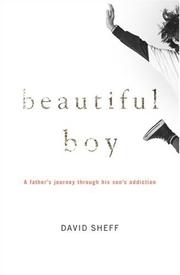
Beautiful Boy: A Father's Journey Through His Son's Addiction
David Sheff recounts watching his son Nic slide into meth addiction, and his own desperate, humbling search for how to help without destroying them both.
2,076-word summary · 9 min read
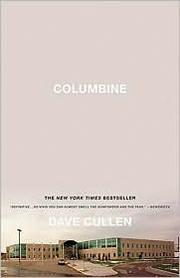
Columbine
Ten years of reporting on the 1999 school massacre, including a journalist's correction of the myths he helped create in the first hours.
2,232-word summary · 10 min read
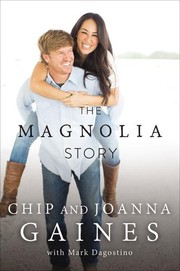
The Magnolia Story
How Chip and Joanna Gaines met, closed their first shop, nearly lost everything in a housing development, and built Fixer Upper.
2,994-word summary · 13 min read
Lone Survivor: The Eyewitness Account of Operation Redwing and the Lost Heroes of SEAL Team 10
Marcus Luttrell's account of the 2005 SEAL mission in Afghanistan that killed three of his team and left him alone.
2,144-word summary · 10 min read
Life
The Rolling Stones guitarist tells his own story: a Dartford childhood, the band's first gigs, the drug raids, the tax years and Patti Hansen.
2,761-word summary · 12 min read
Dry
A memoir of drinking, rehab and relapse, and the strange business of getting sober one morning at a time.
2,643-word summary · 12 min read

Dear Girls: Intimate Tales, Untold Secrets & Advice for Living Your Best Life
Ali Wong's debut collects fourteen letters to her daughters, covering sex, money, work, marriage, Vietnam, and being a working Asian American mother.
2,266-word summary · 10 min read
Travels with Charley
Steinbeck drives across America with his poodle Charley, looking for the country he remembers and finding a place that has changed.
2,039-word summary · 9 min read
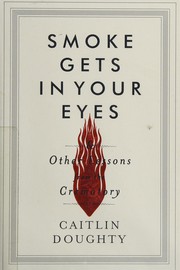
Smoke Gets in Your Eyes: And Other Lessons from the Crematory
A young medieval history graduate takes a job at an Oakland crematory and becomes a mortician, confronting the physical reality of death and the funeral…
2,003-word summary · 9 min read
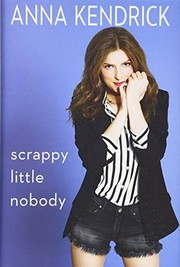
Scrappy Little Nobody
Anna Kendrick's essays trace her path from a Portland childhood and Broadway to Hollywood, with jokes, anxiety, and a refusal to pretend fame fixed her.
2,092-word summary · 9 min read

The Letters of Vincent van Gogh
Vincent van Gogh's letters to his brother Theo, in a Penguin Classics selection edited by Ronald de Leeuw, trace a decade of work, faith, and obsession.
2,611-word summary · 12 min read
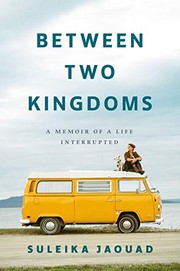
Between Two Kingdoms: A Memoir of a Life Interrupted
Diagnosed with leukemia at twenty-two, Suleika Jaouad survives treatment and then takes a 100-day road trip to meet the strangers who wrote to her.
2,311-word summary · 10 min read
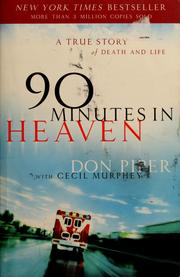
90 Minutes in Heaven: A True Story of Death and Life
A pastor declared dead at a 1989 crash scene describes ninety minutes he says he spent in Heaven, then thirteen months of surgeries, depression, and recovery.
2,246-word summary · 10 min read