
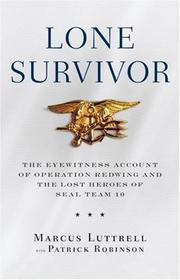
Lone Survivor: The Eyewitness Account of Operation Redwing and the Lost Heroes of SEAL Team 10
2,144-word summary 10 min read 390 pages in the book
- First published
- 2007
- Publisher
- Little, Brown and Company
- Pages
- 390
- ISBN
- 9780316067591
Reading options
What's inside (9 sections)
I read this one in a bad mood, which I think is the right way to read it. Marcus Luttrell's Lone Survivor, published by Little, Brown and Company on June 12, 2007, 390 pages, ISBN 9780316067591, is the account of the night in June 2005 when he and three other Navy SEALs were ambushed in the mountains of Kunar province in Afghanistan, and he was the only one of the four who survived. It is written with a novelist named Patrick Robinson, and that collaboration is visible in the good ways and the bad.
What stayed with me was not the firefight, which is the part everyone remembers and which the book handles well. What stayed with me was the part afterward, in a house in a village called Salar Ban, when a Pashtun farmer with a family and a rifle had to decide what to do with a broken American soldier hiding under his floor. That is the part of the book I would hand to a stranger.
Before the mountain
Luttrell was born in Houston in 1975 and grew up in Willis, Texas, the kind of place where everybody is a truck person or an oilfield person. When he was fourteen, an Army veteran named Billy Shelton started training him and his twin brother Morgan in his driveway: weights, running, rope work, the whole grim curriculum of someone who wants you to fail before you get the chance. Morgan made it into the SEALs too, and later left the Navy as an officer and went into politics. The twins are a thread that runs through the book, and the book is warmer about that childhood than about almost anything else in it.
Marcus enlisted in the Navy in March 1999, a year after leaving college without finishing. He wanted the hard thing and he went looking for it, which is a sentence I think about whenever I read about elite forces in general. He broke his femur falling off a rope in Basic Underwater Demolition and SEAL training, went back, and graduated with his class in April 2000. He did jump school, then SEAL Qualification, and on February 2, 2001 he got his Naval Special Warfare Insignia, the trident that people mean when they say the Navy SEALs. Then he went to Fort Bragg for the combat medic course, because a SEAL fire team carries a corpsman, and Luttrell was that corpsman.
He deployed to Iraq in 2003 with the invasion force, then in 2005 to Afghanistan with SEAL Team Ten. The first third of the book is the part where he is training, drinking, being hazed and being broke. The training chapters are the weakest writing in the book, because training stories are always the weakest writing in books like this. Somebody, probably Robinson, had a very good instinct to put them early. It gives you the reader's assumption of what kind of man the narrator is before the mountain asks you to change it.
Four men and a mountain
The operation was called Red Wings, and it was run by a Marine battalion out of Kunar province whose commanders named their large operations after hockey teams, because the battalion's first three had turned out to be names you did not want to explain in Afghanistan. Spurs, Mavericks, Celtics, Stars, and then Red Wings.
The target was a local Taliban-aligned militia leader named Ahmad Shah, who had been behind a handful of attacks on coalition forces, and who lived in a cluster of buildings on the slopes of Sawtalo Sar, a mountain twenty miles west of the provincial capital. Shah was not bin Laden. He was a village-level strongman with maybe fifty men, and the plan was for a four-man SEAL reconnaissance team to go up, find him, and guide a bigger force in behind him.
That team was Lieutenant Michael Murphy, who led it; Petty Officer Second Class Danny Dietz; Petty Officer Second Class Matthew Axelson; and Luttrell, the corpsman, whose job on the mountain was to keep the other three alive. Inserted late on the night of June 27, 2005, they fast-roped from a Chinook into a saddle between two peaks while the other helicopter dropped decoy bundles to confuse anyone watching.
Then some goat herders stumbled into their overwatch position and saw them. The team talked it over, and Murphy, who would be killed the next morning, decided to let them go, because they were civilians and the rules of engagement said so. The book says the talk became a vote, and that the vote nearly went the other way. That scene has been argued over ever since, and I will get to it.
The team moved to a fallback position, and within about an hour the shooting started.
The gulch and the second helicopter
What came down on them was a mixed force with RPK machine guns, AK-47s, RPG-7 rocket grenades and an 82 millimeter mortar, which is to say everything a militia could carry. The team was driven into a gulch on the Shuryek Valley side of the mountain, and the radio would not work, and the satellite phone would not work, and the only message that got out was enough to tell the command center they were under attack.
Dietz was killed early. Murphy climbed the cliff to get a radio signal and was shot for it. The quick reaction force took hours to launch, and when it came, the two helicopters went in without the Apache cover they should have had. One of them took an RPG-7 that hit the transmission under the rear rotor, and the Chinook went down with sixteen Americans inside: eight SEALs of Team Ten and eight Army Special Operations aviators, including the 160th's commander and the overall ground commander, LCDR Erik Kristensen. That was the worst single loss of American special operations forces up to that point, and the book sits in the arithmetic of it: sixteen names, then the men who died to try to save four.
Axelson was killed on the slope. Luttrell was blown over a cliff by a rocket grenade and left with a broken back, fractures, and shrapnel, and then he did the thing that makes the story a story: he kept his rifle, hid, and stayed alive through the day and the night while the Taliban searched the slope for him. He came down out of the mountains eventually, badly hurt, and crawled for miles.
Salar Ban
The name of the man who found him is Mohammad Gulab, from the village of Salar Ban, and the book is careful about him, which is one of its virtues. The custom that governs what happens is Pashtunwali, and the specific part of it is Nanawatai, sanctuary: if you take in someone who is being hunted, you become responsible for him, and the village stands behind you.
Gulab took Luttrell in, moved him, hid him, and fed him. Shah, the same militia leader the team had come for, came to the village and demanded the wounded American be handed over. Gulab and the others refused. This is the part of the story I find hardest to accept and cannot stop thinking about: a man with no weapons advantage and a family at stake, saying no, because a rule older than any of the parties in the war said that was the answer.
Luttrell wrote a note and wanted someone to carry it out. Gulab would not leave him, so he sent an older relative named Shina down the valley with the note and a thousand afghanis, about twenty dollars then, and Shina walked, took a cab, and reached the American base at Nangalam in the middle of the night with the story. On July 2, Rangers and Afghan National Army soldiers reached the area, and two Air Force pararescuemen, Josh Appel and Chris Piercecchi, carried Luttrell out. Two days later they went back up the mountain with his descriptions and recovered the bodies of Dietz, Murphy and Axelson.
Gulab and his family got threats afterward and were moved to Asadabad. The last section of the book is an epilogue called Lone Star, which deals with the years after the rescue rather than the night itself.
The fight over the facts
Here is where the book is most interesting to argue with, and also where you have to be careful.
The enemy numbers do not agree with each other. Luttrell's own after-action report put the militia at twenty to thirty-five fighters. His book says the team was briefed to expect eighty to two hundred. Initial intelligence estimates were ten to twenty. The Navy cited thirty to forty in Michael Murphy's Medal of Honor citation and more than fifty in the related summary. Ed Darack, in Victory Point, cites a military intelligence report putting the force at eight to ten, against the eighty to two hundred claimed in the book. The New York Times review noted the book is spiked with unabashed braggadocio and patriotism, and with polemics aimed at the liberal media, and that is not an unfair reading of the later chapters.
The vote over the goatherds is the most disputed scene. A Navy Special Warfare Command spokesman said he had never heard of a decision like that being put to a vote, and Murphy's father wrote in Newsday that his son would never have considered killing unarmed civilians.
And Gulab himself pushed back. He said Luttrell was found with all eleven of his magazines, not nearly empty as the book says. He said the Taliban tracked them from the helicopter. He said the locals searched the hills afterward and found no Taliban dead. A former Marine colonel involved in the recovery said there were no reports of enemy casualties, and the two videos the Taliban filmed show about seven men in the militia. Gulab also said that before his 60 Minutes interview, an interpreter told him to agree with whatever Marcus said. If you read the book as the survivor's scripture, you are accepting one man's account against a dead man's enemies, and the enemies have their own account.
Two small things that will drive you mad. The title says Operation Redwing, and the operation was actually called Red Wings; the error is in the book and it has been repeated for two decades. And Patrick Robinson is a thriller novelist, which means the book you are holding is a collaboration, and some of the smoothest set pieces are his.
After the book
Luttrell received the Navy Cross from President Bush in 2007, and Michael Murphy was posthumously awarded the Medal of Honor the same year. Dietz and Axelson had received the Navy Cross in 2006.
The years after the book were not gentle. In 2011 a Chinook was shot down in Wardak province, killing thirty Americans, including seventeen Navy SEALs, and that crash passed the 2005 helicopter as the deadliest single incident for American forces in Afghanistan. In 2012 he published a second book, Service, with James Hornfischer, about the awkward business of coming home. In 2013 Universal released Peter Berg's film, with Mark Wahlberg in the role; the rights had cost the studio more than two million dollars in 2007. The Lone Survivor Foundation now funds treatment programs for wounded service members and their families.
There is also the yellow Labrador he was given during his recovery, DASY, named from the initials of the four men: Danny, Axe, Southern, Yankee. The dog was shot dead outside his property in 2009, and the two men who did it were charged with animal cruelty, which says something about how the story attached itself to the people living it.
Who should read it
Read it if you want a memoir of a fight that went wrong, told by the man who lived through it, with a village that deserves more of the credit than it usually gets. Read it alongside Darack's Victory Point, which is colder and more skeptical, and you will get a much better picture of the day than either book gives alone.
Skip it if you want a technical account of the firefight, because the book skips a lot of the professional detail to stay with the human part. Be suspicious of it if you are the kind of reader who notices that the surviving narrator is also the selling narrator. He was very good at it, and he was very good at it because the story was true, and the two things are hard to separate after a few hundred pages.
I still think about Gulab. Everyone talks about the man who survived and the men who did not, and the man in the house with the rifle is the reason there is a man to talk about.
FAQ
When was Lone Survivor published?
Little, Brown and Company published the first edition on June 12, 2007, with 390 pages and ISBN 9780316067591. A trade paperback followed from Back Bay Books in 2008, and a 2013 film adaptation starred Mark Wahlberg.
Who wrote the book with Marcus Luttrell?
Patrick Robinson, a British thriller novelist, worked with Luttrell on the manuscript. Luttrell's later book Service, published in 2012, was written with James Hornfischer.
Is the book an exact account of the fight?
Not entirely, and the book has been argued with since publication. Luttrell's after-action report put the militia at 20 to 35 fighters while the book says the team was briefed to expect 80 to 200, and Mohammad Gulab, the villager who hid him, disputed other details.
Similar books
A Long Way Gone: Memoirs of a Boy Soldier
A Sierra Leone boy flees rebels, becomes a child soldier at thirteen, and fights his way back through rehab.
2,434-word summary · 11 min read
Band of Brothers
Easy Company, 506th Airborne, from Toccoa training through D-Day, Holland, Bastogne, and Hitler's Eagle's Nest.
2,685-word summary · 12 min read
American Sniper: The Autobiography of the Most Lethal Sniper in U.S. Military History
Navy SEAL sniper Chris Kyle recounts Texas roots, SEAL training, four Iraq tours, and the strain combat placed on his marriage and health.
2,011-word summary · 9 min read
Unbroken
Louis Zamperini survives a Pacific crash, sharks and POW camps after running in the Berlin Olympics.
3,263-word summary · 15 min read

The Zookeeper's Wife: A War Story
The directors of the Warsaw Zoo hid roughly three hundred Jews in empty cages and outbuildings after the German invasion, while Jan worked for the resistance.
2,065-word summary · 9 min read

Long Walk to Freedom
Mandela's account of a Thembu childhood, a law practice, a banned movement, twenty-seven years in prison, and the negotiation that ended apartheid.
2,454-word summary · 11 min read

In Order to Live: A North Korean Girl's Journey to Freedom
A young North Korean girl crosses the Yalu, survives trafficking in China, and rebuilds her life in Seoul in this unsparing memoir.
2,027-word summary · 9 min read

Down and Out in Paris and London
Orwell's account of washing dishes in Paris hotels and tramping through London does not ask for pity, only for a clear look at how poverty actually works.
2,282-word summary · 10 min read

The Girl with Seven Names: A North Korean Defector's Story
Hyeonseo Lee crossed the frozen Yalu River at seventeen, spent years hidden in China, escaped to South Korea, and later returned to rescue her family.
2,404-word summary · 11 min read

Bury My Heart at Wounded Knee: An Indian History of the American West
Dee Brown's 1970 retelling of the American West from the point of view of the people it destroyed.
2,233-word summary · 10 min read

The Letters of Vincent van Gogh
Vincent van Gogh's letters to his brother Theo, in a Penguin Classics selection edited by Ronald de Leeuw, trace a decade of work, faith, and obsession.
2,611-word summary · 12 min read
Killing Lincoln
Booth plots as Lincoln pushes war end and reunion in 1865.
2,486-word summary · 11 min read
In the Heart of the Sea: The Tragedy of the Whaleship Essex
The whaleship Essex sunk by a whale leaves men in boats for ninety days.
2,750-word summary · 12 min read

Wild Swans
Three generations of women survive warlords, revolution, and the Cultural Revolution in Jung Chang's family memoir.
2,356-word summary · 10 min read
The Perfect Storm
Gloucester's Andrea Gail vanished in the October 1991 nor'easter; Junger joins the crew, storm science, and Tamaroa rescues into a plain and hardworking sea…
2,592-word summary · 12 min read

Twelve Years a Slave
Free violinist Solomon Northup tells how Brown and Hamilton lured him south into twelve years of Louisiana bondage until Bass letters brought rescue in January…
2,931-word summary · 13 min read
Cleopatra: A Life
Pulitzer winner Schiff restores Cleopatra as a capable ruler, from Ptolemy debts and Caesar to Antony, Actium, and her death in 30 BC, built from coins and…
3,586-word summary · 16 min read
The Splendid and the Vile
Larson follows Churchill circle through Blitz year with diaries and bombing nights.
2,038-word summary · 9 min read
A Stolen Life
Kidnapped at eleven in 1991, Jaycee Dugard survived eighteen years in an Antioch backyard and tells her own story of endurance and motherhood.
2,807-word summary · 12 min read
The Wager: A Tale of Shipwreck, Mutiny and Murder
Thirty starved men reach Brazil as heroes in 1742, then three more land in Chile calling them mutineers, and Grann sorts the wreck.
2,995-word summary · 13 min read

The Rise and Fall of the Third Reich: A History of Nazi Germany
A Berlin correspondent turned historian traces Nazi Germany from beer halls to bunker using eyewitness memory and captured German records.
3,559-word summary · 16 min read
Endurance: Shackleton's Incredible Voyage
Trapped and crushed in Antarctic ice, Shackleton and 28 men survive floes, open boats, and an 800 mile sea crossing. Lansing tells it from their diaries.
2,818-word summary · 13 min read
Dead Wake
Larson tracks Lusitania, U-20, and Room 40 toward May 1915 sinking.
2,471-word summary · 11 min read
Days of Love and Rage
Six Syrians build a short democracy in Manbij, then watch inequality and ISIS undo it.
2,022-word summary · 9 min read
Autobiography of Cotton
A Pulitzer winner traces her cotton-worker grandparents and a 1934 border strike through archives, memory, and damaged land.
2,213-word summary · 10 min read
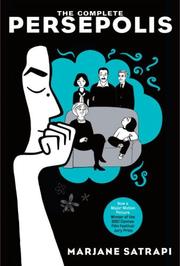
The Complete Persepolis
Satrapi's full black and white memoir in one volume, from revolution era Tehran through Vienna exile and back home again.
2,498-word summary · 11 min read

Persepolis
Marjane Satrapi's black and white memoir of growing up in Tehran during revolution and war, from a bold ten year old to a fourteen year old sent alone to…
2,984-word summary · 13 min read
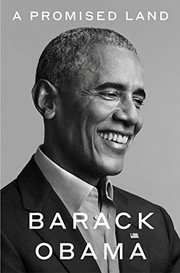
A Promised Land
First-volume memoir from Iowa 2008 through the 2011 bin Laden raid, crisis management and doubt.
2,243-word summary · 10 min read
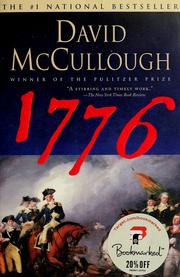
1776
Washington's amateur army from Boston siege to Trenton through mud and doubt.
2,139-word summary · 10 min read
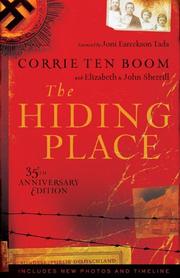
The Hiding Place: The Triumphant True Story of Corrie Ten Boom
The Ten Booms hide Jews in Haarlem, suffer Ravensbruck, lose Betsie, and learn forgiveness.
2,593-word summary · 12 min read