
Reading options
What's inside (9 sections)
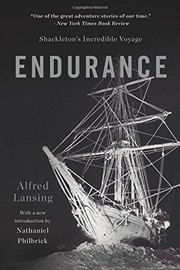
I picked this up because a friend kept insisting it was the best survival story ever written, and I did not believe him. Survival books tend to blur together for me. Cold, hunger, someone eats a boot. I expected misery stretched over three hundred pages. What I got instead was stranger and better, a story about management under impossible pressure, told through frostbite and boat wood and seal meat. Endurance: Shackleton's Incredible Voyage was published in 1959 by McGraw-Hill in New York, 416 pages in the Basic Books paperback edition cited here, ISBN 9780465062881, author Alfred Lansing. It follows Sir Ernest Shackleton and the twenty eight men of the Imperial Trans-Antarctic Expedition from confidence to shipwreck to open boat to rescue, and every man lived. That last fact sounds like a spoiler. It is really the premise. The interest is in how.
Lansing was a Chicago journalist and Navy veteran, not a polar expert, and he wrote the book from the crew's own paper trail. Nearly every diary kept on the expedition was opened to him. Almost every man still alive sat for long interviews. The ship's surgeon Alexander Macklin gave him diaries and months of guidance. So the voice feels close to the ice without pretending to have been there. Dates, rations, wind shifts, who quarreled with whom, it all comes from people who endured it.
The last great prize and a wooden ship
Shackleton had already tried for the South Pole and failed with honor. By 1914 both poles had been reached, Amundsen and Scott in the south, so he aimed at the one feat left. He would cross Antarctica on foot, from the Weddell Sea side to the Ross Sea side, straight over the pole. Money came from donations and loans. The ship was a Norwegian built wooden barquentine from 1912, first named Polaris, bought and renamed Endurance after the Shackleton family motto about conquering through endurance. She had a reinforced hull for ice and both sail and steam. Strong, but no wooden hull was built to be squeezed by an ocean of moving floes.
The expedition left Plymouth in August 1914, just as war broke out in Europe, stopped in Buenos Aires, and reached the whaling station at Grytviken on South Georgia late in the year. Whalers warned Shackleton the ice was unusually heavy that season. He went anyway. On December 5 the Endurance left South Georgia for the Antarctic coast with twenty eight men, sixty nine sled dogs, a cat named Mrs. Chippy belonging to the carpenter, and stores meant to last deep into the crossing. The mood was high. The photographer Frank Hurley set up his camera on deck. Scientists took soundings. Nobody on board treated this as a suicide run. It looked like the start of a famous triumph.
Lansing is good at this early stretch because he lets confidence sit beside small warnings. The pack thickens day by day. Leads of open water close behind the ship. By January 1915, still short of the landing coast, the Endurance is held fast. At first the men treat it as a delay. They exercise the dogs on the ice. They take photographs in clear cold light. Shackleton still talks about waiting for a thaw and pushing on. Readers know the title of the book. The men did not.
Beset, drift, and the slow crush
For the next ten months the ship drifts with the ice while the crew settles into a strange domestic routine. This is the part of the book I did not expect to enjoy. There are watches and meals and lectures. Hurley develops glass plates in a darkroom rigged below deck. The meteorologist logs wind. The cook bakes bread in a coal stove galley. Dogs breed and fight and run in teams when the surface allows. Parties play football on flat floes. At midwinter they celebrate with extra rations and songs. The ice holds them, but life goes on, and Lansing piles up enough small texture that you start to feel the cold in your own hands.
Under that routine the pressure grows. The floes grind and raft. Ridges rear up near the hull with sounds like artillery. The ship heels, lifts, groans. The carpenter, Harry McNish, shores up timbers and builds odd structures on deck. Shackleton orders the dogs moved off to ice kennels to reduce risk. By October the floes close like a vise. Water pours in faster than the pumps can handle. On October 27, 1915 Shackleton gives the order to abandon ship. The men haul boats, tents, food, and clothing onto the ice and watch the Endurance die slowly a few hundred yards off. She sinks stern first on November 21. Hurley keeps filming until the ice takes the mast. Several men cry. A few admit relief that the waiting is over.
If you like momentum, this middle drift may test you. Lansing tracks stores and dog teams and wind direction in detail, and some chapters read like a ledger with frost on it. I found myself skimming latitudes. But the slowness has a point. It shows how disaster arrived by inches, and how ordinary habits kept fear from turning into panic. The criticism I would make is that Lansing rarely steps back to explain his own omissions here. He sticks so close to the diaries that larger questions about why Shackleton sailed into known heavy ice get less attention than the price of that choice deserves.
Camps on moving ice
Homeless on the floe, the party builds Dump Camp from salvaged spars and canvas, then the more ordered Ocean Camp. Tents go up in rows. The three lifeboats, the James Caird, the Dudley Docker, and the Stancomb Wills, sit ready on sledges. Rations shrink. Seal and penguin meat become the staple, eaten half raw when fuel runs short. The hated moment comes when Shackleton orders the remaining dogs shot. They cannot be fed and cannot be carried in the boats. The cat goes too. Lansing reports this plainly, through the men's notes, and the flat tone makes it worse than any speech would.
Frank Wild, Shackleton's second in command, runs the daily life of the camps while Shackleton plans. Wild is one of the book's quiet revelations. Tireless, fair with food, quick to settle disputes, he holds the group together through example more than orders. The surgeon Macklin treats frostbite, bad teeth, and low spirits. Arguments flare. McNish, aging and proud of his craft, resents taking orders from officers he sees as amateurs in woodwork, and at one point refuses an order in a way that shadows his later treatment. Class lines from the ship persist on the ice. Officers keep small privileges. Seamen notice. Lansing does not hide this friction, though he keeps his own judgments mild.
Spring brings the floe breaking under them. The surface that carried them for a year softens and splits. They march in fits, hauling boats over pressure ridges, gaining a mile and losing it to the drift. Ocean Camp is left behind. They settle at Patience Camp on a larger floe and wait for open water while eating down to the bone. Blubber lamps smoke in the tents. Men sleep in reindeer bags that never fully dry. Lansing's restraint serves him well here. He describes hunger and wet and boils and snow blindness without reaching for grand statements, and the accumulation does the work.
Three small boats for Elephant Island
When the floe finally fractures in April 1916, they take to the boats. This passage is the heart of the book for me, and Lansing writes it with a sailor's care. Twenty eight men crowd into three open boats, each barely twenty feet long, loaded with stones for ballast, frozen sleeping bags, casks of water, and sacks of dried meat. McNish has raised the gunwales with scrap wood and canvas to give them a few extra inches against the sea. The difference between life and death is measured in inches.
They sail and row for days through gales and fog toward Elephant Island, a grim rock with glaciers spilling into black surf. Men bail without pause. Ice forms on the oars and has to be beaten off. Hands swell and split. Thirst grows because seawater keeps fouling the fresh casks. The Stancomb Wills, smallest of the three, nearly swamps more than once and has to be towed. When they finally make land on April 15 at a narrow spit, some men fall to their knees on the shingle and cannot stand. They have lived on a moving landscape for over a year. Solid ground feels unreal.
Wild takes charge of the Elephant Island party while Shackleton decides the next move. The spit, later called Cape Wild, offers little shelter from wind and surf. They flip the two larger boats upside down, pack stone walls around them, stretch canvas over the top, and call the hut the Snug. Food is seal and penguin and limpets gathered at low tide. Fuel is blubber. A rescue ship might pass, but nobody plans on luck. Winter is coming to the southern ocean. Lansing lingers on the ingenuity of the camp, the stonework and the blubber stove and the rota for the one decent sleeping bag, and you understand that survival here meant craft as much as courage.
Eight hundred miles in the James Caird
Shackleton chooses six men and the stoutest boat, the James Caird, for a run to South Georgia, eight hundred miles across some of the roughest water on earth. The crew is himself, the Endurance captain Frank Worsley, second officer Lionel Greenstreet's place going instead to men picked for the sea passage, with Tom Crean, Timothy McCarthy, John Vincent, and McNish. McNish caulks the old boat with wicking and seal blood and tallow because proper materials are gone. They load limited water, hard biscuit, sugar lumps, and a small Primus stove. They leave on April 24 with the island shrinking behind them.
I read these chapters slowly because every page holds weather. Gales build gray seas that tower over the boat and break across her. Spray freezes on oilskins until men move like statues. They take turns at the tiller in short spells because steering in those seas demands full strength. Worsley shoots the sun with a sextant in rare clear moments, wedged in the stern while waves try to tear the instrument from his hands, and his navigation across sixteen days with almost no fixes is one of the great feats of the age. They sleep in shifts under a canvas cover, soaked, cramped, frostbitten, drinking thin milk made from powdered rations.
South Georgia rises on May 10, cliffs black against cloud, surf exploding at their feet. The landing at King Haakon Bay nearly kills them at the last minute when the boat grounds in breaking water, but they get ashore and crawl above the tide line. Three men are too broken to go on. Shackleton, Worsley, and Crean rest a few days, eat more than they should, then set out to cross the island's unmapped interior to reach the whaling station at Stromness. No one has ever made that crossing. They climb with a carpenter's adze as an ice axe and a coil of rope, through cloud and crevasses and wind that knocks them flat, walking and sliding for thirty six hours without sleep until they hear a steam whistle in the valley below. I had to put the book down at that whistle. It lands like a hand on the shoulder.
Rescue, credit, and what drags
The rest comes fast after months of slow suffering. The whalers at Stromness feed the three scarecrows and stare at their beards and rags. A boat fetches the three men left at King Haakon Bay. Then Shackleton begins the grinding work of rescue. The southern winter blocks approach after approach to Elephant Island. Trawlers turn back in ice. A borrowed vessel breaks down. Loans and governments and the war complicate everything. Wild, back on the spit, keeps twenty two men alive on shrinking rations and strict routine, telling them the Boss will come. On August 30, 1916 the Chilean steamer Yaccho, lent for the attempt, breaks through fog to find the whole party drawn up on the beach, thin and filthy and alive. Not one man of the twenty eight was lost. Even the stowaway, the youngest aboard, stands in the line.
Lansing closes with honors and costs rather than fanfare. Shackleton's reputation climbs. Some men return to war. McNish, whose woodwork saved the boats, is denied the Polar Medal given to the others, likely for his earlier defiance, and the slight follows him to his grave. The wreck of the Endurance herself rests three thousand meters down in the Weddell Sea, found upright in 2022 by a search team, her name still legible on the stern. Lansing could not have known that coda, but it fits his theme. The ship held her shape in the dark for a century, the way the crew held theirs.
Fair criticism belongs here because admiration should not turn into worship. Lansing keeps such steady sympathy for Shackleton that harder questions get soft answers. The decision to push into heavy ice after warnings, the rigid class divisions in food and shelter, the shooting of the animals, the sidelining of McNish, all pass through without much challenge. The science staff beyond a few favorites stay thin as characters. Women appear only in passing references to wives and mothers, true to the source material yet limiting for modern readers who want the full human picture. And the prose, so strong on boats and ice, can flatten in the camp chapters into lists of stores and symptoms. Readers who want inner lives and debate may find the book too external. Readers who want a clean record of what happened, day by day, will find little better.
For all that, I keep thinking about small scenes more than the famous ones. Wild handing out equal slivers of meat with frozen fingers. Worsley balancing a sextant in a heaving stern. McNish planing wood by lamplight while the floe cracks under the tent. Hurley diving back toward a sinking ship for his plates. None of these moments ask to inspire. They show work continuing past the point where quitting would make sense. When people call this the greatest survival story, I now think they mean something plain. These men did not escape by luck alone. They stayed organized, stayed kind more often than not, and kept moving toward the next camp, the next island, the next whistle in the valley. That is a lesson with edges, and Lansing lets it stand without polishing it into a slogan.
Hunger, boats, and mountains
One thread worth pulling out is hunger, because Lansing treats it as a slow pressure rather than a single crisis. Early on there is plenty, even celebration food saved for holidays. Then the portions narrow. Sugar is counted in lumps. Biscuits are counted in halves. Seal steaks fried in blubber keep scurvy off but never fill the belly. Men dream of bread and wake angry. The cooks scrape pots and serve the scrapings as soup. By Patience Camp the talk at night is all of meals remembered in exact detail, courses and sauces described like poetry. Lansing never lectures about starvation. He shows its arithmetic, and the arithmetic is bleak.
A second thread is the boats themselves. McNish deserves a longer look than the book quite gives him. He was in his forties, older than most, prickly, certain of his trade, and his patches and raised topsides kept the Caird afloat through seas that should have rolled her. Lansing records the carpentry with respect while keeping McNish at arm's length as a personality. I wished for more about the tension between a skilled workman and the officers who commanded him. The book gives enough to see the injustice of the missing medal, but it does not press the point. That restraint feels loyal to the survivors who spoke to Lansing, and slightly unfair to the one who died unrecognized.
The mountain crossing deserves its place apart from the sea voyage because it changes the register from endurance to speed. After a year of waiting on ice and weeks in boats, three men move fast over snow with almost no gear, sliding down slopes they cannot climb back up, lowering each other into fog, drinking meltwater from cupped hands. Lansing writes it almost breathlessly, which suits the event. The contrast tells you what Shackleton understood about his own men. Given a path, however steep, they would spend everything to walk it. Given open waiting, they needed Wild's routines to keep despair from settling. Leadership here looks less like speeches and more like reading which kind of strain each moment demands.
FAQ
When was Endurance published?
McGraw-Hill published it in 1959. The first edition runs 282 pages and the Basic Books paperback cited here runs 416 pages with ISBN 9780465062881.
Did everyone on the expedition survive?
Yes. All twenty eight men lived. Shackleton's boat party reached South Georgia and a Chilean steamer lifted the Elephant Island camp on August 30, 1916.
Is Endurance part of a series?
No. It is a standalone account built from crew diaries and interviews, with ship surgeon Alexander Macklin as a key source.
Similar books

The Lost City of Z: A Tale of Deadly Obsession in the Amazon
David Grann retraces Percy Fawcett's 1925 disappearance in the Amazon and finds that the lost city he sought was not entirely a fantasy.
2,493-word summary · 11 min read
In the Heart of the Sea: The Tragedy of the Whaleship Essex
The whaleship Essex sunk by a whale leaves men in boats for ninety days.
2,750-word summary · 12 min read
The Perfect Storm
Gloucester's Andrea Gail vanished in the October 1991 nor'easter; Junger joins the crew, storm science, and Tamaroa rescues into a plain and hardworking sea…
2,592-word summary · 12 min read
Lone Survivor: The Eyewitness Account of Operation Redwing and the Lost Heroes of SEAL Team 10
Marcus Luttrell's account of the 2005 SEAL mission in Afghanistan that killed three of his team and left him alone.
2,144-word summary · 10 min read
The Wager: A Tale of Shipwreck, Mutiny and Murder
Thirty starved men reach Brazil as heroes in 1742, then three more land in Chile calling them mutineers, and Grann sorts the wreck.
2,995-word summary · 13 min read
A Long Way Gone: Memoirs of a Boy Soldier
A Sierra Leone boy flees rebels, becomes a child soldier at thirteen, and fights his way back through rehab.
2,434-word summary · 11 min read
Into Thin Air
Krakauer's account of the 1996 Everest disaster: a guided summit push, a sudden storm, and the choices that left eight dead above 26,000 feet.
2,447-word summary · 11 min read
Unbroken
Louis Zamperini survives a Pacific crash, sharks and POW camps after running in the Berlin Olympics.
3,263-word summary · 15 min read

The Zookeeper's Wife: A War Story
The directors of the Warsaw Zoo hid roughly three hundred Jews in empty cages and outbuildings after the German invasion, while Jan worked for the resistance.
2,065-word summary · 9 min read

Long Walk to Freedom
Mandela's account of a Thembu childhood, a law practice, a banned movement, twenty-seven years in prison, and the negotiation that ended apartheid.
2,454-word summary · 11 min read

1491: New Revelations of the Americas Before Columbus
Charles C. Mann gathers archaeology, ecology, and demography to argue that the Americas before Columbus were older, fuller, and more deliberately shaped than…
2,712-word summary · 12 min read

The Icebound Land
Captured and enslaved in Skandia, Will fights a drug that erases him while Halt and Horace cut a bloody road through Gallica to bring him home.
2,088-word summary · 9 min read

The DaVinci Code: A Quest for Answers
A short 2006 dialogue in which three friends test Dan Brown's claims about Jesus, Mary Magdalene, Nicaea, and the canon.
2,088-word summary · 9 min read

The Beach
A young backpacker follows a dead man's map to a hidden island community, then discovers what the people there are willing to do to keep it secret.
2,067-word summary · 9 min read

Nothing to Envy
Barbara Demick follows six defectors from Chongjin through the North Korean famine, showing how ordinary people lived, believed, and finally left.
2,068-word summary · 9 min read

In Order to Live: A North Korean Girl's Journey to Freedom
A young North Korean girl crosses the Yalu, survives trafficking in China, and rebuilds her life in Seoul in this unsparing memoir.
2,027-word summary · 9 min read
The Valley of Horses
Exiled from the Clan, Ayla survives alone in a hidden valley, tames a horse and a cave lion, and nurses a wounded stranger back to life.
2,311-word summary · 10 min read

Down and Out in Paris and London
Orwell's account of washing dishes in Paris hotels and tramping through London does not ask for pity, only for a clear look at how poverty actually works.
2,282-word summary · 10 min read

The Girl with Seven Names: A North Korean Defector's Story
Hyeonseo Lee crossed the frozen Yalu River at seventeen, spent years hidden in China, escaped to South Korea, and later returned to rescue her family.
2,404-word summary · 11 min read
The Wright Brothers
David McCullough tells the story of two self-taught Ohio brothers, working largely alone and out of a bicycle shop, who solved the problem of flight before…
2,027-word summary · 9 min read

The Magic of Thinking Big
Schwartz's 1959 self-help classic argues that success follows from the size of your thinking, supported by sales anecdotes, vocabulary drills and goal setting.
2,579-word summary · 11 min read
Creativity, Inc.: Overcoming the Unseen Forces That Stand in the Way of True Inspiration
Pixar's president on why the studio that made Toy Story nearly broke itself, and the daily habits that kept the creativity coming.
2,179-word summary · 10 min read

Bury My Heart at Wounded Knee: An Indian History of the American West
Dee Brown's 1970 retelling of the American West from the point of view of the people it destroyed.
2,233-word summary · 10 min read

At Home: A Short History of Private Life
Bill Bryson tours his own Norfolk rectory room by room to explain how private life and the modern home got built.
2,334-word summary · 10 min read

The Hard Thing About Hard Things
A founder and CEO writes about the parts of running a company that no framework can fix, from layoffs and demotions to the loneliness of the job.
2,161-word summary · 10 min read

Prisoners of Geography: Ten Maps That Tell You Everything You Need to Know About Global Politics
Tim Marshall explains how mountains, rivers, coasts, and resources shape the choices of nations, from Russia's flat borders to the chokepoints of the South…
2,328-word summary · 10 min read

The Letters of Vincent van Gogh
Vincent van Gogh's letters to his brother Theo, in a Penguin Classics selection edited by Ronald de Leeuw, trace a decade of work, faith, and obsession.
2,611-word summary · 12 min read

Never Fade
Ruby, now a leader in the Children's League, must track down the boy whose memories she erased, because he holds the only proof of what caused the disease that…
2,188-word summary · 10 min read

The World Is Flat: A Brief History of the Twenty-first Century
Thomas L. Friedman's 2005 bestseller argues that technology, trade, and open borders leveled the global playing field, and it names the ten forces that did it.
2,369-word summary · 11 min read

Nemesis Games
The Rocinante crew scatters across the solar system just as Marco Inaros and the Free Navy bombard Earth. The Expanse reaches its turning point.
2,506-word summary · 11 min read