
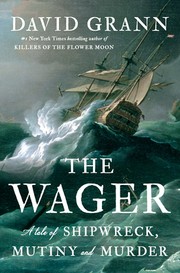
The Wager: A Tale of Shipwreck, Mutiny and Murder
2,995-word summary 13 min read 352 pages in the book
- First published
- 2023
- Publisher
- Doubleday
- Pages
- 352
- ISBN
- 9780385534260
Reading options
What's inside (8 sections)
I picked this one up because a coworker would not stop talking about it at lunch. He said it was about a shipwreck where everyone lived just long enough to accuse each other of murder. David Grann's book, published in 2023 by Doubleday and running 352 pages in hardcover, is slow, cold, wet, and often miserable on purpose. I read most of it on a couch with a blanket, feeling guilty about being warm.
The basic shape is easy to hold. In 1740 Britain sends a small squadron under Commodore George Anson to hurt Spain in a war most people now call the War of Jenkins' Ear. The plan is to round Cape Horn and take a Spanish treasure ship coming from Mexico. One of Anson's ships is HMS Wager, an old converted merchantman, packed with pressed men and officers who did not get better berths. In May 1741 she piles onto rocks off what is now Chile and breaks apart. About 140 men get ashore onto a treeless place they call Wager Island. Five months later most are dead or gone. Thirty men sail away in a patched boat and reach Brazil in January 1742. They are welcomed as heroes. Six months after that, three more men stagger into Chile with a different story. They say the heroes are mutineers.
Grann tells it straight through, from dockyard to courtroom, using logs, letters, diaries, and court martial papers. He also went to the island himself, which he describes near the end, seasick and soaked. You can feel the weather in every chapter.
The wooden world and a mission built to fail
The first part spends a lot of time below deck, and I mean a lot. Grann wants you to smell the ship before it sinks.
Anson is the rising star, careful and quiet, a man who checks rigging himself and remembers young officers. David Cheap is his opposite in many ways. Cheap starts as first lieutenant on Anson's own ship Centurion, eager, touchy about honor, hungry for a command of his own. He gets it by luck. The original captain of the Wager deserts with most of his crew, another officer dies, and Cheap steps into the vacancy. For a man who wanted glory, it is a bad prize. The Wager is broad and wallowing, built to carry goods, not to chase galleons. Her guns are heavy for her frame. Her crew is a mix of old men, boys, landsmen who have never been to sea, and marines who hate sailors and are hated back.
Then there are the two men who will matter most after the wreck. John Bulkeley is the gunner, a working sailor who knows powder, shot, tides, and men. He keeps a journal in a plain hand. John Byron is a midshipman, sixteen, small for his age, seasick and proud, the future grandfather of the poet Lord Byron. Grann uses Byron's later memoir a lot because Byron noticed the small cruelties that older sailors took as normal.
Life on an eighteenth century man of war was already a punishment before anything went wrong. Typhus moved through crowded berths. Scurvy turned gums black and opened old wounds. Food ran short because contractors cheated. Pay was months late and then docked for clothes you were forced to buy. Men died of fever and were sewn in canvas and tipped over the side before morning prayer finished. When these men later steal flour from each other on an island, you understand they were taught by the navy that food is survival and survival is private.
The squadron leaves in September 1740 and starts coming apart almost at once. Storms scatter ships. Sickness empties decks. Supply ships turn back. By the time they reach Cape Horn in March and April 1741, the Wager is alone, short of hands, with sick men lying three deep below. Cheap does one thing well here. He gets around the Horn when wind and current want to push him onto ice. Grann gives him credit for that piece of seamanship. It matters because what happens next is largely Cheap's fault, and Grann wants the blame to be fair.
Around the Horn and onto the rocks
Cape Horn in those months is a narrow gate of wind. The squadron tries for weeks to beat west through it. Masts crack. Sails blow to ribbons. Scurvy is now raging. Men too weak to chew. Men weeping because they cannot lift a bucket. On the Wager the sick list grows until there are not enough healthy hands to work the pumps.
Cheap pushes to hold station and keep westing, afraid to lose ground. His officers warn that they are being set east toward Patagonia. Cheap overrules them. On the night of May 13 into May 14, 1741, breakers are heard. Orders fly. Too late. The Wager strikes rocks off an island in the Guayaneco Islands and rolls on her side in surf.
The wreck chapter is the best writing in the book for me. Men in darkness hearing wood tear. Guns breaking loose below. Water coming in black and freezing. Byron, the boy, climbs through a hatch with water at his chest and gets out because a seaman grabs his collar. About 140 men reach a barren point of land. Many are hurt, naked, without shoes. They watch the hull break into planks by morning.
They name it Wager Island. It is low, wind scoured, with peat bogs, stunted trees bent sideways, and rain that rarely stops. There are shellfish and some birds and seals when the weather allows hunting, which it often does not. The Kawésqar people, nomadic canoe families who knew these channels, pass at times and know how to live here. The English do not. That gap will shape everything.
Wager Island: hunger, cold, and Cheap losing the crew
If you like survival stories, this middle stretch is gripping and grim. If you need steady progress, it will test you, because island life is the same hunger repeated with worse manners each week.
Cheap insists he is still captain with full powers. In his mind the Articles of War crossed the surf with them. In the men's minds pay stopped when the ship died, and with pay went obedience. That legal fog hangs over the whole book and later over the trial. Nobody in London had settled whether wrecked sailors owed duty or wages. On the island the argument is not legal. It is practical. Who finds food. Who builds shelter. Who shares.
Bulkeley and Cummins do the useful work. Bulkeley organizes parties to salvage flour, sets rules for sharing, builds huts from wreck wood and sailcloth, and keeps his journal daily. Cummins, the carpenter, is maybe the most admirable man here. He fashions tools, repairs boats, and later lengthens a yawl and a barge into a schooner they call Speedwell, using wreck planks and handmade nails. Byron runs messages, hunts with mixed success, and watches. He admires Cheap at first because Cheap speaks to him kindly and shares a little extra food, which on that island feels like love.
Cheap pulls away. Grann paints him as increasingly suspicious and strict, worried that any slack will be used at a court martial to say he lost his ship through neglect. He clings to rank, keeps a separate tent, keeps a servant, rations liquor tightly while men starve. He quarrels with officers over small slights. He refuses help from the Kawésqar after first accepting it, or rather his men ruin it. Some sailors cheat and threaten the visitors. One account says a sailor steals food from a native family. The Kawésqar leave, taking with them knowledge the English needed about where to find shellfish in winter. Grann does not excuse the English here. He is blunt that contempt helped starve them.
Violence spreads. A gang under a marine or sailor named James Mitchell sets itself apart as seceders, stealing stores, threatening others, and killing at least two men. One victim is left unburied for a time, which haunts the camp. Discipline collapses into theft. Men eat rotten meat. They boil shoes. They catch a few ducks and fight over the blood. Scurvy returns on land. Men swell and bleed and die in huts while rain finds every seam.
Grann is good on how hunger changes rules without changing personalities. Bulkeley grows more communal. Cheap grows more jealous of any authority but his own. Byron wavers between them. I found Byron the easiest to picture, sixteen and trying to act like an officer while hungry when no one looks.
A fair criticism belongs here too. These island chapters repeat. Another storm. Another failed hunt. Another death logged in short sentences. Around the fourth hut building scene I started skimming. Grann also leans hard on Bulkeley's journal because it is full and clear, which means Bulkeley looks more reasonable than he might have.
The shooting, the Speedwell, and two escapes
The break comes over a small drunken quarrel that turns fatal.
Midshipman Henry Cozens, hungry and drunk, is shouting near Cheap's tent. Accounts differ on the exact words, and Grann is careful to say so. Cheap believes, or says he believes, that Cozens is calling for mutiny. He steps out with a pistol and shoots Cozens in the head at close range. Cozens lives for days in pain and dies. The camp splits for good after that shot. To Bulkeley and most of the men, the captain has shown he will kill his own rather than bend. To Cheap and his few friends, the shot proves command must be defended or all will dissolve.
Bulkeley moves fast. He argues that self preservation now requires leaving, and that staying with a man who shoots his crew is death. He gathers signatures on a paper saying the men choose to sail for Brazil through the Strait of Magellan using a copy of an old voyage account by John Narborough that Byron happened to bring. The choice of Brazil matters. Brazil is Portuguese and neutral, so English sailors can land without being taken as prisoners of war. Cheap wants to sail north to Chile, meet Anson, and finish the mission against Spain. Bulkeley wants to live. Most vote with Bulkeley.
Cummins finishes the Speedwell, about fifty feet of rebuilt boat, decked over in part, with masts from wreck spars. It looks unfit for open sea and it nearly is. On October 13, 1741, Bulkeley's party leaves, crammed with more than eighty men in three small craft, the Speedwell plus a cutter and a barge. Byron goes with them at first, then changes his mind at the last beach and wades back to Cheap. Grann treats that moment with care. It is not strategy. It is shame and affection. Byron cannot abandon the captain who fed him, even though he knows the captain's party is smaller and weaker.
The two voyages that follow are each a book on their own. Bulkeley's run to Brazil is more than 2500 miles and over a hundred days in storms, with hunger worse than on the island because there is nowhere to hunt. Men die and are buried at sea. The cutter and barge separate and vanish. The Speedwell leaks, loses masts, runs on patched sails. Bulkeley holds the men together by vote and by threat in turns. On January 28, 1742, thirty thin men in a wreck of patched wood and cloth reach the coast of Brazil. Locals feed them. London hears first that the Wager's men are heroes.
Cheap's party has a harder path. He stays with Byron, marine lieutenant Thomas Hamilton, midshipman Alexander Campbell, and a handful of others. They try to sail north, fail, return, try again. Some desert. Some die. In the end Cheap, Byron, Hamilton, and Campbell fall in with Kawésqar guides who help them reach Chiloé Island and then Chile. Spanish authorities take them as prisoners of war and hold them for years. They reach England in 1745 and 1746 to find Bulkeley's version already printed and believed.
I read these sea chapters fastest. Salt sores. Frostbitten fingers that will not tie knots. A ration of flour mixed with salt water and eaten raw. Grann rarely invents thoughts here. He sticks to what journals say they did. When journals go silent, he says so.
Brazil heroes, Chile prisoners, and a paper war
Back in England the story becomes about who writes first and loudest.
Lieutenant Robert Baynes, who had sailed with Bulkeley, accuses Bulkeley and Cummins of mutiny to save himself. The Admiralty holds the charge without acting while Cheap is missing. Bulkeley answers the only way a warrant officer can answer gentlemen. He publishes. With Cummins he puts out A Voyage to the South-Seas in the Years 1740-1, a tight narrative built from his island journal and sea log. It sells. The public loves an open boat voyage and a plain speaker over a touchy captain who shot his own midshipman. Cheap's friends answer with pamphlets and letters. Coffeehouse talk picks sides. Newspaper men, the Grub Street hacks Grann enjoys mocking, print wild versions with invented speeches and ghosts.
Grann is sharp on this part. He shows how each side cut facts to fit a trial that had not happened yet. Bulkeley stresses votes, councils, necessity, and Cheap's shot. He softens the thefts by his own men and the abandonment of the sick. Cheap stresses commission, oath, and anarchy, and softens hunger and his own hoarding. Byron, caught between, writes with guilt toward both. His memoir is gentle and sad, protective of Cheap as a man while admitting the camp fell apart under him. Later writers copied Byron most because he sounded honest, which Grann warns is not the same as being complete.
There is a smaller ugly episode Grann does not skip. In Brazil the boatswain John King and others try to steal or suppress Bulkeley's journal by breaking into his lodgings. They know paper will decide who hangs. A man writing for a future court writes for himself too.
My complaint here is that Grann rushes some of the Brazil and Chile waiting years. Men sit in prisons and ports for months while ships miss sailing seasons. He covers it in brisk pages after spending fifty pages on rigging. I wanted more of how ordinary sailors lived in those gaps, what work they found, who helped them, what they told women and priests and children who stared. He gives flashes, a crowd paying to view prisoners, a kind official, a priest who records names, then moves on to London print fights. The argument about empire needed more of those middle lives, beyond admirals and authors.
The trial that tried almost nothing
The court martial meets on April 15, 1746, aboard HMS Prince George, with senior officers in full form. Anyone who expects a climax like a modern trial will be surprised. Grann lets the air out on purpose.
The court asks almost entirely about the loss of the ship, not about Wager Island. Did Cheap do his duty to save the Wager. Did Baynes report land when the carpenter sighted it. Was the wreck bad luck, bad navigation, or neglect. Cheap blames Baynes for not passing on Cummins sighting. Baynes says he thought it was cloud. Bulkeley, sensing the narrow charge, says he has nothing to add against anyone about the wreck. Cummins and others say the same. Byron answers short technical questions. After brief deliberation the court finds Cheap did his duty and acquits him and the crew of blame for the wreck. Baynes gets a reprimand. No one is tried for mutiny. No one is tried for the murder of Cozens. No one is tried for desertion or theft on the island.
Grann argues this outcome was useful to the navy. A full trial about island anarchy would have put on record that British officers stole, starved men, shot their own, and lost control for months. In the middle of a costly war, with Anson himself now rising toward the Admiralty, such a record would have stained the idea that British sea power meant order and lawful rule. Better to rule the wreck unavoidable, punish one lieutenant lightly, and close the file. Cheap keeps rank. Bulkeley is shut out of preferment despite his acquittal and fades. Byron stays in service and rises.
Grann closes with his own visit to Wager Island, cold and humbled, picking over stones and rust and whale bone, reading Byron by torchlight in a tent. He does not claim the trip solved anything. He says it taught him how little shelter the place gives and how much work every meal cost. His larger claim is plain. The fight was over who gets to write history, captains or gunners, officers or boys, Englishmen or the Kawésqar who watched them starve on a coast they knew how to live on.
Is it for everyone. No. If you want naval action with broadsides every chapter, much of this book will feel like damp waiting. The opening dockyard chapters are dense. The scurvy passages are hard to read. The legal end is anticlimactic by design, which some readers will find flat after the boat voyages. I also wished Grann had given the Kawésqar more than sharp asides and a late chapter.
What stays with me is smaller. Cummins lengthening a boat while men steal the flour he is trying to save. Byron wading back to Cheap because kindness in starvation weighs more than logic. Bulkeley taking a vote in a leaking boat because men will row for a decision they chose. Thirty men reaching Brazil and kneeling on sand. Three men reaching Chile years later to learn they are villains in a book already sold. I finished its 352 pages with more respect for Bulkeley's seamanship and less certainty about who I would have followed.
FAQ
When was The Wager published and which edition is cited here?
Doubleday published it on April 18, 2023. The hardcover runs 352 pages and the ISBN is 9780385534260.
Is The Wager part of a series?
No. It stands alone. Readers of Killers of the Flower Moon will recognize the archival detective shape, but no prior book is needed.
Who are the main figures in The Wager?
Captain David Cheap, gunner John Bulkeley, carpenter John Cummins, and sixteen year old midshipman John Byron. Their journals and testimony drive Grann's account.
Similar books
Killers of the Flower Moon: The Osage Murders and the Birth of the FBI
In 1920s Oklahoma, Osage oil wealth makes tribal members targets for murder, forcing the young FBI under Tom White to expose the conspiracy behind the Reign of…
2,403-word summary · 11 min read
Lone Survivor: The Eyewitness Account of Operation Redwing and the Lost Heroes of SEAL Team 10
Marcus Luttrell's account of the 2005 SEAL mission in Afghanistan that killed three of his team and left him alone.
2,144-word summary · 10 min read
In the Heart of the Sea: The Tragedy of the Whaleship Essex
The whaleship Essex sunk by a whale leaves men in boats for ninety days.
2,750-word summary · 12 min read
The Perfect Storm
Gloucester's Andrea Gail vanished in the October 1991 nor'easter; Junger joins the crew, storm science, and Tamaroa rescues into a plain and hardworking sea…
2,592-word summary · 12 min read

The Hot Zone
Ebola and Marburg move from African outbreaks to a Virginia monkey house and an Army response in suits.
2,291-word summary · 10 min read
Empire of Pain: The Secret History of the Sackler Dynasty
How the Sackler family sold OxyContin and shaped an overdose crisis while giving to museums.
2,048-word summary · 9 min read

The Library Book
Susan Orlean investigates the 1986 Los Angeles Central Library fire and suspect Harry Peak while tracing library history, her mother's influence, and the…
2,319-word summary · 10 min read
Say Nothing
Patrick Radden Keefe traces Jean McConville's 1972 disappearance through the Price sisters, Brendan Hughes, and Gerry Adams, using Boston College tapes to…
2,846-word summary · 13 min read

A Stolen Life
Kidnapped at eleven in 1991, Jaycee Dugard survived eighteen years in an Antioch backyard and tells her own story of endurance and motherhood.
2,807-word summary · 12 min read
Helter Skelter
Prosecutor Bugliosi builds Tate-LaBianca case against Manson Family.
2,838-word summary · 13 min read
Endurance: Shackleton's Incredible Voyage
Trapped and crushed in Antarctic ice, Shackleton and 28 men survive floes, open boats, and an 800 mile sea crossing. Lansing tells it from their diaries.
2,818-word summary · 13 min read
A Long Way Gone: Memoirs of a Boy Soldier
A Sierra Leone boy flees rebels, becomes a child soldier at thirteen, and fights his way back through rehab.
2,434-word summary · 11 min read

The Devil in the White City
Architect Burnham builds the 1893 Chicago Fair while H.H. Holmes builds his murder hotel nearby.
2,020-word summary · 9 min read
Unbroken
Louis Zamperini survives a Pacific crash, sharks and POW camps after running in the Berlin Olympics.
3,263-word summary · 15 min read

The Lost City of Z: A Tale of Deadly Obsession in the Amazon
David Grann retraces Percy Fawcett's 1925 disappearance in the Amazon and finds that the lost city he sought was not entirely a fantasy.
2,493-word summary · 11 min read
The Zookeeper's Wife: A War Story
The directors of the Warsaw Zoo hid roughly three hundred Jews in empty cages and outbuildings after the German invasion, while Jan worked for the resistance.
2,065-word summary · 9 min read

Long Walk to Freedom
Mandela's account of a Thembu childhood, a law practice, a banned movement, twenty-seven years in prison, and the negotiation that ended apartheid.
2,454-word summary · 11 min read

1491: New Revelations of the Americas Before Columbus
Charles C. Mann gathers archaeology, ecology, and demography to argue that the Americas before Columbus were older, fuller, and more deliberately shaped than…
2,712-word summary · 12 min read
The DaVinci Code: A Quest for Answers
A short 2006 dialogue in which three friends test Dan Brown's claims about Jesus, Mary Magdalene, Nicaea, and the canon.
2,088-word summary · 9 min read

Nothing to Envy
Barbara Demick follows six defectors from Chongjin through the North Korean famine, showing how ordinary people lived, believed, and finally left.
2,068-word summary · 9 min read

In Order to Live: A North Korean Girl's Journey to Freedom
A young North Korean girl crosses the Yalu, survives trafficking in China, and rebuilds her life in Seoul in this unsparing memoir.
2,027-word summary · 9 min read

Down and Out in Paris and London
Orwell's account of washing dishes in Paris hotels and tramping through London does not ask for pity, only for a clear look at how poverty actually works.
2,282-word summary · 10 min read

The Girl with Seven Names: A North Korean Defector's Story
Hyeonseo Lee crossed the frozen Yalu River at seventeen, spent years hidden in China, escaped to South Korea, and later returned to rescue her family.
2,404-word summary · 11 min read
The Wright Brothers
David McCullough tells the story of two self-taught Ohio brothers, working largely alone and out of a bicycle shop, who solved the problem of flight before…
2,027-word summary · 9 min read
Columbine
Ten years of reporting on the 1999 school massacre, including a journalist's correction of the myths he helped create in the first hours.
2,232-word summary · 10 min read

Bury My Heart at Wounded Knee: An Indian History of the American West
Dee Brown's 1970 retelling of the American West from the point of view of the people it destroyed.
2,233-word summary · 10 min read
At Home: A Short History of Private Life
Bill Bryson tours his own Norfolk rectory room by room to explain how private life and the modern home got built.
2,334-word summary · 10 min read
Red Notice
An American financier in Moscow exposes a $230 million tax fraud, watches his lawyer die in prison, and turns the case into an international human rights law.
2,008-word summary · 9 min read

Prisoners of Geography: Ten Maps That Tell You Everything You Need to Know About Global Politics
Tim Marshall explains how mountains, rivers, coasts, and resources shape the choices of nations, from Russia's flat borders to the chokepoints of the South…
2,328-word summary · 10 min read
Catch and Kill: Lies, Spies, and a Conspiracy to Protect Predators
Ronan Farrow recounts how NBC killed his Harvey Weinstein reporting, then how The New Yorker published it and helped ignite #MeToo.
2,057-word summary · 9 min read