
Reading options
What's inside (6 sections)
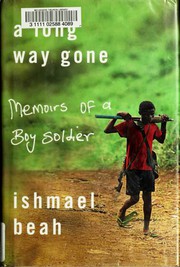
I picked up A Long Way Gone because I wanted to understand what a civil war does to a kid who never asked to be part of it. Ishmael Beah published it with Farrar, Straus and Giroux in 2007, a 240 page memoir about his years as a child soldier in Sierra Leone in the 1990s. I expected something brutal and distant. What I found was brutal, yes, but also specific and plain spoken, full of small details about music and hunger and friendship that made the terrible parts harder to look away from.
Beah starts in a calmer time. He was born in 1980 in Mogbwemo, a small village in the Bonthe District, and grew up with his parents, his older brother Junior, and his younger brother Ibrahim. He loved American hip hop, especially groups like Run-D.M.C., and he and Junior and friends formed a rap and dance crew. They practiced moves, traded cassettes, and entered talent shows. School, soccer, stories from elders, work around the house. That ordinary life is important because the book keeps measuring everything after against it.
The break comes fast. In early 1993 Beah is twelve. He and Junior and friends travel to Mattru Jong, a larger town, to perform in a talent show. While they are gone, rebels from the Revolutionary United Front attack back home. Word reaches Mattru Jong that Mogbwemo has been hit and people are running. The boys cannot go back. They wait, they try routes, they hear worse news each day. Then Mattru Jong itself comes under attack. Mortars, gunfire, crowds running toward the bush. In the chaos Beah loses touch with Junior and the group scatters. That scattering shapes the next year of his life.
What follows is months of wandering. Beah joins and leaves small groups of boys. They move from village to village through forest and farmland, always hungry, always listening for guns. Sometimes villagers feed them. Sometimes villagers chase them away because hungry strange boys look like rebels or thieves. They eat wild fruit, steal cassava at night, drink coconut water, sleep in abandoned huts or under trees. They see burned houses, bodies on paths, people with missing hands. The rebels were known for amputations and for forcing civilians to carry loads or join them. Beah does not explain the politics at length. He shows what a twelve year old would actually see. Smoke. Empty markets. A mother calling names. A dog barking at nothing.
I found these chapters the hardest to read, not because of gore but because of repetition. Every village offers the same hope and the same collapse. Food, rest, rumors of safety, then an attack or a warning that fighters are near, then running again. Beah and his companions grow thinner and quieter. They stop talking about the future. They argue over small food. They learn to read sounds. A distant pop could be a hunter or a soldier. A helicopter could mean help or fear. Trust shrinks to whoever walks next to you.
Family keeps slipping away. Beah hears at one point that his family may have reached a village, and he walks hard for days to get there, only to find the place burned and empty. Later he stays for a while with a kind fisherman or with farmers who take boys in, and for a week life almost steadies. Then rebels or soldiers pass through and the cycle restarts. His shoes fall apart. His clothes tear. He gets sores on his feet. He dreams about home and wakes angry that dreaming wastes energy.
By the time government soldiers pick him up, he is thirteen and half wild with hunger. It happens near a village where the army has a post. The soldiers do not exactly rescue the boys. They more or less absorb them. They take them to a barracks at Yele, feed them, give them a place to sleep, and then begin training them. At first Beah is relieved. The army has rice. The army has order. The lieutenant in charge, Jabati, speaks to the boys like a strict father. He says the rebels killed their families and the only way to survive and get revenge is to fight. The boys, who have lost everything, listen.
Becoming a soldier
Training starts with drills and ends with killing. The boys learn to strip and clean AK-47s, to crawl, to obey commands, to march, to raid. They watch war films on a small television at the base, American action movies where tough men mow down enemies without flinching, and the officers tell them to be like that. Then drugs enter. The soldiers hand out white tablets, marijuana, and a mix the boys call brown-brown, cocaine mixed with gunpowder. It numbs fear and hunger. Under it, Beah says, he could do things he could never do clear headed.
His first kill happens during a raid, messy and fast, and afterward he vomits and shakes. The officers praise him. The older soldiers clap him on the back. Soon the shaking stops. That stopping frightens me more in retrospect than the killing itself. Beah describes how he and his friends, including boys named Alhaji and Kanei and others he grew close to, became known as fierce small fighters. They volunteered for ambushes. They guarded posts. They took revenge for friends killed by rebels. They shot prisoners when ordered. They burned villages suspected of helping rebels. He rose to junior lieutenant. He says he did not count days anymore. He counted guns, food, and who was still alive.
Drugs were not a side detail. They were the routine. Pills in the morning, smoke at night, brown-brown before patrols. Without them the boys felt headache, anger, and vivid nightmares. With them they felt bold and empty. Beah is honest that he liked the bold feeling at the time. He liked having a gun because a gun meant no one could chase him again. He liked belonging to a squad because the squad fed him and praised him. He writes about laughing after firefights, about bragging, about carving notches or keeping tokens. He does not excuse it. He presents it as what happened when a hurt kid was given weapons, drugs, and permission.
The army years blur. Battles against rebels in bush and town, long marches, malaria, wounds treated quickly, friends dying. Beah is wounded more than once. He sees Kamajor militia fighters, traditional hunters who fought on the government side and had their own rituals and beliefs about protection. He sees civilians caught between sides, accused by one side of helping the other. He describes entering a village after rebels had passed, finding people tied or mutilated, and then his unit taking out its anger on the next village. Cause and effect had collapsed. Everyone was retaliating for something.
I kept waiting for a moment of doubt inside the soldier chapters, and Beah gives only flashes. A song on a looted cassette that reminds him of Junior. A boy crying for his mother before a raid. A civilian face that looks like a teacher. Then the drugs and orders cover it. That feels true to how he tells it. He was not secretly resisting the whole time. He was inside it.
Out of the bush
When rescue comes, Beah does not want it. In early 1996, when he is fifteen, UNICEF workers and army officers select a group of boy soldiers, including him, to be taken out for rehabilitation. From the boys' view this looks like betrayal or punishment. They fight the staff on the truck. They arrive at a center in Freetown angry, armed with nothing but withdrawal and habit.
The rehabilitation chapters are raw in a different way. The boys at the Benin Home fight each other, break furniture, throw things at staff, sneak out to find drugs, have nightmares that make them attack in sleep. Beah describes headaches, vomiting, shaking, and sudden rage when the pills stop. The staff, patient to a degree that amazed me, keep feeding them, keep talking, keep separating fighters without beating them. Slowly the fog lifts.
One nurse matters more than the rest. Esther, a nurse at the center, notices Beah keeps to himself and loves music. She brings him a Walkman and a Run-D.M.C. cassette, and later takes him to see a talent show or buys him tapes. Music reconnects him to the boy from Mogbwemo who danced with Junior. He starts talking to her about his family, then about what he did as a soldier. She listens without flinching. That listening, plus schooling, soccer, and friendships with other boys recovering, pulls him back toward language. He had gone months speaking mostly in commands and curses. Now he practices telling a story start to finish.
Esther does not fix him in a single scene. Recovery stutters. Beah still has nightmares where he shoots or runs. He still gets angry fast. He still does not trust adults who promise safety. But he begins to sleep through some nights. He begins to eat without hoarding. He performs in a talent show at the center, rapping with other boys, and the applause feels strange and good. For the first time in years he imagines a future that is not a patrol.
Family finds him again in a limited way. His uncle Tommy, his father's brother, lives in Freetown and takes Beah in after the center. Tommy has a wife and crowded rooms and little money, but he makes space. Beah enrolls in school, studies hard, catches up, plays soccer, makes friends who did not fight. He visits his old village when he can and learns more about who survived and who did not. Junior has died. His parents have died. Ibrahim has died. He writes this plainly, without long lament, which somehow lands harder.
A speech and another flight
Tommy pushes Beah to keep studying and to speak about what happened. In early 1996 Beah is chosen to speak at a United Nations conference on children affected by war, and he travels to New York. He describes the cold, the tall buildings, the strangeness of telling his story to quiet rooms full of adults. He meets Laura Simms, an American storyteller who later becomes important to him, and other advocates. He returns to Sierra Leone determined to finish school and work on behalf of other former child soldiers.
Then the war turns again. In May 1997 a military coup overthrows the government in Freetown. Fighting spreads through the city. Soldiers loot. Rebels press in. Schools close. Tommy grows ill and dies. Beah, now seventeen, finds himself again in danger, partly because former child soldiers are suspected by all sides and partly because chaos makes everyone a target. He decides to leave.
The flight to Guinea is short on the map and long in feeling. Beah travels with friends, bribes and talks his way through checkpoints, hides his past, walks and rides crowded vehicles, crosses into Guinea exhausted. From there, through help from UNICEF contacts and Laura Simms, he eventually secures a chance to move to the United States in 1998. He arrives in New York with little, finishes his last years of high school, and begins to write.
The book opens and closes in New York in 1998, with high school friends asking why he left Sierra Leone. He smiles and says he will tell them sometime. By the end we understand what sometime means. The whole memoir sits inside that pause before telling.
What held and what troubled me
What held for me was the voice. Beah writes in short, clear sentences, with concrete images. The taste of unripe mango. The weight of an AK when you are small. The relief of new laces. The way rain sounds on zinc roofs at the center. He does not decorate. He remembers. His account of withdrawal and nightmares felt especially honest because he admits how long it took and how much he resisted kindness at first. His portrait of Esther avoids sainthood. She is firm, funny, and tired, and she uses music because medicine alone will not reach him.
I also valued how he shows boy friendship. The wandering boys share food even when starving, keep watch in turns, tease each other to stay awake, and grieve without ceremony when one disappears. Later the soldier squad offers a twisted version of the same loyalty. And the rehab boys fight and then protect each other. Beah keeps returning to the same need. Someone to walk with, someone who knows your name.
What troubled me falls into two parts. First, context stays thin. If you come in knowing little about Sierra Leone, you will learn little about why the RUF formed, who funded different sides, what the government and the Kamajors and outside forces did, or how diamonds and poverty shaped the war. Beah was a kid inside it, so the narrow view is honest, but I wanted a bit more framing to place his experience. Without it, the war can feel like weather rather than choices by adults.
Second, the memoir faced questions about exact dates and details. In 2008 an Australian newspaper argued that villages and timelines did not line up and that Beah may have spent less time as a fighter than stated. Beah and his publisher stood by the book, noting the difficulty of precise recall after trauma and displacement. I mention this because you should know it going in. It did not undo the book for me, since the core events match well documented patterns of child recruitment in that war, but it reminded me to read memoir as remembered truth, not a court transcript.
A smaller complaint. The last third moves fast. School, the UN trip, the coup, Tommy's death, the escape, and arrival in America pass in fewer pages than the wandering months. I wanted more time in Freetown classrooms and more on how he learned to live with neighbors who knew what he had done. The book ends just as that longer adjustment starts.
Still, I finished with a clearer picture than any news report gave me. Not of strategy or peace talks, but of what it feels like to be twelve and running, thirteen and armed, fifteen and trying to sleep without pills. Beah does not ask for pity. He asks for attention. The final pages, back in that New York classroom, suggest why he wrote. Someone has to tell the full story, in order, while others still cannot.
FAQ
When was A Long Way Gone published?
Farrar, Straus and Giroux published it in 2007. The hardcover runs 240 pages and the ISBN is 9780374105235.
Is A Long Way Gone part of a series?
No. It is a standalone memoir, not part of a series, covering his time as a boy soldier and his rehabilitation.
Who should read this book?
Readers who want war memoirs and survival stories, though the combat and withdrawal scenes are intense and not for young children.
Similar books
Lone Survivor: The Eyewitness Account of Operation Redwing and the Lost Heroes of SEAL Team 10
Marcus Luttrell's account of the 2005 SEAL mission in Afghanistan that killed three of his team and left him alone.
2,144-word summary · 10 min read
American Sniper: The Autobiography of the Most Lethal Sniper in U.S. Military History
Navy SEAL sniper Chris Kyle recounts Texas roots, SEAL training, four Iraq tours, and the strain combat placed on his marriage and health.
2,011-word summary · 9 min read
Unbroken
Louis Zamperini survives a Pacific crash, sharks and POW camps after running in the Berlin Olympics.
3,263-word summary · 15 min read

The Zookeeper's Wife: A War Story
The directors of the Warsaw Zoo hid roughly three hundred Jews in empty cages and outbuildings after the German invasion, while Jan worked for the resistance.
2,065-word summary · 9 min read

Long Walk to Freedom
Mandela's account of a Thembu childhood, a law practice, a banned movement, twenty-seven years in prison, and the negotiation that ended apartheid.
2,454-word summary · 11 min read

In Order to Live: A North Korean Girl's Journey to Freedom
A young North Korean girl crosses the Yalu, survives trafficking in China, and rebuilds her life in Seoul in this unsparing memoir.
2,027-word summary · 9 min read
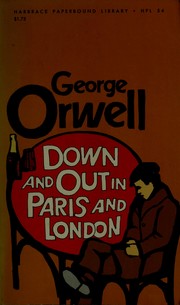
Down and Out in Paris and London
Orwell's account of washing dishes in Paris hotels and tramping through London does not ask for pity, only for a clear look at how poverty actually works.
2,282-word summary · 10 min read
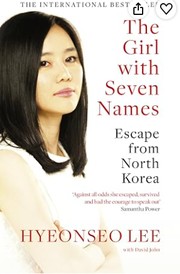
The Girl with Seven Names: A North Korean Defector's Story
Hyeonseo Lee crossed the frozen Yalu River at seventeen, spent years hidden in China, escaped to South Korea, and later returned to rescue her family.
2,404-word summary · 11 min read

Bury My Heart at Wounded Knee: An Indian History of the American West
Dee Brown's 1970 retelling of the American West from the point of view of the people it destroyed.
2,233-word summary · 10 min read

The Letters of Vincent van Gogh
Vincent van Gogh's letters to his brother Theo, in a Penguin Classics selection edited by Ronald de Leeuw, trace a decade of work, faith, and obsession.
2,611-word summary · 12 min read
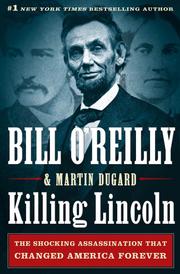
Killing Lincoln
Booth plots as Lincoln pushes war end and reunion in 1865.
2,486-word summary · 11 min read
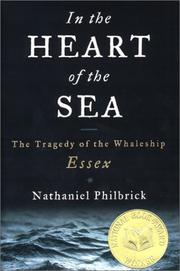
In the Heart of the Sea: The Tragedy of the Whaleship Essex
The whaleship Essex sunk by a whale leaves men in boats for ninety days.
2,750-word summary · 12 min read
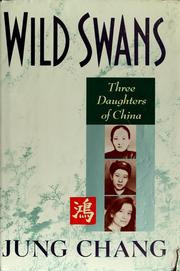
Wild Swans
Three generations of women survive warlords, revolution, and the Cultural Revolution in Jung Chang's family memoir.
2,356-word summary · 10 min read
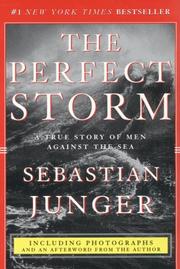
The Perfect Storm
Gloucester's Andrea Gail vanished in the October 1991 nor'easter; Junger joins the crew, storm science, and Tamaroa rescues into a plain and hardworking sea…
2,592-word summary · 12 min read

Twelve Years a Slave
Free violinist Solomon Northup tells how Brown and Hamilton lured him south into twelve years of Louisiana bondage until Bass letters brought rescue in January…
2,931-word summary · 13 min read

Cleopatra: A Life
Pulitzer winner Schiff restores Cleopatra as a capable ruler, from Ptolemy debts and Caesar to Antony, Actium, and her death in 30 BC, built from coins and…
3,586-word summary · 16 min read
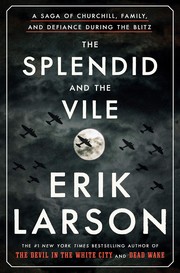
The Splendid and the Vile
Larson follows Churchill circle through Blitz year with diaries and bombing nights.
2,038-word summary · 9 min read
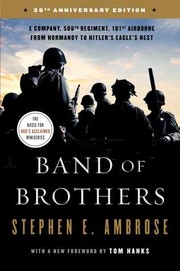
Band of Brothers
Easy Company, 506th Airborne, from Toccoa training through D-Day, Holland, Bastogne, and Hitler's Eagle's Nest.
2,685-word summary · 12 min read
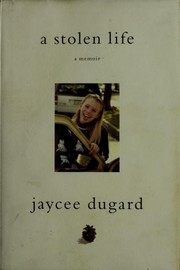
A Stolen Life
Kidnapped at eleven in 1991, Jaycee Dugard survived eighteen years in an Antioch backyard and tells her own story of endurance and motherhood.
2,807-word summary · 12 min read
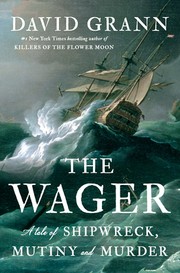
The Wager: A Tale of Shipwreck, Mutiny and Murder
Thirty starved men reach Brazil as heroes in 1742, then three more land in Chile calling them mutineers, and Grann sorts the wreck.
2,995-word summary · 13 min read
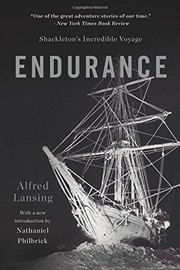
Endurance: Shackleton's Incredible Voyage
Trapped and crushed in Antarctic ice, Shackleton and 28 men survive floes, open boats, and an 800 mile sea crossing. Lansing tells it from their diaries.
2,818-word summary · 13 min read
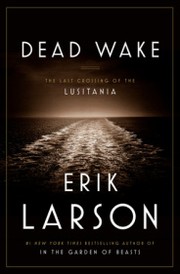
Dead Wake
Larson tracks Lusitania, U-20, and Room 40 toward May 1915 sinking.
2,471-word summary · 11 min read
Days of Love and Rage
Six Syrians build a short democracy in Manbij, then watch inequality and ISIS undo it.
2,022-word summary · 9 min read
Autobiography of Cotton
A Pulitzer winner traces her cotton-worker grandparents and a 1934 border strike through archives, memory, and damaged land.
2,213-word summary · 10 min read
The Complete Persepolis
Satrapi's full black and white memoir in one volume, from revolution era Tehran through Vienna exile and back home again.
2,498-word summary · 11 min read
Persepolis
Marjane Satrapi's black and white memoir of growing up in Tehran during revolution and war, from a bold ten year old to a fourteen year old sent alone to…
2,984-word summary · 13 min read

A Promised Land
First-volume memoir from Iowa 2008 through the 2011 bin Laden raid, crisis management and doubt.
2,243-word summary · 10 min read
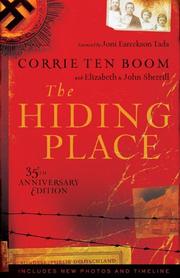
The Hiding Place: The Triumphant True Story of Corrie Ten Boom
The Ten Booms hide Jews in Haarlem, suffer Ravensbruck, lose Betsie, and learn forgiveness.
2,593-word summary · 12 min read
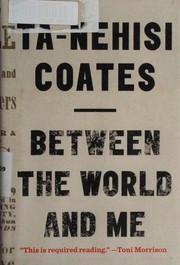
Between the World and Me
Coates writes to his son about the Black body in America, from Howard to the loss of Prince Jones.
2,234-word summary · 10 min read
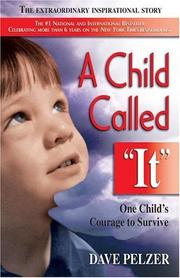
A Child Called It
Dave survives his mother games of hunger and cold in Daly City until teachers and foster care step in.
2,326-word summary · 10 min read