
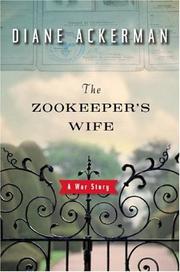
The Zookeeper's Wife: A War Story
2,065-word summary 9 min read 368 pages in the book
- First published
- 2007
- Publisher
- W. W. Norton
- Pages
- 368
- ISBN
- 9780393061727
Reading options
What's inside (10 sections)
The Warsaw Zoo in the 1930s was a strange and beautiful place to raise a child. There were lions in the courtyard, an elephant that liked to lean over the fence, and a villa in the middle of the grounds where the director lived with his wife and son. Antonina Zabinska kept a menagerie inside the house as well as outside it: a badger, a rabbit, lynx cubs, a hyena pup. Her diary records the animals by name and the people by habit, and it is the source Diane Ackerman uses to reconstruct a story that would otherwise be lost.
The story is this. When Germany invaded Poland in September 1939, the zoo was bombed, most of its animals were killed or taken to Berlin, and the Zabinskis were left in a ruined compound with a villa, a few outbuildings, and a decision to make. Over the next five years they hid roughly three hundred Jews, most of them escaping the Warsaw Ghetto, in the empty cages, the sheds, and the house itself. Jan was an officer in the Polish underground. Antonina ran the household and the hiding operation while raising two children and feeding a rotating cast of strangers.
Ackerman published the book in 2007 with W. W. Norton. It runs 368 pages and won the Orion Book Award in 2008. It is not a conventional history. It is a hybrid of biography, natural history, and reconstruction, and its virtues and its problems both come from that mixture.
The zoo before the war
Jan Zabinski was a zoologist, a veteran of the First World War, and a man with a talent for administration. He became director of the Warsaw Zoo in 1929, when the institution was small and struggling. Under his direction it grew into one of the more interesting zoos in Europe, with a reputation for breeding animals that usually did not breed in captivity.
Antonina was his wife, the daughter of a Russian doctor, and the person who made the villa work. She had a gift with animals that Ackerman treats as almost supernatural. She could calm a frightened lynx. She could coax a badger out from under a sofa. She understood that animals respond to tone and smell and the absence of fear, and she applied the same understanding to people.
Their son Ryszard was born in 1930. The villa was full of guests, animal and human, and the household ran on a schedule that Antonina improvised every morning. Ackerman is very good on the texture of that life: the sounds at night, the smell of the carnivore kitchens, the way the animals became part of the family's emotional weather.
The invasion
The bombing of Warsaw began on September 1, 1939. The zoo was hit. Walls collapsed, cages broke open, and animals were killed in the streets or shot by soldiers. Some escaped and were hunted through the city. The ones that survived were eventually taken to Germany for the Berlin Zoo, a project overseen by Lutz Heck, a zoologist and Nazi Party member who wanted to rebuild German fauna from what he considered pure stock.
Ackerman does not linger on the violence, but she does not sanitize it. The scene where Antonina finds a dead animal or a shattered enclosure is repeated often enough to become a rhythm. The zoo is not a sanctuary in wartime. It is a target, and then it is a ruin, and then it is a disguise.
The Germans turned part of the grounds into a pig farm and later a fur farm. Jan talked his way into a job with the municipal parks department, which gave him a reason to move around the city and a permit that could be bent. The zoo's official purpose became food production for the occupiers. Its unofficial purpose became something else.
The guests
The hiding operation was built on improvisation. Jews who escaped the Ghetto, or were smuggled out by Jan on the pretext of collecting waste or inspecting property, were brought to the zoo and given a place to sleep. They were called "guests" in the household's language. Each one was assigned an animal name, partly as a code and partly, Ackerman suggests, because it made the danger easier to talk about.
Some stayed for a night. Some stayed for months. Some were moved to safe houses in the city. The zoo was not a permanent shelter. It was a way station, and the constant movement made it both safer and more fragile. A single informer could have ended everything.
The hiding places were grotesque in their ingenuity. Empty cages. A tunnel under a shed. The back of a wardrobe. A room behind a false wall. Ackerman describes these spaces with the eye of a naturalist, noting the damp, the darkness, the way a person learns to be still. The book's best passages are about the physical experience of hiding: the boredom, the fear of footsteps, the small negotiations over food and noise.
Antonina's role was to keep the household calm. She had to feed everyone without attracting attention, manage the animals, deal with German officers who visited the villa, and keep her children from saying the wrong thing. She did it while pregnant. Their daughter Teresa was born during the occupation, in the house, with a German presence in the city and guests in the walls.
The house under a crazy star
The zoo's code name in the underground was "the House Under a Crazy Star." It is a phrase from Antonina's diary, and it captures the atmosphere of the place: a household run on instinct, luck, and a kind of deliberate unreason. The people inside were living in a situation that made no sense, and they had decided to behave as if it did.
Ackerman is drawn to Antonina's empathy with animals, and she argues that the same empathy made the rescue work possible. It is a lovely idea, and it is partly true. Antonina was good at reading fear. She knew how to approach a frightened creature without cornering it, and she used that knowledge on people. But Ackerman sometimes pushes the parallel too hard, as if the zoo were a moral laboratory in which kindness to animals naturally became kindness to humans.
The reality was messier. The Zabinskis were not saints. They were ordinary people with ordinary prejudices and ordinary fears, and they made choices that were sometimes reckless and sometimes cruel. Jan was away for long stretches, working for the resistance, and Antonina was left to manage a household that could have been discovered at any moment. The book is honest about the strain, but it is more comfortable with heroism than with ambivalence.
The uprising and after
Jan fought in the Warsaw Uprising in August 1944. He was wounded and taken prisoner, and Antonina did not know for a long time whether he was alive. The city was destroyed around them. The zoo was destroyed again. The family survived.
After the war, the Zabinskis stayed in Poland. The zoo reopened in 1949 with Jan as director. The communist government was not friendly to the old intelligentsia, and the family's wartime record did not protect them from suspicion. Jan eventually left the zoo and worked elsewhere. Antonina wrote her diary, which was published in Polish in 1968 but not in English until much later.
In 1965, Yad Vashem recognized Jan and Antonina as Righteous Among the Nations. The recognition came late and quietly. Ackerman's book, and the 2017 film based on it, brought the story to a much wider audience, which is one of the things a book like this can do.
The children
Ryszard was nine when the war started. He grew up in a house where strangers appeared at breakfast and disappeared by dinner, and his parents did not always explain who they were. Ackerman uses him sparingly, but the passages where he appears are among the most affecting, because they show how quickly a child adapts to a life that adults know is abnormal.
He carried food to the guests. He kept secrets. He played in the ruins of the zoo, which for a boy was both a playground and a graveyard. The book does not psychologize him. It simply notes what he did, and lets the reader imagine what it cost.
Teresa was born during the occupation, in the villa, while the household was full of hidden people. Antonina's pregnancy is one of the book's quiet acts of defiance. A birth in a place designed for death is a statement, even if nobody says it out loud. The baby also made the hiding more dangerous: a crying infant is a risk, and the household had to manage it the way it managed everything else, with improvisation and luck.
Ackerman is good on the way children become part of a survival system. They are not shielded from the war. They are given jobs. They are told only what they need to know. The result is a childhood that is both privileged, because the family had a house and food, and profoundly strange.
What the book does well
Ackerman is a poet by training, and it shows. Her descriptions of animals are precise and unsentimental. She notices the way a hyena moves, the smell of a lion's breath, the particular silence of a house with hidden people in it. The natural history is not decoration. It is the lens through which she sees the war.
She is also good at scale. The Holocaust is often written at the level of policy or at the level of the survivor's testimony. Ackerman writes it at the level of a household: how many people are in the kitchen, who is sleeping where, what happens when a German officer knocks on the door. That intimacy makes the history feel immediate.
The research is visible without being intrusive. She draws on Antonina's diary, interviews, Polish archives, and the records of the resistance. When she imagines a scene, she usually signals it. When she quotes, she quotes. That is more care than many popular histories take.
Ackerman's method is worth describing, because it is the reason the book reads like a novel. She takes a diary entry, a date, a name, and builds a scene around it. The weather, the food, the arrangement of furniture, the sound of the animals: most of that is reconstruction. She does not pretend otherwise, but she also does not mark every invented detail. A reader who wants to know exactly what is documented and what is imagined will have to work for it.
That is a real limitation for a history book. It is also what makes the book readable. Antonina's diary is not a narrative. It is a record of days, and days do not have plots. Ackerman gives them a shape, and the shape is often beautiful.
What it does not
The book has been criticized for being choppy, and the criticism is fair. Ackerman moves between Antonina's diary, the wider history of the Warsaw Ghetto, animal lore, and her own reflections, and the transitions are not always smooth. Some chapters read like a collage. The chronology can be hard to follow.
The bigger issue is the sentimentality. Ackerman loves her subject, and her love sometimes softens the story. The Zabinskis' courage is real, but the book is less interested in the moral compromises that made survival possible: the lies, the bribes, the people who could not be saved. The guests are mostly a collective. A few are named, but few are developed. The book is about the rescuers more than the rescued.
There is also the question of Polish antisemitism, which Ackerman acknowledges but does not explore. The Zabinskis were exceptional, and the book sometimes implies that their decency was typically Polish. The historical record is more complicated, and a reader who wants that context will need to look elsewhere.
None of this ruins the book. It is a moving, carefully researched account of a place where the line between a zoo and a shelter stopped mattering. The image that stays with me is not the lions or the soldiers. It is Antonina playing the piano in the villa while people hiding in the walls listen, because the music is a way of saying that the house is still a house.
FAQ
Is The Zookeeper's Wife a novel?
No, it is nonfiction. Ackerman reconstructs the story from Antonina Zabinska's diary, interviews, and Polish archives.
How many people did the Zabinskis save?
Roughly three hundred Jews passed through the zoo during the occupation, many of them smuggled out of the Warsaw Ghetto.
What happened to the zoo animals?
Many were killed in the bombing and the fighting, and some were taken to Germany for the Berlin Zoo. The surviving buildings were reused as a pig farm and fur farm.
Similar books
The Splendid and the Vile
Larson follows Churchill circle through Blitz year with diaries and bombing nights.
2,038-word summary · 9 min read
Band of Brothers
Easy Company, 506th Airborne, from Toccoa training through D-Day, Holland, Bastogne, and Hitler's Eagle's Nest.
2,685-word summary · 12 min read
Night
Elie Wiesel's account of Sighet, the cattle cars, Auschwitz and Buchenwald, told in short flat sections by a boy about fifteen. Why the book carries the year…
2,594-word summary · 12 min read
The Orphan's Tale
A Dutch teenager rescues a Jewish baby from a death train and joins a German circus, where a Jewish aerialist teaches her to fly.
2,943-word summary · 13 min read
Lone Survivor: The Eyewitness Account of Operation Redwing and the Lost Heroes of SEAL Team 10
Marcus Luttrell's account of the 2005 SEAL mission in Afghanistan that killed three of his team and left him alone.
2,144-word summary · 10 min read
Bury My Heart at Wounded Knee: An Indian History of the American West
Dee Brown's 1970 retelling of the American West from the point of view of the people it destroyed.
2,233-word summary · 10 min read
Exodus
Leon Uris's sweeping 1958 novel follows Jewish refugees, Haganah fighters, and Holocaust survivors from Cyprus to the founding of Israel and the 1948 war.
2,529-word summary · 11 min read
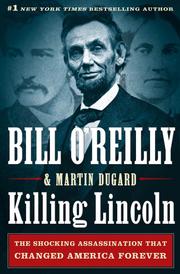
Killing Lincoln
Booth plots as Lincoln pushes war end and reunion in 1865.
2,486-word summary · 11 min read
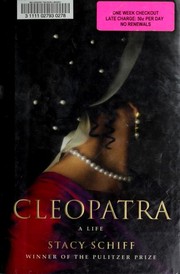
Cleopatra: A Life
Pulitzer winner Schiff restores Cleopatra as a capable ruler, from Ptolemy debts and Caesar to Antony, Actium, and her death in 30 BC, built from coins and…
3,586-word summary · 16 min read
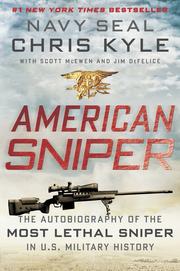
American Sniper: The Autobiography of the Most Lethal Sniper in U.S. Military History
Navy SEAL sniper Chris Kyle recounts Texas roots, SEAL training, four Iraq tours, and the strain combat placed on his marriage and health.
2,011-word summary · 9 min read
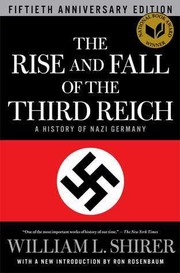
The Rise and Fall of the Third Reich: A History of Nazi Germany
A Berlin correspondent turned historian traces Nazi Germany from beer halls to bunker using eyewitness memory and captured German records.
3,559-word summary · 16 min read
Dead Wake
Larson tracks Lusitania, U-20, and Room 40 toward May 1915 sinking.
2,471-word summary · 11 min read
Days of Love and Rage
Six Syrians build a short democracy in Manbij, then watch inequality and ISIS undo it.
2,022-word summary · 9 min read
A Long Way Gone: Memoirs of a Boy Soldier
A Sierra Leone boy flees rebels, becomes a child soldier at thirteen, and fights his way back through rehab.
2,434-word summary · 11 min read
In the Garden of Beasts
Ambassador Dodd takes his family to 1933 Berlin and watches charm curdle into terror.
1,927-word summary · 9 min read
The Hiding Place: The Triumphant True Story of Corrie Ten Boom
The Ten Booms hide Jews in Haarlem, suffer Ravensbruck, lose Betsie, and learn forgiveness.
2,593-word summary · 12 min read
Unbroken
Louis Zamperini survives a Pacific crash, sharks and POW camps after running in the Berlin Olympics.
3,263-word summary · 15 min read
The Diary of a Young Girl
Anne Frank's diary explained: two years in the Secret Annex, the entries on fear and boredom, what Otto Frank cut, and why the book still reads like a…
1,913-word summary · 9 min read

Long Walk to Freedom
Mandela's account of a Thembu childhood, a law practice, a banned movement, twenty-seven years in prison, and the negotiation that ended apartheid.
2,454-word summary · 11 min read
1491: New Revelations of the Americas Before Columbus
Charles C. Mann gathers archaeology, ecology, and demography to argue that the Americas before Columbus were older, fuller, and more deliberately shaped than…
2,712-word summary · 12 min read
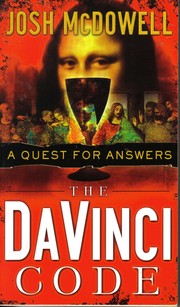
The DaVinci Code: A Quest for Answers
A short 2006 dialogue in which three friends test Dan Brown's claims about Jesus, Mary Magdalene, Nicaea, and the canon.
2,088-word summary · 9 min read
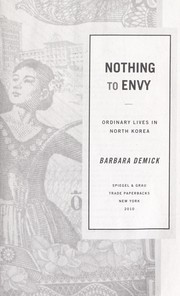
Nothing to Envy
Barbara Demick follows six defectors from Chongjin through the North Korean famine, showing how ordinary people lived, believed, and finally left.
2,068-word summary · 9 min read
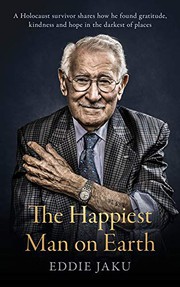
The Happiest Man on Earth
Eddie Jaku's memoir follows a Leipzig childhood, Buchenwald, Auschwitz, a death march, and the slow rebuilding of a life in Australia.
2,597-word summary · 12 min read

Sophie's Choice
A young Southern writer in 1947 Brooklyn befriends a brilliant, unstable couple and slowly learns the story of the Polish Catholic woman at the center of their…
2,798-word summary · 12 min read

Down and Out in Paris and London
Orwell's account of washing dishes in Paris hotels and tramping through London does not ask for pity, only for a clear look at how poverty actually works.
2,282-word summary · 10 min read
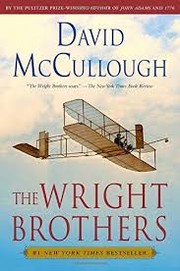
The Wright Brothers
David McCullough tells the story of two self-taught Ohio brothers, working largely alone and out of a bicycle shop, who solved the problem of flight before…
2,027-word summary · 9 min read
At Home: A Short History of Private Life
Bill Bryson tours his own Norfolk rectory room by room to explain how private life and the modern home got built.
2,334-word summary · 10 min read
Prisoners of Geography: Ten Maps That Tell You Everything You Need to Know About Global Politics
Tim Marshall explains how mountains, rivers, coasts, and resources shape the choices of nations, from Russia's flat borders to the chokepoints of the South…
2,328-word summary · 10 min read
The Lost City of Z: A Tale of Deadly Obsession in the Amazon
David Grann retraces Percy Fawcett's 1925 disappearance in the Amazon and finds that the lost city he sought was not entirely a fantasy.
2,493-word summary · 11 min read

The Letters of Vincent van Gogh
Vincent van Gogh's letters to his brother Theo, in a Penguin Classics selection edited by Ronald de Leeuw, trace a decade of work, faith, and obsession.
2,611-word summary · 12 min read