
The Happiest Man on Earth
2,597-word summary 12 min read 208 pages in the book
- First published
- 2020
- Publisher
- Macmillan Australia
- Pages
- 208
- ISBN
- 9781760980085
Reading options
What's inside (9 sections)
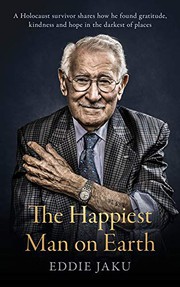
The book is thin, and I read it in an afternoon, which felt wrong. On the cover is an old man in a suit, smiling, with a number tattooed on his forearm that the designer has not hidden. Eddie Jaku was born Abraham Salomon Jakubowicz in Leipzig in 1920 and died in Sydney in 2021 at 101. He published this memoir in 2020, the year he turned 100: just over 200 pages, fifteen short chapters, each titled with a lesson. It is a survivor's account shaped by decades of talking to school groups at the Sydney Jewish Museum.
Jaku writes as if you are across a table. The prologue begins "My dear new friend," and he keeps that tone even when the material should make conversation impossible. Liam Pieper helped, and the seams are hidden. The voice is direct, repetitive, and dryly funny.
Leipzig, and the dog
His childhood is furnished, not summarized. His father, Isidore, ran a factory; his mother, Lina, kept a kosher kitchen; his sister, Henni, was two years younger. The family thought of themselves as Germans first and Jewish second. There was a dachshund puppy, Lulu, who slept on his lap. On his thirteenth birthday his father found him six eggs, a loaf of white bread, and a pineapple.
In 1933 Jaku was expelled from high school. His father obtained false papers for a real German orphan, Walter Schleif, and sent him to an engineering college in Tuttlingen. For five years he lived under that name, afraid of showers and changing rooms.
On 9 November 1938, his parents' twentieth wedding anniversary, he took the train home to surprise them. The house was dark and locked. His parents had gone into hiding, believing he was safe. He let himself in and slept in his childhood bed.
At five in the morning, ten Nazis broke down the door. They beat him badly. One cut off his sleeve and began to carve a swastika into his arm with a bayonet. Lulu jumped at the man, and the Nazi killed her. Then they dragged Jaku into the street and made him watch as the 200-year-old family house was destroyed. It was Kristallnacht. Synagogues were burning, and Jewish neighbors were thrown into the icy river while people he had grown up with jeered.
Buchenwald, and a way out
Buchenwald, in Jaku's telling, is bad plumbing, bad food, and a daily game. Guards opened the gates and let two or three hundred prisoners run, then machine-gunned them thirty meters out. The bodies went home with a letter saying the man died trying to escape; the proof was the bullet in his back.
What saved him was a face from outside. A former boarding-house acquaintance, Helmut Hoer, was now an SS guard. He did not know Jaku was Jewish. When he recognized "Walter," Jaku told him the truth and spat on his shoes. Hoer vouched for him to the commander as an exceptional toolmaker. Jaku signed a contract saying he had been treated well, and on 2 May 1939 his father collected him.
His father drove him to the Belgian border instead. They crossed at night with a smuggler, but his father stopped to help someone up the bank and was caught in a searchlight. He was beaten by the Belgian police, handed to the Gestapo, and escaped from a train by pulling the emergency brake.
They made it to Brussels. Jaku's mother and sister did not. The Gestapo had them in Leipzig. When Jaku called, an officer told him to come back or they would kill his mother. His mother got on the phone and shouted that it was a trap. The officer smashed the phone into her face, breaking her cheekbone.
Jaku was free for two weeks before the Belgian gendarmerie arrested him as a German. He was sent to the Exarde camp, then talked his way into a permit to teach engineering in Ghent, where he found Kurt Hirschfeld. Then Germany invaded Belgium, and the ship to England left without them. They walked to Dunkirk, where a captain would take only English soldiers. Jaku walked south for two and a half months, was arrested as a spy, and spent seven months at Gurs. He escaped the train to Auschwitz by chiseling through the floorboards with a stolen screwdriver and hopped trains 400 kilometers back to Brussels.
The attic years
His parents and sister were alive. A family friend, a Brussels police commissioner, had kept the family's contingency plan and gave him the address: the attic of a boarding house run by Mr Toher, a Catholic man in his late nineties who did not understand that hiding Jews was illegal. It had two cramped rooms and no bathroom. Jaku's father built a false wall and planks outside the windows so they could run across the roofs. They lived there eleven months.
Jaku worked nights in a factory, repairing machinery in the dark. He was paid in cigarettes, which he swapped for groceries. The attic also held two aunts and three children from a Jewish family whose parents had been taken. Jaku says this cramped, frightened time was one of the happiest of his life.
In the winter of 1943, the Belgian police raided the apartment. Jaku was at work. His parents and sister hid the children behind the false wall; the younger boy had a cold, so his father gave him a handkerchief to bite. The police waited all night. He came home at three and insulted them. They took him to Gestapo headquarters, where his family already was. The children were never found.
The family was sent to Malines, then loaded onto a train to Auschwitz: 1,500 people, 150 per carriage, nine days, one drum of water, one drum for a toilet. Jaku's father cut a sheet of paper into 150 squares and rationed two cups a day. Two people died in their carriage. In some others, 40 percent did.
The number and the friend
At Birkenau, in February 1944, Josef Mengele pointed Jaku to the right and his father to the left. Jaku slipped into his father's line. A guard told him he was not getting on the truck: his father was old and would ride, Jaku would walk. If he had stayed on the truck, he would have been killed.
They were crammed into a washroom for three days and nights while guards shouted "Fire" or "Gas" to make them trample each other. Jaku and Kurt took a corner, two standing guard while two slept, then switched. When the lights came on, 18 of the 148 men were dead. Jaku's fingernails had pierced his palm from squeezing the paper with his number.
His number was 172338. Two days later an SS officer led him between the barracks, pointed at the smoke, and told him his parents had gone there. He had not said goodbye to his mother. He says he still dreams of her and wakes up calling out, then asks the reader to go home and tell their mother they love her.
Kurt is the spine of the Auschwitz chapters. He had told the Nazis he was a shoemaker, so he worked indoors. Jaku worked outdoors, then as a foreman at an IG Farben factory. He made 200 whistles, one for each operator. Three times he was taken to the gas chamber and pulled out at the last moment because his name, number, and profession were on a list.
Kurt and Jaku kept each other alive in small ways. When Jaku was sick with a liver infection, Kurt walked through a blizzard with a bowl of soup and was caught by a guard who beat him across the face with it. Without Kurt, he says, he would not have lasted half the average seven months.
The camp also shows what Jaku calls the loss of morals. A kapo from Austria sent people to the gas chamber for cigarettes, including his own cousin. Jaku never stole another prisoner's bread, even when his own was taken.
There is an escape attempt that reads like comedy until it doesn't. A civilian food deliverer named Krauss arranged for Jaku to hide inside a modified food drum and roll off a truck. The drum hit a tree and he was free, but he was still in his striped uniform. He knocked at a Polish farmhouse and asked for a shirt. The farmer came back with a rifle and shot him in the calf. Jaku made a tourniquet from his shirt and limped back to the column returning from work, then slipped into the ranks and walked back into Auschwitz. A prisoner doctor removed the bullet in a toilet with an ivory letter opener while convent bells covered the noise.
The pipe and the cave
On 18 January 1945, the camp was evacuated. Jaku marched for three days in snow. At Gleiwitz, Kurt said he could not take another step. Jaku found a manhole in the ceiling of a shower room, lifted Kurt into it with three other men, and covered the opening with a plank. He said goodbye and rejoined the march.
The survivors were loaded into open wagons for Buchenwald and lay under a blanket stitched from everyone's jackets. After Buchenwald he was sent to a machine shop in Auma, chained to a machine for twelve hours a day. The foreman, Goh, had been a prisoner of war with Jaku's father in the First World War. He left bread and porridge in a hatch. Jaku was too damaged to eat most of it, but the kindness kept him going.
By April 1945, the prisoners were marched in circles for nearly 300 kilometers. One night the commander found an abandoned horse and announced soup. Jaku ran into a drainage pipe under the road. He carried two wooden lids from pickle barrels and wedged one on each side of his head. He lost consciousness in the freezing water. When he woke, the lids were full of bullets: thirty-eight in one, ten in the other. The guards had shot down the pipes after the column moved on.
He crawled out, scratched at his tattoo with a stone until his arm bled, and walked to a farmhouse. A girl opened the door. Her father came, saw the blood and the prison haircut, and cried. He gave Jaku a jumper and shoes, and told him to sleep in the hayshed. Jaku slept one night, then crept away at dawn to a forest four kilometers off. He found a cave, ate raw slugs and snails, and drank from a poisoned creek. Too sick to stand, he crawled to a highway, and an American tank came down the road.
He woke a week later in a hospital, weighing 28 kilograms. A nurse named Emma whispered that he had a 65 percent chance of dying and a 35 percent chance of living. He promised that if he lived he would leave Germany and spend the rest of his life putting right what the Nazis had done. He lived.
A life after, built slowly
The liberation chapters are not a triumphal ending. Jaku crosses into Belgium, tells a border guard he is a Jew whom Belgium handed to the Nazis, and is let in with double rations. He goes back to his parents' apartment, where their things are gone. He has lost more than a hundred relatives. He does not feel joy at being free. He thinks about killing himself. Then he finds Kurt at a Jewish welfare canteen, and the two men weep. A few months later, he finds Henni too, through a newspaper photograph.
He and Kurt take an apartment, and Jaku becomes foreman of a factory making tools for the railway. They take in two Jewish girls who had tried to kill themselves after returning to empty homes. Jaku tells them, "From now on, you are my sisters."
Flore Molho comes into the book quietly, at a town hall in Molenbeek. She is a Sephardic Jew from Salonica who survived the war in Paris under the name Christiane Delacroix. She comes out to look at the man with the tattoo. Jaku falls in love immediately. She does not. They marry on 20 April 1946, which was Hitler's birthday. Jaku notes that they are still here and Hitler is not.
Their first son, Michael, is born in 1948. Jaku says that when he held the baby, his heart was healed. That sounds too neat until the pages before it, where a box of photographs from Leipzig leaves him a miserable ghost for years. The healing is a decision he makes, and then keeps making.
Australia comes in 1950. Jaku is still a refugee in Belgium among people who may have been collaborators. He, Flore, and Michael sail on the MS Surriento and arrive in Sydney on 13 July 1950. The first winter is one of the wettest on record.
In Sydney he works as a medical instrument maker, then runs a service station and a real estate agency. They have a second son, Andre. Jaku volunteers at the Sydney Jewish Museum from its opening in 1992. He receives the Order of Australia Medal in 2013 and gives a TEDx talk in 2019. The book came out the next year. He died the year after that.
What the book leaves out
The plain style is the point, but it is also a limitation. Jaku repeats himself. Happiness is a choice. Life can be beautiful if you make it beautiful. These lines return every few chapters, and the fifteen chapter titles are all lessons. For a reader who wants a memoir to trust the scene, the repetition can feel like a moral handed over before the story has had time to work.
The book is short, and the shortness is uneven. The camp years are detailed. The years after 1945 get only a few chapters, and the biggest questions are handled quickly. How did Jaku recover from what he saw? What did the marriage to Flore cost her? She is vivid in small scenes but never tells her own story, and her wartime hiding is summarized in a few pages. The book mentions nightmares and a period of being a "miserable ghost," then moves on. I wanted more of that difficult middle.
There is little historical framing. Jaku tells what happened to him, not how the Nazi state worked or why other countries looked away. That is fair for a memoir, but it means the book is not a good first history of the Holocaust. Some larger claims, like the idea that Hitler could have been stopped if enough ordinary Germans had stood up on Kristallnacht, arrive without much room for argument.
And the title is a promise the book cannot fully keep. Jaku does not claim to be happy every day. He says he made a decision to smile, and that the decision was a kind of revenge. He also says he does not forgive, and that forgiving would make him a traitor to the six million. That tension is more interesting than the slogan of the title, but the book resolves it quickly into another lesson. Readers who want an unconsoled account of survival may find the uplift too smooth.
Near the back is a photograph of Jaku holding his belt, the only personal possession he kept through Auschwitz. The belt is ordinary and worn. He kept it for seventy-five years. That object stays with me more than the title does.
FAQ
When was The Happiest Man on Earth published?
Macmillan Australia published it on 28 July 2020, the year Eddie Jaku turned 100. The hardback runs 208 pages.
Is The Happiest Man on Earth about the Holocaust?
Yes. Jaku recounts Kristallnacht, Buchenwald, Auschwitz, and a death march, along with his life in Belgium and Australia after the war.
Does Eddie Jaku say he is happy?
He calls happiness a decision and a kind of revenge, but he also says he does not forgive the Nazis. The book does not claim he is happy every day.
Similar books
We Were the Lucky Ones
Based on her own family, Hunter follows the Kurc family of Radom as war scatters five siblings from Siberia to Brazil and back toward reunion.
2,805-word summary · 12 min read
Cilka's Journey
After surviving Auschwitz, Cilka Klein is sentenced to a Siberian labor camp, where she trains as a nurse and fights to stay human.
2,365-word summary · 11 min read
Lilac Girls
Three women meet across World War II: a New York volunteer, a Polish courier turned prisoner, and a German camp doctor.
2,731-word summary · 12 min read
Night
Elie Wiesel's account of Sighet, the cattle cars, Auschwitz and Buchenwald, told in short flat sections by a boy about fifteen. Why the book carries the year…
2,594-word summary · 12 min read
The Zookeeper's Wife: A War Story
The directors of the Warsaw Zoo hid roughly three hundred Jews in empty cages and outbuildings after the German invasion, while Jan worked for the resistance.
2,065-word summary · 9 min read
The Orphan's Tale
A Dutch teenager rescues a Jewish baby from a death train and joins a German circus, where a Jewish aerialist teaches her to fly.
2,943-word summary · 13 min read

In Order to Live: A North Korean Girl's Journey to Freedom
A young North Korean girl crosses the Yalu, survives trafficking in China, and rebuilds her life in Seoul in this unsparing memoir.
2,027-word summary · 9 min read
The Girl with Seven Names: A North Korean Defector's Story
Hyeonseo Lee crossed the frozen Yalu River at seventeen, spent years hidden in China, escaped to South Korea, and later returned to rescue her family.
2,404-word summary · 11 min read
Lone Survivor: The Eyewitness Account of Operation Redwing and the Lost Heroes of SEAL Team 10
Marcus Luttrell's account of the 2005 SEAL mission in Afghanistan that killed three of his team and left him alone.
2,144-word summary · 10 min read
Those Who Save Us
A Minnesota professor hunts her mother's hidden wartime past in Weimar, where survival came wrapped in an SS officer's protection. A dual timeline about…
2,345-word summary · 10 min read
Between Two Kingdoms: A Memoir of a Life Interrupted
Diagnosed with leukemia at twenty-two, Suleika Jaouad survives treatment and then takes a 100-day road trip to meet the strangers who wrote to her.
2,311-word summary · 10 min read
The Choice
Auschwitz survivor and therapist turns prison into a guide for healing.
2,472-word summary · 11 min read
A Stolen Life
Kidnapped at eleven in 1991, Jaycee Dugard survived eighteen years in an Antioch backyard and tells her own story of endurance and motherhood.
2,807-word summary · 12 min read
Maus II: A Survivor's Tale: And Here My Troubles Began
Vladek survives Auschwitz and the death march while Art struggles with success, guilt, and his father's aging stubbornness.
2,111-word summary · 9 min read

A Hymn to Life
Gisele Pelicot tells her own story, from a shattering 2020 phone call to the open Mazan trial where shame changed sides.
2,456-word summary · 11 min read
Schindler's List
Womanizing profiteer Schindler spends a fortune typing over a thousand Jews onto factory lists.
2,048-word summary · 9 min read
The Things We Cannot Say
A Florida mother travels to Poland to answer her silent grandmother's plea, uncovering a wartime love story and a decades-old identity swap.
2,365-word summary · 11 min read
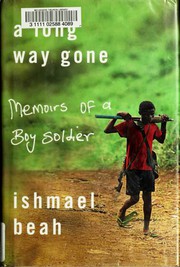
A Long Way Gone: Memoirs of a Boy Soldier
A Sierra Leone boy flees rebels, becomes a child soldier at thirteen, and fights his way back through rehab.
2,434-word summary · 11 min read
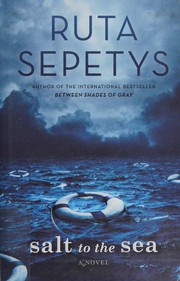
Salt to the Sea
Four refugee teens cross frozen Prussia toward a doomed ship that history barely remembers.
2,094-word summary · 9 min read
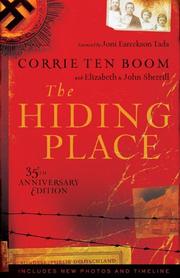
The Hiding Place: The Triumphant True Story of Corrie Ten Boom
The Ten Booms hide Jews in Haarlem, suffer Ravensbruck, lose Betsie, and learn forgiveness.
2,593-word summary · 12 min read
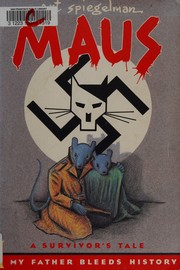
Maus I: A Survivor's Tale: My Father Bleeds History
Art Spiegelman interviews his father Vladek about Sosnowiec and Auschwitz, drawing Jews as mice in this tense father and son memoir.
2,223-word summary · 10 min read
A Child Called It
Dave survives his mother games of hunger and cold in Daly City until teachers and foster care step in.
2,326-word summary · 10 min read
Man's Search for Meaning
Psychiatrist Viktor Frankl survived Auschwitz and argued that humans can endure anything by finding meaning in it.
2,012-word summary · 9 min read
The Tattooist of Auschwitz
Heather Morris retells the years of Lale Sokolov as tattooist at Auschwitz Birkenau, his love for Gita Furman, and the food trades and quiet risks that kept…
2,442-word summary · 11 min read
The Diary of a Young Girl
Anne Frank's diary explained: two years in the Secret Annex, the entries on fear and boredom, what Otto Frank cut, and why the book still reads like a…
1,913-word summary · 9 min read

The Long Winter
Dakota Territory, 1880: seven months of blizzards cut a town off from the railroad, and a family survives on twisted hay, ground wheat, and a dangerous wheat…
2,210-word summary · 10 min read

The Japanese Lover
A Polish refugee and the son of a Japanese gardener fall in love in San Francisco in 1939, then keep the affair secret for nearly seventy years.
2,286-word summary · 10 min read

Long Walk to Freedom
Mandela's account of a Thembu childhood, a law practice, a banned movement, twenty-seven years in prison, and the negotiation that ended apartheid.
2,454-word summary · 11 min read
Brown Girl Dreaming
Jacqueline Woodson retells her childhood in verse, moving from Ohio to South Carolina to Brooklyn while the civil rights movement reshapes the world around her.
2,727-word summary · 12 min read
The Power of One
A boy in apartheid South Africa decides to become welterweight champion of the world, and the novel follows every mentor, fight, and loss that gets him there.
2,145-word summary · 10 min read