
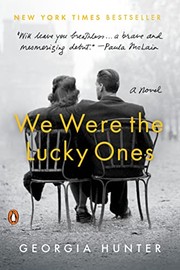
We Were the Lucky Ones
2,805-word summary 12 min read 403 pages in the book
- First published
- 2017
- Publisher
- Viking
- Pages
- 403
- ISBN
- 9780399563096
Reading options
What's inside (7 sections)
I came to this book sideways, the way I come to most family stories that are not my own. A neighbor lent it to me after I mentioned that big World War II novels sometimes lose me when the cast gets too large. She smiled and said this one would test that theory, since it follows an entire family through the war. She was right. It did test me. I read the Viking edition from 2017, the one that runs 403 pages, and I kept a little diagram on a scrap of paper for the first hundred pages so I could keep everyone straight. By the end I did not need the paper. I knew these people, and I was turning pages fast to find out who would make it.
The premise is simple to state and hard to hold in your head while it is happening. The book follows the Kurc family of Radom, Poland: parents and five grown children, plus spouses and a new baby, a comfortable Jewish family with shops and music lessons and plans. When Germany invades Poland in 1939, the family scatters to survive. One son is already abroad. Others run east, get pushed farther east by force, hide in plain sight, pass as someone else, or walk out through forests at night. The war lasts six years. The family spends those years trying to stay alive on separate paths, with almost no word passing between them. The question on every page is whether blood and luck can stretch that far without snapping.
What makes it hit harder is that Hunter based it on her own family history. Her grandfather was one of those siblings. She did interviews, traveled to the places they lived, and worked from records and memories to rebuild what happened. You can feel that research in the texture, the names of streets, the papers people had to carry, the foods they missed. It never reads like a textbook. It reads like someone telling you what her grandmother told her, with the gaps left showing.
A full table in Radom before the sky changes
The opening chapters are my favorite kind of setup, warm and a little slow, the family gathered for holidays and birthdays while trouble gathers at the edges of the news. Hunter introduces the parents, Sol and Nechuma, who hold the center, and the five siblings, each with a distinct place in the family. Genek is the eldest son, already settled with his wife Herta. Mila is married too, with a small daughter, Felicia, who becomes one of the emotional anchors of the whole book. There are two more brothers finding their way in work and love, and a younger sister still close to home. One brother, Addy, the author's grandfather, is living in France when the story starts, chasing music and a life abroad, which turns out to matter enormously because distance that once felt romantic becomes a wall.
Hunter is good at the small markers of a good life. Supper tables crowded with talk. A shop doing steady trade. A baby learning to walk while adults argue about politics and pretend she is not listening. The siblings tease each other the way grown children do when they still live near their parents. Sol gives advice. Nechuma worries the way mothers do and is usually right. I settled into these pages and started to care about everyone, which is exactly what the book wants, because it is about to pull the table apart.
The invasion arrives the way it arrived for real families, not as one dramatic scene but as a run of bad news that will not stop. Radio reports. Men called up. Roads filling with people carrying bundles. Bombs close enough to hear. The siblings make fast choices with thin information, and Hunter lets you feel how fast. Genek and his wife are pushed east and then farther, caught in the Soviet machinery that swallows Polish refugees and soldiers alike. Mila stays closer to home with little Felicia, trying to keep a child fed and quiet while the rules change around them. The parents try to hold Radom as long as Radom can be held. Addy, far away in France, finds that being safe abroad is a temporary condition, because France will not stay safe either.
I found myself thinking about how young most of them were. Old enough to marry and work, young enough to believe they could outrun what was coming. The book never lectures about this. It just shows a family that had built something solid discovering that solid does not count when armies move.
Siberia, France, and the long road to Brazil
Once the family splits, the novel becomes a set of parallel threads, and Hunter moves between them chapter by chapter. I will walk through them in the order they opened for me, because keeping the order straight helped me keep faith with each person.
Genek's thread is the coldest, literally. He and Herta are swept into the Soviet system and sent east by rail into Siberia, to a labor settlement where winter does most of the guarding. Hunter writes this stretch with grim patience. The barracks. The thin soup. The work quotas that do not care if you are sick. The way people trade scraps of news like currency. Herta grows thinner and harder, and Genek learns to fix anything with wire and stubbornness. What kept me reading was not adventure but endurance, the daily math of calories and firewood, and the small kindnesses that kept them human. A shared crust. A mended boot. A nurse who looks the other way for a minute.
Addy's thread is the most restless. He is in France when the war finds him again, and as France falls he has to run. His path bends south and then across the sea to Brazil, a country he never planned to call home. I liked these chapters for their loneliness. Addy is the brother with no one to take care of except himself, which sounds easier until you read it. He waits in lines for stamps that never come. He writes letters that cannot be answered. He plays music where he can and takes work where he finds it. The ocean crossing reads like a held breath, weeks of water and rumor, and then the strange bright hardness of starting over in a new language while your family might be dead. Hunter writes exile well, the guilt of being the one who got out mixed with the fear that getting out only postponed the danger.
Mila's thread, back in Poland, is the one that wrung me out. She is trying to keep Felicia alive in a place where being noticed can kill. There are scenes of hiding in a convent and farm country, of moving the child from place to place, of trusting strangers with the most precious thing you have. One passage about a forged paper and a train platform stayed with me for days. Hunter does not oversell these moments. She lets a mother count stops and rehearse a false name and hold a sleeping girl, and that is enough. If you are a parent, budget extra time for this thread. I had to put the book down twice and stare out the window.
The parents and the remaining siblings get their own hard roads. Jakob and the youngest sister face the ghetto and then the choice between hiding and running, with help from old friends that comes at great risk. Sol and Nechuma, older and less able to run, depend on the courage of others and on each other. Hunter handles their chapters with restraint. There is no false uplift, only the next meal, the next hiding place, the next name on a list to avoid. What links all these threads is paper: visas, work cards, baptism records, permits to travel one more town down the line. The family that once ran shops now trades in documents, and a stamp can mean the difference between a bed and a cattle car.
Hiding a child, forging a name, waiting for mail
The middle of the book is long, and I want to be straight about that. At 403 pages with this many viewpoints, there are stretches where you will think you have lost the thread, especially when two brothers are both on the move and the dates overlap. Hunter helps by dating chapters and naming the viewpoint clearly, and after a while I learned to read each thread like its own short novel, trusting that the reunion logic would pay off. It does, but you have to give it room.
What carries the middle is detail, not plot twists. A winter coat traded for potatoes. A classroom where a girl must remember never to use her real name. A kitchen where a woman grates something into soup to make it look like more than it is. A line outside a consulate where Addy learns the exact weight of a shrug from a clerk. These are the textures survivors remember, and Hunter gathered them the way a good listener does, one anecdote at a time until a life appears.
Two kinds of scenes repeat across threads, and both earned their place for me. The first is the close call, the knock at the door, the inspection on the train, the neighbor who looks a second too long. Hunter writes these with short sentences and no flourish, which makes them worse in the best way. The second is the wait, weeks in a cold room or a hot port city with nothing to do but imagine the worst. Waiting is harder to write than chasing, and Hunter is patient with it. People mend clothes. They boil water. They argue about nothing. They sleep badly. Then a letter arrives, or does not, and the whole day tilts.
Felicia, the little girl, becomes the still point of the book without ever becoming a symbol. She is passed between arms, hidden under coats, told to be quiet in tones that frighten her even when the words are gentle. Her chapters, seen through the adults around her, reminded me that survival for a child is mostly about trusting that the adult holding you knows something you do not. Mila and the relatives who shelter the girl carry a weight the soldiers in this book never have to carry. I thought Hunter was at her best here, writing motherhood as strategy, every lullaby a cover and every meal a small victory.
There is also a thread about Palestine and the idea of it, the hope some of the siblings hold that there might be a place where papers would not matter. Hunter keeps this general and human rather than political, a dream discussed in kitchens late at night. I was glad she did. This is a book about getting through the week, not about grand plans, and the moments when characters let themselves picture a shore or a farm somewhere far off feel like windows opening in a stuffy room.
What the war costs, counted person by person
As the war grinds toward its end, Hunter does something brave. She does not give you one big liberation scene. She gives you several small ones, each with its own texture and none of them clean. A camp gate opening onto a road full of walking skeletons. A city in ruins where a brother looks for a street that is no longer there. A ship manifest with a name spelled wrong. Freedom arrives tired and hungry, and everyone it touches is thinner, older, and less sure that joy is allowed yet.
The costs pile up in ways that feel honest. People who survived Siberia cough through the next winter and the one after. Marriages bent by years apart have to learn their shape again. Children who learned to lie about their names have to learn to answer to the true ones. Parents who spent years imagining their children dead have trouble believing the living proof. Hunter lets these aftershocks take their time. One sibling flinches at loud noises. Another cannot throw away food. A third keeps every scrap of paper with an official stamp, just in case. These details told me more about damage than any battlefield chapter could.
I should note the criticism that will occur to many readers, because it occurred to me. With so many threads, some characters get less room than they deserve. Two of the siblings blur together for long stretches, and just when I leaned into one story, the chapter ended and I was on another continent. The research sometimes shows at the seams, with a street history or a ship detail pausing the scene. And the arc bends toward reunion in a way that can feel almost too shaped, given how random survival was for most families. Hunter knows this. She addresses it in her notes about what she found and what she had to imagine. But if you prefer your war books jagged and unresolved, the steadiness here may strike you as too kind.
Against that, the steadiness is also the point. This family lived because a chain of strangers did brave things, a nun who made room, a farmer who kept quiet, a clerk who stamped a form he should not have stamped, a friend who shared a coat. Hunter names that chain wherever she can. The title says lucky, and the book earns the word without cheapening it. Luck here is not a charm. It is other people, over and over, plus the stubbornness to keep walking one more day.
After: the table, smaller and larger than before
The closing movement follows the survivors as they find each other, and I will keep the specifics light because discovering who made it and how they meet is the quiet reward Hunter has been saving. Letters cross oceans with news months old. A brother in Brazil stares at a photograph and does arithmetic about ages. A sister steps off a train and looks for faces in a crowd. The parents, if they can be found, are found the way people were found then, through lists and offices and luck. No single scene tries to carry the whole weight. Instead there are meals, the first ones in years where everyone at the table knows the same dead and the same living.
What moved me most was how unsentimental Hunter keeps the reunions. People cry, but they also argue about where to live and what to call the baby and who gets the window seat. Grief sits next to relief without apology. One sibling cannot stop talking about those who did not come back. Another goes quiet and works with his hands. The family that gathers is smaller than the one that scattered, and larger too, because there are new spouses and new children who were born into hiding or exile and who will carry names chosen in memory of the lost. I thought about my own table while I read, and about how little separates a full house from an empty one.
The final chapters follow the family outward, to new countries and new papers, the kind that mean citizenship instead of permission to live another month. Addy's path leads toward America and toward the granddaughter who will one day write all this down. Others build lives in the places that took them in. Hunter closes with an account of her research, and I urge you not to skip it. It tells you which threads came from interviews, which from archives, and where she filled gaps with informed care. Knowing that the Kurc family of Radom was real, and that their luck was as narrow as the book says, sent me back to the first pages to look at that crowded supper table with different eyes.
I finished the Viking edition with two feelings at once. The first was gratitude, the simple kind, for people who hid a child and stamped a paper and shared bread when bread was gold. The second was admiration for a first time author who took on a huge cast across six years and five countries and brought them home. Yes, it is long. Yes, the middle sags under the weight of so many separate roads. But the faces stay with you, Mila counting stops, Genek mending what cannot be mended, Addy waiting for mail in a hot strange city, parents holding the center as long as they can. I lent my copy on to another neighbor with the same warning mine gave me. Keep a list of names for the first hundred pages. You will not need it after that. These people will have moved in.
FAQ
Is We Were the Lucky Ones based on a true story?
Yes. Hunter based it on her own family, the Kurcs of Radom, Poland, rebuilding their wartime paths from interviews and records.
When was We Were the Lucky Ones published?
Viking published it in 2017, and that edition runs 403 pages.
Who are the main characters?
The parents Sol and Nechuma Kurc, their five grown children, and spouses including a baby granddaughter, followed along separate wartime paths.
Similar books
The Things We Cannot Say
A Florida mother travels to Poland to answer her silent grandmother's plea, uncovering a wartime love story and a decades-old identity swap.
2,365-word summary · 11 min read
Cilka's Journey
After surviving Auschwitz, Cilka Klein is sentenced to a Siberian labor camp, where she trains as a nurse and fights to stay human.
2,365-word summary · 11 min read
Lilac Girls
Three women meet across World War II: a New York volunteer, a Polish courier turned prisoner, and a German camp doctor.
2,731-word summary · 12 min read
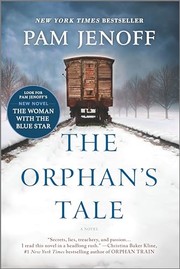
The Orphan's Tale
A Dutch teenager rescues a Jewish baby from a death train and joins a German circus, where a Jewish aerialist teaches her to fly.
2,943-word summary · 13 min read

The Long Winter
Dakota Territory, 1880: seven months of blizzards cut a town off from the railroad, and a family survives on twisted hay, ground wheat, and a dangerous wheat…
2,210-word summary · 10 min read

The Japanese Lover
A Polish refugee and the son of a Japanese gardener fall in love in San Francisco in 1939, then keep the affair secret for nearly seventy years.
2,286-word summary · 10 min read
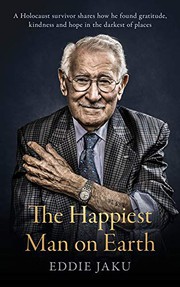
The Happiest Man on Earth
Eddie Jaku's memoir follows a Leipzig childhood, Buchenwald, Auschwitz, a death march, and the slow rebuilding of a life in Australia.
2,597-word summary · 12 min read
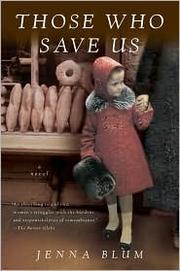
Those Who Save Us
A Minnesota professor hunts her mother's hidden wartime past in Weimar, where survival came wrapped in an SS officer's protection. A dual timeline about…
2,345-word summary · 10 min read
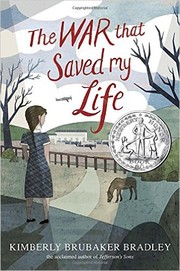
The War That Saved My Life
Ten-year-old Ada has never left her London flat, hidden away because of her clubfoot. Wartime evacuation sends her to Kent, where a reluctant guardian and a…
2,252-word summary · 10 min read
Schindler's List
Womanizing profiteer Schindler spends a fortune typing over a thousand Jews onto factory lists.
2,048-word summary · 9 min read
Salt to the Sea
Four refugee teens cross frozen Prussia toward a doomed ship that history barely remembers.
2,094-word summary · 9 min read
Between Shades of Gray
In 1941, fifteen-year-old Lina is deported from Lithuania to Siberia and uses her drawings to survive and send word to her father.
2,263-word summary · 10 min read
Winter Garden
Two sisters keep a deathbed promise: hear their cold mother's Russian fairy tale to the end, and find besieged Leningrad inside it.
2,983-word summary · 13 min read
Hotel on the Corner of Bitter and Sweet
A Chinese American boy befriends a Japanese American girl in wartime Seattle, then loses her to the internment camps.
2,973-word summary · 13 min read

Sarah's Key
In 1942 Paris Sarah locks her brother to save him, then vanishes. Sixty years later journalist Julia traces her, exposing family guilt and silence.
2,591-word summary · 12 min read
The Tattooist of Auschwitz
Heather Morris retells the years of Lale Sokolov as tattooist at Auschwitz Birkenau, his love for Gita Furman, and the food trades and quiet risks that kept…
2,442-word summary · 11 min read

The Zookeeper's Wife: A War Story
The directors of the Warsaw Zoo hid roughly three hundred Jews in empty cages and outbuildings after the German invasion, while Jan worked for the resistance.
2,065-word summary · 9 min read

The Shadow Sister
Star D'Apliese steps out of her sister's shadow and follows a bookshop clue into the Edwardian life of Flora MacNichol, a woman who gave up love for duty.
2,260-word summary · 10 min read
The Power of One
A boy in apartheid South Africa decides to become welterweight champion of the world, and the novel follows every mentor, fight, and loss that gets him there.
2,145-word summary · 10 min read

The Only Woman in the Room
A novel about Hedy Lamarr's escape from an arms-dealer husband, her Hollywood career, and the frequency-hopping patent the Navy ignored.
2,067-word summary · 9 min read

Little Town on the Prairie
In the spring after the Long Winter, fifteen-year-old Laura sews shirts, studies for a teaching certificate, and helps send her blind sister Mary to college.
2,071-word summary · 9 min read

Mrs. Everything
Two Jewish sisters in Detroit grow up, apart and together, across seven decades of American life, from the 1950s to the 2016 election.
2,362-word summary · 10 min read
The Valley of Horses
Exiled from the Clan, Ayla survives alone in a hidden valley, tames a horse and a cave lion, and nurses a wounded stranger back to life.
2,311-word summary · 10 min read

Sophie's Choice
A young Southern writer in 1947 Brooklyn befriends a brilliant, unstable couple and slowly learns the story of the Polish Catholic woman at the center of their…
2,798-word summary · 12 min read
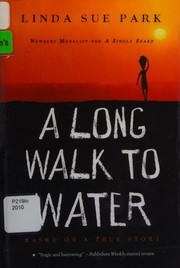
A Long Walk to Water
Two eleven-year-olds in southern Sudan, twenty-three years apart: a Dinka boy fleeing war and a Nuer girl walking hours for water, until their stories meet at…
2,217-word summary · 10 min read
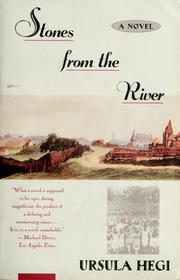
Stones from the River
Trudi Montag is born a dwarf in a small German river town in 1915 and grows up to keep the town's library and its secrets, from the First World War to the…
2,818-word summary · 13 min read
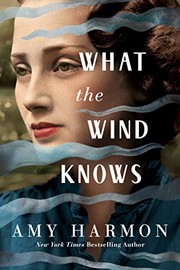
What the Wind Knows
Annie scatters her grandfather's ashes on Lough Gill and is pulled into 1921 Ireland, where she becomes the missing Anne Gallagher and falls for Dr. Thomas…
2,056-word summary · 9 min read
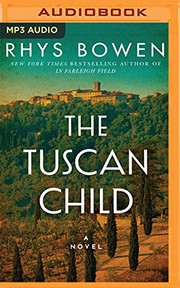
The Tuscan Child
After her father's death, Joanna follows a returned letter to Tuscany and uncovers his wartime love, a hidden painting and a village secret. A dual-timeline…
2,095-word summary · 9 min read
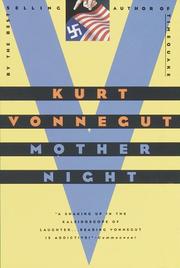
Mother Night
Howard W. Campbell Jr., a Nazi propagandist and American spy, tells the story of his double life from an Israeli prison cell while waiting to be tried for war…
1,988-word summary · 9 min read
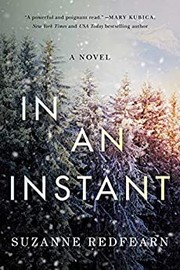
In an Instant
After a family camper crashes down a snowy mountain, sixteen-year-old Finn watches from the afterlife as survivors make impossible choices and try to live with…
2,130-word summary · 9 min read