
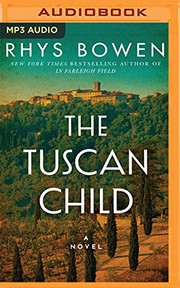
The Tuscan Child
2,095-word summary 9 min read 352 pages in the book
- First published
- 2018
- Publisher
- Lake Union Publishing
- Pages
- 352
- ISBN
- 9781503951822
Reading options
What's inside (7 sections)
The Tuscan Child begins with a funeral and a letter that should never have been opened. Hugo Langley has died in England in 1973, and his daughter Joanna is going through his things when she finds a sealed envelope addressed to a woman in Italy. The letter was posted in 1945 and returned to sender, marked "Not known at this address." Inside, Hugo tells Sofia Bartoli that he loves her and that "our beautiful boy is safe. He is hidden where only you can find him."
Joanna reads that line and thinks what any reader would think. Her father had another family. Somewhere in Tuscany there is a half-brother she has never met, a boy Hugo loved enough to hide. The rest of the novel is her attempt to find him, and the answer is not what she expects. Rhys Bowen's 2018 novel is a dual-timeline mystery, moving between Hugo's wartime Tuscany and Joanna's search in 1973. It is cozy in tone, generous with food and landscape, and more interested in buried family pain than in combat.
Joanna is twenty-five and training to become a solicitor. She has just come through a difficult period. Her boyfriend Adrian pressured her into ending a pregnancy and then left her. She is grieving her father, though their relationship was not simple. Hugo was distant, especially after her mother died, and Joanna never understood why. She grew up in the gatekeeper's lodge at Langley Hall, the family estate, and hoped one day to buy the Hall back. Hugo sold it to pay inheritance taxes, and it is now a girls' boarding school. The funeral brings her home to a life that has already been sold.
At the funeral, the family solicitor Nigel Barton tells her that Hugo had been married before. His first wife, Brenda, left him for an American officer and took their son Teddy to the United States. Teddy arrives from Ohio, polite and uninterested in the modest estate. He renounces any claim and leaves. Joanna is left with the wooden angel, the cigarette packet with a sketch of a woman's face, and the returned letter. She decides to go to San Salvatore.
Hugo in Tuscany
The wartime sections begin in December 1944. Hugo is an RAF bomber pilot, shot down over German-occupied Tuscany. He parachutes into an olive grove with a wounded leg. Sofia Bartoli finds him. She is a local woman whose husband, Guido, has been missing for three years, and she is raising a young son, Renzo. She hides Hugo in a bombed-out monastery on the hill above the village. She cleans his wound, brings him food, and risks her life every time she climbs the path.
Hugo speaks Italian, which he learned while studying art in Florence before the war. That shared language makes their intimacy possible. He is not just a foreign soldier. He is a man who knows the paintings in the churches and can talk about beauty in the middle of starvation. Sofia is practical and brave. She is also lonely. Her husband may be dead. The village is full of German soldiers, partisans, and people willing to inform on their neighbors.
The two fall in love. Hugo sketches Sofia on a cigarette packet and tells her he has made her beautiful because that is how he sees her. The gesture is romantic and a little vain, the kind of thing a man says when he has decided to turn a real woman into a muse. Sofia, to her credit, does not melt entirely. She has a child to protect and a missing husband to mourn. She knows the difference between a wartime romance and a life.
During Christmas, a stray Allied bomb cracks the chapel floor. Hugo and Sofia discover steps leading down to a hidden crypt. Inside, behind a carved screen, they find a painting of the Madonna and Child. The baby has golden curls and reaches toward two cherubs. Sofia says, "Oh, what a beautiful boy." Hugo thinks the painting might be by Leonardo da Vinci, though he cannot prove it. They hide it again and cover the entrance with rubble.
That phrase, "beautiful boy," is the hinge of the whole novel. Hugo uses it in his letter to Sofia years later, and Joanna reads it as a reference to a child. It is actually a reference to the baby in the painting. Bowen lets the reader believe the paternity mystery for a long time, and the correction is both a relief and a small sadness. Hugo was not hiding a son. He was hiding a work of art and a love he could not keep.
The wartime story ends in violence. The partisans are betrayed and massacred. Cosimo, Sofia's former suitor, appears to be the only survivor. German soldiers close in. Hugo gives Sofia his gold signet ring and tells her to trade it for a cart so she can flee with Renzo. They confess their love and sleep together once. Before Sofia can return, the Germans capture Hugo. He is taken with other prisoners, the convoy is bombed by American planes, and he is thrown clear. American troops find him among the dead. He survives the war.
The returned letter
Hugo spends the rest of his life believing Sofia abandoned him. After the war he goes back to San Salvatore, or at least asks about her, and the mayor tells him she was seen driving away with a German officer. His letter is returned. His father has died. Brenda has left with Teddy. He cannot pay the inheritance taxes. He marries Elsie Williams, his loyal former housekeeper, and they move into the lodge. Joanna is their daughter. Hugo never tells her about Sofia or the painting. He becomes a distant man, and Joanna grows up feeling that she is living next to a locked room.
The 1973 sections are Joanna's attempt to open that room. She travels to San Salvatore and stays with Paola Rossini, a widow whose warmth reminds her of Elsie. The village is beautiful and full of food, but the people are guarded. They remember a plane crash but say there were no survivors. When Joanna mentions Sofia, one man spits. The story they tell is that Sofia ran off with a German officer and abandoned her son.
Joanna meets Renzo, now thirty-two. He speaks English because he worked in a restaurant in London. He is wary of her at first, and Cosimo, the man who raised him, is openly hostile. Cosimo has become wealthy by buying land from families whose men died in the partisan massacre. He accuses Joanna of being German. Paola explains that Cosimo's wealth is built on other people's grief.
Then a man named Gianni Martinelli is murdered near Joanna's lodging. He had sent her an envelope containing a note saying he knows the truth about Sofia, a partisan star pin, a bloodstained cloth, and a German banknote. Joanna realizes that Gianni was killed because he was about to talk. The village mystery and the family mystery are the same mystery.
The crypt
Joanna and Renzo grow closer. Renzo remembers his mother climbing the hill every day with a basket when he was a child. He does not know what she was carrying or who she was feeding. He notices that Joanna's signet ring matches one among Sofia's possessions and bears Hugo's initials. The ring links Hugo to Sofia, but it does not make Renzo his son. Renzo was already Sofia's child before Hugo arrived. That distinction matters, and the novel is careful about it.
An earthquake cracks the monastery floor and reopens the steps Hugo and Sofia sealed. Joanna and Renzo descend into the crypt and find the painting intact. It is as beautiful as Hugo described. Then Cosimo follows them with a gun and demands the painting. He has spent decades guarding the secret, and he is not going to let two young people take it.
Joanna accuses him of betraying Sofia and the partisans. Renzo wrestles with him for the gun, and Cosimo knocks him unconscious. Nigel Barton, the solicitor, arrives unexpectedly from England and goes for help. An aftershock collapses the rock beneath Cosimo, and he falls to his death. It is not a heroic ending. It is a man consumed by greed, dying in the hole he spent his life protecting.
Nigel also brings news that changes Joanna's future. A family portrait, cleaned and examined, turns out to be an unknown work by Thomas Gainsborough. It may be worth several hundred thousand pounds. Joanna authorizes its sale. The money gives her freedom and removes her need to buy back Langley Hall. She can stop trying to recover the past and start building a life.
Father Filippo's confession
The moral climax belongs to Father Filippo, the village priest. On his deathbed he summons Joanna and Renzo and confesses that he betrayed Sofia and Hugo to the German commandant. The commandant threatened to execute the village if the priest did not tell him where the airman was hiding. Filippo chose the village over the two lovers. He has carried the guilt ever since, and the village has carried the story that Sofia ran away with a German officer.
Renzo forgives him. He says Filippo did what he thought best and that there was no right answer. That forgiveness is the most generous moment in the book. It does not undo the betrayal. It does not bring Sofia back. It simply refuses to make the past into a simple story of good people and villains. The novel is interested in that kind of moral mess, even when it wraps it in a cozy Tuscan setting.
The ending is domestic. Renzo inherits Cosimo's villa. He plans to return the land Cosimo took from the families of the massacre victims. He will finish chef training in London and open a restaurant in the villa. Joanna will pass her bar examination. They kiss on the terrace as the sun sets. It is a hopeful ending, and it is earned by the choices they make, not by a revelation that solves everything.
What the book does well
The Tuscan Child is at its best when it is showing the texture of daily life under occupation. Sofia's baskets of food, the cold monastery, the fear of being seen on the path, the way a village can agree on a story that everyone knows is false. Bowen is good at scarcity. She is also good at the pleasure of 1973 Tuscany: the food, the wine, the warmth of Paola's kitchen. The contrast between the two periods is the point. Joanna arrives in a place of abundance and discovers that it was built on hunger and silence.
The mystery is less rigorous than the atmosphere. Joanna's investigation is often guided by convenient discoveries. Gianni's envelope, the signet ring, the earthquake that reopens the crypt, the Gainsborough portrait that solves her money problems: these are plot devices rather than organic turns. Readers who want a strict detective story may find the book too soft. The prose is plain, and some of the romance between Joanna and Renzo feels rushed.
But the emotional question is strong. Joanna wants to know who her father was, and the answer is a man who loved someone else, lost her through a lie, and spent the rest of his life being careful. That is a sad and believable portrait. Hugo is not a villain. He is a man who made a life out of incomplete information. The novel lets Joanna see that without asking her to forgive everything.
The "beautiful boy" correction is the best structural choice Bowen makes. It takes the reader's natural assumption, that a secret child must be the secret, and replaces it with something stranger and more interesting. Hugo's hidden love was not a person. It was a painting and a memory of a woman who said the wrong words at the right moment. The boy in the painting is safe because Hugo hid him. The woman is not safe, and Hugo never knows what happened to her.
I would recommend The Tuscan Child to readers who like dual-timeline historical fiction, gentle mysteries, and endings that leave the past partly unresolved. It is not a war novel in the strict sense. It is a book about inheritance, in every meaning of the word: the things our parents leave us, the things they hide, and the things we choose to do with both.
FAQ
Is Renzo Hugo's son in The Tuscan Child?
No. Renzo was already Sofia's young son before Hugo arrived in Tuscany. The beautiful boy Hugo mentions in his letter is the child in the hidden Madonna and Child painting, not Renzo.
What happened to Sofia Bartoli?
Father Filippo betrayed Sofia and Hugo to the German commandant, and the village later told a false story that Sofia ran away with a German officer. The novel does not document her later life or death.
Is the hidden painting a Leonardo da Vinci?
Hugo suspects it might be, but the attribution is never confirmed. The novel leaves the painting's authorship as his conjecture rather than a verified fact.
Similar books
The Echo of Old Books
Barbara Davis's 2023 novel sends a rare-book dealer in 1984 New Hampshire hunting for the authors of two unpublished volumes that tell opposite sides of one…
2,491-word summary · 11 min read
The Clockmaker's Daughter
A London archivist finds a Victorian satchel holding a photograph, a sketchbook and a letter, then follows them to Birchwood Manor, where a young woman died in…
2,886-word summary · 13 min read
Those Who Save Us
A Minnesota professor hunts her mother's hidden wartime past in Weimar, where survival came wrapped in an SS officer's protection. A dual timeline about…
2,345-word summary · 10 min read
The Keeper of Happy Endings
Barbara Davis's 2021 standalone braids a Paris dressmaker's wartime losses with a grieving Boston artist who unlocks her family's secrets through an old row…
2,437-word summary · 11 min read
The Lake House
Detective Sadie reopens 1933 Edevane baby vanishing tied to writer Alice.
2,055-word summary · 9 min read
The Secret Keeper
A girl watches her mother kill a stranger in 1961; fifty years later she digs into her mother wartime London past.
2,262-word summary · 10 min read
The Storyteller's Secret
A New York journalist goes to India to learn why her grandmother loved a British officer, and why a family servant kept the truth for forty years.
2,270-word summary · 10 min read
Big Lies in a Small Town
A 22-year-old woman leaves prison to restore a 1940 mural, and Edenton, North Carolina, starts talking.
2,187-word summary · 10 min read

The Redbreast
Harry Hole chases an ageing sniper through modern Oslo while two Norwegian volunteers on the Eastern Front carry a fifty-year-old betrayal toward a royal…
2,453-word summary · 11 min read
The Lost Girls of Paris
In 1946, a war widow finds an abandoned suitcase in Grand Central holding photographs of twelve women who vanished in the war, and follows their story back to…
2,668-word summary · 12 min read
The Huntress
A Soviet night pilot, a Boston photographer doubting her stepmother Annelise, and a Nazi hunter chase Die Jagerin from wartime Europe to 1950 Boston in a long…
2,666-word summary · 12 min read
The Forgotten Garden
A Brisbane woman traces a century old abandonment from an English country house to a Cornish cove and a hidden author.
2,056-word summary · 9 min read
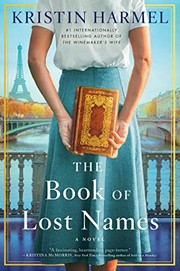
The Book of Lost Names
A young forger in occupied France helps Jewish children flee with new names while keeping a secret book of the truth.
2,097-word summary · 9 min read
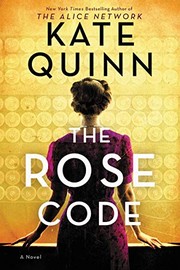
The Rose Code
Three Bletchley Park women reunite in 1947 to expose a wartime traitor in Quinn's codebreaking novel.
3,219-word summary · 14 min read
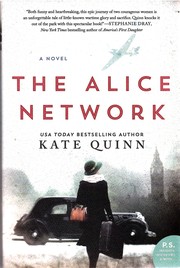
The Alice Network
Two women, two wars: Eve spied for the Alice Network in 1915 France, Charlie searches for her cousin in 1947, and their road trip pulls both stories together.
2,090-word summary · 9 min read
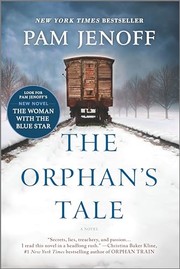
The Orphan's Tale
A Dutch teenager rescues a Jewish baby from a death train and joins a German circus, where a Jewish aerialist teaches her to fly.
2,943-word summary · 13 min read

The Japanese Lover
A Polish refugee and the son of a Japanese gardener fall in love in San Francisco in 1939, then keep the affair secret for nearly seventy years.
2,286-word summary · 10 min read

The Beach House
A young valet is beaten to death at a Hamptons party, and his law-student brother spends a year building a case against the family that covered it up.
2,049-word summary · 9 min read
The Art Forger
A disgraced Boston painter agrees to copy a Degas stolen from the Gardner Museum, then begins to suspect the original she is copying is itself a forgery.
2,117-word summary · 9 min read

Anatomy: A Love Story
In 1817 Edinburgh, a noblewoman who wants to be a surgeon disguises herself to study anatomy and falls for the grave robber who supplies her with bodies.
2,031-word summary · 9 min read

The Shadow Sister
Star D'Apliese steps out of her sister's shadow and follows a bookshop clue into the Edwardian life of Flora MacNichol, a woman who gave up love for duty.
2,260-word summary · 10 min read
The Only Woman in the Room
A novel about Hedy Lamarr's escape from an arms-dealer husband, her Hollywood career, and the frequency-hopping patent the Navy ignored.
2,067-word summary · 9 min read
The Unmaking of June Farrow
A woman in a North Carolina flower-farming family walks through a red door into 1951, where she must solve her mother's disappearance and decide whether to…
2,701-word summary · 12 min read
The Black Dahlia
James Ellroy builds a fiction around the real Black Dahlia murder, following two Los Angeles cops whose partnership and obsessions destroy them.
2,533-word summary · 11 min read
The Agony and the Ecstasy
Irving Stone turns Michelangelo's seventy years of carving, painting, and arguing with popes into a novel about the cost of making something that outlives you.
2,260-word summary · 10 min read
Only Time Will Tell
A Bristol dockworker's son wins a scholarship, falls in love with the daughter of the family that owns the shipyard, and learns that his father's death was not…
2,082-word summary · 9 min read
Once Upon a River
A wounded man stumbles into a riverside inn carrying what appears to be a drowned child who is not quite dead, and the story braids the guesses of everyone who…
2,173-word summary · 10 min read
Stones from the River
Trudi Montag is born a dwarf in a small German river town in 1915 and grows up to keep the town's library and its secrets, from the First World War to the…
2,818-word summary · 13 min read
Last Night at the Telegraph Club
The 2021 National Book Award winner follows Lily Hu, a Chinese American teenager in 1954 San Francisco, as she falls for Kath and learns what it costs to be…
2,336-word summary · 10 min read
The Diviners
In 1920s New York, Evie O'Neill's ability to read objects pulls her into an occult investigation that awakens something far older and more dangerous.
2,045-word summary · 9 min read