
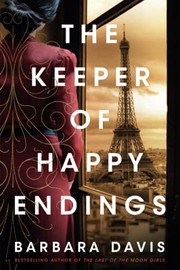
The Keeper of Happy Endings
2,437-word summary 11 min read 415 pages in the book
- First published
- 2021
- Publisher
- Lake Union Publishing
- Pages
- 415
- ISBN
- 9781542021470
Reading options
What's inside (9 sections)
I picked this one up because a bookseller promised it would make me cry, and I wanted to know if a novel could actually earn that. The Keeper of Happy Endings nearly did. It braids two stories into one: a young French dressmaker in occupied Paris and a grieving woman in Boston about forty years later, joined by a row house, a sealed box, and a wedding gown that was never worn. Barbara Davis wrote it as a standalone. Lake Union Publishing brought it out in 2021, and the paperback runs about 415 pages, the sort of book you finish in two long sittings if you do not watch the clock.
The setup is simple enough to describe and hard to forget. A family of Paris dressmakers claims it can sew luck into a wedding dress. One of those dressmakers loses almost everything in the war. Decades on, the granddaughter she never knew she had walks into her old shop.
A salon where luck went into the seams
Soline Roussel grows up inside her family's bridal salon in Paris, an exclusive place where the work is done by hand and the reputation is closer to folklore than fashion. The Roussel women are called spell weavers, les tisseuses de sort, and less kindly, dress witches. For generations they have stitched la magie into each gown, a charm of sorts that is said to guarantee the bride a happy ending. Clients were vetted, sometimes with tests, before a dress was promised. Word of mouth kept the order book full.
Soline's mother, Esmée, is the one most people mean when they say dress witch. She believes in the gift and treats it as a duty. Soline is taught from a young age that happy endings belong to other people, and that her job is to hand them out, not to expect one. There is a reason the family holds that line. A maléfice, a curse, is said to run down the line of Roussel dressmakers, and the women who wield the magic are the ones who pay for it with their own love lives. The family survives by keeping its head down and its heart guarded.
That is the part Soline resists. She is a talented designer with ideas of her own. She sketches gowns in secret, fantasies of a career built on her own name rather than her mother's charms. Esmée sees the daydreaming as selfish and tells her so, often. Theirs is a cold relationship, full of quiet truces. This tension between a mother who wants a successor and a daughter who wants a life is one of the two emotional spines of the book, and Davis sets it up early.
The war walks in
Then the Germans arrive. Paris fills with soldiers, and food, work, and fabric grow scarce. The salon's clients stop coming. Esmée is already ill, and she grows weaker as the occupation tightens. In 1943 she dies, and Soline closes the shop.
Alone and bereft, Soline volunteers at a hospital to care for wounded men. It is there, on her first day, that she meets Anson Purcell, an American ambulance driver with the American Field Service. He ferries the injured through a city that is no longer safe for anyone. The attraction is immediate and mutual, and it moves quickly because the times do not allow for slow courtship. What begins as flirtation beside hospital beds turns into something real.
Anson is not only an ambulance driver. He works with the Resistance, smuggling people out of France. Soline joins him as a courier, carrying messages across a city where being caught means a cell or worse. The chapters covering this stretch are some of the strongest in the book. Davis writes the danger plainly, without turning it into a thriller, and the romance gains weight because the two of them are useful to each other in a moment when usefulness is survival.
When Anson is discovered, he insists that Soline flee to safety. He tells her to go to America, to his family in Rhode Island, and he promises to follow her when the war ends and marry her there. So she goes, carrying a hope she has no reason to trust, given everything her family believes about love.
The American chapter of her life goes wrong almost at once. Anson's father, Owen, is a hard and unforgiving man who never approved of her. Soline learns she is pregnant with Anson's child, and Owen treats her with open contempt. Then a telegram arrives saying Anson has gone missing in Paris and is presumed dead. Owen uses the news to cut her off completely. He sends her to a home for unwed mothers and forbids her from telling anyone about the pregnancy. Soline gives birth to a daughter she names Assia. The nurses tell her the baby was too small and did not survive. She believes them, because what reason would she have not to.
That lie is the hinge of the entire novel, though the reader does not know it yet. Soline picks up the pieces of herself, moves to Boston, and builds a new life as a dressmaker. She opens a shop called L'Aiguille Enchantée, the charmed needle, and it thrives for years. Then, in the early 1980s, a fire destroys the shop and injures her hands badly enough that she can no longer sew. She retreats into her townhouse, half a recluse, keeping a dress box of mementos out of sight because looking at it hurts and throwing it away hurts more.
Rory, and the house she cannot stop thinking about
The modern thread belongs to Aurora Grant, called Rory, a twenty-three-year-old artist and aspiring gallery owner in Boston. Her life has been frozen for five months. Her fiancé, Matthew Huxley, known as Hux, is a physician working with Doctors Without Borders who was abducted during an armed raid in South Sudan. The State Department has told her almost nothing, and she has forty-three letters from him and no news. She drifts through days, barely putting herself together.
Rory's other wound is her mother, Camilla, a woman whose approval she has never quite managed to win. Rory has been studying for an MFA, but her real dream, the one Hux encouraged, is to open a gallery for artists nobody has heard of yet. She plans to call it Unheard Of. One afternoon, driving home, she notices an abandoned row house on Newberry Street and feels an inexplicable pull toward it, as if someone were watching her from an upstairs window. She cannot shake the feeling that the building is meant to be hers.
The row house, of course, belongs to Soline. It housed her dress shop until the fire gutted it, and it has sat empty since. Soline, urged on by her attorney, agrees to lease it. Rory has a purpose again. She tells Camilla she is leaving her program to chase the gallery, a decision that lands badly, and the friction between the two of them sharpens through the first half of the book.
Soline and Rory are the same kind of person and neither of them can see it yet. Both are artists. Both have lost the man they loved, one to a presumed death in a war and one to a disappearance on another continent. Both are trying to decide whether hope is worth the cost. Davis keeps their parallels close, maybe a little too close, but the pairing does what it is supposed to do.
The box under the stairs
While clearing out the building, Rory finds a box tucked beneath the stairs. Inside are letters in French, a shaving kit, and a vintage Roussel wedding dress, still wrapped, never worn. There is a veil with it, kept with the gown as if the whole outfit were waiting for a day that never came. Rory tracks down Soline to return the things, and that meeting turns into a friendship neither woman planned.
Soline is direct, elegant, and older than Rory expected, her hands gloved over the scars the fire left. She answers Rory's questions about the box, but she is careful. She admits the dress was hers, and that the shaving kit belonged to Anson, the man she lost in the war. She will not confirm anything about the magic when Rory repeats what she has read about the Roussel gift. Instead she says something close to the idea that people cling to illusions because life is hard and illusions make it bearable. It is a telling answer from a woman who has spent decades protecting herself from a promise she believes failed.
The letters themselves matter to the plot. They were written by brides in Paris, in French, thanking the Roussel women after their mother's death, and they are the emotional record of a business built on other people's happiness. Reading them, Rory starts to see Soline as more than a landlord. The two women begin meeting regularly. Soline encourages Rory to keep her love for Hux alive and to refuse to give up on him. Rory, in turn, pulls Soline back into the world, into shops and lunches and conversations she had stopped having.
The friendship is tested by the gallery and by Camilla, who is openly uncomfortable around Soline and behaves badly when the three of them collide at lunch. Soline, wounded, withdraws for a while. It is a small scene with a big effect, because it shows how easily she still retreats into her old habit of disappearing when she feels unwanted.
The coincidence the whole book bets on
This is where spoilers are unavoidable, so consider that fair warning. Rory, trying to comfort Soline, decides to find a photograph of Anson so the older woman will have something concrete to hold. What she uncovers is that Anson did not die in the war. He was badly injured in 1944, captured by the Germans while in his ambulance, and left for dead. He survived. He is alive. And through a chain of discoveries that the novel presents as fate, Rory learns that Anson is her grandfather, that Soline is her grandmother, and that Camilla, the baby everyone called Assia, is the child Soline was told had died.
Owen's deception is the engine of forty years of pain. He told Soline the baby had not survived, and he told Anson that Soline had moved on and wanted nothing to do with him. Each of them spent decades believing the other had abandoned them. Neither was true. The misunderstanding was manufactured by a cruel man and then left to harden into fact. Rory and Camilla learn the truth first and make their peace, then decide to hold the information back from Soline, at least for now, because they are unsure how she will take it.
Rory finds Anson and tells him he has a daughter and a granddaughter. He does not react well. He has spent his life believing Soline left him, and the news collides with that belief. He comes around slowly, and on the night of the gallery opening he seeks Rory out. Soline, who still does not know he is alive, sees him across the room and the shock sends her into retreat for days. It takes Thia, Anson's sister, plus Camilla and Rory, to sit Soline down and tell her the whole story. Once the deception is laid out, the two old lovers can finally talk. They reconcile, and the novel closes with their wedding the following spring. Anson also brings Rory news that Hux is alive and has been freed. Everyone gets the ending the title promised.
Where the spell wobbles
I liked this book and I still have to be honest about where it strains. The central coincidence is enormous. That the woman who leases the burned-out shop is the granddaughter of the woman who owns it, that the lost baby grew up to be her mother, that the presumed-dead soldier is alive and reachable, is a lot of luck piled on one plot. Davis frames it as magic and destiny, which softens it, but readers who want their coincidences weighted will feel the machinery turning. The reveal is powerful enough that I let it pass, though I noticed the strings.
The sentimentality is real, too. The Last of the Moon Girls crowd will not mind, but the novel leans on tears the way the salon leans on charms. Some scenes reach for the heart a beat too obviously, and the magic itself stays vague by design, which keeps it from ever being tested. If you want a firm rule about how the dresses work, you will not get one.
The pacing is uneven between the timelines. Paris in the early 1940s carries more weight and more danger. Boston in 1985 is gentler, and its central problem, Rory waiting on word of Hux, moves slowly until the family mystery takes over. Owen is a thin villain, cruel with little complexity, and Camilla's early coldness softens faster than it probably should. There is also something a little neat about how quickly the two women become indispensable to each other. A few chapters of quiet distance would have made the closeness land harder.
None of this ruins it. It just means the book works best if you accept it as a fable with wedding dresses, not as a sober family saga.
Who should read it
Readers who loved The Last of the Moon Girls or the softer end of World War II historical fiction should feel at home here. So should anyone who likes a dual timeline where the past and present are genuinely in conversation, with letters and objects passing between them. If you want a clean standalone with a closing chapter that ties every thread into a bow, that is exactly what this is. It is not a war novel in the gritty sense, and it is not a thriller, despite the resistance subplot. It is a story about grief, mothers and daughters, and the question of whether a person can reopen a door they had bolted shut.
I finished it in two evenings and went back to reread the scenes in the hospital, where Soline and Anson first meet, because that is where the book is most alive. The magic is soft, the coincidence is huge, and the ending is exactly as tidy as the title warns. It still got me. Some books are built to do that, and this one knows what it is.
FAQ
Is The Keeper of Happy Endings part of a series?
No. It is a standalone novel by Barbara Davis, first published by Lake Union Publishing in 2021.
What are the two timelines in the book?
One thread follows Soline Roussel in Paris during World War II and later; the other follows Rory Grant in Boston in 1985 as she opens an art gallery and meets Soline.
Who is Rory Grant in relation to Soline?
Rory is Soline's granddaughter. The baby Soline was told had died at birth was actually adopted, and she grew up to become Rory's mother, Camilla.
Similar books
The Tuscan Child
After her father's death, Joanna follows a returned letter to Tuscany and uncovers his wartime love, a hidden painting and a village secret. A dual-timeline…
2,095-word summary · 9 min read
Those Who Save Us
A Minnesota professor hunts her mother's hidden wartime past in Weimar, where survival came wrapped in an SS officer's protection. A dual timeline about…
2,345-word summary · 10 min read
The Echo of Old Books
Barbara Davis's 2023 novel sends a rare-book dealer in 1984 New Hampshire hunting for the authors of two unpublished volumes that tell opposite sides of one…
2,491-word summary · 11 min read

The Japanese Lover
A Polish refugee and the son of a Japanese gardener fall in love in San Francisco in 1939, then keep the affair secret for nearly seventy years.
2,286-word summary · 10 min read

The Shadow Sister
Star D'Apliese steps out of her sister's shadow and follows a bookshop clue into the Edwardian life of Flora MacNichol, a woman who gave up love for duty.
2,260-word summary · 10 min read
The Unmaking of June Farrow
A woman in a North Carolina flower-farming family walks through a red door into 1951, where she must solve her mother's disappearance and decide whether to…
2,701-word summary · 12 min read
The Storyteller's Secret
A New York journalist goes to India to learn why her grandmother loved a British officer, and why a family servant kept the truth for forty years.
2,270-word summary · 10 min read
The Clockmaker's Daughter
A London archivist finds a Victorian satchel holding a photograph, a sketchbook and a letter, then follows them to Birchwood Manor, where a young woman died in…
2,886-word summary · 13 min read
The Last Letter from Your Lover
A 1960s wife with lost memory and a modern journalist chase the same lost love letters across forty years.
2,506-word summary · 11 min read
The Lake House
Detective Sadie reopens 1933 Edevane baby vanishing tied to writer Alice.
2,055-word summary · 9 min read
The English Patient
In a ruined Italian villa in 1945, a burned man, a nurse, a thief, and a sapper trade pasts shaped by desert love and war.
2,006-word summary · 9 min read
Next Year in Havana
A Cuban-American writer takes her grandmother's ashes to Havana and finds a hidden 1959 love that reshapes her family story.
2,962-word summary · 13 min read
The Secret Keeper
A girl watches her mother kill a stranger in 1961; fifty years later she digs into her mother wartime London past.
2,262-word summary · 10 min read
The Things We Cannot Say
A Florida mother travels to Poland to answer her silent grandmother's plea, uncovering a wartime love story and a decades-old identity swap.
2,365-word summary · 11 min read
The Things We Leave Unfinished
Georgia Stanton and Noah Harrison finish Scarlett's last novel while her WWII romance with pilot Jameson unfolds in letters. A dual timeline story of grief,…
2,565-word summary · 11 min read
The Alice Network
Two women, two wars: Eve spied for the Alice Network in 1915 France, Charlie searches for her cousin in 1947, and their road trip pulls both stories together.
2,090-word summary · 9 min read
The Stationery Shop
Two teenagers fall in love in a Tehran stationery shop in 1953, are separated by the coup and a family deception, and meet again sixty years later.
2,024-word summary · 9 min read
The Orphan's Tale
A Dutch teenager rescues a Jewish baby from a death train and joins a German circus, where a Jewish aerialist teaches her to fly.
2,943-word summary · 13 min read

Anatomy: A Love Story
In 1817 Edinburgh, a noblewoman who wants to be a surgeon disguises herself to study anatomy and falls for the grave robber who supplies her with bodies.
2,031-word summary · 9 min read
The Only Woman in the Room
A novel about Hedy Lamarr's escape from an arms-dealer husband, her Hollywood career, and the frequency-hopping patent the Navy ignored.
2,067-word summary · 9 min read
The Valley of Horses
Exiled from the Clan, Ayla survives alone in a hidden valley, tames a horse and a cave lion, and nurses a wounded stranger back to life.
2,311-word summary · 10 min read
Once Upon a River
A wounded man stumbles into a riverside inn carrying what appears to be a drowned child who is not quite dead, and the story braids the guesses of everyone who…
2,173-word summary · 10 min read
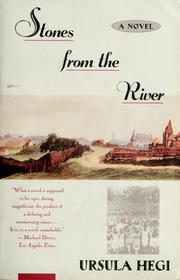
Stones from the River
Trudi Montag is born a dwarf in a small German river town in 1915 and grows up to keep the town's library and its secrets, from the First World War to the…
2,818-word summary · 13 min read

Origins
Stefan's diary of 1864 and 1888: how he and Damon fell for Katherine, became vampires, and went looking for a killer in London.
2,056-word summary · 9 min read
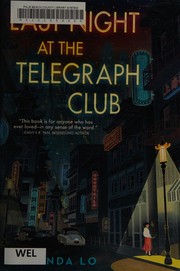
Last Night at the Telegraph Club
The 2021 National Book Award winner follows Lily Hu, a Chinese American teenager in 1954 San Francisco, as she falls for Kath and learns what it costs to be…
2,336-word summary · 10 min read

Ivanhoe
A disinherited Saxon knight, a great tournament, a besieged castle and a trial by combat. Scott's most famous novel, set in England in 1194.
2,834-word summary · 13 min read
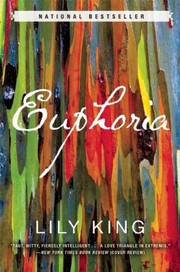
Euphoria
Three anthropologists in 1930s New Guinea turn fieldwork into a love triangle, and a real history breathes behind them.
2,048-word summary · 9 min read
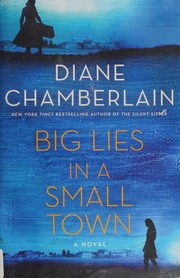
Big Lies in a Small Town
A 22-year-old woman leaves prison to restore a 1940 mural, and Edenton, North Carolina, starts talking.
2,187-word summary · 10 min read
Where We Belong
Marian's orderly New York life cracks when the daughter she gave up for adoption arrives, and the search for the father forces her to tell the truth.
2,056-word summary · 9 min read
What the Wind Knows
Annie scatters her grandfather's ashes on Lough Gill and is pulled into 1921 Ireland, where she becomes the missing Anne Gallagher and falls for Dr. Thomas…
2,056-word summary · 9 min read