
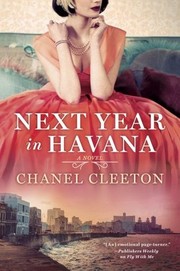
Next Year in Havana
2,962-word summary 13 min read 400 pages in the book
- First published
- 2018
- Publisher
- Berkley
- Pages
- 400
- ISBN
- 9780399586682
- Series
- The Perez Family (#1)
Reading options
What's inside (8 sections)
I picked up Next Year in Havana because a friend kept pressing it on me after a trip to Miami. She had grown up hearing her own parents talk about Cuba in that half sad, half angry way, and she said this was the first novel that made her understand why they could not let it go. I am usually wary of book club picks that promise a sweeping love story. They often smooth out the history. This one surprised me. The book is 400 pages in the 2018 Berkley edition, and it moves between Havana in 1958 and Havana in 2017, following a grandmother and then her granddaughter. It is romantic, yes, but it is also specific about houses, food, streets, and the choices people had to make when the government changed overnight.
Cleeton writes from inside that Cuban American exile world. She is herself of Cuban heritage. The novel became a Reese Witherspoon pick, which explains why so many people found it. What kept me reading was the structure. Two women fall for stubborn men at dangerous moments. The older story explains the younger one.
Let me walk through it the way it unfolds.
Elisa in 1958, sheltered and restless
Elisa Perez is nineteen when we meet her. She is the daughter of Emilio Perez, a sugar baron, one of the richest men in Cuba. The family lives in Miramar, the grand part of Havana, with staff and drivers and parties. Elisa has three sisters, Isabel, Beatriz, and Maria. Her mother runs a tight schedule of lunches and fittings and rules about how a proper young woman behaves.
The politics are background noise at first. That is the point. Fulgencio Batista is in power, corrupt and brutal, and Fidel Castro and his 26th of July Movement are gaining ground in the hills. In Elisa's circle people talk about it the way rich people talk about trouble elsewhere, as something that will pass. Her father has ties to the old order. Business is good. The house is full of music and late dinners.
Elisa feels restless inside that comfort. She is observant and a little rebellious. One night she slips out with her sisters to a party she should not attend. There she meets Pablo Gutierrez.
Pablo is older, serious, warm in a way that catches her off guard. He is handsome, but what pulls Elisa in is his conviction. He believes Batista has to go. He is working with the revolution, carrying messages and taking risks, though he does not tell her everything at first. They talk. He gives her a white rose. It sounds corny written down. In the book it works because Elisa has never met anyone who speaks to her as if her opinions matter.
Their early scenes are my favorite part of the historical thread. Dancing. Long walks on the Malecon, that wide seawall road where Havana meets the water. Stolen hours in cafes. Ropa vieja steaming on a plate. Music spilling from doorways. Elisa starts to see her city differently because Pablo points to the parts she was trained not to see.
Her parents would be horrified, and they are, once they learn. To them Pablo is dangerous and low. To Elisa he is the first honest thing in a curated life.
Loving Pablo while Havana falls apart
The middle of Elisa's story is letters and waiting.
Pablo moves between Havana and the countryside where fighting is heaviest. Elisa stays home and pretends to be the dutiful daughter. They write to each other when they can. He sends her his grandmother's ring as a promise. She wears it on her hand when they are alone and on a chain around her neck when she has to hide it. I loved that small detail. It tells you how double her life has become.
There is one scene that stayed with me. Pablo is arrested by Batista's police. Elisa begs her father to use his contacts to get him out. Emilio can do it. He has money and friends in high places. He agrees, but at a price. Elisa must promise to stop seeing Pablo.
She promises. She does not keep the promise.
Would you? At nineteen, told the country is fine by people who profit from it being not fine, and then shown proof it is not fine by someone you love, most of us would keep sneaking out. Elisa does.
Meanwhile history speeds up. Late 1958 into early 1959, Batista flees. Castro wins. At first there is joy in the streets. Many Cubans, even rich ones, hoped for change. Then the new regime hardens. Trials. Confiscations. People connected to the old system become targets. The Perez family, with their sugar wealth and Batista ties, suddenly has to think about leaving.
Elisa discovers she is pregnant. She is waiting for Pablo to come back so they can decide what to do. Instead a friend of his, Guillermo, brings word that Pablo was killed in battle.
That is all she gets. No body. No letter. Just someone's report.
The family flees. The opening image of the book is actually that airport farewell, the Perez family lined up with suitcases, leaving Havana for Miami, unsure if they will ever return. Elisa gets on the plane believing the father of her child is dead. She carries the ring and the letters and the rose she pressed flat. She does not tell most people what happened.
I found this section painful in a good way. Cleeton does not make Elisa a heroine of the revolution. She stays a sheltered girl who glimpsed something larger and paid for it. That feels honest.
Marisol in 2017, carrying ashes through customs
Sixty years later we meet Marisol Ferrera.
Marisol is in her thirties, a freelance writer living in Miami. She is Elisa's granddaughter, raised on Elisa's glowing stories. Parties and a beautiful house by the sea. Marisol feels Cuban without having set foot in Cuba. She speaks the language, eats the food, knows the jokes. She has never breathed the air.
When Elisa dies, her last wish is direct. She wants Marisol to take her ashes back to Cuba and scatter them in the country where she was born.
Marisol agrees. She is nervous and grieving and determined. Because American travel to Cuba was easier in 2017 during the Obama thaw, she can go as a journalist writing a lifestyle piece. She packs the small box of ashes in her luggage and hopes customs does not look too closely. That tense plane ride tells you a lot about how the book sees return. It is not a vacation. It is a smuggled goodbye.
Havana hits her hard. The beauty is there. The pastel buildings. The old cars. The sea light. But so is the decay. Crumbling facades. Empty shelves. Houses divided into apartments for several families. Rules about money, with one currency for locals and convertible pesos for foreigners. Marisol keeps comparing what she sees with what her grandmother described. The gap aches.
She stays with Ana Rodriguez, Elisa's childhood friend who never left. Ana is now an old woman running a household that includes her family and boarders. They operate a paladar, a small private restaurant in the home, which lets them earn foreign currency and survive a little better than neighbors. The house is crowded and loud and generous. Guests come and go. Everyone watches everyone else, kindly and also carefully.
Ana's grandson picks Marisol up from the airport. That is Luis.
Luis, history lessons, and a slow burn
Luis is a professor of history at the University of Havana. He is thoughtful, tired around the eyes, proud of Cuba and frustrated by its government. He lives in Ana's divided house with his mother Caridad and his ex-wife Cristina, who stayed because housing in Havana is brutal and money is tight. At first Marisol assumes Cristina is still his wife. That misunderstanding creates a clumsy stretch where Marisol tries not to stare at a man she finds compelling.
Luis becomes her guide. He walks her through Old Havana, the university, the plazas, the Malecon where Elisa once walked with Pablo. He talks about Cuban history without sounding like a textbook. He thinks ordinary Cubans deserve better than slogans from either side.
He also has a secret. At night he writes a blog that criticizes the regime. He uses careful language, but in Cuba that kind of writing gets noticed. Friends warn him. His mother worries. He keeps doing it because he feels he should.
Marisol and Luis circle each other for a while. She is only there for a short visit. He cannot easily leave. Still they keep talking late, cooking together in the crowded kitchen, arguing about history and then laughing. Marisol grew up on exile stories where Castro ruined everything. Luis grew up inside the system where America is blamed for everything. They have to translate for each other.
Is the romance fast? Yes. This is where I started to raise an eyebrow. Marisol has known the man for days and is already picturing a life. Grief makes people attach quickly. Foreign places heighten everything. I bought it enough to keep going, but if you need slow and skeptical love stories, this thread may test you.
What saves it is the link to the mystery. Every outing doubles as fieldwork. She is retracing Elisa.
The buried box and the news about Pablo
Ana gives Marisol a box that Elisa left buried in the yard of the old Perez house.
Think about that image. Before fleeing, Elisa buried her most precious things under the soil. The white rose from her first date with Pablo. His letters. The ring. Ana later dug it up after the confiscated house changed hands and kept it for decades without opening it. Now she hands it to Marisol.
Reading those letters changes what Marisol thought she knew. Her grandmother, the proper exile matriarch married to her grandfather Juan, had once loved a revolutionary with everything she had.
Then Marisol visits Magda, the family's old nanny, still living in Havana. Magda tells her plainly what no one in Miami ever said. Elisa was already pregnant when she boarded that plane in 1959.
So Marisol does the math. Her father Miguel may not be Juan's biological son. He may be Pablo's.
That question, who is my grandfather really, drives the rest of the book. Did Juan know? Did Elisa's sisters know? Beatriz, the sharpest and most political sister, seems the likely keeper of secrets. Marisol wonders if her whole family story rests on a silence.
She also learns Pablo may not have died. Guillermo thought he saw him fall. War reports get things wrong. There are hints Pablo survived, rose within the new government, and is still alive in Havana as an old man with influence.
Marisol decides to find him. This is brave and a little reckless. Asking about a powerful official while staying on a journalist visa, while dating a blogger the police already watch, is not wise. She does it anyway. Grief makes you bold.
The search leads to a frightening night. Luis is taken by men. Marisol is shoved into a car too. For a stretch you fear the worst. Then Marisol is brought to a grand house near the sea. An old man waits inside.
Pablo.
He is alive. He works high in the government. He saw Marisol's name on entry records and had been keeping an eye on her. When he learned Luis was being picked up on a charge of social dangerousness, a broad charge used to jail critics before they act, he intervened and had Marisol pulled out too.
Their talk is the emotional center of the modern thread. Pablo explains what happened after Elisa left. He had been badly hurt and thought lost. When Batista's men once held him, Elisa's father had bought his release at the cost of Elisa's promise. Later, when Emilio Perez was held by the new forces, Pablo used his own pull to get the old man freed and sent a message to Elisa through him.
Emilio never passed the message on.
By the time Pablo could look for Elisa in Miami, Emilio showed him photos of Elisa with her new husband Juan and their child. He told Pablo they were happy. Pablo, believing Elisa thought him dead and had moved on, chose not to disrupt her life. He married in Cuba. He had children. He stayed and tried to shape change from inside, a choice the book presents without fully excusing.
Did Emilio act to protect his daughter or to control her? The book lets you sit with that. I leaned toward control mixed with fear. He had just lost his home and status. A revolutionary son-in-law threatened the rebuilt Miami life. Still, hiding a letter that could have reunited two people is cruel. Cleeton does not soften it.
Pablo also confirms what Marisol suspected about Miguel. Yes, the timing points to Pablo as the father. Marisol now holds a truth her Miami family never discussed.
Arrest, escape, and scattering ashes
The last stretch moves quickly.
Pablo cannot simply free Luis. What he can do is create a narrow opening. On paper it looks like an accidental release. Luis comes back to Ana's house bruised and shaken. Pablo warns them. Luis has to leave Cuba at once before anyone corrects the error.
The plan is hurried. Get to Antigua, then take a chartered plane linked to the Perez company to Florida. Marisol calls her sister in Miami to arrange help. Ana and Caridad press Luis to go. He resists. He does not want to abandon Cuba or admit his writing failed. He feels leaving means letting the regime win.
The women talk him around. They argue he can write more freely from outside, that exile is not surrender, that staying in prison helps no one. Marisol promises they will write together about Cuba and push for attention from abroad. He agrees, though it costs him.
Before they leave, Marisol and Pablo walk to the Malecon at night with Elisa's ashes. This was Elisa's favorite place. They release the ashes to wind and water. I found the scene moving without being showy. Just an old man saying goodbye to a girl he loved at nineteen and a granddaughter finishing the errand.
Marisol later sees Beatriz in Miami, the aunt most likely to have known. Beatriz confirms she knew about Pablo. She says Elisa's marriage to Juan was real, even if it started as shelter after loss. Juan raised Miguel as his own. His love was steady and true, different from the blaze with Pablo but not false.
The book ends with Luis and Marisol in Miami, starting work and starting over, raising glasses with the old exile toast that gives the novel its title. Next year in Havana. It is a wish exiles say at gatherings, meaning we will return when Cuba is free. Then we get a brief closing view of Elisa in 1970 in Key West with Juan and young Miguel, looking across ninety miles of water toward home.
I will be honest about weak spots, because they are worth knowing before you commit.
The politics can feel simplified. Batista's Cuba and Castro's Cuba each get sketched more than examined. If you want a deep history of the revolution, this is not that book. Cleeton gives you enough to follow the romance, not enough to argue about. Luis's blog hints at present day repression but stays general.
The middle sags a little. Dual timelines demand balance, and Marisol's tourist discoveries sometimes repeat. Another crumbling mansion, another lesson about two currencies. The point is fair. After the third pass I wanted the plot to advance.
And yes, the romances are idealized. Pablo is brave and tender. Luis is handsome and principled. Elisa and Marisol are beautiful and quick. Everyone talks well under pressure. If you prefer prickly characters who make ugly choices, you may find this crew too polished.
Here is why I still recommend it, with those caveats.
Cleeton captures something true about inheritance. Marisol thought identity was stories told at kitchen tables in Miami. In Havana she learns identity is also streets and shortages. She stops seeing Cuba as her grandmother's lost paradise and starts seeing it as Luis's complicated home.
The book also respects both kinds of courage. Elisa's courage in loving across a political divide and then building a loyal marriage after loss. Marisol's courage in asking questions her family buried. Luis's courage in writing when silence would be safer. None of these people get everything they want. They choose what they can live with.
Who should skip it? If you dislike romance as an engine, or you need hard historical argument, look elsewhere. If dual timelines annoy you, this will annoy you, since it switches often. If you want every Cuban perspective, including Afro Cuban voices and rural voices, you will find this story centered on a wealthy white family and its circle. That focus is narrow. Cleeton knows it and gestures outward, but the center holds.
For me the image that remains is small. A ring worn on a finger in private and on a chain in public. A rose pressed in a buried box. Ashes scattered where a girl once walked with her first love. I have read heavier books about revolution. Few made the cost feel so personal.
Next time I see that toast at a restaurant, next year in Havana, I will hear it differently. Less as a slogan. More as a promise between people who may never see the street they dream about.
FAQ
Is Next Year in Havana the first book in a series?
Yes. It is book 1 of The Perez Family series and follows Elisa Perez in 1958 Havana. It works alone, but Beatriz gets her own story next in When We Left Cuba.
Is Next Year in Havana based on a true story?
No. Elisa, Pablo, Marisol, and Luis are fictional. Cleeton draws on Cuban exile family experience and real events around the 1959 revolution and 2017 Havana.
Does Marisol find Pablo alive in Havana?
Yes. Marisol learns the battle report was wrong and meets an old Pablo in Havana. He confirms the family secret and helps free Luis so Marisol and Luis can leave for Miami.
Similar books
More from The Perez Family first, then related titles.

Doctor Zhivago
A doctor and poet lives through revolution, war, and love in Pasternak's novel of private life under the pressure of Russian history.
2,213-word summary · 10 min read

The Keeper of Happy Endings
Barbara Davis's 2021 standalone braids a Paris dressmaker's wartime losses with a grieving Boston artist who unlocks her family's secrets through an old row…
2,437-word summary · 11 min read
The Stationery Shop
Two teenagers fall in love in a Tehran stationery shop in 1953, are separated by the coup and a family deception, and meet again sixty years later.
2,024-word summary · 9 min read

The Japanese Lover
A Polish refugee and the son of a Japanese gardener fall in love in San Francisco in 1939, then keep the affair secret for nearly seventy years.
2,286-word summary · 10 min read

Anatomy: A Love Story
In 1817 Edinburgh, a noblewoman who wants to be a surgeon disguises herself to study anatomy and falls for the grave robber who supplies her with bodies.
2,031-word summary · 9 min read

The Shadow Sister
Star D'Apliese steps out of her sister's shadow and follows a bookshop clue into the Edwardian life of Flora MacNichol, a woman who gave up love for duty.
2,260-word summary · 10 min read

The Valley of Horses
Exiled from the Clan, Ayla survives alone in a hidden valley, tames a horse and a cave lion, and nurses a wounded stranger back to life.
2,311-word summary · 10 min read
The Unmaking of June Farrow
A woman in a North Carolina flower-farming family walks through a red door into 1951, where she must solve her mother's disappearance and decide whether to…
2,701-word summary · 12 min read

The Echo of Old Books
Barbara Davis's 2023 novel sends a rare-book dealer in 1984 New Hampshire hunting for the authors of two unpublished volumes that tell opposite sides of one…
2,491-word summary · 11 min read

The Storyteller's Secret
A New York journalist goes to India to learn why her grandmother loved a British officer, and why a family servant kept the truth for forty years.
2,270-word summary · 10 min read

Origins
Stefan's diary of 1864 and 1888: how he and Damon fell for Katherine, became vampires, and went looking for a killer in London.
2,056-word summary · 9 min read
Last Night at the Telegraph Club
The 2021 National Book Award winner follows Lily Hu, a Chinese American teenager in 1954 San Francisco, as she falls for Kath and learns what it costs to be…
2,336-word summary · 10 min read

Ivanhoe
A disinherited Saxon knight, a great tournament, a besieged castle and a trial by combat. Scott's most famous novel, set in England in 1194.
2,834-word summary · 13 min read
Euphoria
Three anthropologists in 1930s New Guinea turn fieldwork into a love triangle, and a real history breathes behind them.
2,048-word summary · 9 min read
Where We Belong
Marian's orderly New York life cracks when the daughter she gave up for adoption arrives, and the search for the father forces her to tell the truth.
2,056-word summary · 9 min read
What the Wind Knows
Annie scatters her grandfather's ashes on Lough Gill and is pulled into 1921 Ireland, where she becomes the missing Anne Gallagher and falls for Dr. Thomas…
2,056-word summary · 9 min read
Troubles in Paradise
In the final Paradise novel, Irene Steele rebuilds her life on St. John while the truth about Russ's death and Todd Croft's criminal empire finally surfaces.
2,471-word summary · 11 min read
The Tuscan Child
After her father's death, Joanna follows a returned letter to Tuscany and uncovers his wartime love, a hidden painting and a village secret. A dual-timeline…
2,095-word summary · 9 min read
Loving Frank
Mamah Borthwick Cheney leaves her family for Frank Lloyd Wright, and their affair becomes a public scandal that ends in tragedy at Taliesin.
2,034-word summary · 9 min read
Ghosted
After seven perfect days with Eddie, Sarah is ghosted, and her search for answers uncovers a secret tied to the accident that changed both their lives.
2,011-word summary · 9 min read
A Voice in the Wind
A young Christian slave in Rome serves a spoiled patrician daughter and catches the eye of her brother, while a captured German gladiator fights for freedom.
2,322-word summary · 10 min read
The Storm Sister
Ally D'Aplièse loses her father and her lover within weeks, then follows a brass frog and a Norwegian biography into Anna Landvik's music and the world of…
2,376-word summary · 11 min read

The Clockmaker's Daughter
A London archivist finds a Victorian satchel holding a photograph, a sketchbook and a letter, then follows them to Birchwood Manor, where a young woman died in…
2,886-word summary · 13 min read
Those Who Save Us
A Minnesota professor hunts her mother's hidden wartime past in Weimar, where survival came wrapped in an SS officer's protection. A dual timeline about…
2,345-word summary · 10 min read
Grave Mercy
Convent assassin Ismae spares Gavriel and hunts traitors in Brittany.
2,357-word summary · 10 min read
Everything We Keep
A widow questions her husband's death when a stranger claims his past.
2,307-word summary · 10 min read

Chain of Gold
Cordelia and James hunt demons in Edwardian London while hearts tangle.
2,364-word summary · 11 min read
Anne's House of Dreams
Newlyweds Anne and Gilbert start in a seaside house with kind neighbors.
2,465-word summary · 11 min read
The Rules of Magic
Franny, Jet, and Vincent Owens test strict family rules and a love curse in 1960s Manhattan and Massachusetts in Alice Hoffman's warm prequel about love, loss,…
2,686-word summary · 12 min read

The House at Riverton
In 1999, ninety eight year old maid Grace Bradley tapes the truth about a 1924 shooting at Riverton Manor, poet Robbie Hunter, two sisters and a lie held for…
2,433-word summary · 11 min read