
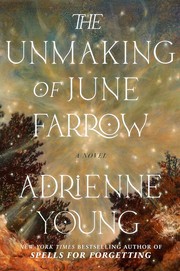
The Unmaking of June Farrow
2,701-word summary 12 min read 336 pages in the book
- First published
- 2023
- Publisher
- Delacorte Press
- Pages
- 336
- ISBN
- 9780593598672
Reading options
What's inside (10 sections)
The funeral on the hill
Malachi Rhodes plays his fiddle at the grave, and almost nobody from Jasper comes to listen. That tells you most of what you need to know about the Farrows. The town has spent generations buying their flowers and whispering about their women, and now that Margaret Farrow is dead, the whispers have a fresh thing to feed on.
June stands on the hill while the red clay goes back into the ground. She is thirty-four, sunburned, practical, the last of the line. The family farm has been in the Farrows for more than a century, and she runs it with the same stubbornness her grandmother brought to everything. What she has inherited besides the farm is the thing the town calls madness. Her mother, Susanna, disappeared when June was an infant. Margaret spent years slipping sideways in her own mind before she died. June has spent the last year hearing wind chimes that are not there, catching a voice at the edge of a room, seeing a man in the church window and then the orange tip of a cigarette on her porch.
She writes the episodes down in a notebook. A woman with a ledger is still a woman trying to stay sane.
Birdie, the old friend who moved in to help nurse Margaret, presses the family locket into June's palm after the burial. It is gold, with a mother-of-pearl watch face and four hands, and it was in the basket with June when she was found on Market Street as a baby. June has always known what the locket means and what it costs. She has decided not to marry. No children. The line ends with her, and the town can find something else to talk about.
Then the letter arrives.
A photograph that should not exist
It is addressed in Margaret's handwriting and postmarked two days before she died. Inside is a black-and-white photograph from 1911. A minister stands beside his wife. The man is Nathaniel Rutherford, whose murder in 1950 is still the darkest story in Jasper. The woman is Susanna Farrow, June's mother, looking exactly as she does in the photograph June has kept for years.
June has a box of research in the basement, the kind of box you build when you are a child who has been told your mother simply left. She lays the two images side by side. The resemblance is not a family likeness. It is the same face.
At the courthouse, Ida Pickney pulls the records. There is a 1911 marriage license for Nathaniel Rutherford and Susanna Farrow. The church's baptism log lists a daughter, June Rutherford, born March 14, 1912, and died October 2, 1912. October 2 is the day the infant June was found on Market Street, wrapped in a blanket, with a locket around her neck.
In the cemetery, June kneels at three graves. Nathaniel. Susanna. A small stone with her own name on it.
Birdie comes home to find the kitchen table covered in paper. She does not laugh it off. She sits down and tells June the truth the family has kept from her. The Farrow women are not mad. They cross. There is a red door, and when it appears, it opens onto another year. Birdie gives her an old envelope with an address on Hayward Gap Road, a pressed bluebell, and two words in Susanna's handwriting: Trust me. Then she tells June to open the door the next time she sees it.
The door on Hayward Gap Road
June drives out to the abandoned farmhouse first. On the way back, the door is standing in the grass at the edge of the road, red paint chipped, brass knob bright. There is no wall around it. No house. Just a door in a field, the way a mistake might look if a mistake could be patient.
She opens it.
The field on the other side is the same field. The road is paved. The farmhouse is whole. The air smells of fresh tar, and a truck from another decade goes past with a sound like a cough. The door is gone behind her. A woman on a porch screams at the sight of her, and June walks toward the smoke coming from the chimney because there is nowhere else to go.
Eamon Stone comes out of the barn. He is dark-haired, Irish, a tobacco farmer with a young man's shoulders and an old grief already settling into his face. He says her name like it hurts him. Then he takes her wrist, pushes up her sleeve, and looks for a burn scar. It is not there. She watches the hope leave him.
He hides her from a passing deputy and takes her to Esther Farrow, her great-great-grandmother, who runs the flower farm in this year and does not pretend to be kind. It is 1951. Susanna is dead. A version of June lived here for five years, married Eamon, gave birth to a daughter named Annie, and vanished a year ago without a word.
Esther explains the shape of the thing. The door appears to Farrow women. The locket sets the year. Each woman gets three crossings. Every crossing frays time a little more, and the fraying gets into the mind, which is why the family has always looked like a family with a curse on it. A woman cannot travel to a year where she already exists. That rule, at least, is supposed to hold.
By the time June stepped through the door on Hayward Gap Road, she had already made two crossings she cannot remember. This is the third.
A daughter behind the curtain
Annie is four years old and watches June from behind a curtain. She has her father's dark eyes and none of his ease. She does not run to her mother. She does not speak. She stands in the gap between the fabric and the wall and waits to see what this woman is going to do.
Margaret comes to the farmhouse every day to help. She is sixteen, bright-faced, already competent, and it is a shock to see her grandmother at that age. June knows this girl will one day raise her, feed her, lie to her about the door, and die slowly in a house that smells of cut stems and medicine. Margaret does not know any of that yet. She just knows that June is back, and that the last time June left, Annie was found alone in the house.
The middle of the novel lives here, in the garden and the tobacco fields. June weeds, cooks, washes, learns the rhythm of a household that already has a place for her. She helps Eamon smoke the tobacco to hold off a blight. She sits with Annie and lets the child come to her. Memories arrive without warning: Eamon by a pond, a chestnut horse named Callie, a wedding under a willow tree. At the same time, her other life begins to go. The name of a neighbor. A lullaby Margaret used to sing. The exact color of the kitchen in the house she grew up in.
She writes everything down on scraps of paper. It is one of the best images in the book: a woman taking notes on herself as she disappears.
It is also where the plot slows to a walk. Young is good at the texture of work, and the farm is beautifully rendered, but the murder mystery that got June through the door goes quiet. If you came for the puzzle, you will feel the pause.
The sheriff with her father's face
Caleb Rutherford pulls Esther's truck over and takes June to the station. He is the sheriff, Nathaniel's son, and June's half-brother, though neither of them knows that yet. He has his father's jaw and a conscience his father never had.
In the little room, Caleb plays a tape of June's own voice from the 1950 investigation. On the recording, she says she left the Midsummer Faire alone that night. Today she told him she and Eamon went home together. The voice on the tape is calm and certain. The woman sitting in front of him cannot explain the difference.
Then he puts a blue shoe on the table. Mimi Granger, an old woman who lives along the river road, has given a statement. She saw June running through the pasture that night, covered in blood, carrying Annie. Eamon arrives before Caleb can push further, and the anger coming off him is enough to clear the room.
Esther fills in the history that night. Susanna crossed into the past, met Nathaniel, and became pregnant with June. Nathaniel was a minister, and he decided that Susanna was something demonic. He offered Esther money to poison the unborn child. Esther refused and sent Susanna back to the future. Susanna returned anyway, gave birth to June, and lived in fear of him until she faked the baby's death and sent her forward to 1989.
Nathaniel was told his daughter died in her sleep. He drowned Susanna and buried her under an oak tree, then let the town believe she had killed herself. He raised Caleb alone. And when the older June arrived in 1946, he recognized her. He began following her, watching her, calling her a demon sent to torment him.
What happened at the river
The Midsummer Faire is held on the anniversary of Nathaniel's death. Tents go up along the river bridge, and garlands of Esther's flowers hang over the water. June and Eamon go together because they need the town to see them together. It is a performance, until he takes her hand.
They dance. His hand settles at her waist with the ease of years, and her body remembers a choreography her mind does not. He almost kisses her and then pulls away, and the want in his face is worse than anger. That night she dreams of a wedding night, and wakes with the ghost of his touch on her skin.
She asks him straight out whether he killed Nathaniel. He says no. He says she did.
The memory comes back in a rush. After the Faire, Nathaniel intercepted June and Annie at the river. He was quoting scripture and calling them abominations. He shoved June under the water and held her there. She got a hand around a rock, hit him, and kept hitting him until he stopped moving. Annie saw all of it. June ran home covered in blood. Eamon cleaned her and the child, burned their clothes, and dragged the body toward the falls to make it look like a drowning. It caught on a fallen tree and was found.
Then Margaret confesses her part. The older June came to her before she vanished with a plan. She deliberately crossed into a year where she already existed, 2022, knowing it should erase her. Instead, the two versions of her began to merge into one thread. The point was to end the fraying, so that Annie would never have to see the door. Margaret was told to deliver the photograph and the locket at the exact moment they were needed. If June chose to stay, the curse would break.
The wedding under the willow
Caleb comes to the flower farm with a warrant. He has a photograph from the Faire that proves June lied about the shoes. Eamon lifts a rifle. And in the middle of the dahlias, the red door appears.
June looks at it for a long moment. She has spent her whole life preparing to run from this, and the door is offering her the clean escape one more time. She walks past it and holds out her wrists.
In the car, she tells Caleb everything. She is his half-sister, June Rutherford. Nathaniel killed their mother and buried her under the oak. She killed Nathaniel because he was drowning her and she needed to get back to her daughter. Caleb cries. Then he throws the keys at her feet and scatters the evidence out the window.
Susanna's body is exhumed from under the oak and buried properly in the Farrow plot. June marries Eamon again under the willow, in the same lace dress. The life she chose is small in the way real lives are small: weather, work, a child, a man, a town that never stops watching.
The cost is the other life. Her memories of the present begin to go. Mason's face blurs. The house on Bishop Street becomes a set of rooms she can describe but cannot enter. Birdie's voice fades. June writes it all down in a new notebook, an archive of a woman she is about to stop being.
The door appears a few more times. Then it stops. Annie grows up without it. The old woman who handed June the locket at the funeral is Annie, June's daughter, grown old and come forward to raise the baby who will become her mother. And in 1966, Margaret gives birth to Susanna, and the whole long circle begins again.
What works, what frays
The best of this book is atmosphere and intimacy. Young writes the Blue Ridge Mountains with dirt under her fingernails: tobacco smoke, wet dahlias, river water, the particular silence of a house after a funeral. The relationship between June and Margaret is the emotional center, especially the impossible tenderness of meeting your grandmother when she is sixteen and realizing she has been carrying your future since before you were born. Eamon is a good romantic lead because his anger and his grief are the same thing. The Birdie reveal recolors hundreds of small moments, and the ending is honest about what it costs to choose a life.
The problems are real too. The time-travel rules are complicated and sometimes arbitrary. The locket, the three crossings, the prohibition on visiting a year where you already exist, the loophole that lets a woman merge with herself: the novel explains each one in dialogue, but the explanations raise more questions than they settle. Why the Farrows? Why a door? Why three? The curse has no origin story, only a mechanism. That is fine if you are reading for feeling, and frustrating if you are reading for logic.
The pacing sags in the middle. The domestic idyll is beautifully written, but the murder plot goes dormant while June learns to be a mother and a farmer. The mystery eventually gives way to romance and family reunion, and the central reveal arrives as a memory triggered by a sentence rather than as something June deduces. Readers who want a fair-play mystery may feel cheated.
Some of the turns are guessable. Caleb as her half-brother, Nathaniel as her father, Birdie as Annie: the book plants enough that you may see them coming. The reveals still land because the emotional work is done, but they are not surprises. Mason is the weakest piece. He exists to represent the life June gives up, and he is kind and patient and barely on the page, which makes the choice feel less expensive than it should.
The ending also moves very fast. Arrest, confession, exhumation, wedding, decades of fading: it plays like a montage, and Caleb's change of heart needs more room than it gets. Young ends on Susanna's birth in 1966, which means the loop is still turning even as the book asks us to believe the curse is broken. That contradiction is deliberate, I think, but it leaves the victory feeling conditional.
So who should read it? If you like atmospheric Southern magical realism, complicated mothers and daughters, and a romance that earns its ache, this is for you. If you need your time travel to survive a diagram, or you want the curse explained, or you want a mystery you can solve alongside the detective, look elsewhere. If you dislike stories where the heroine saves the people she loves by forgetting her own life, the last fifty pages may feel less like a wedding than a funeral.
FAQ
Is The Unmaking of June Farrow a time-travel romance?
It is both a time-travel mystery and a romance. June's relationship with Eamon is central, but the novel is equally concerned with her mother and daughter.
What is the Farrow family curse?
The Farrow women are able to cross into other times through a red door, and the crossings fray their lives and memories. June believes the curse will end with her.
Does the book have a happy ending?
It ends with June choosing to stay in 1951 with Eamon and their daughter, knowing she will lose her memories of the future. It is a hopeful ending with a real cost.
Similar books

Indigo Ridge
A new police chief in a Montana town meets the founding family's eldest son in a bar, and one night later a body turns up under their cliff.
2,763-word summary · 12 min read
True Believer
Jeremy Marsh, a science journalist who debunks paranormal claims, comes to a small North Carolina town and falls for a librarian who believes in things he…
2,125-word summary · 9 min read

Say You're Sorry
A widowed prosecutor defends the teenager accused of killing her babysitter, uncovering a small town's secrets and a killer hiding in plain sight.
2,116-word summary · 9 min read
Ghosted
After seven perfect days with Eddie, Sarah is ghosted, and her search for answers uncovers a secret tied to the accident that changed both their lives.
2,011-word summary · 9 min read
The Keeper of Happy Endings
Barbara Davis's 2021 standalone braids a Paris dressmaker's wartime losses with a grieving Boston artist who unlocks her family's secrets through an old row…
2,437-word summary · 11 min read
Garden Spells
Two sisters reunite in their family home in Bascom, North Carolina, where an apple tree shows anyone who eats from it the biggest event of their life.
2,030-word summary · 9 min read
Everything We Keep
A widow questions her husband's death when a stranger claims his past.
2,307-word summary · 10 min read
My Killer Vacation
A teacher and a bounty hunter share a Cape Cod rental with a corpse and a growing attraction.
2,625-word summary · 12 min read
Chocolat
A single mother opens a chocolate shop opposite the church during Lent, and a divided French village must choose between pleasure and piety.
2,272-word summary · 10 min read
A Bend in the Road
Widowed sheriff Miles loves teacher Sarah while her family's secret touches his wife's death.
2,182-word summary · 10 min read
The Hawthorne Legacy
Avery hunts for lost Toby Hawthorne while old wills, postcards and a violent rival force her to face what the inheritance really costs.
2,576-word summary · 11 min read

The Beach House
A young valet is beaten to death at a Hamptons party, and his law-student brother spends a year building a case against the family that covered it up.
2,049-word summary · 9 min read
Size 12 Is Not Fat
Former teen pop star Heather Wells investigates two dorm elevator deaths while juggling her ex, her crush, and a size-12 wardrobe.
2,805-word summary · 12 min read
How the Light Gets In
Gamache investigates the murder of the last Ouellet quintuplet while the Sûreté he served is dismantled from inside by the man who took his protégé.
2,279-word summary · 10 min read

First Grave on the Right
Charley Davidson is a private investigator in Albuquerque and the grim reaper. When three murdered lawyers come back as ghosts, her two jobs collide.
2,770-word summary · 12 min read
Bury Your Dead
Recovering from a failed raid that killed his officers, Gamache investigates a murder in a Quebec City library while Beauvoir reopens a case in Three Pines.
2,022-word summary · 9 min read

Anatomy: A Love Story
In 1817 Edinburgh, a noblewoman who wants to be a surgeon disguises herself to study anatomy and falls for the grave robber who supplies her with bodies.
2,031-word summary · 9 min read
The First Fifteen Lives of Harry August
Harry August dies and is born again into the same life, again and again, until a warning from a child tells him the world is ending faster with each pass.
2,189-word summary · 10 min read
The Bookshop on the Corner
A Birmingham librarian loses her job, buys a van, and moves to the Scottish Highlands to run a mobile bookshop. Warm and bookish, with uneven pacing.
2,557-word summary · 11 min read
Once There Were Wolves
A biologist reintroduces fourteen wolves to the Scottish Highlands while protecting her traumatized twin sister, then finds a body in the snow that could…
2,682-word summary · 12 min read
Cross My Heart and Hope to Spy
Cammie Morgan returns to Gallagher Academy for a second year of spy training, only to fall for a boy from a rival spy school and hunt a mole in her own school.
2,567-word summary · 11 min read
I Kissed Shara Wheeler
Shara Wheeler kisses her rival Chloe Green at prom and disappears, leaving a scavenger hunt that forces Chloe to rethink everything she knew about her.
2,083-word summary · 9 min read
Fantasy Lover
A New Orleans sex therapist summons a cursed Spartan general from an ancient book and gets one month to break his spell.
2,315-word summary · 10 min read
Act Your Age, Eve Brown
Eve Brown crashes into a Lake District bed and breakfast, breaks the owner's arm, and talks her way into his kitchen. A grumpy-sunshine romance about work,…
2,474-word summary · 11 min read
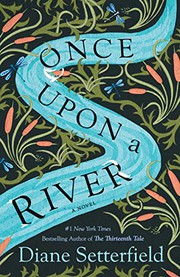
Once Upon a River
A wounded man stumbles into a riverside inn carrying what appears to be a drowned child who is not quite dead, and the story braids the guesses of everyone who…
2,173-word summary · 10 min read
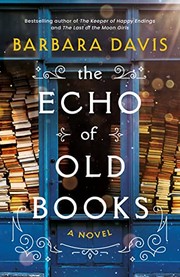
The Echo of Old Books
Barbara Davis's 2023 novel sends a rare-book dealer in 1984 New Hampshire hunting for the authors of two unpublished volumes that tell opposite sides of one…
2,491-word summary · 11 min read
Last Night at the Telegraph Club
The 2021 National Book Award winner follows Lily Hu, a Chinese American teenager in 1954 San Francisco, as she falls for Kath and learns what it costs to be…
2,336-word summary · 10 min read
Fearless Fourteen
Bounty hunter Stephanie Plum babysits a teenager, guards a fading singer, and hunts nine stolen million dollars under her boyfriend's basement.
2,466-word summary · 11 min read
Circus of the Damned
A rogue master vampire arrives in St. Louis and Anita Blake is caught in an undead turf war, with a science teacher in the crossfire.
2,757-word summary · 12 min read
Big Lies in a Small Town
A 22-year-old woman leaves prison to restore a 1940 mural, and Edenton, North Carolina, starts talking.
2,187-word summary · 10 min read