

Fantasy Lover
2,315-word summary 10 min read 352 pages in the book
- First published
- 2002
- Publisher
- St. Martin's Paperbacks
- Pages
- 352
- ISBN
- 9780312979973
- Series
- Hunter Legends (#1)
Reading options
What's inside (7 sections)
I bought this at a library sale because the cover was so absurd I felt obligated. A shirtless man in a leather skirt, a woman swooning, a title that promised exactly one thing. I expected to hate-read it. Instead I read it in two days and then lent it to a friend. Fantasy Lover was published by St. Martin's Paperbacks in 2002 and runs 352 pages. It is the first book in the Hunter Legends series, and it is the novel that opened the door to Sherrilyn Kenyon's Dark-Hunter world, even though Kenyon has described it as a tie-in rather than an official entry in that series. The setting is New Orleans, and the book uses the city well: heat, bars, a psychic friend, a lot of night.
The premise is the kind that could go very wrong. Grace Alexander is twenty-nine, a sex therapist with a successful practice and no sex life of her own. She has been celibate for four years. Her parents died in a car accident, and the man she was seeing afterward, Paul, took advantage of her grief in a way that left a mark. Her best friend Selena is psychic, or at least convinced she is, and for Grace's birthday she buys an ancient book that supposedly contains a spell to summon a love slave.
Grace does not believe in any of it. Selena wears her down. They perform the ritual halfway drunk, and nothing happens, and Grace goes to bed. Then a naked man appears in her living room.
The summoning
Julian of Macedon is not a subtle houseguest. He is tall, beautiful, and dressed in nothing but the confidence of a man who has been desired for two thousand years. Grace screams, runs, and falls flat on her face. It is a great meet-cute, and the book knows it. Julian is amused. He is also confused, because Grace does not immediately want to have sex with him, which is what every other summoning has taught him to expect. He offers himself. She says no. He respects it, mostly because he has no idea what else to do.
The comedy in the early chapters comes from the collision of an ancient general and a modern woman with a mortgage. Julian does not understand the car, or why she keeps talking about her feelings. Grace does not understand why a man who looks like that is standing in her kitchen eating like he has not eaten in centuries. The book is funny in a broad, sitcom way, and the jokes land more often than they should.
Under the jokes is a lonelier story. Julian has been in the book for two thousand years. He can hear what happens around him, but he cannot see, smell, taste, or touch. He has been summoned only a handful of times, and the last time was 107 years before Grace. He savors water, food, and sunlight because he has been denied them for centuries. He misses the weight of a sword in his hand. The way he treats ordinary things did more to make me care about him than any speech about his past.
The man in the book
Julian was born in 182 BC, the son of Aphrodite and a Spartan general named Diokles. He was raised as a soldier, became a general, and earned a reputation for being very good at killing people. He also lost a wife, Penelope, and children. The book reveals the losses slowly, and the slowness is the right choice. Julian's grief is not a plot twist. It is the reason he is so careful with Grace, and the reason he keeps expecting her to leave.
The curse came from Priapus, his half-brother and the god of fertility. Julian slept with one of Priapus's virgins, and Priapus retaliated by killing Penelope. Julian's revenge, and the family politics that followed, ended with him bound into a scroll that was later made into a book. Priapus is not a grand villain. He is a petty, entitled brother with too much power, which is worse. The gods in this book are a family with grudges, and Julian is the relative they have decided to punish forever.
Inside the book, Julian is conscious but deprived. He can hear the world, which means he has spent centuries listening to people talk about him, use him, and forget him. That is a horror story tucked inside a romance. Kenyon does not linger on it, but she does not let you forget it either. Every time Julian is delighted by something ordinary, the book reminds you how long he has been without it.
The rules of the curse are where the plot gets complicated. Julian is released for one month at a time. He is bound to please the woman who summoned him. If he fails, he goes back to the book. The only way to break the curse is for a woman with the surname Alexander to spend the month with him and not have sex with him until the final night. Then, on that night, they have to consummate the relationship. Each day he goes without sex, his control erodes. By the end, he is in danger of becoming a mindless creature who will take what he wants. Eros gives him a set of magical chains to use if Grace needs to restrain him.
Grace's surname is Alexander. The book does not pretend this is a coincidence. The gods have been meddling in Julian's life for two thousand years, and they are not done. The stakes get higher when Grace learns that part of the spell means she will lose her sanity if Julian returns to captivity. So the clock is running for both of them.
A sex therapist who won't talk about sex
The irony is not subtle. Grace spends her days telling other people how to want, how to ask, how to touch. She spends her nights alone. Paul, the man who hurt her, took her virginity during a period when she was grieving her parents, and then she overheard him and his friends joking about a bet. The details are ugly and the book handles them with a light touch, which is both a mercy and a problem. Grace's trauma is the reason she has closed herself off, but the novel rarely lets her sit with it long enough to name it.
Instead, Julian does the emotional work for both of them. He waits. He asks. He stops when she tenses. He is, for a man who has been a sex slave for two millennia, remarkably good at consent. The book wants us to see that he is not like the others, that he is gentle and patient and safe. It works, mostly. Julian is easy to love. He is also a fantasy of a man who has no life of his own and therefore no demands to make on hers. That is the appeal and the limitation of the premise.
The love scenes are explicit, but they are on the cool side of hot. There is a lot of talk about sex, a lot of innuendo, and a lot of delay. The book promises a love slave and delivers a slow burn with a side of handcuffs. Readers looking for erotica may be disappointed. Readers looking for a romance with heat and jokes will be fine. The most intimate scene in the book might be the one where Grace reads aloud to Julian, because it is the first time someone has given him something without wanting something back.
The middle section is where the book is most comfortable: Julian learning to drive, Julian being horrified by modern food, Julian trying to understand Grace's job, Julian worrying about what he would do for a job of his own. The domestic comedy is better than the action. Kenyon has a good ear for the way an ancient man would misunderstand a modern woman, and a better ear for the way a modern woman would refuse to be charmed by it.
Gods behaving badly
The gods are the best part of the book and the messiest. Eros, also known as Cupid, shows up as a biker with a bad attitude and a wife named Psyche who is much nicer than he is. Julian punches him in the face. This is how the reader learns that Eros and Julian are brothers, both sons of Aphrodite, and that Priapus is their half-brother. The family reunion is a brawl, which feels right for Olympus.
Aphrodite is the most interesting of the gods. She is beautiful, vain, and possessive. She wants Julian for herself, or at least wants to be the most important woman in his life. She is also a mother who failed him and knows it. When she finally visits Grace, she is not there to bless the relationship. She is there to take her son back. What changes her mind is seeing how Grace takes care of him. Aphrodite's acceptance is not a reward for Grace being good enough. It is a recognition that someone else has done the mothering she could not.
Athena arrives with a different kind of offer. If the curse breaks, the gods will return Julian to a moment before his imprisonment. He can go home. He cannot change history, but he can live in his own time again. For Julian, that is almost irresistible. For Grace, it is a door closing. She has spent the book trying not to want him, and now she has to want him enough to let him choose. The book handles this better than it handles most of its emotional beats, because it gives Julian a real alternative. He is not staying because he has nowhere else to go. He is staying because he wants her.
Priapus is the villain, and he is a good one in the petty sense. He is not trying to destroy the world. He is trying to keep his brother in a book because he cannot stand the idea of Julian free. The final fight is short and messy. Priapus attacks. Julian is mortally wounded. Grace holds him and screams for help, and Aphrodite comes. She gives Julian back his life, and he takes up his sword. The sword cannot kill Priapus, but it can force him into the book. Julian does exactly that. Aphrodite then hands Julian custody of the book, which is a funny and satisfying punishment. Priapus will get out eventually, if he behaves.
The ending is a choice, not a rescue. Athena offers to send Julian home. He looks at Grace and says his home is with her. It is a simple line, and it works because the book has earned it. The epilogue, set a year later, gives them twins, a mountain of paperwork from Aphrodite, and a joke about Priapus behaving badly in someone else's book. It is silly and warm and exactly what the book has been promising.
What has aged
Fantasy Lover is a 2002 book, and some of it feels older than that. The premise depends on a man who cannot leave, which is a consent problem in a pretty wrapper. Kenyon mitigates it by making Julian willing, by having Grace refuse to use him, and by letting him choose her at the end. That helps. It does not erase the fact that the fantasy is built on unequal power. Readers who need their romances to be ideologically clean will struggle with it. Readers who can hold the fantasy and the critique at the same time will have a better time. The book also drops in a brief cameo by Kyrian of Thrace, a small wink at the series that would follow.
Grace is the weaker character. She is smart and kind and good at her job, but the book never lets her be angry enough. Her trauma is explained, not explored. She forgives, she heals, she loves, and the novel moves on. Julian gets the rich backstory, the lost family, the grand confrontation with the gods. Grace gets to be the woman who saves him by loving him. That is a generous role, but it is not an equal one.
The prose can be repetitive. Kenyon likes a rhetorical flourish, and she likes to tell you what a character is feeling right after showing you. The secondary characters are often cartoonishly mean, especially the women who want Julian. The ending is rushed, and the final battle is over before it has time to hurt. The Rhodes Scholar detail about Selena is the kind of overreach that pulls you out of the story. None of these flaws are fatal. They are the price of a book that is more fun than polished.
What has aged best is Julian. His loneliness is specific and moving. His delight in small things is contagious. His relationship with Grace is built on a thousand small kindnesses, and the book is smart enough to know that the sex is not the most intimate thing in it. The scene where Grace reads to him, the scene where he saves a child from a car, the scene where he asks her to chain him because he is afraid of hurting her: these are the moments that stay.
Would I recommend it? Yes, with a warning. It is a good entry point to Kenyon's world, a good comfort read, and a good book for anyone who likes their romance with a side of Greek family dysfunction. It is not a good book for anyone who wants a heroine with as much interiority as the hero or a plot that holds up to close inspection. I finished it fond of Julian, fond of Grace, and curious about the rest of the series. That is enough.
FAQ
Is Fantasy Lover a Dark-Hunter novel?
It is a tie-in and prequel to Sherrilyn Kenyon's Dark-Hunter world rather than an official Dark-Hunter novel, and it was published as the first Hunter Legends book.
How explicit is Fantasy Lover?
The love scenes are explicit but mostly vanilla, and the book spends much of its time on banter, longing, and delayed consummation.
Does Fantasy Lover have a happy ending?
Yes. Julian chooses to stay in modern New Orleans with Grace, and the epilogue shows them a year later with twins.
Similar books
More from Hunter Legends first, then related titles.

Lover Unleashed
Paralyzed vampire warrior Payne and surgeon Manny Manello collide in an adult paranormal romance, as Xcor's Band of Bastards arrives in Caldwell for revenge.
2,374-word summary · 11 min read

Electric Idol
Psyche wears a camera deal to dodge Aphrodite and falls for Eros.
2,332-word summary · 10 min read

A Touch of Malice
Engaged Hades and Persephone face gods who vote on their marriage.
2,562-word summary · 11 min read
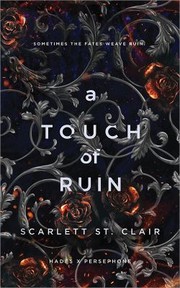
A Touch of Ruin
Persephone and Hades go public, tragedy shatters trust, and she bargains toward queenship through grief.
2,085-word summary · 9 min read

Her Soul to Take
A paranormal vlogger in a cult-run town summons a bound demon, and the only way to survive the god beneath the mine is to give him her soul.
2,089-word summary · 9 min read

Magic Burns
A magic flare hits Atlanta, and mercenary Kate Daniels must recover stolen maps, find a missing witch, and keep a teenage girl alive while Celtic gods try to…
2,021-word summary · 9 min read
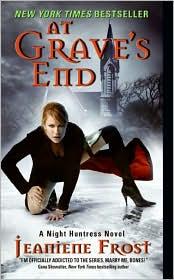
At Grave's End
Cat and Bones face Max, a zombie-raising ancient vampire, and a prophecy that ties their marriage to Patra's death in the third Night Huntress novel.
2,061-word summary · 9 min read
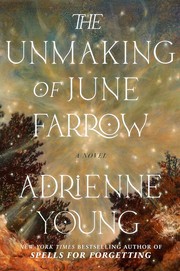
The Unmaking of June Farrow
A woman in a North Carolina flower-farming family walks through a red door into 1951, where she must solve her mother's disappearance and decide whether to…
2,701-word summary · 12 min read

The Siren
Saved from a shipwreck in 1930, Kahlen becomes a siren who sings men to their deaths for the Ocean, until a boy in a college library makes her want a life she…
2,369-word summary · 11 min read

The Awakening / The Struggle
A popular high school girl falls for a vampire, then discovers that his dangerous brother wants her too, in the first two books of the Vampire Diaries series.
2,660-word summary · 12 min read

Beneath This Man
Ava returns to Jesse after five days apart and finds his drinking, jealousy, and a hidden deception that changes what she can forgive.
2,341-word summary · 10 min read

There Are No Saints
Two rival artists circle a struggling San Francisco painter. Cole Blackwell wants her, Alastor Shaw wants her dead. Book one of the Sinners duet.
2,190-word summary · 10 min read

The Predator
Coder Morana Vitalio and mob enforcer Tristan Caine chase stolen software while a case of missing girls from twenty years back catches up with them both.
2,296-word summary · 10 min read
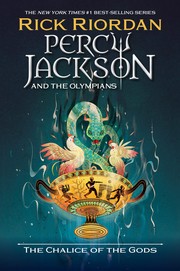
The Chalice of the Gods
Percy needs three recommendation letters from three gods to apply to college, so his first quest is recovering a stolen chalice from the god of old age.
2,106-word summary · 9 min read

The Casanova
Kate Landon's boss is also the pen pal she falls for online, hiding behind fake names, until family secrets and a trip to Paris get in the way.
2,274-word summary · 10 min read
Angels' Blood
Nalini Singh's 2009 Guild Hunter opener sends vampire hunter Elena Deveraux after a murderous archangel in New York, while its most powerful ruler watches.
2,367-word summary · 11 min read

What the Wind Knows
Annie scatters her grandfather's ashes on Lough Gill and is pulled into 1921 Ireland, where she becomes the missing Anne Gallagher and falls for Dr. Thomas…
2,056-word summary · 9 min read

The Burning Maze
Apollo, still trapped in a mortal teenager's body, follows a dangerous prophecy through the Labyrinth with Meg and Grover as the Triumvirate's grip tightens.
2,248-word summary · 10 min read

Lore
Lore Perseous, the last of a hunted bloodline, is pulled back into the Agon when a wounded Athena offers her revenge against the god who killed her family.
2,188-word summary · 10 min read
Daughter of the Moon Goddess
The daughter of Chang'e hides in the Celestial Court, trains as an archer, and risks everything to free her mother from the Emperor's punishment.
2,146-word summary · 10 min read

Blue Moon
Ever Bloom tries to save her immortal boyfriend, Damen, from a mysterious illness while a new student named Roman quietly takes control of her school and her…
1,998-word summary · 9 min read

Beautiful Stranger
After a betrayal, Sara Dillon moves to New York and starts a no-strings affair with a British stranger, only to find that control and intimacy are harder to…
2,015-word summary · 9 min read
The Magician King
Quentin rules a peaceful Fillory until a golden key strands him on Earth, while Julia's brutal road from hedge witch to demigod rewrites the whole story.
2,431-word summary · 11 min read
A Fate Inked in Blood
In Norse-inspired Skaland, a fish gutter hiding a goddess's blood is claimed by a jarl, bound by oath, and guarded by the son she cannot want.
1,971-word summary · 9 min read
Pestilence
Firefighter Sara Burns shoots the Horseman Pestilence and discovers he cannot die. Taken captive, she rides with him as his plague sweeps the world.
2,508-word summary · 11 min read

Emerald Green
Gwyneth must close the blood circle that will crown an immortal tyrant, and the prophecy says her death is the final lock.
2,044-word summary · 9 min read
Half-Blood
Half-blood Alex trains at the Covenant while gods stir and rules close in.
2,601-word summary · 12 min read

This Man
Ava O Shea meets Jesse Ward while designing The Manor House, and their obsessive affair tests her work and limits.
2,209-word summary · 10 min read

Sapphire Blue
Gwyneth trains with Gideon for new jumps while Lucy and Paul warn the circle must stay open.
2,218-word summary · 10 min read
Gabriel's Rapture
A professor faces a hearing while Julia fights for her own name in Florence, testing love through distance and work.
2,480-word summary · 11 min read