
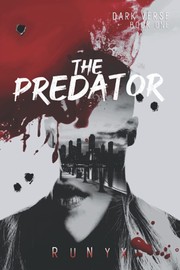
The Predator
2,296-word summary 10 min read 318 pages in the book
- First published
- 2019
- Publisher
- Independently published
- Pages
- 318
- ISBN
- 9781653678426
- Series
- Dark Verse (#1)
Reading options
What's inside (9 sections)
Somewhere near the middle of The Predator, Morana Vitalio stops being able to tell the difference between the man who wants to keep her alive and the man who has already decided who gets to kill her. That line is mine, not RuNyx's, but it is the book in a single sentence.
I read it on a train in October and went looking for a second copy immediately, which is not something I normally do with books I hold reservations about. My reservations were aimed at the marketing. The blurbs sell a dark contemporary mafia romance with a possessive hero and a hacker heroine, and that description is accurate, except that the packaging never mentions that the missing girls at the center of the story were taken as children and most of them never came back. That is the real subject. The codes and the penthouse and the kissing are the scaffolding built around it.
The book itself was self-published at the end of December 2019, and Penguin publishes it in the United Kingdom. It is the first entry in RuNyx's Dark Verse series. It runs a little over three hundred pages, it moves quickly, and it does not let you put it down easily.
A knife at the back of a man who should have killed her
The opening scene sets up the whole engine of the book. Morana is twenty-four, a software developer, and the daughter of Gabriel Vitalio, who runs the Shadow Port family. She is at a party at the Maroni estate, the family her own family has hated for two generations. She did not come for the food. She has a disguise, knives she has strapped to her body, and an aerosol can of poison, and she intends to recover a stolen thumb drive by killing Tristan Caine.
Tristan is the man the Outfit calls The Predator. He is the only person in the inner circle who is not blood, which means he was taken in, raised and trained rather than born to it. Every other account of him describes the same thing: unmatched with weapons, morality in doubt, motives nobody can read.
He disarms her in seconds and pins her against a wall with her own blades at her throat. He could kill her. Instead he covers it up, walks her out through a hidden exit, and tells her she owes him a debt. That decision is the first thing that makes the book more interesting than the genre usually manages.
Two weeks later her ex-boyfriend Jackson Miller lures her to an abandoned construction site, and Jackson is dead when she gets there. Dante Maroni, the eldest son of the Outfit's boss Lorenzo, tells her the scene was staged and that somebody is framing Tristan. Then Tristan pins her against the hood of her car and tells her, at length, that he hates her. He offers no reason.
What the codes are and why the families need them dead
The software is the technical center of the plot. Morana built it years earlier, on a dare, as a party trick for a coder with too much free time. It turned out to be the real thing: code that could expose secrets and wreck governments and criminal organizations at once. Jackson stole it after being recruited to get close to her, and everything in the book points at Tristan as the holder.
She cannot tell her father. Dating an outsider and losing a weapon like that to the enemy is a death sentence in the Vitalio house, so she goes in alone instead. Meanwhile she overhears Gabriel telling his right-hand man that his daughter is dangerous but must never learn the truth about herself. That line sits under everything else in the novel.
RuNyx handles the crime material at a quick, clipped pace. Men are killed and the chapters move on. There is no procedural detail, no ballistics, no grief for the bodies. If you want a mob novel with texture, this is not it. What the book does care about is the family machinery: surveillance, a father who values his own daughter as a bargaining chip, and a business that treats everyone inside it as inventory.
Two supporting characters carry most of the outside world. Dante Maroni, the eldest son, is the one who tells Morana that she has been set up, and he is funny and cynical in the middle of genuinely frightening situations. Amara is the one who grew up inside the Maroni house and lost her voice to an abduction when she was fifteen, which is why she talks in a rasp and why she is the natural confidante for a woman whose own family has been hiding something from her since childhood. Between them they do more for the story than Gabriel does.
The penthouse with the glass wall
Tristan does not court her the way anybody does in this genre. He climbs the wall of the Vitalio mansion at midnight and comes in through her window, and the first thing they do is negotiate. They will work together to find the codes and keep them secret. Her condition is that she works with Dante rather than with him, because Dante is at least honest about being an enemy.
He pushes the blade of her knife away with his bare hand, deliberately, and lets the blood run onto her wrist before he goes out the window. It is a strange, cold, flirtatious gesture, and it tells you exactly what kind of man he is before the book explains any of it.
They barely speak to each other in the first half. Two people who intend to kill one another, sharing rooms, saying almost nothing, is a good engine for a novel, and RuNyx keeps it running for a long time.
The physical relationship arrives earlier than some readers want. At a dinner at the restaurant Crimson, a man at Gabriel's table gropes Morana in plain view, and Tristan follows her into the restroom. He says he despises her and wants her and leaves the choice to her. Later, when Gabriel finds out and pushes his daughter down a flight of stairs, she drives to the penthouse anyway. He runs a bath for her, and turns down the bed.
At two in the morning she tries to leave the city. He finds her in the parking lot, and instead of stopping her he steps aside and lets her decide. She gets back in the car and goes upstairs with him.
The most talked-about scene in the book is the storm. A storm traps her in his penthouse, which has a whole wall of glass looking out over the city and the sea. She presses her palms against it and wants the view more than she wants safety. Tristan sits down beside her. He says his sister loved the rain. She says her mother loved the rain.
Neither of them has a sister or a mother left. That is the whole of what they manage to say to each other for hours, and it is doing more work than a page of dialogue would.
Twenty-five missing girls
The mystery resurfaces through an anonymous sender who starts with a newspaper clipping about twenty-five girls who went missing in Tenebrae over a decade, then with a photograph. The photograph shows Morana as a toddler beside Luna Caine and another child. Morana was one of the girls taken, and she was the only one who ever came home.
Her reaction is the right one: she does not fall apart, she goes to work. She finds out that the alliance between the two families, the secret deal that the prologue shows them sealing over a car trunk, is not about weapons and alcohol at all. It has a second layer, and the girls are in it.
Her father does not react with grief. He disowns her, and then he puts a bomb under her Mustang. She hears the device beeping and runs, which is the only reason she is alive. What she does next is the moment the reader has to sit with. She waits for his two men, who have come to confirm the body, and she shoots the fuel tank of their vehicle. Two men die in front of her.
After that she goes to Saturn, a casino that pretends to be neutral ground, because a lead takes her there. The game in the back room is the strangest scene in the book. Players sit across from each other with a revolver loaded with a single bullet. They take turns asking each other questions. Refuse to answer and the trigger gets pulled.
Tristan asks Morana what she knows about his past. She knows, by then, that the answer is dangerous for him and for her. She says nothing. He pulls the trigger and the bullet grazes her arm.
Neither of them is ever quite the same after that. She refused to sell him out. He refused to kill her.
The boy who shot his father
Amara, who grew up in the Maroni household and lost her voice in an abduction at fifteen, is the one who finally explains the boy. Her account is short and brutal.
Twenty years ago, seventeen days after Luna disappeared, eight-year-old Tristan followed his father into a meeting. David Caine, who ran security for the Outfit, put a gun against the head of toddler Morana and told Gabriel he wanted his daughter back. Tristan understood that his father meant it. He picked up a gun and killed David Caine.
His mother found out, called him a monster, and left him. Lorenzo Maroni took him in and made him useful, which is a kinder sentence than what actually happened in that house. So Tristan's hatred was never about Morana surviving while Luna did not, though that is the question he cannot answer when she asks it. His hatred is about the chain her existence started, the one that cost him his father, his mother, and his childhood.
That is the reveal the whole book has been walking toward.
What it changes is the meaning of every scene that came before. The reason he would not tell her why he hated her had nothing to do with cruelty, and the bathroom in the restaurant was less about possession than about a man who had no other way of saying that she had been in his life since she was a small child. It also means Morana is not a bystander in his damage. She is the reason it happened.
The graveyard, the rain, and a gun on the ground
The ending happens in a graveyard near the airport, in the rain, after Morana has watched two of her father's men burn and before she has any idea whether she will live the week.
Tristan arrives, wounds one of the men who came back to check the wreckage, and sends them away. Then, believing he is unobserved, he puts his hand on the burnt metal of her destroyed car. Morana sees that. It is the first genuinely tender gesture he makes in the entire novel, and he makes it to a wrecked Mustang.
She steps out and tells him she knows everything. Then she drops her gun on the ground and tells him he can shoot her right now if he needs it. If he does not, then the threat ends forever. He does not shoot. He kisses her for the first time, closes his eyes for a moment, lowers the weapon, picks up her gun, and hands it back to her.
Then he walks to his vehicle and she follows him into the dark.
The codes are still missing. The anonymous sender is still out there. The second layer of the Alliance is still unexposed. The book ends on a comma, not a period, and readers who came for a closed case will be annoyed.
Who this book is for
The Predator is a mood before it is a plot. The silences between Tristan and Morana, the rooms they share without speaking, the emphasis on how he moves and how she watches him, all of that is generated very efficiently. The single-bullet revolver and the graveyard in the rain are the kind of set pieces the genre exists to produce.
What is weaker is the prose. Readers have counted a particular description of his eyes appearing dozens of times across the book, and a recurring phrase for his voice turns into a running joke. The two leads barely speak to each other for long stretches, which some readers read as atmosphere and others read as a lack of anything to say. The stolen-code mystery that opens the book is the inciting incident, and around the midpoint it largely stops mattering; nobody ever really explains who framed him or why.
The ending is the other dividing line. Some readers treat the open conspiracy as a promise that the series will pay it off. Others point out that a book in a series still has to resolve something.
None of that rescues or sinks it, for me. The childhood abduction at the center of the story is handled seriously, and the last hundred pages are the best thing RuNyx has written in this series so far. If you want a violent, explicit, contemporary crime romance with a genuinely sad back story under it, this is the one.
Buy it for the mood and the back story. Read it with the volume low if you are sensitive to the violence, because it is real violence, not atmosphere, and there are explicit scenes that no blurb mentions.
FAQ
Is The Predator by RuNyx a fantasy book or a romance?
It is a contemporary mafia romance rather than fantasy. The Dark Verse books are modern crime and dark romance stories, and this one follows a software developer and a mob enforcer with no fae or supernatural court anywhere in it.
How explicit and violent is The Predator?
It contains explicit sex scenes and real violence, including a bombing, a shooting and several deaths. The ending settles the romance between the leads but leaves the stolen software and the wider conspiracy unresolved.
How many books are in the Dark Verse series?
Dark Verse is RuNyx's series and The Predator is book one of it. Later entries published by Penguin include The Reaper, The Emperor, The Finisher and The Annihilator.
Similar books
More from Dark Verse first, then related titles.

There Are No Saints
Two rival artists circle a struggling San Francisco painter. Cole Blackwell wants her, Alastor Shaw wants her dead. Book one of the Sinners duet.
2,190-word summary · 10 min read

The Kiss Thief
Promised to one man, taken by another, Francesca must choose in Chicago.
2,545-word summary · 11 min read
Bound by Honor
An arranged mafia marriage between a Chicago girl and a New York heir turns to love.
2,586-word summary · 11 min read
My Dark Romeo
A debutante ball kiss traps Dallas Townsend in a marriage to Romeo Costa, a man who wants her as leverage in a war against his father and her fiance.
2,530-word summary · 11 min read
The Casanova
Kate Landon's boss is also the pen pal she falls for online, hiding behind fake names, until family secrets and a trip to Paris get in the way.
2,274-word summary · 10 min read
Wretched
The Wicked Witch of the West becomes a heroin chemist, and the DEA agent sent to destroy her family falls for the very woman he was assigned to ruin.
2,117-word summary · 9 min read

The Darkest Temptation
Sheltered Mila flies to Moscow and falls for captor Ronan, a Russian enforcer seeking revenge.
2,023-word summary · 9 min read

The Maddest Obsession
Sharp-tongued Gianna spars with secretive Christian Allister in this 2019 Made #2 mafia romance, where teasing hides danger and lies.
3,903-word summary · 17 min read
The Sweetest Oblivion
Sheltered Elena Abelli catches the eye of feared made man Nicolas Russo after her sister flees an arranged match.
3,342-word summary · 15 min read

Her Soul to Take
A paranormal vlogger in a cult-run town summons a bound demon, and the only way to survive the god beneath the mine is to give him her soul.
2,089-word summary · 9 min read
The Ex Talk
Two rival public radio producers pretend to be exes for a dating show, then fall for each other while the lie grows.
2,389-word summary · 11 min read

Beneath This Man
Ava returns to Jesse after five days apart and finds his drinking, jealousy, and a hidden deception that changes what she can forgive.
2,341-word summary · 10 min read

Indigo Ridge
A new police chief in a Montana town meets the founding family's eldest son in a bar, and one night later a body turns up under their cliff.
2,763-word summary · 12 min read
Beautiful Stranger
After a betrayal, Sara Dillon moves to New York and starts a no-strings affair with a British stranger, only to find that control and intimacy are harder to…
2,015-word summary · 9 min read
Savage Bonds
Oli's deadly gift is out in the open, her Bond runs the show, and the Resistance is closer than ever in the second Bonds that Tie novel.
2,431-word summary · 11 min read
Pestilence
Firefighter Sara Burns shoots the Horseman Pestilence and discovers he cannot die. Taken captive, she rides with him as his plague sweeps the world.
2,508-word summary · 11 min read
The Finish Line
Tobias King seeks forgiveness from Cecelia as the Ravenhood past closes in.
2,868-word summary · 13 min read

Broken Prince
Reed loses Ella and ruins his name while rivals circle him.
2,356-word summary · 10 min read
My Killer Vacation
A teacher and a bounty hunter share a Cape Cod rental with a corpse and a growing attraction.
2,625-word summary · 12 min read
God of Malice
Rina Kent's God of Malice fully retold: Glyndon King, Killian Carson's fixation, secret societies, and the Devlin twist that resets everything.
2,849-word summary · 13 min read

Below Zero
Stranded at an Arctic station, NASA engineer Hannah is rescued by rival Ian, and a storm forces them to face old grudges and attraction.
2,555-word summary · 11 min read
Kulti
Pro soccer player Sal Casillas gets childhood idol Reiner Kulti as assistant coach, and a tense season turns into slow friendship.
2,544-word summary · 11 min read
Scarred
A spy bride sent to ruin a scarred king learns his scars first.
2,074-word summary · 9 min read
Brutal Prince
Aida's small fire forces a marriage to Callum Griffin to stop a Chicago mob war neither wants.
2,042-word summary · 9 min read
Does It Hurt?
Running Sawyer hitches a sailboat with guarded Enzo and wrecks off the Australian coast.
2,251-word summary · 10 min read
Den of Vipers
Handed to the four Vipers over her father's debt, Roxy fights to hold her ground in their guarded house and busy club in this long 2020 dark romance.
4,247-word summary · 19 min read
Entwined with You
Eva and Gideon marry in secret while a Corinne pregnancy claim, police questions, and reporter pressure test their bond in Crossfire book three.
2,971-word summary · 13 min read
Corrupt
College student Rika Fane faces Michael Crist and his friends three years after Devil's Night put them in prison.
2,870-word summary · 13 min read
Reflected in You
Eva and Gideon deepen their obsessive love while facing past abuse and public exposure.
2,587-word summary · 11 min read
Hooked
James Hook kidnaps Wendy to take revenge on Peter Pan in this dark retelling.
2,584-word summary · 11 min read