

Indigo Ridge
2,763-word summary 12 min read 338 pages in the book
- First published
- 2021
- Publisher
- Devney Perry LLC
- Pages
- 338
- ISBN
- 9781950692491
- Series
- The Edens (#1)
Reading options
What's inside (11 sections)
I picked this up on a long drive across Montana, expecting a cowboy romance with a sheriff in it. What I found was a police procedural that contains a very explicit sex scene in its first ten pages, a murder mystery that holds its shape for most of its length, and a town that feels mapped from memory rather than invented. Devney Perry is a genre writer who has decided to get very good at her genre. The tropes arrive on schedule and with real craft behind them, and the book knows exactly what it is and does not pretend otherwise.
Published in 2021 by Devney Perry's own imprint, Devney Perry LLC, the paperback runs 338 pages and carries the ISBN 9781950692491. It is the first of The Edens, which Perry describes as six books for six siblings. Griffin Eden is the eldest, and his brother Knox takes the second book, Juniper Hill. A Christmas novella set in the same town sits at the front of the series, and a few shorter Edens stories arrived along the way. Perry grew up in Montana and lives in Washington, and it shows in the writing. Quincy does not exist, but the way a place measures a stranger, the way a road washes out after rain, the way a family can own a town without ever having to raise its voice, all of that feels written from the inside.
The Worst First Night in Town
Winslow Covington is thirty and has spent several years as a detective with the Bozeman Police Department. She takes the job of chief of police in Quincy because she is good at it and because her grandfather, Walter "Covie" Covington, known as Pops, is the mayor and put the name forward. There was a lot of talk about nepotism. Winn is extremely clear with herself about the difference, and a good part of the book is other people refusing to believe in it.
On her first night in town she goes to Willie's, and meets a tall, quiet stranger who says he does not live in town. He is not lying about being new. He is lying about not living there. Griffin Eden is the eldest son of the family that founded Quincy.
What follows is the encounter the whole book is built on. Winn has come out of a relationship with a man named Skyler, a life coach who criticized her interrogative instincts and then betrayed her, and she is in the mood to make a decision. Griffin, as he explains much later, prefers not to get attached to people passing through. Both of them assume the situation is harmless because the other one is a stranger. Both of them are wrong about that.
The next morning Winn walks into the police station she will run and sees Griffin standing in the lobby. He lets her know, as a general principle, that she is an outsider. By lunch, Pops has brought her to The Eloise Inn to meet the Eden family, and Harrison Eden is sitting at the table with his eldest son.
Perry gets the humiliation exactly right. It is not that Griffin is a villain. It is that Winslow, a cop, spent a night with a man she had no reason to trust, and now has to sit across from his father and pretend the last twelve hours did not happen. She refuses to be embarrassed on his family's account, and that refusal is what the rest of the book is built on.
Griffin. Tonight, I chose Griffin.
A Body at the Base of the Ridge
Griffin manages the Eden ranch and has five younger siblings: Knox, the twins Lyla and Talia, Eloise, and Mateo. He is also the one who finds the body, because a ranch hand works out the ridge trail and a young woman in a white dress is lying at the bottom of Indigo Ridge, a cliff on Eden land. Griffin gets there first. He is certain she killed herself. He is not the only one who thinks so.
Winslow arrives to find Officer Smith sitting on it, having deliberately failed to call her in. That is the first shot in a small war between her and a man who wanted the chief's job. Then she starts noticing the details that do not fit a suicide. Lily Green, which is how the victim is identified by a tattoo on her wrist, had no shoes and no flashlight on the trail. Her feet were unscratched, which means she did not walk down that path. Her car was parked miles away. There is no note. And when the autopsy comes back, it says she had sex in the twenty-four hours before she died.
Seven apparent suicides have happened in the community over the past decade. Two of them were at this cliff. The victims are mostly women in their twenties. Winn calls Cole Goodman, her old mentor in Bozeman, and he confirms the pattern. She goes to the ranch to ask Griffin about the trails, mentions his uncle Briggs, who lives alone in a cabin near the ridge, and the conversation ends with a kiss neither of them planned.
Perry is good at the procedural texture here, the part where a cop with a case starts pulling threads and every thread leads back into a town she does not own. This is also where the book starts fitting Winslow into a familiar shape: she is competent, she is stubborn, she is underestimated by everyone including herself at the start, and she is right. The mystery is not doing heavy lifting on the logic side. It works through pacing and atmosphere.
Suspicions on Eden Land
The middle of the book is where Winslow and Griffin stop being enemies and start being something else. It happens in stages, all of them small. Griffin asks her to move into the ranch house and she says yes. His siblings feed her. Pops is openly on her side, and there is a dinner at the family table that has the specific warmth of a book trying to build a family around its heroine before it takes her away from her blood family.
Her own family is a hole in the middle of the story. On the Fourth of July, after the town's independence celebrations, she wakes from a nightmare and tells Griffin for the first time that five years ago her parents were killed in a car collision, and that she was a patrol officer, and the first to arrive at the scene. Griffin holds her until sunrise. It is the first time he stops performing for her, and it is the moment the book earns the romance.
Griffin has a secret too. His uncle Briggs, who lives in the cabin near the ridge, is slipping. Griffin finds him talking about hunting season in June and sees a pair of women's cowboy boots planted as flowers at the cabin. He recognizes them as Lily Green's and brings them to Winslow. Melina Green, Lily's mother, confirms it. Later, on the trail up to the cabin, Winslow finds a leather purse with an H monogrammed on it, and inside it a wallet with Lily Green's driver's license. Harmony Hardt's mother says the purse belonged to her daughter, one of the other supposed suicides. Melina does not recognize it at all.
Fingerprints on the purse and the wallet belong to Briggs and nobody else. That is the point. Winn realizes someone put the objects in his cabin to point a police investigation at him, and she tells Pops she wants out of the case. Pops tells her to step back. She does not step back, and this is where the book gets genuinely tense, because the person who framed Briggs is still in town and now knows she is looking.
There is a lighter thread I enjoyed. Winn's ex, Skyler, turns up on her porch uninvited, and Griffin plays the boyfriend long enough to send him away. Later Winn sees Griffin with Emily Nelsen, the reporter who wrote an unflattering piece about her hiring, and assumes the worst. Emily turns out to be Griffin's own one-night mistake from a year earlier. The jealousy and the misreading are engineered so neatly that you can see the machinery, but they work.
The Hubcap on Rain's Jeep
The turn comes from evidence so small it almost reads as coincidence. On her way out of Pops's house, Winslow notices a hubcap on the Jeep in the driveway. It matches one that turned up weeks earlier on the private road up to Indigo Ridge. The Jeep belongs to Rain Nigel.
Rain is the wife of Frank Nigel, Pops's neighbor and best friend. Frank is the one with the secrets. He has been carrying on affairs with the same set of young women for years and leaving handwritten notes, and Rain found out. Rain killed four of them. Then she dressed each death up as a suicide, dropped them off the cliff, and framed Briggs by planting the belongings of one victim at his cabin and the belongings of another on the trail where he would find them.
Rain is a small, tidy, monstrous woman who has been doing this in a town where everybody knows everybody and nobody looks too closely at the mayor's best friend. When she realizes Winslow has her, she knocks her out with a blow to the head and wakes her up zip-tied in the back of the Jeep at the bottom of the ridge. She walks her up the trail at knifepoint and tells her the whole story. She calls her "little bird," which pays off the prologue, where an unnamed voice asks someone at the edge of a cliff if they will fly, little bird, and urges them to step off. Rain is going to stage Winslow's death the same way.
The Ridge After Dark
Griffin figures it out by noticing that Winslow did not come home. He reaches Pops's house, finds her vehicle still there, then finds Frank Nigel drunk in his garage. Frank breaks and tells him Rain did it and took Winslow. Griffin drives up the ridge and calls Briggs for help. He blocks the trail with a fence line, which forces Rain to turn back, while Briggs comes at her from another direction.
Rain drags Winslow toward a drop-off. Winslow fights, takes a set of knife wounds doing it, and manages to send Rain over the edge. Griffin carries her down the mountain, and she tells him she loves him as they go. He says it back. She loses consciousness.
Winn spends three days in the hospital. Her heart stops during surgery. Frank is arrested as an accessory to murder, and his confession, his credit card records, and handwritten notes found under Lily Green's mattress confirm that four of the seven supposed suicides were murders committed by Rain.
The epilogue is one year later. Winslow and Griffin are married, with a son named Hudson and another child on the way. Briggs has been moved into Harrison and Anne's house so the family can keep an eye on him. Officer Smith has been fired. And on a patrol shift, Winslow runs into a young mother named Memphis Ward, newly hired at The Eloise Inn, walking toward Knox Eden's property to rent an apartment. That is the doorway into Juniper Hill, and the series hands off cleanly.
Quincy and the Edens
The small town is both the pleasure and the limitation. Perry builds Quincy with the confidence of somebody who has spent time in towns like it. The bar where the bartender and his father look identical. The diner. The inn that belongs to the family and is staffed by the family. The way a job at a low wage is both a lifeline and a humiliation for someone used to a bigger life. The way the Edens can run a town without announcing it, because the founding family has been there so long that its authority does not need to raise its voice.
What that buys is a book where every supporting character has a stake. Griffin runs the ranch. Eloise runs the inn. Talia is the one who gets things done. Knox has a sharp tongue and a chef's kitchen and his own book to look forward to. Their parents, Harrison and Anne, are present enough to make the family feel real and quiet enough to let the siblings make their own mistakes.
What it costs is range. A mystery that lives inside a single town's gossip has a ceiling, and Winslow cannot leave Quincy to chase a lead in Helena. The suspects are people she meets at the grocery store. Every character in the book, killer included, is someone she has a relationship with, which is the whole appeal of the setup and also the reason the whodunit never gets genuinely surprising. By the last third you can guess the shape of it. Perry is good enough that you do not mind.
What Works and What Does Not
The best thing in the book is Winslow. She is a thirty-year-old detective with a real career and a real brain, and she refuses the thing cheap books usually make their heroines do, which is to be softened by love. She agrees to move into Griffin's house and she still wins every argument she has with him. She takes the job her grandfather pushed for and spends the whole book refusing the accusation of nepotism, mostly by being better at the work than everyone who doubts her. The romance is the reward for watching her be competent, not a substitute for it.
Griffin took me by surprise. He comes across as an arrogant jerk for the first fifty pages, which is the point, but the arrogance has a reason behind it. He has been the responsible eldest son since his father made him manager of the ranch, and he has learned that the fastest way to keep a family intact is to decide things yourself. He softens on his own schedule and on his own terms.
What does not work
The mystery is thin, and it is fair to say so. Seven suicides, a man slipping into dementia, a hubcap, some planted belongings. The clues are legible rather than clever, and the killer's motive, jealousy over a long-running affair, is understandable in a way that makes her less frightening than she is meant to be. The book is not selling a puzzle. It is selling a romance with a case attached, so that the two leads have a reason to keep talking to each other. That is a perfectly good product. It is just not a mystery novel.
The sex is explicit, and Perry is not shy about it. The encounter with Griffin is recalled in fragments through the early chapters, from her point of view and from his, and it is written to be read. Readers who want their small-town love stories to fade to black should know that in advance. The prose is otherwise clean and modern, with short paragraphs and a lot of dialogue.
The villain is thin in the way villains in this genre are thin, and Winslow's parents are mostly used as a wound to explain her. The subplot with Skyler arrives, does very little, and leaves.
Who it is for
This is for readers who want a romance with a pulse and a small town they can believe in. It is for people who like the family-saga shape of Perry's later books and want to start at the beginning, since Griffin and Winslow are among the strongest couples she has written. It is also for anyone who wants to see a competent woman at work in a job she has to prove she deserves.
It is not for readers who want a mystery that resists solving. The romance is the point, and the case is the engine that keeps the romance in motion.
I finished it the same day I started it and then went back to the first chapter to reread the night in Willie's. That scene does more work than most novels manage across their whole middle. The honest version of this book is that it does exactly what it was built to do. The Montana is the best part of it. If you like your small towns with weather in them, this one is worth the drive.
FAQ
When was Indigo Ridge published?
Devney Perry published it on 26 October 2021 through her own imprint, Devney Perry LLC. The paperback runs 338 pages and carries the ISBN 9781950692491.
Who are the main characters?
Winslow Covington, the new chief of police in Quincy, Montana, and Griffin Eden, the eldest son of the town's founding family. Her grandfather, the mayor, is Pops Covington.
Is Indigo Ridge part of a series?
Yes. It is book one in The Edens, a six-book series following the six Eden siblings. Juniper Hill, the second book, follows Knox Eden and Memphis Ward.
Does the book have a murder mystery in it?
Yes. A woman is found dead at the base of a cliff on Eden land, and Winslow works out that several town suicides were murders. The case runs alongside the romance.
Similar books
More from The Edens first, then related titles.

Juniper Hill
Fleeing New York with her baby, Memphis takes a housekeeping job above Knox Eden's garage, and the grumpy chef becomes the first person she can rely on.
2,021-word summary · 9 min read
My Killer Vacation
A teacher and a bounty hunter share a Cape Cod rental with a corpse and a growing attraction.
2,625-word summary · 12 min read
There Are No Saints
Two rival artists circle a struggling San Francisco painter. Cole Blackwell wants her, Alastor Shaw wants her dead. Book one of the Sinners duet.
2,190-word summary · 10 min read
True Believer
Jeremy Marsh, a science journalist who debunks paranormal claims, comes to a small North Carolina town and falls for a librarian who believes in things he…
2,125-word summary · 9 min read

Say You're Sorry
A widowed prosecutor defends the teenager accused of killing her babysitter, uncovering a small town's secrets and a killer hiding in plain sight.
2,116-word summary · 9 min read
The Finish Line
Tobias King seeks forgiveness from Cecelia as the Ravenhood past closes in.
2,868-word summary · 13 min read
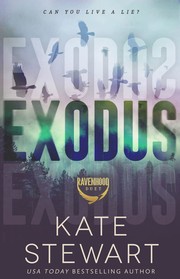
Exodus
Cecelia grieves Sean while Dominic pulls her into the Ravenhood reckoning.
2,463-word summary · 11 min read
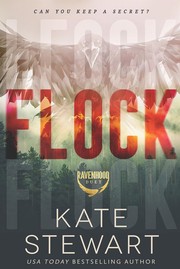
Flock
Nineteen-year-old Cecelia trades a year in Triple Falls for her mother future and falls for two men hiding the Ravenhood secret.
2,997-word summary · 13 min read
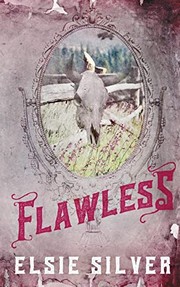
Flawless
Pro bull rider Rhett Eaton is benched by scandal, and his agent's daughter Summer must keep him in line in Chestnut Springs.
2,484-word summary · 11 min read
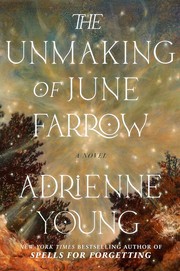
The Unmaking of June Farrow
A woman in a North Carolina flower-farming family walks through a red door into 1951, where she must solve her mother's disappearance and decide whether to…
2,701-word summary · 12 min read

The Bookshop on the Corner
A Birmingham librarian loses her job, buys a van, and moves to the Scottish Highlands to run a mobile bookshop. Warm and bookish, with uneven pacing.
2,557-word summary · 11 min read
My Dark Romeo
A debutante ball kiss traps Dallas Townsend in a marriage to Romeo Costa, a man who wants her as leverage in a war against his father and her fiance.
2,530-word summary · 11 min read
The Ex Talk
Two rival public radio producers pretend to be exes for a dating show, then fall for each other while the lie grows.
2,389-word summary · 11 min read

Act Your Age, Eve Brown
Eve Brown crashes into a Lake District bed and breakfast, breaks the owner's arm, and talks her way into his kitchen. A grumpy-sunshine romance about work,…
2,474-word summary · 11 min read

The Predator
Coder Morana Vitalio and mob enforcer Tristan Caine chase stolen software while a case of missing girls from twenty years back catches up with them both.
2,296-word summary · 10 min read

The Casanova
Kate Landon's boss is also the pen pal she falls for online, hiding behind fake names, until family secrets and a trip to Paris get in the way.
2,274-word summary · 10 min read

At First Sight
Jeremy and Lexie are married and expecting a baby when anonymous emails tell him the child may not be his.
2,317-word summary · 10 min read

Worth Dying For
Reacher stops for one night in rural Nebraska and finds a family that runs the county, a missing girl and a shipment worth killing for.
2,021-word summary · 9 min read
Ghosted
After seven perfect days with Eddie, Sarah is ghosted, and her search for answers uncovers a secret tied to the accident that changed both their lives.
2,011-word summary · 9 min read

Delilah Green Doesn't Care
Delilah returns to Bright Falls to photograph her stepsister's wedding and falls for Claire, a bookstore owner and single mother, while a cruel bet threatens…
2,315-word summary · 10 min read
The Kiss Thief
Promised to one man, taken by another, Francesca must choose in Chicago.
2,545-word summary · 11 min read

Lovelight Farms
Stella fakes dating Luka to save her Christmas tree farm.
2,584-word summary · 11 min read
Everything We Keep
A widow questions her husband's death when a stranger claims his past.
2,307-word summary · 10 min read

Broken Prince
Reed loses Ella and ruins his name while rivals circle him.
2,356-word summary · 10 min read

The Simple Wild
City Calla flies to Alaska to face dying father and gruff pilot Jonah, learning bush life and love.
2,284-word summary · 10 min read
The Other Mrs.
A Chicago family inherits a house on a Maine island, then a neighbor is found murdered. Kubica's 2020 thriller builds to a final reframe.
2,267-word summary · 10 min read
Secretly Yours
A bubbly Napa gardener sends anonymous love letters to her grumpy professor neighbor in this steamy small-town rom-com.
2,504-word summary · 11 min read
Never Never
Charlie and Silas wake with no memory of each other, and the notes their past selves left raise darker questions in part one of the Hoover and Fisher series.
2,516-word summary · 11 min read
Good Girl Complex
A people-pleasing college girl moves to beach town Avalon Bay and falls for a local boy who distrusts her whole world.
2,225-word summary · 10 min read

Below Zero
Stranded at an Arctic station, NASA engineer Hannah is rescued by rival Ian, and a storm forces them to face old grudges and attraction.
2,555-word summary · 11 min read