
Secretly Yours
2,504-word summary 11 min read 384 pages in the book
- First published
- 2023
- Publisher
- Avon
- Pages
- 384
- ISBN
- 9780063238985
- Series
- A Vine Mess (#1)
Reading options
What's inside (8 sections)
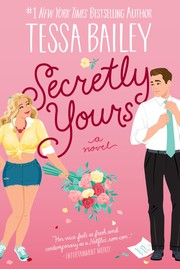
I picked up Secretly Yours because a friend with excellent rom-com instincts told me it was the perfect palate cleanser: short chapters, a sunny heroine, a grump who melts, and a Napa Valley setting that makes everything feel like golden hour. She was mostly right. This is the first book in Tessa Bailey's A Vine Mess series, published by Avon in February 2023, and it runs 384 pages in paperback. It took me two evenings. I laughed out loud several times, rolled my eyes a few times too, and finished it feeling warm toward both leads even though the road getting there wobbles in the middle.
A gardener and a professor walk into Napa
Hallie Welch is the human equivalent of a garden in full bloom. She runs a gardening business in St. Helena, in the heart of California wine country, and she throws herself at every person and project with total sincerity. She talks fast, feels faster, and has spent years nursing a crush on Julian Vos that started when she was fourteen and he barely noticed her. Part of what makes her easy to root for is that her chaos comes from care. She shows up for neighbors, remembers small details about people, and cannot stand to see anything living neglected, plant or person. Part of what makes her exhausting, even to herself, is that she has no filter and no off switch. She knows people find her a lot. She has decided to be a lot anyway, which I respected even when I wanted to reach in and suggest she take a breath.
Julian Vos is her exact opposite. He is a college professor, precise and scheduled, a man who irons his reactions flat. He has come back to St. Helena and the family vineyard on a leave to write a book, and he guards his working hours like a border. Where Hallie spills, Julian contains. Where she improvises, he outlines. He is not cruel about it, at least not at first. He is simply a man who has built a quiet, controlled life and finds his new neighbor's noise, color, and constant motion genuinely distressing. Their first clashes are the classic shared-fence kind: her tools in his path, her music through his wall, her cheerful chatter landing on his concentration like hail. Bailey writes these collisions with good comic timing. You can feel two worldviews bouncing off each other, and you can also feel the interest underneath the irritation on both sides.
The family pressure around them gives the friction stakes. The Vos family owns a winery, and Julian carries the weight of expectation that comes with an old Napa name: be serious, be productive, produce the book, represent the family well. Hallie carries a different weight. She is still grieving her grandmother, whose death left a hole in her daily life, and she is trying to prove that her joyful, scrappy way of working is a real profession and not a cute hobby. Neither of them says any of this plainly at first. They just get on each other's nerves with impressive efficiency while the whole small town watches and takes sides.
The night Hallie writes the letter
The plot truly starts on a night when Hallie has had too much to drink and does something she would never do sober. She writes Julian an anonymous note, a secret admirer letter, and gets it to him without signing it. In the cold light of morning she is horrified at herself. It feels childish and risky, exactly the kind of impulsive move that confirms every bad thing buttoned-up people think about her. She decides to leave it alone and hope it blows over.
It does not blow over. Julian answers. Not with a grand gesture but with curiosity, and then with genuine engagement. Letter by letter, a correspondence grows between them, with Julian writing back to a stranger he cannot identify and Hallie reading replies meant for a mystery woman while knowing she is the author of the whole thing. This is the engine of the book, and Bailey handles the dramatic irony well. The letters let both characters drop their public armor. On paper Julian is wittier and warmer than he is across the fence, and Hallie is more thoughtful than her scatter suggests. Watching them fall for each other's written selves while bickering in person is the most fun stretch of the novel. I kept thinking of old movies where lovers trade unsigned notes, except here the notes arrive alongside explicit modern banter about attraction that leaves no doubt this is a steamy romance for adults.
What I liked most about this section is how the letters expose the gap between how each of them performs and who they are. Hallie performs confidence to cover grief and insecurity about being taken seriously. Julian performs coldness to protect a schedule that is really a shield against disappointment. On the page, with no audience, they admit things they dodge face to face. If you have ever been braver in writing than in speech, this part will ring true. My only complaint is that Hallie lets the deception run longer than comfort allows. Every extra letter raises the eventual price, and I started doing that readerly math where you subtract from the romance the size of the coming apology. Bailey knows this and keeps the letters crackling enough that you forgive the delay, but only just.
Wine country does a lot of quiet work
One pleasure of the book is how much texture Bailey gets out of St. Helena without turning it into a travel brochure. The vineyard rows, the tasting rooms, the seasonal workers, the small-town grapevine that moves faster than any car: it all feels lived in. Hallie's gardening plots and client gardens give her reasons to be outdoors and ladders to be up, which puts her repeatedly in Julian's eyeline while he is trying to write. The Vos winery gives Julian reasons to be pulled into family duties he resents, which puts him repeatedly in Hallie's orbit at gatherings, fundraisers, and family meals. Napa here is not just scenery. It is the reason these two cannot avoid each other, and the source of most of their obligations.
The supporting cast fills out the town without stealing the book. Julian's sister Natalie gets the most page time, sharp and observant, and readers who continue with the series will recognize her as the heroine of the next book. Various neighbors, clients, and winery staff drift through with opinions about Hallie and Julian that range from amused to exasperated. Nobody is painted as a villain. Even the family members applying pressure read as people who love in clumsy, demanding ways rather than as obstacles placed by the plot. That softness is a choice. Bailey wants the central tension to come from the leads themselves, from Hallie's secret and Julian's rigidity, not from an evil ex or a scheming rival. I found that refreshing, though it does mean the middle of the book has to work harder to generate conflict, with mixed results.
There is also a nice thread about work as identity. Hallie wants her gardening to be respected as skilled labor, and several scenes show her knowledge in action: soil, seasons, pruning, the patience of growing things. Julian wants his book to prove he is more than the family name, and his writing scenes show a different kind of patience: sentences, structure, the grind of pages. They are both makers, just in different mediums, and when they finally start respecting each other's craft, the romance deepens past attraction. A late scene where Julian actually sees what Hallie built with her hands landed for me as more romantic than some of the bedroom scenes, because attention is its own kind of devotion.
When the secret comes out
Every secret-admirer plot has a detonation point, and this one arrives roughly where you expect it. Julian learns, or pieces together, that the woman writing to him and the neighbor driving him crazy are the same person. I will not spoil the exact mechanics, except to say the reveal is handled with real hurt on his side and real shame on hers. Julian's reaction stings because it confirms Hallie's worst fear: that to him she is fundamentally unserious, someone who plays games instead of saying things straight. Hallie's defense lands because it contains truth too: the letters were the only place he let her be a full person instead of a nuisance.
The breakup stretch that follows is the weakest part of the book for me. It leans on the standard romance machinery where both people nurse their wounds separately, misunderstand a few key facts, and need friends to talk sense into them. One particular stretch of stubbornness from Julian tested my patience. He is allowed to be angry. He was deceived, and his trust does not come easily. But he holds the grudge a beat longer than the evidence supports, and the book has to work to keep him sympathetic while he does it. Hallie, to her credit, does not just wait around. She keeps working, keeps showing up for her clients and friends, and starts to set terms for what she will accept. Her growth in these chapters is the best argument the book makes that she is more than comic relief. She decides she would rather lose him than shrink herself to keep him, and that decision is what makes the eventual reunion feel earned rather than inevitable.
The reunion itself takes place against the usual series-romance backdrop of a public event where everyone who matters is present, feelings run high, and private truths get said where others can hear them. Bailey stages it with warmth and a good grovel. Julian has to admit, out loud, what the letters taught him: that he was using order as armor, that Hallie's supposed messiness includes perception and courage he lacks, and that he wants the noise after all. It works because the apology is specific. He names what he did wrong instead of offering generic regret, and he offers changed behavior rather than just changed feelings. Readers who dislike grand gestures should know this one stays fairly grounded. It is more honest conversation in front of witnesses than spectacle.
Steam, banter, and the Bailey formula
Let me talk plainly about what kind of romance this is, since it matters for whether you will enjoy it. Secretly Yours is an open-door, steamy contemporary romance by an author famous for frank bedroom scenes and playful dirty talk. The physical relationship between Hallie and Julian is central, not decorative. Bailey uses their contrasts in bed the way she uses them out of it: her enthusiasm against his control, his precision against her abandon, until both of them loosen in ways that mirror the emotional plot. If that sounds appealing, you will be well served. If you prefer closed doors or slow burns where a hand-hold is the climax, this is not your book, and no amount of vineyard charm will change that.
The banter is the other signature element. Hallie talks a mile a minute, Julian answers dry and short, and the rhythm of their exchanges carries pages that would otherwise be pure setup. I laughed at several of their fights, especially the early ones where Julian tries to be dignified while Hallie dismantles his dignity without noticing. Over 384 pages, though, the banter pattern repeats enough that you can see the machinery. She provokes, he stiffens, she charms, he thaws, repeat. Bailey varies the settings and the stakes, but the loop is visible by the final third. Readers who love this dynamic will not mind. Readers who want the couple's dynamic to evolve faster may skim some middle chapters.
A word on the grumpy-sunshine label, since the book is often shelved that way. It fits, but with a slight twist worth noting. Julian's grumpiness is not meanness. He is genuinely overwhelmed by feeling and has organized his life to minimize surprise. Hallie's sunshine is not naivete. She has known loss and condescension, and her brightness is partly a decision to meet the world with generosity anyway. The book is kindest to both of them when it lets those deeper versions show. It is thinnest when it coasts on the labels. Fortunately the letters keep pulling the deeper versions forward, which is why I say the correspondence plot is doing the heaviest lifting in the novel.
What annoyed me and who should read it
Fair criticism first, because this book invites it. The middle sags. Between the delight of the early letters and the pain of the reveal, there is a long stretch where the plot treads water: another fence quarrel, another family lunch, another near-miss conversation that would solve everything if completed. The deception lasts past the point of comfort, as I said, and Julian's rigidity sometimes reads less like character and more like a device to keep them apart. A few Napa social scenes blur together, and I mixed up minor characters more than once. None of this ruined the book for me, but it kept it from being a favorite. This is a warm, fizzy read with a soft center, not a tightly plotted one.
There is also the question of taste around the power balance. Julian is older, wealthier, and credentialed; Hallie is younger, scrappier, and used to being dismissed. The book works to level them, giving Hallie professional competence and moral clarity that Julian has to acknowledge. Mostly it succeeds. But readers sensitive to dynamics where the wealthy man pronounces judgment on the working woman's maturity may flinch at a couple of Julian's colder speeches before he earns his way back. Bailey clearly intends those speeches to be his flaw on display rather than the book's verdict, and the text supports that reading. Still, your tolerance for that arc will shape your experience.
So who should read it. Fans of Tessa Bailey's earlier books, especially the Bellinger Sisters books about sparky heroines and gruff men, will feel at home, though the Napa wine family is its own thing and no prior reading is required. Readers who love small-town contemporary romance with explicit steam, secret-identity tension, and an opposites-attract engine will find exactly what the cover promises. It also suits anyone who wants grief handled lightly but honestly; Hallie's mourning for her grandmother never hijacks the comedy, but it gives her sunshine shadow and weight. Skip it if you want closed doors, if prolonged secret-keeping enrages you, or if you need your heroes reasonable from page one. Julian takes most of the book to become reasonable, and Hallie takes most of it to stop apologizing for who she is. When they finally meet in the middle, gardening gloves and book draft both a little dirty, I believed they had earned each other's mail.
FAQ
When was Secretly Yours published?
Avon published it on February 7, 2023. The paperback runs 384 pages and the ISBN is 9780063238985.
Who are the main characters?
Hallie Welch, a St. Helena gardener, and Julian Vos, a professor staying at the family winery to write, plus his sister Natalie.
Is Secretly Yours part of a series?
Yes, it opens the A Vine Mess series, followed by Unfortunately Yours with Natalie and August.
Similar books
More from A Vine Mess first, then related titles.
My Killer Vacation
A teacher and a bounty hunter share a Cape Cod rental with a corpse and a growing attraction.
2,625-word summary · 12 min read
Act Your Age, Eve Brown
Eve Brown crashes into a Lake District bed and breakfast, breaks the owner's arm, and talks her way into his kitchen. A grumpy-sunshine romance about work,…
2,474-word summary · 11 min read
Juniper Hill
Fleeing New York with her baby, Memphis takes a housekeeping job above Knox Eden's garage, and the grumpy chef becomes the first person she can rely on.
2,021-word summary · 9 min read
The Simple Wild
City Calla flies to Alaska to face dying father and gruff pilot Jonah, learning bush life and love.
2,284-word summary · 10 min read
Good Girl Complex
A people-pleasing college girl moves to beach town Avalon Bay and falls for a local boy who distrusts her whole world.
2,225-word summary · 10 min read
Heartless
Gruff single dad Cade Eaton hires bubbly Willa Grant as summer nanny in Chestnut Springs, and two months together wear down his walls.
2,967-word summary · 13 min read
It Happened One Summer
LA It girl Piper is cut off and sent to Westport where gruff captain Brendan challenges her glitter.
2,089-word summary · 9 min read
Austenland
A New York graphic designer obsessed with Mr. Darcy inherits a trip to a Jane Austen theme park, where the fantasy of Regency romance collides with the men…
2,030-word summary · 9 min read
The Bookshop on the Corner
A Birmingham librarian loses her job, buys a van, and moves to the Scottish Highlands to run a mobile bookshop. Warm and bookish, with uneven pacing.
2,557-word summary · 11 min read
The Ex Talk
Two rival public radio producers pretend to be exes for a dating show, then fall for each other while the lie grows.
2,389-word summary · 11 min read
Bet Me
A sharp actuary agrees to dinner with a charming serial bettor, then spends the next month pretending the wager does not matter.
2,710-word summary · 12 min read
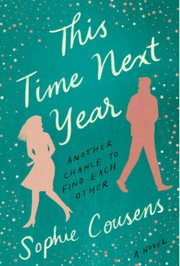
This Time Next Year
Two women give birth minutes apart on New Year's Day 1990, and one takes the other's lucky name. Thirty years on, their children meet again.
2,194-word summary · 10 min read

Indigo Ridge
A new police chief in a Montana town meets the founding family's eldest son in a bar, and one night later a body turns up under their cliff.
2,763-word summary · 12 min read

At First Sight
Jeremy and Lexie are married and expecting a baby when anonymous emails tell him the child may not be his.
2,317-word summary · 10 min read
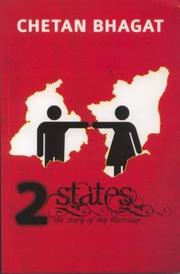
2 States: The Story of My Marriage
A Punjabi boy from Delhi and a Tamil Brahmin girl from Chennai meet at IIM Ahmedabad, and turn a love marriage into a campaign to convince two families.
2,634-word summary · 12 min read
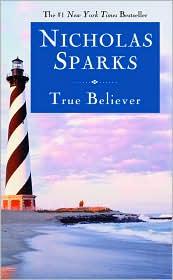
True Believer
Jeremy Marsh, a science journalist who debunks paranormal claims, comes to a small North Carolina town and falls for a librarian who believes in things he…
2,125-word summary · 9 min read

Delilah Green Doesn't Care
Delilah returns to Bright Falls to photograph her stepsister's wedding and falls for Claire, a bookstore owner and single mother, while a cruel bet threatens…
2,315-word summary · 10 min read
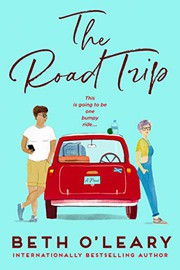
The Road Trip
Two exes squeeze into one small car for the drive to a Scottish wedding, with four years of history and one photograph between them.
2,418-word summary · 11 min read
My Favorite Half-Night Stand
Millie, a criminology professor who has always been one of the guys, invents a secret dating profile and matches with her best friend Reid.
2,362-word summary · 10 min read
Take a Hint, Dani Brown
A viral rescue video turns a PhD student and a grumpy security guard into internet couple goals, and the fake relationship they build to keep the attention…
2,005-word summary · 9 min read
The Marriage Bargain
A bookstore owner marries a billionaire friend's brother for a year to save home and company.
2,092-word summary · 9 min read
The Finish Line
Tobias King seeks forgiveness from Cecelia as the Ravenhood past closes in.
2,868-word summary · 13 min read
Lovelight Farms
Stella fakes dating Luka to save her Christmas tree farm.
2,584-word summary · 11 min read
The Roommate
Uptight Clara shares a flat with porn star Josh and teams up to build ethical adult films for women.
2,362-word summary · 10 min read
Mr. Wrong Number
After a fire and a wrong-number text, Olivia falls for a stranger who is closer than she thinks in this funny Omaha rom com.
2,248-word summary · 10 min read
King of Sloth
Party heir Xavier chases publicist Sloane who refuses to fall in forced job.
2,017-word summary · 9 min read
All Rhodes Lead Here
Grieving Aurora moves to Colorado to fix a farmhouse, finding slow healing with her gruff older neighbor Tobias Rhodes.
2,249-word summary · 10 min read

Exodus
Cecelia grieves Sean while Dominic pulls her into the Ravenhood reckoning.
2,463-word summary · 11 min read
Wild Love
A full retelling of Elsie Silver's Wild Love: a heroine's return to Rose Hill, a grumpy billionaire neighbor, forced proximity, and a slow burn first in a new…
3,067-word summary · 14 min read
Hopeless
Fake engaged to town hero Beau Eaton, outcast bartender Bailey Jansen finds pretend and real blurring in Chestnut Springs.
2,491-word summary · 11 min read