
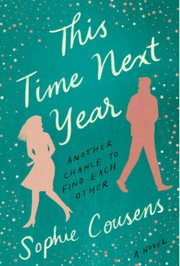
This Time Next Year
2,194-word summary 10 min read 352 pages in the book
- First published
- 2020
- Publisher
- G. P. Putnam's Sons
- Pages
- 352
- ISBN
- 9780593191200
Reading options
What's inside (9 sections)
I picked this up because a film of it had started appearing in my feed, then kept reading because the narrator kept making me laugh in places I did not want to laugh. The American edition I read is from G. P. Putnam's Sons, published December 1, 2020, ISBN 9780593191200, and a British edition had appeared a couple of months earlier the same year. Sophie Cousens's debut is a romantic comedy with a small engine under the bonnet, and the engine is this: two people born minutes apart in the same London hospital on New Year's Day 1990, one of whom took the other's name and a cash prize for being born first, and both of whom spend the next thirty years blaming each other for their luck.
The premise is a joke you can see the ending of from the first page. Cousens knows that too, and the book is a great deal of funnier than the premise deserves. What gives it weight is that she is really writing about mothers. Every turn of the plot eventually routes back to two women in a hospital room on New Year's Eve 1989, one of them bitter, one of them frightened, and about how much of what we call our personality we inherited rather than chose.
A name taken in a hospital
Here is the setup, and it is very good. On the last night of 1989, Connie Cooper goes into labor in a London hospital and finds herself in a ward with a woman named Tara Hamilton. Tara is the one everybody notices, thin and well dressed and clearly from money, while Connie is the one everybody ignores. Then the babies arrive, minutes apart, and the hospital hands out a cash prize for the first child born in the new year. Tara's baby wins it. She does not need the money. She also takes the name Connie had chosen for her own daughter, Quinn, and her son is called Quinn for the rest of his life.
So Connie's daughter is called Minnie, which is short for a Mini, and the family spends three decades treating that accident as the source of every bad thing that has ever happened to them. It is a joke with a long shadow. Minnie's birthdays are cursed. Things go wrong on New Year's Day, they always have, and the cause is obviously that she was born second and robbed of the lucky name.
Cousens writes the origin story with relish, from Connie's point of view as much as Minnie's, and the two of them are linked in a way you can feel in the prose. The mother is not a villain. She is a woman who lost something small in a hospital and built a personality out of it, which is a much more interesting way to lose a name than simply being a villain would be.
Then there is the man himself. Quinn Hamilton grows up with the money and the charm and the prize, at least as seen from outside. Minnie assumes the good luck followed him everywhere. It did not. His father left when he was young, and his mother, Tara, lives with anxiety so severe she will not leave the house. Quinn becomes her errand runner, the one who fetches her things because she cannot go out, and he grows into a man who is good at looking after people and terrible at letting anyone look after him.
The bakery and the superstition
Minnie is a baker. Specifically she runs a pie business that is not for profit, and by the time the novel opens it is going under. She is about to lose the company and, with it, her home. That is the practical crisis of the book, and it is constantly out of frame, because the story keeps sliding back to birthdays.
The supporting cast is where the book gets its comic charge. Minnie's best friend Leila has a boyfriend called Ian who speaks in video game metaphors. Minnie's own boyfriend is Greg, a pun merchant of genuinely painful quality. A blonde woman called Fleur works at the bakery and behaves like a rumour with a name tag. And Minnie's father is an amateur horologist, a man who repairs clocks, a detail that does more for his character than any speech could.
Connie runs commentary on all of it. She is a committed cynic, and she has taught her daughter to read every setback as a personal insult from the universe. The running gag is the car: Mini, Minnie, the Mini Minor, any vehicle on the road at the wrong moment. It is relentless in a way that will either delight you or exhaust you, and Minnie's narration keeps winking at it, because she knows exactly how ridiculous she sounds and she cannot stop.
Locked in the bathroom
Here is the meeting, and it is very funny. It is New Year's Eve, Minnie's thirtieth birthday, and the party is extravagant and packed with the kind of people who are nervous around her. She ends up stuck in a bathroom with the door handle she cannot turn and a dead phone, and the next morning the man who comes to help her sort it out is Quinn Hamilton.
That is the whole first turn of the plot. The rest of the book is the two of them getting to know each other while insisting they are not doing that.
Her first read on him is that he is a rich boy who was handed the world while she got the raw end of every deal. His first read on her is that she is a spiky woman with a chip on her shoulder, which the author has said out loud, and she is, but she is also funny and warm and much sharper than she gives herself credit for. The book is careful to let him be the person who notices her competence. She bakes under pressure, she holds a room, and she keeps a business afloat while her mother tells her the universe is against her.
Both of them misread the other for a good while, which is where the comedy lives and where the romance too. The snag is that Minnie's misreading is easier and funnier to read about than Quinn's, since we are stuck inside her head. He gets the better material only once he stops being mysterious and starts being specific.
Two mothers, two childhoods
The novel has no numbered chapters. Each section is headed by a date, and the dates jump around, so the plot moves forward in the present while sliding back into earlier New Years: two children who nearly met as kids, who crossed paths as teenagers, who brushed shoulders without ever learning each other's names. That structure is the point and also the problem. It is a lovely way to say that their lives were always braided together, and it is a real chore to track.
The flashbacks are worth it for the two mothers. Connie's story is the one everybody knows, the stolen name and the prize and the resentment. Tara's story is the one Minnie does not know, and it is worse in the ways that matter. A rich woman who cannot leave her own house, a husband who left, a child who came to depend on him. When Minnie finally understands why Quinn keeps one foot out of every relationship, she understands it because she has seen what it costs to be needed by a frightened person.
Cousens is also clear that both women were failed by the same hospital on the same night, and that the feud of the next thirty years was built out of a moment neither of them chose. Nobody in this book is a villain, which is a small miracle given how much the plot leans on the two of them.
The comedy
Here is where I have to hand this book its due. The jokes are good and they come fast. There is a scene where Quinn and Minnie end up doing a bit involving a banana that I will not spoil, a running description of a room as roughly the size of an ant's nostril, a security queue at an airport that a reviewer on the jacket praised, and constant affectionate references to the Great British Bake Off, which tells you exactly which world this book lives in.
The voice is the real gift. Minnie narrates in a register somewhere between a stand-up comic and someone talking to a friend over a drink, and the jokes are not only gag lines, they are how the book handles its own sentiment. When the story reaches the big rom-com set piece near the end, Minnie compares herself to Meg Ryan in Sleepless in Seattle, and it is not a wink. It is a woman who has read the rulebook and knows she is inside it and is deciding what to do about that.
There is a bus driver scene too, the one where the heroine tells a stranger the entire story because she cannot hold it in any longer. Cousens has said that rom-coms are about fated love, and she also has said the book is really about whether fate is a real thing or just a story we tell about the past. Minnie believes in luck because her mother taught her to. Quinn does not, because his life has taught him that good things happen to other people and then leave. The book watches the two beliefs slowly swap places.
The ending, and the part that does not quite work
I will not spoil the ending, but I will say that the final stretch is where you find out whether you are reading a novel or a formula. The romance itself lands, and the last scenes are warm and earned in the way this kind of book demands. The moment I kept thinking about afterwards is the one involving Connie's transformation, and not in a good way.
Kirkus called the book "a cozy quilt of recycled rom-com tropes", and while that is unkind it is not wrong. This is a genre exercise executed with real skill and a lot of heart, but it is an exercise. The coincidences are stacked: two births minutes apart, a shared birthday, a name stolen, a locked bathroom, a party, years of near-misses across London. The engine works, but you can hear the machinery. And Connie's softening at the end arrives without the weight it needs. Something happens to her away from the page and she comes back a warmer person, and the book treats that as a happy ending rather than as a convenient one. One reviewer complained that no amount of gardening makes an optimist out of a lifelong cynic, and I felt that.
The pacing has the same wobble. The present-day story could carry a couple of hundred fewer pages, and the flashbacks multiply toward the middle before the plot finally gets going. Minnie's superstition also gets slightly tiresome, because the joke has to be re-explained to a new reader every few chapters.
And yet. The ensemble is genuinely charming. Leila, Fleur, Greg with his puns, the dad with his clocks, the mother with her grudge, and Quinn, who turns out to be the kindest man in the book and is stuck with a mother he cannot leave. Cousens is very good at the small warm thing, the moment where somebody says the exact right line and nobody makes a speech.
Who it is for
If you want a book that hands you a laugh every few pages and a decent ending, this is it. If you want the coincidences questioned and the mother-daughter psychology examined rather than resolved, look elsewhere, because the book knows what it is and it is not trying to be more than it is. Cousens wrote it after a career in television, and the jokes have the pace of someone who has written for a script and knows exactly where the laugh goes.
The audiobook is read by Hannah Arterton, who finds the character's comic timing better than most readers will. There is also a film version, released in 2024 and directed by Nick Moore, with Lucien Laviscount as Quinn and Sophie Cookson as Minnie, John Hannah as her father and Monica Dolan as Connie. Cousens wrote that screenplay herself. The film compresses the ensemble into the central romance, which is a reasonable trade, and it keeps the humor and drops the reflectiveness.
What stays with me is the argument the book ends up making, which is that luck is a story we tell about the past rather than a thing that happens to you. Two people who spent thirty years blaming a birth for their fortunes finally have to admit that a birth is not a destiny, and then the book lets them get on with the small business of being alive. For a romance with a joke at its centre, that is a decent place to land.
FAQ
Is This Time Next Year part of a series?
No. It is a standalone debut novel, published in 2020 by G. P. Putnam's Sons in the United States, with a British edition appearing earlier that autumn.
Who are the two main characters and how do they meet?
Minnie Cooper, a pie baker, and Quinn Hamilton were born minutes apart in the same London hospital on New Year's Day 1990. They meet again at a New Year's party, when Minnie gets locked in a bathroom and Quinn sorts it out the next morning.
Has the book been adapted for film or audio?
A film version directed by Nick Moore was released in 2024, starring Lucien Laviscount as Quinn and Sophie Cookson as Minnie. The audiobook is read by Hannah Arterton.
Similar books
Austenland
A New York graphic designer obsessed with Mr. Darcy inherits a trip to a Jane Austen theme park, where the fantasy of Regency romance collides with the men…
2,030-word summary · 9 min read
The Ex Talk
Two rival public radio producers pretend to be exes for a dating show, then fall for each other while the lie grows.
2,389-word summary · 11 min read
Mr. Maybe
Libby Mason wants a rich husband, but the wealthy man who proposes is dull and the broke writer she cannot forget is not offering forever.
2,322-word summary · 10 min read
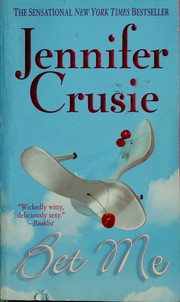
Bet Me
A sharp actuary agrees to dinner with a charming serial bettor, then spends the next month pretending the wager does not matter.
2,710-word summary · 12 min read
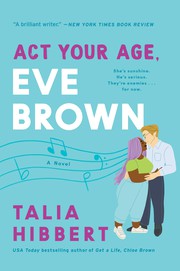
Act Your Age, Eve Brown
Eve Brown crashes into a Lake District bed and breakfast, breaks the owner's arm, and talks her way into his kitchen. A grumpy-sunshine romance about work,…
2,474-word summary · 11 min read
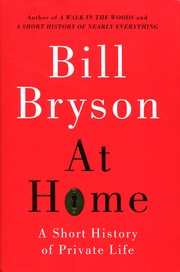
At Home: A Short History of Private Life
Bill Bryson tours his own Norfolk rectory room by room to explain how private life and the modern home got built.
2,334-word summary · 10 min read
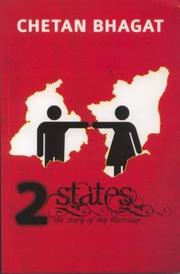
2 States: The Story of My Marriage
A Punjabi boy from Delhi and a Tamil Brahmin girl from Chennai meet at IIM Ahmedabad, and turn a love marriage into a campaign to convince two families.
2,634-word summary · 12 min read
The Road Trip
Two exes squeeze into one small car for the drive to a Scottish wedding, with four years of history and one photograph between them.
2,418-word summary · 11 min read
My Favorite Half-Night Stand
Millie, a criminology professor who has always been one of the guys, invents a secret dating profile and matches with her best friend Reid.
2,362-word summary · 10 min read
Take a Hint, Dani Brown
A viral rescue video turns a PhD student and a grumpy security guard into internet couple goals, and the fake relationship they build to keep the attention…
2,005-word summary · 9 min read
The Marriage Bargain
A bookstore owner marries a billionaire friend's brother for a year to save home and company.
2,092-word summary · 9 min read
Bridget Jones: The Edge of Reason
Bridget doubts Mark, takes a job with Daniel, and lands in trouble in Thailand.
2,198-word summary · 10 min read
Jemima J
Overweight London journalist Jemima Jones invents a slim online self for a California lover, starves to match the photo, then faces betrayal and learns to…
2,883-word summary · 13 min read
Ghosts
At 32, food writer Nina Dean faces ghosting by Max and her father's dementia in London.
2,677-word summary · 12 min read
The Roommate
Uptight Clara shares a flat with porn star Josh and teams up to build ethical adult films for women.
2,362-word summary · 10 min read
Secretly Yours
A bubbly Napa gardener sends anonymous love letters to her grumpy professor neighbor in this steamy small-town rom-com.
2,504-word summary · 11 min read
My Killer Vacation
A teacher and a bounty hunter share a Cape Cod rental with a corpse and a growing attraction.
2,625-word summary · 12 min read
Mr. Wrong Number
After a fire and a wrong-number text, Olivia falls for a stranger who is closer than she thinks in this funny Omaha rom com.
2,248-word summary · 10 min read
Size 12 Is Not Fat
Former teen pop star Heather Wells investigates two dorm elevator deaths while juggling her ex, her crush, and a size-12 wardrobe.
2,805-word summary · 12 min read
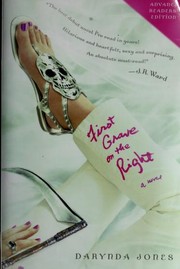
First Grave on the Right
Charley Davidson is a private investigator in Albuquerque and the grim reaper. When three murdered lawyers come back as ghosts, her two jobs collide.
2,770-word summary · 12 min read

Lick
Evelyn wakes up married to the lead guitarist of Stage Dive after a Las Vegas birthday she cannot remember, and the annulment gets complicated.
1,989-word summary · 9 min read
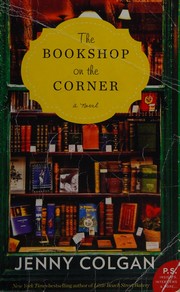
The Bookshop on the Corner
A Birmingham librarian loses her job, buys a van, and moves to the Scottish Highlands to run a mobile bookshop. Warm and bookish, with uneven pacing.
2,557-word summary · 11 min read
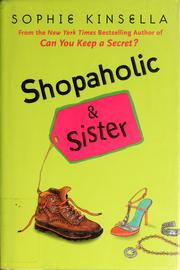
Shopaholic and Sister
Becky Brandon returns from a ten-month honeymoon to meet the half-sister she always wanted, then discovers that Jess is thrifty, prickly, and nothing like the…
2,591-word summary · 12 min read
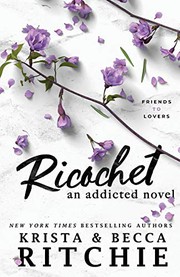
Ricochet
Lily Calloway tries to stay celibate for ninety days while Loren is in rehab, leaning on Rose, Connor, and Ryke as therapy forces her to face her childhood.
2,575-word summary · 11 min read
My Dark Romeo
A debutante ball kiss traps Dallas Townsend in a marriage to Romeo Costa, a man who wants her as leverage in a war against his father and her fiance.
2,530-word summary · 11 min read
Devil in Winter
A shy heiress with a stammer proposes a marriage of convenience to London's most notorious rake, then makes him prove he can be faithful.
2,548-word summary · 11 min read
Under Locke
Iris Taylor moves to Austin broke and wary, takes a front-desk job at a tattoo shop, and spends the book learning that Dex Locke’s blunt cruelty and unexpected…
2,591-word summary · 12 min read

Beneath This Man
Ava returns to Jesse after five days apart and finds his drinking, jealousy, and a hidden deception that changes what she can forgive.
2,341-word summary · 10 min read

Two by Two
Sparks's twentieth novel turns from first love to a marriage breaking up: Russell Green loses his wife and his job, then rebuilds his life around his…
2,192-word summary · 10 min read
There Are No Saints
Two rival artists circle a struggling San Francisco painter. Cole Blackwell wants her, Alastor Shaw wants her dead. Book one of the Sinners duet.
2,190-word summary · 10 min read