

Shopaholic and Sister
2,591-word summary 12 min read 352 pages in the book
- First published
- 2004
- Publisher
- Dial Press
- Pages
- 352
- ISBN
- 9780385338097
- Series
- Shopaholic (#4)
Reading options
What's inside (9 sections)
The book opens on a yoga mat, which is the last place Becky Brandon wants to be. Ten months into a year-long honeymoon, she is supposed to be breathing deeply while Luke, her husband, has finally learned to relax. Instead she is doing sums. There are shipping crates behind her, a customs bill with her name on it, and a credit card that has been quietly working overtime in countries where she does not speak the language. Her body is in the pose. Her mind is in a spreadsheet with a panic attack.
Sophie Kinsella published the novel in 2004, the fourth Shopaholic book; the Dial Press edition runs 352 pages. By this point the series has a reliable machine underneath it, and the machine is already audible. Becky spends, Becky hides, Becky is found out, Becky charms her way back. What changes here is the person standing in the way.
Luke and Becky have been travelling for ten months and have two left. They cut the trip short. Partly Becky is homesick for her parents and for Suze, her best friend. Partly Luke has business calling him back to London, and the trip has done what Becky hoped: he is looser, less like a man who checks his phone during dinner. They stop in Milan on the way, where Luke has a meeting with a potential client.
Becky promises she will not buy anything in Milan. The promise lasts roughly as long as it takes her to find a leather shop. She buys Luke a belt, which sounds sweet until you learn why he needs one: she destroyed the last one with hot wax while waxing her legs. The belt is a peace offering with a crime attached.
Then she sees the Angel bag. It is the bag of the season, expensive, waitlisted, and exactly the sort of object that shuts down Becky's reasoning. There is a list. A wealthy businessman named Nathan Temple overhears and, because he knows the owner, gets her moved to the front. Becky is overcome. She promises to pay him back somehow, with no plan for how.
Two trucks and a very bad week
Back in England, Becky and Luke surprise her parents and get a strange reception. Graham and Jane are jumpy, distracted, and conspicuously uninterested in the gifts. Becky notices and files it away. The next day she and Luke go to the christening of Suze's twins, and the ground shifts again. Suze has a new friend, Lulu Hetherington, a mother of four who is competent, organised, and instantly appalled by Becky. Becky calls her horse-faced and hypocritical, which is not her finest hour and is very funny.
The fight with Suze is worse. Suze admits she was lonely while Becky was away, that Lulu was there when she needed someone, and that she is jealous of a ten-month honeymoon that left her at home with three children. Becky hears the jealousy and misses the loneliness. They part badly.
Then the souvenirs arrive. Two trucks of them. The bills are obscene, and Luke, who has snapped back into business mode with a haircut and a wardrobe of expensive suits, puts her on a budget and tells her to sort out the mess. Her new job at a London department store does not start for months, so she has nothing but time.
Her solution is eBay. She sells the souvenirs, makes a dent in the debt, and feels briefly like a woman in control. The problem is the twenty Tiffany clocks. Luke bought them as corporate gifts for the Arcodas Group, a client he is desperate to land, and Becky sells them without knowing what they are. A colleague buys one. Luke finds out. It is one of the book's better set pieces: the stakes are real, and Becky's defence is sincere and useless.
A sister, in theory
Her parents finally explain. Graham had a relationship, years before, with a woman named Marguerite, a railway stewardess. There was a daughter named Jessica Bertram, Jess, Becky's half-sister.
Becky's reaction is not cautious. It is a burst of pure want. She has always wanted a sister, she says, and the timing is perfect, because Suze has moved on and Becky has a hole in her life. She imagines shopping trips, manicures, late nights, a replacement best friend who is also family. She has cast the role before she has met the applicant.
Jess arrives and the casting collapses. She is studious, careful with money, a little standoffish, and completely uninterested in the things Becky considers fun. She lives in Scully, in the north of England, and she has the terrible habit of being right. When Becky takes her shopping, Jess admits she only came to make Becky happy. When Becky tries to show her a good time, Jess tries to teach her how to compare prices. Their values do not merely differ. They are pointed at each other like weapons.
The best scene in this stretch is small. They are in a supermarket, and Jess is explaining unit pricing with the patience of a woman who has never had money to waste. Becky is trying. A stranger with two daughters tells them to stop arguing because they are setting a bad example. Kinsella lets the embarrassment sit for a beat longer than a joke needs, and it lands.
Meanwhile Luke is working every hour. Brandon Communications is pitching the Arcodas Group, and Luke has become the version of himself Becky likes least: efficient, absent, dressed for a meeting. He says something about how hard Becky is to live with, and she overhears it. She does not ask what he meant. She decides it means the marriage is over.
The meeting she should not have arranged
Becky decides to repay Nathan Temple. She arranges a meeting between him and Luke, believing she is doing her husband a favour. What she does not know is that Luke has been avoiding Temple for good reasons. Temple owns Value Motels, he has a conviction behind him, and he is trying to buy the Daily World. Luke has to take the meeting anyway, and he is furious. It is about the Angel bag, the clocks, the bills, and a wife who keeps making decisions in a parallel universe and calling it help.
They fight. He tells her Jess has been more helpful to him than she has. She tells him he has had no time for her, that she has been carrying her own problems for months, that he looks at her like a problem to be managed. He leaves for Cyprus. Before he goes, he leaves a page of complaints in his neat handwriting. Becky reads it and concludes that her marriage is finished.
The list is the book's sharpest piece of writing and also its most uncomfortable. It is specific, tidy, and cold, and it reveals a Luke who has been keeping score. Kinsella does not let Becky off the hook, or Luke either. The novel does not know what to do with the cruelty it has just uncovered. It needs Luke sympathetic again by the final chapter, so the list becomes a misunderstanding rather than a wound.
That night she dreams she has turned into Alicia, her old nemesis, in a pink suit and a sneer, mocking Jess while Luke and Suze look on in disgust. She wakes up and books a train north, to learn how to deserve the marriage she cannot fix.
North, to Scully
Scully is not a shopping destination. Jess does not want her there, does not want to teach her thrift, and does not soften when Becky explains that her marriage has collapsed. She says she saw it coming, and that Becky will have to grow up on her own.
Jim Smith, the local shopkeeper, takes pity on her and finds her a room at Edie's bed and breakfast. His seventeen-year-old daughter Kelly adopts Becky immediately, mostly because Becky has good shoes and knows what Stila is. Kelly is the audience Becky has been missing.
Becky also stumbles into the local environmental group, led by a patient man named Robin. They are organising against a development that threatens a protected area. Becky, who understands how to get attention, suggests a rally and some media noise. Robin likes the ideas. Jess does not, partly because she thinks Becky is treating activism as another accessory, and partly because she is embarrassed to have her in the room.
The visit becomes an education. Jim tells Becky about Jess's childhood: her mother Marguerite, her stepfather Bill, a household where money was tight and affection conditional, where Jess learned to pay her own way because nobody else would. Becky sees that her own parents paid for everything and taught her nothing about the value of any of it.
Then Jess tells her the thing that changes the shape of the book. She went to see Graham and asked for a DNA test. He never took one. Everyone assumed, and the assumption hardened into fact because nobody wanted to examine it. Becky is not necessarily her sister. The one thing she thought she had found may be a family story nobody bothered to check.
Becky apologises. Properly, without a joke. She admits she was a spoiled brat, that she treated Jess as a fantasy and then punished her for not fitting it, and that she has been running from consequences her whole life. Jess accepts it. They do not become friends. They become two people who have been honest with each other, which is better.
The cupboard and the mountain
Before Becky leaves, Jim shows her something. In Jess's house there is a cupboard full of rocks: ordinary stones, rare crystals, things that look dull until the light hits them. Becky recognises it immediately. It is the same cupboard she has at home for her shoes. The same devotion, the same secret pleasure, the same slightly mad order.
The scene does not argue that shopping and geology are equivalent. It argues that passion is passion, and that a person who has never been allowed to want anything can still find one thing to want desperately.
Jess has gone climbing. Becky follows, in the wrong shoes and the wrong clothes, because she has finally understood something and cannot wait to say it. The weather turns. She loses the path and falls. The mountain sequence is a genuine tonal gear change, closer to a survival story than a comedy. Jess finds her, keeps her awake, and paints her toenails with pink sparkly polish to keep her spirits up. Two women who could not agree on a single thing spend the night agreeing that they do not want to die.
Jess also admits something. While she was in London she saw how Luke treated Becky, how he retreated into work, how he let the marriage become a thing he would deal with later. She told him so. He did not listen. The collapse was not Becky's alone. That does not erase the list, but it complicates it.
Becky gives her the silver Tiffany bean necklace she bought before any of this started. Jess loves it. Help arrives. Suze and Tarquin are involved, and the two sisters come down off the mountain with a relationship that is still uncertain and now voluntary.
What the ending settles
Back in London, Luke returns. The reconciliation is not a grand gesture. It is two people who have been shown their own behaviour by someone with no reason to flatter them. Becky has stopped pretending that her spending is charming. Luke has stopped pretending that his absence is sacrifice. They choose each other with fewer illusions, which in this series counts as growth.
The protest plot resolves with a twist that is very Kinsella. The group has been campaigning against a development that is not what they thought. Arcodas is restoring an old building, not paving over a wildlife site. Robin had the story wrong. The enemy was partly a rumour. It is a neat joke about outrage and incomplete information.
The Angel bag comes back to Becky. Someone finds it and returns it. She looks at it and does not feel the old pull. She gives it to Kelly, along with her Stila makeup. The gesture retires a symbol the book has spent 300 pages advertising. The bag was the source of the trouble, so the bag has to go.
The last pages add one more thing. Becky discovers she is pregnant. It is the kind of final-page revelation that closes a book and opens the next, landing as both reward and threat. The woman who could not look after a credit card is about to be responsible for a child.
What works, and what does not
The comedy is real. Kinsella can build a scene. The twenty Tiffany clocks, the yoga voice, the horse-faced insult, the supermarket lecture, Kelly's awe at a woman with the right lip gloss: these are funny because they are specific and the embarrassment is earned. The rock cupboard is genuinely moving, and the paternity uncertainty gives the novel a shadow it does not quite earn but does use well.
The criticism is equally real. This is the fourth verse of a song, and the verses are getting closer together. Becky hides something, spends something, is discovered, flees, is forgiven. The sister is a device for teaching her a lesson, and for long stretches the book is more interested in Luke's client than in Jess. The tonal shifts are rough: slapstick, a page of grievances, a near-death night on a mountain, a pregnancy test. Kinsella moves between them on nerve, and nerve is not control.
The class assumptions deserve a mention. For Becky, thrift is a hobby she can try on in the north and take off when she gets home. For Jess, it is a childhood. The book notices this, then mostly forgives Becky for it, because the series cannot afford to examine where the money actually comes from. Luke's income and her parents' indulgence are the floor she stands on, and the novel treats that floor as scenery rather than a subject. The shopping addiction is a quirk with consequences that are always solvable by a man with a good job.
And the marriage is resolved too easily. Luke leaves a list that would end most relationships, and the book wants us to believe a week in the north and a conversation on a mountain can answer it. Maybe they can. The novel does not show the work.
None of that ruins the pleasure. It does mean the book is best read as what it is: a fast, warm, occasionally sharp comedy about a woman who has been taught that being loved means being paid for. Readers who want Becky to change permanently will be annoyed by the next book. Readers who dislike brand names, or who want a serious account of debt, or who have no patience with a heroine who creates her own disasters, should stay away. Everyone else will finish it in two sittings and immediately want to know what happens on the mountain road home.
The pregnancy is the tell. Kinsella is not interested in endings that close. She is interested in the next thing Becky will have to learn, and the next thing she will get wrong, and the people who will still be standing there when she does.
FAQ
Do I need to read the earlier Shopaholic books first?
You can start here, but the book assumes you know Becky, Luke, and Suze. The earlier novels explain the shopping habit and the marriage.
Are Becky and Jess really sisters?
They grow up believing they are half-sisters, but no DNA test was ever taken. The novel leaves the question unsettled and makes their relationship a choice rather than a fact.
Is Shopaholic and Sister a romance?
It is more of a comic novel about marriage, friendship, and family. The central relationship is Becky's attempt to grow up, not a new love story.
Similar books
More from Shopaholic first, then related titles.
Confessions of a Shopaholic
Becky Bloomwood hides maxed cards while chasing a finance writing job.
1,910-word summary · 8 min read
Shopaholic Takes Manhattan
Becky and Luke move to New York where shopping fame tempts her to ruin both.
2,025-word summary · 9 min read
Shopaholic Ties the Knot
Becky Bloomwood plans two weddings at once while debts pile up and Luke's mother interferes.
2,218-word summary · 10 min read
Shopaholic and Baby
Pregnant Becky shops for the perfect nursery while Luke's ex becomes her obstetrician.
2,247-word summary · 10 min read
Bridget Jones: The Edge of Reason
Bridget doubts Mark, takes a job with Daniel, and lands in trouble in Thailand.
2,198-word summary · 10 min read
My Not So Perfect Life
Katie chases London creative life while her perfect boss Demeter hides cracks, until a farm trip flips roles.
2,300-word summary · 10 min read
The Undomestic Goddess
A burned out London lawyer flees a career mistake and takes a housekeeper job she cannot do.
2,943-word summary · 13 min read
Mr. Maybe
Libby Mason wants a rich husband, but the wealthy man who proposes is dull and the broke writer she cannot forget is not offering forever.
2,322-word summary · 10 min read
Jemima J
Overweight London journalist Jemima Jones invents a slim online self for a California lover, starves to match the photo, then faces betrayal and learns to…
2,883-word summary · 13 min read
The Flatshare
Two strangers share one bed on opposite shifts and fall in love through notes left around the flat.
2,793-word summary · 12 min read
Wedding Night
Lottie marries an old flame days after a breakup, then flies to a Greek island while her sister quietly works to sabotage the honeymoon. A farce about memory,…
2,213-word summary · 10 min read
Twenties Girl
Dumped and flailing, Lara Lington is haunted by her great-aunt Sadie, a 1920s ghost who wants her lost necklace back.
2,938-word summary · 13 min read
Remember Me?
Lexi wakes after an accident missing three years, with a polished new life and a husband she does not recall, and must work out which parts she wants to keep.
2,390-word summary · 11 min read
I've Got Your Number
Bride to be Poppy borrows stranger Sam phone and snoops wedding chaos.
2,078-word summary · 9 min read
Can You Keep a Secret?
Emma blurts every secret to a stranger on a turbulent flight, then finds him running her company.
3,114-word summary · 14 min read

Size 12 Is Not Fat
Former teen pop star Heather Wells investigates two dorm elevator deaths while juggling her ex, her crush, and a size-12 wardrobe.
2,805-word summary · 12 min read
Between Sisters
Estranged sisters Meghann and Claire reunite in Washington when Claire announces a rushed wedding, then face their mother's desertion and a medical crisis.
2,467-word summary · 11 min read
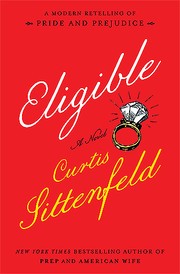
Eligible
Austen's Bennet sisters move to modern Cincinnati, where marriage is a reality show and the house is losing its value.
2,293-word summary · 10 min read
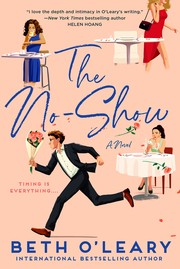
The No-Show
Three women are stood up on Valentine's Day by the same man, but the timeline is not what it seems. O'Leary's warmest book with a knife in it.
2,127-word summary · 9 min read
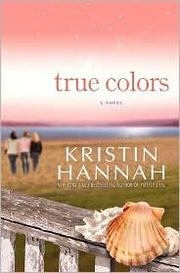
True Colors
Three Grey sisters split over love and duty after their father judges them.
2,596-word summary · 12 min read
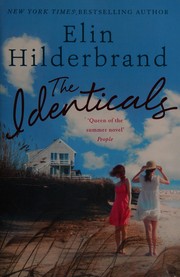
The Identicals
Twin sisters swap Nantucket and Martha Vineyard lives for a summer.
2,556-word summary · 11 min read
Playing for Keeps
Childhood neighbors Haley and Jason turn a long prank war into a fake relationship that turns real.
2,571-word summary · 11 min read
Hello Stranger
Portrait artist Sadie loses face recognition after brain surgery and must finish a contest piece while falling for two men.
2,210-word summary · 10 min read
Tangled
Told by a cocky businessman, a bet to win the new associate who rejects him turns into real pursuit, strict rules, a painful reveal and a wedding-level happy…
2,868-word summary · 13 min read
Ghosts
At 32, food writer Nina Dean faces ghosting by Max and her father's dementia in London.
2,677-word summary · 12 min read
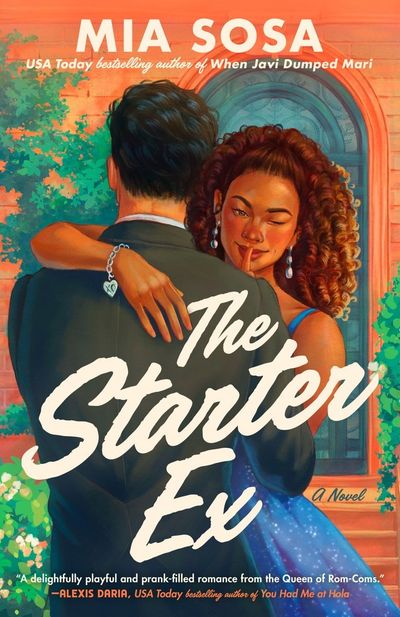
The Starter Ex
A retired bad-girlfriend-for-hire takes one last job and falls for the mark.
2,092-word summary · 9 min read
The Rosie Effect
Married in New York, Don Tillman turns Rosie's pregnancy into research and nearly loses her, until a crisis forces him to listen.
2,869-word summary · 13 min read

The Re-Do List
After a public breakup, Willow Lewis redoes her romantic firsts with her brother's best friend while dog-sitting in Des Moines.
2,390-word summary · 11 min read
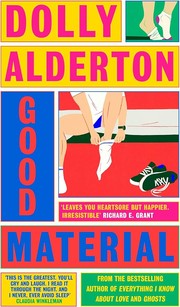
Good Material
A struggling comic replays his breakup with Jen while sofa surfing, bombing gigs and missing the other half of the story.
2,500-word summary · 11 min read
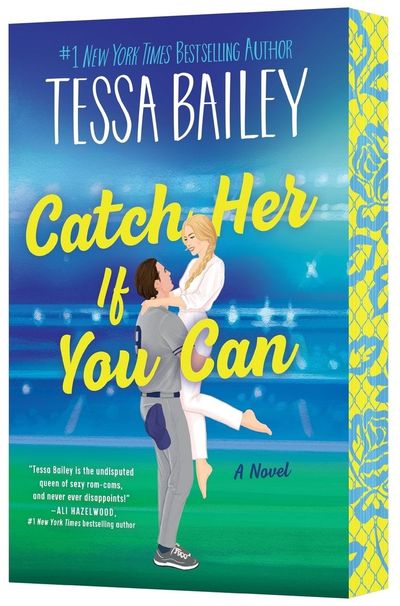
Catch Her If You Can
Yankees catcher Madden proposes a secret marriage of convenience to burlesque club owner Eve when two kids land on her doorstep.
2,187-word summary · 10 min read