
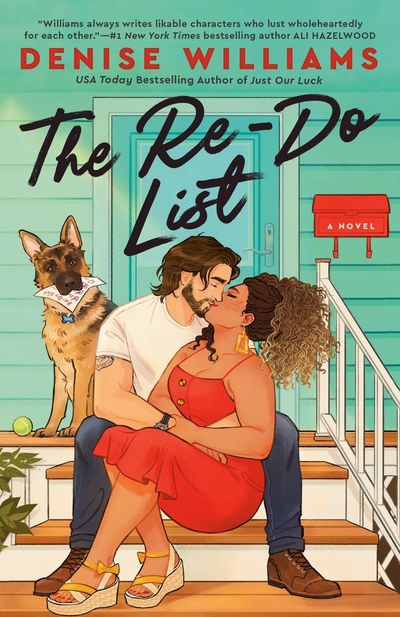
The Re-Do List
2,390-word summary 11 min read 432 pages in the book
- First published
- 2026
- Publisher
- Berkley
- Pages
- 432
- ISBN
- 9780593641453
Reading options
What's inside (8 sections)
I picked up The Re-Do List because I have a soft spot for brother's best friend romances and I wanted something funny after a run of heavy books. Denise Williams published it with Berkley on January 27, 2026. The paperback runs 432 pages and carries ISBN 9780593641453. I read it across four evenings, mostly on the couch with tea, and I laughed out loud more than once. It is a contemporary romance about Willow Lewis, a woman in her late twenties trying to reclaim her romantic history after a breakup that played out in public. The hook is simple. She made all her early romantic memories with one high school sweetheart. After he dumps her in a messy and viral way, she decides to make a re-do list and experience those firsts again on her own terms. Her helper is Deacon, her brother's best friend, who is watching out for her while her brother is deployed.
What sold me early was the setup. Willow comes back to Des Moines to dog sit for her brother Cruz while he is away on deployment. She is between plans. Her job is flexible. Her confidence is shot. Staying in her brother's house with his goofy dog gives her a place to land without moving back in with her parents. Cruz asks Deacon to keep an eye on his little sister. Deacon says yes to two things. He will look out for Willow. He will keep his hands off her. Both promises get hard to keep fast. Deacon is a veteran trying to build a steady civilian life. He works with his hands. He shows up. He remembers small things people tell him. Williams writes him as warm and careful rather than cocky, which I liked because the trope can tip into possessive fast.
Willow's list starts small and a little sad. She wants a better first date. She wants a first dance that does not make her cringe. She wants first kisses that feel chosen instead of settled for. The term Operation Re-Do gets tossed around between them as a joke that turns serious. At first Deacon helps in a friendly way. He takes her out for a proper evening with reservations and no phones on the table. He dances with her in a kitchen while the dog watches. He gives her room to say yes or no to each step. I appreciated how much checking in happens here. Willow says what she wants. Deacon listens. When she changes her mind, he stops. For a book with a lot of heat, consent is part of the flirting, not a footnote.
A viral breakup and a move to Des Moines
Willow Lewis had the kind of teenage love story people envy from outside. Same boyfriend through high school. Same plans through early adulthood. Then the breakup happens in front of an audience, clips and comments and friends sending links she did not ask for. Williams does not linger on the ex for long, which is smart. He gets enough page time for us to see why Willow stayed and why leaving hurt. He was familiar. He knew her family. He was tied to every milestone she counted. When that link breaks, she feels like her own memories belong to someone else.
Coming to Des Moines is not framed as running away. It reads as pressing pause. Cruz's house is lived in and a little messy. Bills on the counter. A spare key with neighbors. A dog with strong opinions about squirrels and delivery trucks. Willow falls into dog routines quickly. Morning walks. Evening couch time. A vet visit that goes sideways in a funny way. I liked these domestic chapters because they slow the romance down. Willow is not sitting idle waiting for Deacon to appear. She is cooking bad pasta. She is video calling Cruz. She is trying to figure out work and money. The dog gives her someone to care for while she sorts herself out, and it gives Deacon a reason to stop by without forcing the romance.
Des Moines itself gets real attention. Williams lives there, and it shows in small touches. Neighborhood bars with trivia nights. A bookstore that hosts author events. Friends who drop off food. This is not a generic small town painted over a city name. Traffic and weather matter. People know each other through school or service or work. That grounded setting helps the comedy land. Jokes come from logistics as much as dialogue. Who drives. Who holds the leash. Who pays for mini golf when both people insist.
Deacon and the promise to Cruz
Deacon is the kind of hero Williams writes well. Steady. Funny in a dry way. Physical without being showy. He served and now he is out, working a trade job and trying to be useful to people he loves. His friendship with Cruz is the spine of his choices. They went through hard stuff together. Cruz trusts him with his house and his sister. Deacon takes that trust seriously. Early chapters show him fixing things around the house, checking smoke detectors, mowing a strip of lawn that does not need it because he needed something to do with his hands.
What makes him interesting is that decency is only one part of him. He likes Willow. He liked her before, from a distance, when she was off limits as his best friend's little sister and then as someone else's girlfriend. Now she is in his town, sleeping on his friend's couch, asking for help with dating, and he has to decide what kind of man he wants to be. Williams gives him a past that includes stress and loss tied to service, but she does not turn him into a case study. He goes to therapy. He has friends he talks to. He has bad sleep some nights. He does not use his history as an excuse to pull away every ten pages, which kept me from getting frustrated with him.
The loyalty bind drives the middle of the book. If Deacon dates Willow openly, he risks Cruz. If he hides it, he risks Willow. There is no version where he gets to keep everyone comfortable. I thought Williams handled this better than most books in this trope. Cruz is not written as a cartoon obstacle. He loves his sister. He respects Deacon. His protectiveness comes from deployment stress and brother habit, not cruelty. When the truth comes out, the fallout feels earned. People say things they mean and things they wish they could pull back. Apologies take time.
Operation Re-Do from first dance to first kisses
The list itself is the engine. Willow writes down moments she wants to redo. A first date where she feels wanted. A first dance where she is not embarrassed. First kisses that are slow and clear. Later items get bolder, and Williams lets Willow own that shift. She is not trying to be shocking. She is trying to learn what she likes after years of going along with someone else's pace. Deacon agrees to help with boundaries. Public items first. Private items only if they both want them. Safe words get discussed in a practical way that made me smile because it was so unsexy and sexy at once.
Some of my favorite scenes live in this stretch. A kitchen dance with socks on tile while dinner burns a little. A mini golf date where Willow keeps score wrong on purpose and Deacon calls her on it. A bar night with friends where someone plays a slow song and they both pretend they are not staring. The kisses, when they happen, are written with attention to breath and hands and laughing between attempts. Williams is good at heat that includes personality. People joke. People adjust. People ask for more or less. It felt adult in the best way.
The turn from firsts to seconds matters. At some point Willow stops counting. She is no longer checking boxes. She is choosing Deacon for a Tuesday, not for a milestone. That shift is quiet. They start making regular plans. Grocery runs. Dog park mornings. Helping a friend move a couch. The romance stops feeling like a project and starts feeling like a relationship. I found that more moving than the big romantic set pieces. Anyone can plan a perfect date. Staying for the boring parts means more.
Friends and dogs and funny side plots
Williams always writes a strong friend group, and this book is no exception. Willow has friends who text too much and show up with snacks. Deacon has buddies from work and from service who tease him and call him out. One friend in particular, a blunt woman who runs a local shop, stole every scene she entered for me. She asks Willow direct questions about what she wants. She tells Deacon when he is being an idiot about Cruz. She watches the dog once and returns him with a full report on his crimes.
The dog deserves his own paragraph. He is not a cute prop. He chews. He pulls. He has selective hearing at the park. He also senses mood in the way real dogs do, leaning against Willow when she cries and sitting on Deacon's feet when Deacon is tense. Dog sitting drives plot in useful ways. Vet bills force money talk. Walks force neighbor chats. A lost leash incident forces Deacon and Willow to cooperate under stress. If you love animal sidekicks, you will be happy here. If you are neutral on dogs in romance, this one might still win you over because the dog creates problems instead of just sitting pretty on the cover.
Comedy comes from situations more than one liners, though there are good lines. A trivia night goes wrong when Willow buzzes in too fast. A family video call catches Deacon shirtless in the background and Cruz notices. A DIY project floods a bathroom. None of this feels stapled on. It grows from who these people are. Willow overprepares. Deacon underplans. Together they make a mess and clean it up. I laughed, but I also believed them as people who would actually date.
Heat with care and talk that helps
Readers who follow Williams know she writes open door romance with clear communication, and this is one of her warmest in that regard. The intimate scenes build across the book. Early kisses are tentative and sweet. Later scenes are explicit and confident, with Willow asking for what she wants and Deacon responding with focus. What stood out to me was how much talking happens before and after. They discuss birth control and testing in plain terms. They discuss what each item on the list means. They pause when one of them gets in their head. That talk never kills the mood for me. It raised the stakes because I trusted them together.
This approach also lets Williams show growth. Willow starts the book apologizing for having needs. She ends scenes by stating them. Deacon starts by trying to be perfect and ends by admitting when he is scared. Their physical connection tracks that change. First kisses are about proof. Later intimacy is about comfort. There is a scene about halfway where Willow stops things to ask a question, and Deacon thanks her for asking. Small moment. It told me everything about why they work.
If you prefer closed door romance, this will be too much for you. Doors stay open here and details are specific. If you like heat tied to character, you will likely enjoy it. I did, though I skimmed one late scene that repeated a dynamic we had already seen. More on that in the criticism section. The strength is not novelty of acts. It is the sense that two people are learning each other and getting better at it.
What drags and who should pick it up
No romance at this length is perfect, and I have two complaints worth naming. The middle sags a little around the sixty percent point. Once Operation Re-Do shifts from public dates to private ones, a few chapters circle the same worry. Willow wonders if she is using Deacon. Deacon wonders if he is betraying Cruz. They talk it through, feel better, then worry again two chapters later. I get why. Both fears are real. But the loop repeats without new information. I started skimming internal monologues until an outside event forced them forward. A tighter edit could have cut thirty pages here and kept the tension.
My other issue is Cruz's return. Without spoiling the exact sequence, the confrontation many readers will wait for resolves a bit fast after a long build. Cruz has reasons to be angry. Deacon has reasons to feel guilty. Willow has reasons to demand a voice in choices about her own life. The book gives all three a hearing, which I respect, but the repair happens quickly once everyone is in the same room. Given deployment stress and brother protectiveness, I wanted one more hard conversation. The ending is happy and believable, just a touch smooth after so much careful friction.
Still, I closed the book fond of these people. Willow's arc from embarrassed ex to clear eyed partner feels honest. She does not become a new person. She becomes more herself, someone who plans dates she enjoys and says no when she needs to. Deacon's arc from loyal friend to honest partner also works. He learns loyalty to Cruz cannot mean lying to Willow. He has to tell the truth and accept what follows. The epilogue gives dog updates and friend cameos without overpromising a perfect future. They choose each other. They keep working.
Pick this up if you like brother's best friend stories with humor and consent, small city settings, dogs with personality, and heat that includes laughter. Skip it for now if you want closed door romance or dislike third act conflict tied to family loyalty. For me, after a string of darker books, this was the right mix of sweet and spicy. I finished it rooting for Willow and Deacon to get their boring Tuesdays together, which is my highest praise for a romance. Boring in the best sense. Chosen. Steady. Theirs.
FAQ
When was The Re-Do List published?
Berkley published the paperback on January 27, 2026. It runs 432 pages and the ISBN is 9780593641453.
Who are the main characters?
Willow Lewis, her brother Cruz, his best friend Deacon, plus a blunt shop owner friend and Cruz's dog who drives much of the domestic comedy.
Is it spicy?
Yes, though it stands alone. Readers who like open door heat with clear consent and humor will feel at home, while closed door readers may want to skip it.
Similar books
Shopaholic and Sister
Becky Brandon returns from a ten-month honeymoon to meet the half-sister she always wanted, then discovers that Jess is thrifty, prickly, and nothing like the…
2,591-word summary · 12 min read

Bridget Jones: The Edge of Reason
Bridget doubts Mark, takes a job with Daniel, and lands in trouble in Thailand.
2,198-word summary · 10 min read
Playing for Keeps
Childhood neighbors Haley and Jason turn a long prank war into a fake relationship that turns real.
2,571-word summary · 11 min read
Hello Stranger
Portrait artist Sadie loses face recognition after brain surgery and must finish a contest piece while falling for two men.
2,210-word summary · 10 min read

Tangled
Told by a cocky businessman, a bet to win the new associate who rejects him turns into real pursuit, strict rules, a painful reveal and a wedding-level happy…
2,868-word summary · 13 min read
Before We Were Strangers
Matt waits fifteen years to ask Grace why she left after one college night that shaped them both.
2,386-word summary · 11 min read
The Rosie Effect
Married in New York, Don Tillman turns Rosie's pregnancy into research and nearly loses her, until a crisis forces him to listen.
2,869-word summary · 13 min read
Drive Me Crazy
A rookie F1 team principal and her comeback-driver childhood crush must save their failing team without wrecking each other.
2,236-word summary · 10 min read
Catch Her If You Can
Yankees catcher Madden proposes a secret marriage of convenience to burlesque club owner Eve when two kids land on her doorstep.
2,187-word summary · 10 min read
Josh and Hazel's Guide to Not Dating
Quirky teacher Hazel and steady Josh set each other up on awful double dates in Portland while insisting they are just friends.
2,854-word summary · 13 min read

Wallbanger
Caroline battles thin walls and a charming playboy neighbor in San Francisco, then falls for him.
1,947-word summary · 9 min read
This Summer Will Be Different
Lucy returns to Prince Edward Island and tries not to repeat one night with her best friend brother Felix.
1,905-word summary · 8 min read
The Soulmate Equation
Statistician Jess matches a genetics grump at top score ever, then tests dating by data.
2,006-word summary · 9 min read

The Flatshare
Two strangers share one bed on opposite shifts and fall in love through notes left around the flat.
2,793-word summary · 12 min read
The Rosie Project
Melbourne genetics professor Don Tillman launches the Wife Project to find a partner by questionnaire, then meets chaotic Rosie Jarman and agrees to help her…
2,780-word summary · 12 min read
The Hating Game
Two executive assistants share an office, a rivalry, and a promotion neither will concede without a fight.
1,945-word summary · 9 min read
The Unhoneymooners
Olive Torres takes her sister's Hawaii honeymoon with enemy Ethan Thomas after food poisoning ruins the wedding.
2,864-word summary · 13 min read

The Love Hypothesis
Love Hypothesis retold: Olive fakes dating Adam, lab hijinks, consent talks, Boston fall.
2,009-word summary · 9 min read

What Happened to Goodbye
Mclean has reinvented herself in four towns since her parents divorced. In Lakeview she uses her real name, and for the first time staying put becomes a choice.
2,796-word summary · 12 min read

Size 12 Is Not Fat
Former teen pop star Heather Wells investigates two dorm elevator deaths while juggling her ex, her crush, and a size-12 wardrobe.
2,805-word summary · 12 min read
Alone With You in the Ether
Two people in Chicago agree to six conversations, and the experiment becomes a love affair that is also a study of bipolar disorder, obsession, and the shape…
2,713-word summary · 12 min read

Dumplin'
Willowdean Dickson enters her town's beauty pageant as a protest and discovers that confidence is harder to keep once she lets someone close.
1,922-word summary · 9 min read

Sam's Letters to Jennifer
A grieving journalist reads her grandmother's letters and finds a decades-long love affair that changes how she sees her family.
2,310-word summary · 10 min read
Mr. Maybe
Libby Mason wants a rich husband, but the wealthy man who proposes is dull and the broke writer she cannot forget is not offering forever.
2,322-word summary · 10 min read

I Kissed Shara Wheeler
Shara Wheeler kisses her rival Chloe Green at prom and disappears, leaving a scavenger hunt that forces Chloe to rethink everything she knew about her.
2,083-word summary · 9 min read

Amy & Roger's Epic Detour
Amy Curry has not driven since the crash that killed her father. With Roger at the wheel and a box of maps between them, a cross-country trip becomes a slow…
3,034-word summary · 13 min read
One to Watch
A plus-size fashion blogger takes the lead role on a reality dating show to prove she belongs on television, and finds she might want what the cameras offer.
2,478-word summary · 11 min read
Between Sisters
Estranged sisters Meghann and Claire reunite in Washington when Claire announces a rushed wedding, then face their mother's desertion and a medical crisis.
2,467-word summary · 11 min read

Eligible
Austen's Bennet sisters move to modern Cincinnati, where marriage is a reality show and the house is losing its value.
2,293-word summary · 10 min read