

Dumplin'
1,922-word summary 9 min read 375 pages in the book
- First published
- 2015
- Publisher
- Balzer + Bray
- Pages
- 375
- ISBN
- 9780062327185
- Series
- Dumplin' (#1)
Reading options
What's inside (8 sections)
I expected this to be a book about a fat girl who enters a beauty pageant and learns to love herself. That is roughly what it is, but the interesting part is how much it resists the easy version of that story. Willowdean Dickson is not a saint, and the novel knows it. She is funny, stubborn, occasionally cruel, and deeply unsure of herself in ways that have nothing to do with her weight. The pageant is the plot, but the real subject is the difference between the confidence you perform and the confidence you actually have.
Willowdean is sixteen and lives in Clover City, Texas, with her mother, Rosie, a former Miss Teen Blue Bonnet who now runs the pageant. Her aunt Lucy, who was more of a mother to her than Rosie, died six months before the book begins. Lucy weighed nearly five hundred pounds and lived a restricted life indoors, but she was warm, funny, and devoted to Dolly Parton. She gave Will a cherry-red 1998 Pontiac Grand Prix named Jolene, and she taught Will to love country music, big hair, and the idea that a woman can be large and glamorous at the same time.
Will's relationship with her mother is the novel's emotional core. Rosie loves her daughter, but she has spent years trying to manage her weight, and the management has become a kind of criticism. She calls her Dumplin', a nickname that is affectionate in private and humiliating in public. She believes that being fat is a problem to be solved, and Will believes that it is simply a fact about her body. The disagreement is not resolved by a single conversation. It is worn down over the course of the book, and the weariness is what makes it believable.
Harpy's and Bo
Will works at Harpy's, the local fast-food joint, and that is where she meets Bo, a private school former jock who is handsome, kind, and interested in her. This is the novel's smartest move. Will has always felt comfortable in her body, or she has told herself she does. Then a boy she likes likes her back, and suddenly she is aware of every inch of herself. She worries about what people will think. She worries about what he will think when he touches her. She panics when his hand brushes her back and leaves without explaining.
The irony is sharp. Will's confidence was partly a defense. As long as she was the girl who did not care what anyone thought, she was safe. Once she wanted something, she became vulnerable, and the vulnerability felt like losing herself. Murphy writes this without making Will pathetic. The fear is recognizable. Anyone who has ever been confident until the moment someone they wanted saw them clearly will understand it.
Bo is a little too good to be true. He is patient, handsome, and emotionally available, and his main function is to be the thing Will wants and fears. The novel gives him some interiority, but not much. He is a prize and a mirror, and the book is more interested in Will's reaction to him than in Bo himself. That is a limitation, but it is not fatal. The romance is not the point. Will's relationship with herself is.
The pageant
The plot kicks in when Will finds an old application for the Miss Teen Blue Bonnet pageant in Lucy's things. Lucy never entered. Her weight, or her fear, kept her out. Will decides to enter as an act of protest in heels, a way of proving that she deserves to be on the same stage as the thin, polished girls her mother trains. She does not expect to win. She expects to make a point.
Her best friend Ellen enters too, which complicates things. Ellen is conventionally beautiful, and she is good at the pageant in a way that Will is not. She makes friends with the other contestants. She enjoys the dresses and the rehearsals. Will feels betrayed, then guilty for feeling betrayed, and their friendship fractures. The fight is not about the pageant. It is about the fact that Ellen is changing, and Will is afraid of being left behind.
Millie, Amanda, and Hannah enter as well. Millie is cheerful, plus-sized, and from a strict religious family. Amanda wears corrective shoes and is fiercely loyal to Millie. Hannah is sarcastic, Dominican, and wears black and combat boots. They are the misfits, and Will feels responsible for them because she knows what the town will say. The novel is careful not to turn them into symbols. Millie has a will of her own, and her decision to enter is not about Will. Amanda is more than her disability. Hannah is more than her irony. They are given enough specificity to be people, though the book could have given them more.
The pageant is a town ritual, and Murphy is good at the details: the rehearsal schedules, the sponsor banners, the mothers in the audience, the way the whole thing is both silly and deadly serious. Clover City is a place where reputation matters, and the pageant is one of the few stages where a girl can become visible. That is why Will's protest is legible to everyone. She is entering more than a contest. She is walking into the one room where the town has decided what a girl is allowed to be.
Dolly and the drag show
The Dolly Parton thread runs through the whole novel. Lucy loved Dolly, and Will inherited the love. Dolly's music does more than provide a soundtrack. It is a way of understanding performance, reinvention, and the pleasure of being excessive. Dolly is a woman who built a persona out of wigs, rhinestones, and a voice, and the novel uses her as a model for how Will might build a self she can live in.
Will finds a flyer for a Dolly-themed drag show at a local bar, a place Lucy used to go. She takes Millie and Hannah, and they meet Lee Wayne, a drag queen who was friends with Lucy. Lee becomes a mentor, helping the girls with their pageant routines and giving them a space where they are not being judged by the standards of Clover City. The drag show is the novel's warmest scene. It is also the place where Will learns that Lucy had a life she did not know about, and that the people who loved her were not all inside the family.
The pageant itself is a series of small humiliations and small victories. Will's magic trick goes badly at the talent tryout. Bo confesses his feelings and then accuses her of caring too much about what other people think. Her mother mentors Bekah Colter, the pageant frontrunner, and Will feels replaced. The low point comes when she retreats to the childhood playroom she shared with Ellen and Lucy, finds a brooch, and remembers who she was before she started performing confidence for other people.
The ending
The final pageant is not a triumph in the usual sense. Will performs a Dolly Parton tribute, changes her costume and song without approval, and is disqualified. Her mother is proud of her anyway, or proud and disappointed at the same time, which is more honest. Will gives a speech about loyalty that helps her repair her friendship with Ellen. Millie stands up to her mother. Hannah and Amanda get their moments. Will goes to Harpy's to see Bo, and the book ends with the possibility of a relationship rather than a declaration of true love.
The resolution with Rosie is the most carefully handled. They do not become best friends. Rosie does not suddenly stop caring about appearances. Will does not suddenly stop being angry. They reach a place of respect, and the book is honest that respect is sometimes the most you can ask for from a parent. The scene where Will helps her mother with a dress she cannot fit into is a small, complicated gesture. It is not forgiveness. It is a truce.
Where it strains
The book's biggest problem is its faith in the pageant as a vehicle for change. The Miss Teen Blue Bonnet is a local institution, and the novel treats it as both a prison and a stage. That works thematically, but it also means the climax is a beauty contest, and the book has to work hard to avoid making the contest itself the measure of Will's growth. It mostly succeeds, but there are moments when the message becomes too neat.
The supporting characters are also uneven. Ellen is important, but she spends much of the book reacting to Will. Bo is underdeveloped. The other contestants, especially Bekah, are sketches. The novel is at its best when it is inside Will's head, and at its weakest when it needs the outside world to provide a plot.
The book's treatment of race and class is also thin. Clover City is a Texas town with a visible hierarchy, and Hannah's Dominican identity and Millie's religious household are noted but not explored in depth. The novel is focused on body image, and it does that focus well, but it sometimes treats other forms of difference as decoration. That is a fair criticism to make of a book that is otherwise generous about the ways people are judged.
The film adaptation, released by Netflix in 2018, is sunnier and more streamlined. It keeps the Dolly Parton music, adds Jennifer Aniston as Rosie, and softens some of the book's sharper edges. The book is funnier and angrier. If you liked the movie, the book is worth reading for the parts the movie left out, especially Lucy's presence and Will's interior monologue.
Why it works
Dumplin' works because Will is not a lesson. She is a girl who is sometimes brave and sometimes petty, who loves her aunt and fights with her mother, who wants a boy and is afraid of what wanting him means. The novel lets her be wrong. It lets her be unkind to Ellen and then makes her apologize. It lets her be confident and insecure in the same paragraph. That contradiction is what makes her feel real.
The book also understands that body positivity is not a switch. Will does not wake up one day and love her body. She has good days and bad days. She has moments of certainty and moments of panic. The pageant does not cure her. It gives her a place to practice being seen. That is a smaller, more honest promise than the cover suggests, and it is the reason the book has lasted.
The nickname is the thread that ties all of this together. Dumplin' is what her mother calls her, and it is both a term of endearment and a way of reducing her to her body. Will spends the book trying to decide whether she can keep the name without accepting the meaning her mother gives it. By the end, she has not resolved that question. She has simply stopped letting it decide what she is allowed to do.
The final image is not a crown. It is Will walking into Harpy's, seeing Bo, and letting herself be glad. That is a modest ending for a book about a girl who enters a beauty pageant to prove a point. It is also the right one. The point was never the crown. The point was the walking in.
FAQ
What is Dumplin' about?
It follows sixteen-year-old Willowdean Dickson, a plus-size girl in a small Texas town, who enters the local beauty pageant as a protest and has to deal with her mother, her best friend, and her first serious crush.
Is Dumplin' part of a series?
Yes. Dumplin' is the first book in a series that continues with Puddin' and Pumpkin. The later books follow some of the same characters in Clover City.
Is the Netflix film faithful to the book?
The 2018 film keeps the main premise and the Dolly Parton music but simplifies the plot and softens some of the characters. The book gives more space to Lucy, Will's interior voice, and the other contestants.
Similar books
More from Dumplin' first, then related titles.
Since You've Been Gone
Shy Emily spends summer finishing her vanished best friend Sloane list of thirteen dares, finding Frank, Dawn, and courage.
2,566-word summary · 11 min read

What Happened to Goodbye
Mclean has reinvented herself in four towns since her parents divorced. In Lakeview she uses her real name, and for the first time staying put becomes a choice.
2,796-word summary · 12 min read
Anya's Ghost
A lonely Russian immigrant falls into a well, befriends the ghost trapped there, and discovers that the ghost's help comes with a dangerous price.
2,001-word summary · 9 min read
I Kissed Shara Wheeler
Shara Wheeler kisses her rival Chloe Green at prom and disappears, leaving a scavenger hunt that forces Chloe to rethink everything she knew about her.
2,083-word summary · 9 min read

The Second Summer of the Sisterhood
Four friends share the traveling pants through a summer of grandmothers, first loves, and mothers who are learning to let go.
2,209-word summary · 10 min read

Aristotle and Dante Dive into the Waters of the World
Ari and Dante return for senior year in El Paso, navigating first love, AIDS, family grief, and the cost of being openly gay in 1987 Texas.
2,188-word summary · 10 min read

Someone Like You
Halley and her best friend Scarlett face a summer of grief, a surprise pregnancy, and Halley's dangerous first romance in Sarah Dessen's 1998 young adult novel.
2,218-word summary · 10 min read
Loveless
Georgia starts university sure she wants love, then learns she is aro-ace.
2,539-word summary · 11 min read
Every Last Word
A girl with OCD finds poetry and friends who know her secrets.
2,434-word summary · 11 min read
The Upside of Falling
Two teens fake-date for a summer dare and end up facing grief, family secrets, and first love.
2,274-word summary · 10 min read
Me and Earl and the Dying Girl
A self-protective Pittsburgh senior is pushed to befriend a classmate with leukemia, and a clumsy film with Earl changes all three.
2,773-word summary · 12 min read
Lola and the Boy Next Door
Costume maker Lola must choose between older Max and inventor Cricket while her two dads hold home steady.
2,045-word summary · 9 min read
I Am the Messenger
Nineteen year old Ed stops a robbery, then gets playing cards sending him to help strangers.
2,124-word summary · 9 min read
The DUFF
Bianca Piper hates Wesley Rush for calling her the DUFF, until a secret arrangement during her parents' divorce forces both teens to grow up.
2,323-word summary · 10 min read
Perfect Chemistry
Perfect rich girl and gang tied boy tutor each other into love that must survive threats.
2,029-word summary · 9 min read
Always and Forever, Lara Jean
Senior year brings college letters, distance from Peter, and a dad wedding Lara Jean helps hold together.
2,037-word summary · 9 min read
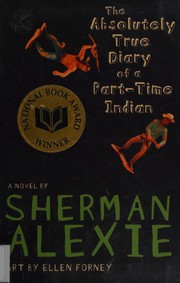
The Absolutely True Diary of a Part-Time Indian
Fourteen-year-old Junior leaves his Spokane reservation school for an all-white farm town, drawing cartoons through grief, basketball, and divided loyalty.
3,224-word summary · 14 min read
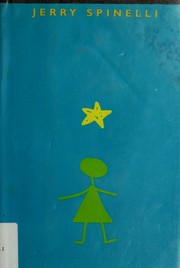
Stargirl
Leo Borlock likes blending in until homeschooled Stargirl Caraway arrives at Mica High with a ukulele, a pet rat, and kindness that tests them both.
2,980-word summary · 13 min read
Will Grayson, Will Grayson
Two Chicago teens with one name collide, with Tiny Cooper's musical stealing every scene.
2,742-word summary · 12 min read
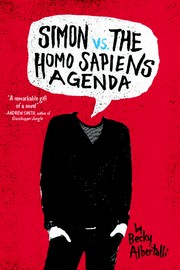
Simon vs. the Homo Sapiens Agenda
Closeted Simon Spier trades emails with Blue while Martin blackmails him over Abby and the school musical nears.
2,952-word summary · 13 min read
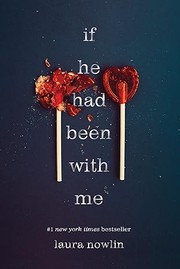
If He Had Been with Me
Childhood friends Autumn and Finn drift apart in high school until one August night changes everything.
2,785-word summary · 12 min read
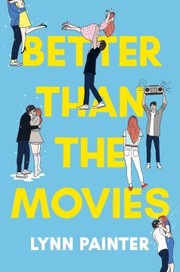
Better than the Movies
A rom com obsessed senior hires her annoying next door neighbor to win her crush, then finds real love is messier and kinder than any movie plot.
2,438-word summary · 11 min read

Anna and the French Kiss
Anna Oliphant is sent to Paris boarding school and falls for Etienne while misreading Bridget and Matt.
3,262-word summary · 14 min read
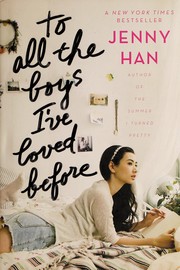
To All the Boys I've Loved Before
Lara Jean's secret love letters get mailed and she fake-dates Peter Kavinsky to dodge Josh.
3,683-word summary · 16 min read
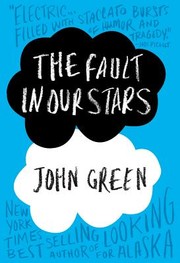
The Fault in Our Stars
John Green's The Fault in Our Stars: Hazel and Augustus in Amsterdam, the unfinished manuscript, and how the novel handles illness, humor, and dying without…
2,192-word summary · 10 min read
The Awakening / The Struggle
A popular high school girl falls for a vampire, then discovers that his dangerous brother wants her too, in the first two books of the Vampire Diaries series.
2,660-word summary · 12 min read
Amy & Roger's Epic Detour
Amy Curry has not driven since the crash that killed her father. With Roger at the wheel and a box of maps between them, a cross-country trip becomes a slow…
3,034-word summary · 13 min read
One to Watch
A plus-size fashion blogger takes the lead role on a reality dating show to prove she belongs on television, and finds she might want what the cameras offer.
2,478-word summary · 11 min read

The First to Die at the End
On the night Death-Cast launches, a boy with a bad heart meets a model with everything ahead of him, and one of them gets the call.
2,908-word summary · 13 min read

Big Swiss
A transcriptionist for a sex coach falls for one of his clients, the tall Swiss gynecologist she calls Big Swiss, in a funny novel about work and secrets.
2,523-word summary · 11 min read