
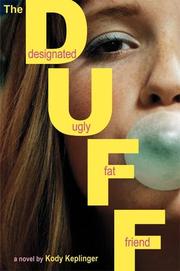
The DUFF
2,323-word summary 10 min read 288 pages in the book
- First published
- 2010
- Publisher
- Little, Brown/Poppy
- Pages
- 288
- ISBN
- 9780316084239
- Series
- Hamilton High (#1)
Reading options
What's inside (6 sections)
I picked up The DUFF because I kept hearing it described as the funny YA book about the girl labeled ugly by a jock, and I expected something light. It is funny in places. It is also heavier than the movie version suggests. Published in 2010 by Little, Brown/Poppy at 288 pages, it opens the Hamilton High series as book one, and Keplinger wrote the first draft while she was still in high school herself. That detail matters, because the school scenes ring true in a way adult-written teen dialogue sometimes does not. Bianca Piper sounds like a real seventeen-year-old, sharp and defensive and wrong about herself in familiar ways.
The setup lands fast. Bianca is out at the Nest, the underage club where Hamilton High kids spend their weekends, with her two best friends. Jessica Gaither and Casey Blithe are dancing and getting attention. Bianca is sitting out for a minute when Wesley Rush slides in next to her. Wesley is the school womanizer, good-looking and smug about it, and he explains to Bianca with total confidence that she is the DUFF of her group. The Designated Ugly Fat Friend. The approachable one guys talk to so they can get near her prettier friends. Bianca throws her Coke in his face.
That scene gets quoted a lot, and it works, but what stuck with me more is how Bianca cannot shake the label afterward. She knows she is not the glamorous one of the three. Jessica is polished. Casey is warm and cute in a way people respond to. Bianca is blunt and prickly and carries a little extra attitude as armor. Wesley naming the dynamic out loud poisons something for her. She starts seeing every interaction through it. When guys talk to her, is it only to reach her friends. When she walks with Jessica and Casey, does she look like the hanger-on. She hates Wesley for handing her that lens, and she hates that part of her suspects he has a point.
When home starts cracking
The home half of the story is what turns this from a banter book into something sadder. Bianca lives with both parents at the start, and the household feels ordinary. Her mother Gina travels for work giving self-help talks. Her father Mike is home, a little gruff, clearly fond of Bianca. Then Gina sends divorce papers from the road, and the house falls apart in a hurry.
Mike turns out to be a recovering alcoholic, sober since Bianca was small, and the divorce filing knocks him off that. He starts drinking again. One night he wrecks their living room in a rage. Bianca comes home to destruction and to a father she barely recognizes. She is scared and furious and embarrassed all at once, and she tells nobody at school the full truth. Not even Jessica and Casey, at first.
School keeps demanding normal behavior while this happens. Bianca has an English paper on The Scarlet Letter to write, which is how Wesley reenters her life in a practical way. They get paired up or agree to work together, depending on how you read the scene, and Bianca decides it is easier to go to his house than to risk him seeing hers. She does not want anyone seeing her father mid-spiral or the smashed-up living room. At Wesley's place, with the paper mostly unwritten and the tension already there, she kisses him. Then she sleeps with him.
She insists afterward that she hates him. He keeps calling her Duffy, which should be infuriating, and somehow becomes their private joke instead. Neither of them tells anyone. That secrecy is the engine for the next third of the book.
The arrangement nobody admits is a relationship
What follows is the part people argue about, and I get why. Bianca, reeling from her parents' split and from an old hurt involving Jessica's older brother Jake, starts using Wesley as an escape. When the day has been awful, she finds him. They hook up. They talk a little. She leaves. Wesley proposes keeping it simple with no strings, and Bianca agrees because strings feel impossible while her home life is on fire.
I want to be honest here. On paper this can read as Bianca trading one bad coping habit for another, and Keplinger does not dress it up much. Bianca is having sex to stop thinking. She says so, more or less. Some readers will find that bleak for a YA romance, and some parents probably will too. But it felt true to me. Grief makes teenagers do careless things, and Bianca is grieving a family that is still technically alive, which is a confusing kind of loss. Wesley listens. That is the uncomfortable part. The boy who insulted her turns out to be decent company when nobody is performing.
Their conversations in his room fill in both of them. Bianca talks about Jake Gaither, the older guy she once got involved with, and how that ended badly and left her wary. She does not tell her friends about Jake either, so Wesley becomes the only person holding both secrets. He tells her pieces of his own life in return. His family has money and a big house and very little warmth. His parents fight or check out. He worries about his younger sister Amy in a way that shows a different Wesley from the clown at the Nest.
The chemistry is written well. Keplinger lets them be funny together, which matters, because without the humor this would be a grim book. They trade insults that shade into flirting. Wesley teases Bianca about her temper. Bianca mocks his reputation and his grades. Underneath, both of them are lonely in houses that do not feel safe, and both are pretending the arrangement is only physical long after it stops being only that.
The secrecy starts costing Bianca her friendships, and this is where I thought the book was strongest. She pulls away from Jessica and Casey. She dodges plans. She lies about where she has been. Jessica and Casey can tell something is wrong, and Bianca will not hand them the real story, partly from shame about her dad and partly because explaining Wesley means explaining the DUFF thing and the sex and all of it. So the friendship frays. There is a particular ache to those scenes, the way Bianca watches her two best friends laughing without her and cannot figure out how to walk back in.
Toby Tucker and the Wuthering Heights problem
Around Valentine's Day the plot adds a complication in the shape of Toby Tucker. Toby is Bianca's longtime crush, a nice guy, the kind of boy she always pictured herself with instead of someone like Wesley. He starts paying attention to her. Around the same time, Gina comes home to talk through the divorce with Mike, and the visit goes badly enough that Mike relapses again after a stretch of trying.
Bianca is now splitting herself three ways. There is the daughter managing an alcoholic father. There is the friend lying to her friends. There is the girl sneaking around with Wesley while daydreaming about Toby noticing her. It is a lot, and Bianca handles it badly, which again felt honest. She snaps at people. She makes choices she has to apologize for later.
One scene I liked more than I expected: Bianca's car will not start after school, and Wesley drives her home. On the way the visit expands. She meets Amy properly and spends time around Wesley's grandmother, and the Rush household comes into focus. It is big and expensive and lonely. Wesley's confidence at school looks thinner inside his own kitchen. Bianca starts to see that his womanizer act is its own armor, same as her prickliness. Neither of them says this outright. They are seventeen. They show it by being kinder to each other for an evening.
Then comes the bad night at Bianca's house. Mike is drunk and cruel, and he calls his own daughter a whore to her face. It is an awful scene, one of the hardest in the book, and Keplinger does not soften it or explain it away. Bianca flees to Wesley's. She finally tells him everything about the divorce and the drinking and the fear. He just stays with her. No jokes, no moves. That night shifts them from hookup to something neither has a name for.
Shortly after, Bianca tells Casey the truth on a car ride home. The whole thing, Wesley and the DUFF label and her feelings getting tangled. Saying it out loud forces her to hear it. She admits she might be falling for Wesley, and the admission scares her more than the divorce news did.
Mike, to his credit, starts going to Alcoholics Anonymous meetings and trying to stay sober. It is not a magic fix. Keplinger keeps it shaky, which I respected. He has good stretches and bad days. Bianca starts repairing things with Jessica and Casey too, and decides to cut Wesley off while she sorts herself out. Out of that clearing, Toby asks her out, and she says yes.
Dating Toby should feel like the win. He is sweet. He suggests books. At his urging she reads Wuthering Heights, and the novel gives her an odd mirror. She starts comparing her own triangle, steady Toby versus wild Wesley, to Catherine Earnshaw caught between Edgar Linton and Heathcliff. It is a nerdy, very teenager way to process a love life, and I found it charming. Books give Bianca language for feelings she cannot say plainly.
But Toby notices what Bianca will not admit. On a date at the Nest, with Wesley staring from across the room, Toby tells her gently that the chemistry is not there for him and that he is thinking of getting back with his ex Nina. They split kindly. No villain, no blowup. I liked that Keplinger let Toby be decent rather than turning him into a jerk to make the ending easier.
There is also a quieter realization running under these chapters. Bianca decides the DUFF idea itself is empty. Every group has someone who feels like the odd one sometimes. Roles shift. People who feel overlooked at seventeen turn out fine, or popular kids stall, or both. She resolves to stop ranking people, partly because she is tired of being ranked. It is a simple moral and the book states it plainly. Some readers will find that preachy. I thought Bianca earned it, since she spent the whole novel judging Wesley and then judging herself.
Choosing Wesley in the open
The ending brings everyone back to the Nest where it started. Bianca walks over to Wesley and asks for something normal. Real dating, in public, no hiding. He agrees, and the book closes on that choice rather than on a wedding-style promise. They are seventeen with messy families and a lot to fix. The point is that they will do it where people can see.
Fair criticism first, because this book invites it. Wesley's early behavior is genuinely gross. He insults Bianca to her face, keeps calling her Duffy after she objects, and pursues her while seeing other girls. The novel asks you to believe he changes, and mostly he does, but the change happens fast in the last stretch. Readers who need a slower apology may not buy it. I bought it with reservations. His kindness to Bianca about her dad is real, and his devotion to Amy gives him depth, but the book glosses over how many other girls he treated as disposable before Bianca.
The parent plot has a similar unevenness. Gina stays thin as a character. She delivers self-help advice for a living while her own marriage collapses, which is an interesting irony the book points at but never fully explores. Mike gets the fuller arc, the drinking and the meetings and the slow effort, and his scenes with Bianca carry weight. I wished Gina had one honest scene equal to Mike's worst one, instead of hovering at the edges.
What works best is Bianca's voice. She is cynical without being cruel, funny without performing, and wrong in ways the book lets her be wrong. Her loyalty to Jessica and Casey feels lived in. Her slow understanding that Wesley's house is as broken as hers, just more expensive, gives the romance its foundation. And the Hamilton High setting feels specific, the Nest and the hallways and the parking lot, rather than generic Teen Movie High.
If you only know the 2015 film, expect differences. The movie flips which parent leaves, softens the home plot considerably, makes Wesley the next-door neighbor, and turns the story into a makeover pact. The novel is rawer. The parents' divorce and Mike's drinking drive everything. The intimacy is on the page, not explicit in a lingering way but unmistakable, and it is tied to Bianca's need to shut her brain off. Readers wanting a chaste slow burn should know that going in.
Who is this for. Teens from about fifteen up who want a romance with some bite, and adults who remember how seriously high school hierarchies felt. It pairs well with other sharp YA contemporaries about reputation and friendship, and it reads fast. The pages turn easily even when the subject gets dark.
I closed it thinking less about the label and more about the friendship repair. Bianca telling Casey the truth in the car, facing Jessica after weeks of lies, choosing to stop ranking herself against them. The romance gets the final scene, but the friendships are the spine. Wesley gets the last dance. Jessica and Casey get the longer loyalty. That balance is why the book has lasted, and why Hamilton High starts here rather than with a cleaner story.
FAQ
Is The DUFF part of a series?
Yes. It is book one of the Hamilton High companion series, followed by Shut Out, A Midsummer's Nightmare, and Lying Out Loud.
How is the book different from the 2015 film?
The novel centers on Bianca's mother leaving and her father's drinking, while the 2015 film flips the parents and turns the plot into a makeover pact.
What age is The DUFF appropriate for?
Older teens, roughly fifteen and up. Bianca's secret relationship with Wesley is on the page and the drinking scenes are blunt.
Similar books
More from Hamilton High first, then related titles.
Anya's Ghost
A lonely Russian immigrant falls into a well, befriends the ghost trapped there, and discovers that the ghost's help comes with a dangerous price.
2,001-word summary · 9 min read

Dumplin'
Willowdean Dickson enters her town's beauty pageant as a protest and discovers that confidence is harder to keep once she lets someone close.
1,922-word summary · 9 min read

The Second Summer of the Sisterhood
Four friends share the traveling pants through a summer of grandmothers, first loves, and mothers who are learning to let go.
2,209-word summary · 10 min read

Aristotle and Dante Dive into the Waters of the World
Ari and Dante return for senior year in El Paso, navigating first love, AIDS, family grief, and the cost of being openly gay in 1987 Texas.
2,188-word summary · 10 min read

Someone Like You
Halley and her best friend Scarlett face a summer of grief, a surprise pregnancy, and Halley's dangerous first romance in Sarah Dessen's 1998 young adult novel.
2,218-word summary · 10 min read
Me and Earl and the Dying Girl
A self-protective Pittsburgh senior is pushed to befriend a classmate with leukemia, and a clumsy film with Earl changes all three.
2,773-word summary · 12 min read
Are You There God? It's Me, Margaret
Twelve-year-old Margaret navigates puberty in New Jersey while trying to choose a religion on her own.
2,178-word summary · 10 min read

Aristotle and Dante Discover the Secrets of the Universe
Two Mexican American boys in 1987 El Paso become inseparable and learn what love asks of family.
2,093-word summary · 9 min read

What Happened to Goodbye
Mclean has reinvented herself in four towns since her parents divorced. In Lakeview she uses her real name, and for the first time staying put becomes a choice.
2,796-word summary · 12 min read

We Are Okay
Marin fled San Francisco after her grandfather vanished and stopped answering anyone. When Mabel visits her college dorm, she has to say what happened.
2,253-word summary · 10 min read
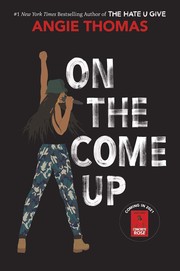
On the Come Up
Bri Jackson, a sixteen-year-old rapper in Garden Heights, chases a record deal while a viral song turns her into a symbol she never wanted to be.
2,034-word summary · 9 min read

Clap When You Land
Two half sisters, one in Sosúa and one in Queens, discover each other after their father dies in a plane crash, in Elizabeth Acevedo's novel in verse.
2,890-word summary · 13 min read
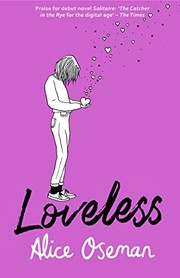
Loveless
Georgia starts university sure she wants love, then learns she is aro-ace.
2,539-word summary · 11 min read
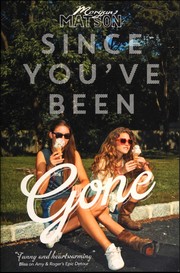
Since You've Been Gone
Shy Emily spends summer finishing her vanished best friend Sloane list of thirteen dares, finding Frank, Dawn, and courage.
2,566-word summary · 11 min read
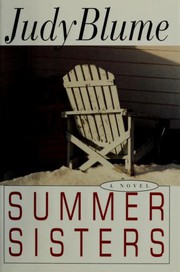
Summer Sisters
Vix and Caitlin share Martha's Vineyard summers from age twelve into adulthood, through first love, grief, marriage, and a disappearance that still haunts Vix.
3,633-word summary · 16 min read
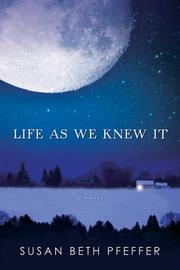
Life As We Knew It
Sixteen-year-old Miranda keeps a diary while an asteroid strike on the moon brings tsunamis, blackouts, and a frozen year of hunger to her Pennsylvania town.
2,485-word summary · 11 min read
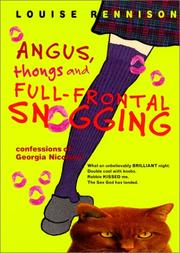
Angus, Thongs and Full-Frontal Snogging
Fourteen-year-old Georgia Nicolson journals boys, friends, parents, and Angus the cat in a frank, funny first year of teen chaos.
2,005-word summary · 9 min read
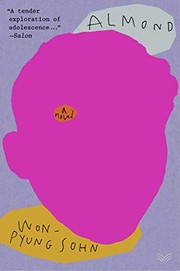
Almond
Yunjae, born with alexithymia, navigates grief and friendship with troubled Gon after losing mother and grandmother.
2,088-word summary · 9 min read
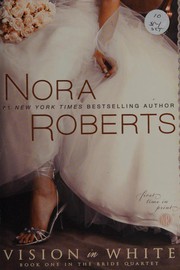
Vision in White
Wedding photographer Mac Elliot does not believe in lasting love. Steady teacher Carter Maguire plans to change her mind. First in the Bride Quartet.
2,167-word summary · 10 min read
Lock and Key
Abandoned Ruby moves in with her sister and learns to trust Nate and Cora.
2,407-word summary · 11 min read
Lola and the Boy Next Door
Costume maker Lola must choose between older Max and inventor Cricket while her two dads hold home steady.
2,045-word summary · 9 min read
I Am the Messenger
Nineteen year old Ed stops a robbery, then gets playing cards sending him to help strangers.
2,124-word summary · 9 min read
The Elegance of the Hedgehog
A Paris concierge hides her brilliant mind while a gifted girl plans her death, until a new tenant sees through them both.
2,248-word summary · 10 min read

Along for the Ride
Insomniac Auden spends a beach summer with her dad and learns biking, parties, and love from Eli.
1,938-word summary · 9 min read

Always and Forever, Lara Jean
Senior year brings college letters, distance from Peter, and a dad wedding Lara Jean helps hold together.
2,037-word summary · 9 min read
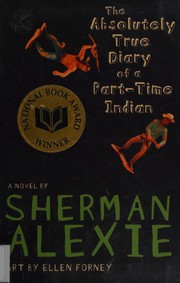
The Absolutely True Diary of a Part-Time Indian
Fourteen-year-old Junior leaves his Spokane reservation school for an all-white farm town, drawing cartoons through grief, basketball, and divided loyalty.
3,224-word summary · 14 min read
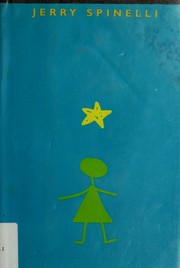
Stargirl
Leo Borlock likes blending in until homeschooled Stargirl Caraway arrives at Mica High with a ukulele, a pet rat, and kindness that tests them both.
2,980-word summary · 13 min read
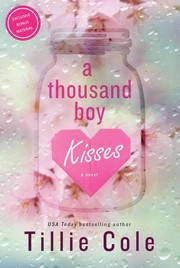
A Thousand Boy Kisses
Poppy and Rune bind promise jar kisses before illness parts them.
2,585-word summary · 11 min read
Will Grayson, Will Grayson
Two Chicago teens with one name collide, with Tiny Cooper's musical stealing every scene.
2,742-word summary · 12 min read
Simon vs. the Homo Sapiens Agenda
Closeted Simon Spier trades emails with Blue while Martin blackmails him over Abby and the school musical nears.
2,952-word summary · 13 min read