

The Elegance of the Hedgehog
2,248-word summary 10 min read 336 pages in the book
- First published
- 2006
- Publisher
- Europa Editions
- Pages
- 336
- ISBN
- 9781933372600
- Original title
- L'Élégance du hérisson
Reading options
What's inside (8 sections)
The Elegance of the Hedgehog by Muriel Barbery was first published in French in 2006 by Gallimard as L'Élégance du hérisson, a 360 page original with ISBN 9782070780938. The English translation by Alison Anderson came out in 2008 from Europa Editions, a 336 page paperback with ISBN 9781933372600. It sold more than two million copies in France and became a word of mouth hit around the world. I started it on a friend's urging and expected something precious. What I got was funnier and sadder than the reputation suggests, a Paris apartment building holding two secret geniuses who finally find each other.
The whole novel takes place in and around one luxury building at 7 rue de Grenelle in Paris, an old private mansion cut into grand apartments for rich tenants. Two voices take turns telling the story. Renée Michel, fifty-four, widowed, the concierge, short and plump and invisible by design. And Paloma Josse, twelve, living on the fifth floor with her wealthy family, brilliant and planning to kill herself on her thirteenth birthday. Neither knows the other is hiding. Then a new tenant moves in and changes the arithmetic.
Barbery taught philosophy before she wrote novels, and it shows on every page. But the ideas come wrapped in jokes, cat opinions, and very French snobbery about food and film, so the book rarely feels like homework.
The concierge at 7 rue de Grenelle
Renée has spent twenty-seven years being exactly what rich people expect from a concierge. She keeps the glass doors polished, sorts the mail, feeds the gossip just enough to stay beneath notice, and leaves the television mumbling in her lodge so visitors assume she lives on soap operas. She describes herself without mercy. Short, plain, with sore feet, a widow, everything the tenants' idea of a concierge requires.
The performance is the point. Behind the lodge door, Renée reads philosophy, Russian novels, and art books, listens to music the tenants would never guess at, and thinks circles around the diplomats and businessmen upstairs. She is entirely self taught, and her taste runs deep. Japanese films, Dutch painting, church music, the kind of culture people pay schools to hand their children. She hides it because she learned early that a poor woman with a mind gets punished for having one. Colleagues mocked her, employers distrusted her, and even her late husband never fully knew her. So she built the disguise and kept it polished for decades.
Her only close friend is Manuela, a Portuguese cleaning woman who works in the building and shares tea and plain talk with Renée. Manuela knows more of the real woman than anyone, though even she gets only part of it. The other constant is Renée's cat, Leo, named with a wink at a famous Russian novelist, who gets some of the book's best comic passages. Renée on her cat, on television, on the tenants' bad taste in renovation, is dry and cutting in a way that made me laugh out loud more than once.
What I admired here is how Barbery lets Renée be both wounded and proud. She is not a victim waiting for rescue. She chose camouflage as a strategy and she is good at it. The cost is loneliness so settled it feels like furniture. She has beauty in her life, books and music and tea, but no witness to share it with. That is the lack the rest of the novel fills.
The twelve-year-old with a plan
Upstairs, Paloma Josse has reached a verdict on life. She is twelve, exceptionally bright, and surrounded by adults she finds hollow. Her father is an important man, busy and distant. Her mother drifts through the apartment in a medicated haze of genteel misery. Her older sister Colombe, a philosophy student, treats Paloma with casual cruelty and treats everyone else as an audience. The family has money, a grand apartment, vacations, and nothing to say at dinner.
Paloma has decided the whole arrangement is a fishbowl, comfortable and empty, and she wants no part of adulthood inside it. Her plan is precise. She will live until the end of the school year, observe the world carefully until then, and die on her thirteenth birthday by fire, pills, or some method she keeps revising. It sounds shocking, and it is meant to, but Barbery writes Paloma with such clarity and humor that you keep reading instead of looking away. The girl is not asking for pity. She is running an experiment and keeping notes.
The notes are the joy of her chapters. She keeps two journals. One holds her deep thoughts, attempts to catch the world in a sentence the way a camera catches a face. The other records what she calls the movement of the world, small observed moments, a gesture, a sound, a pattern in daily life. Through these journals we get her takes on her sister's pretension, her mother's sadness, her classmates' phoniness, and the tenants downstairs. Some entries are sharp enough to sting. A few made me stop and reread.
A fair warning belongs here. Paloma sometimes sounds older than twelve, much older, like a graduate student ventriloquizing a child. Her references are wide, her sentences polished, her scorn fully formed. If you need your child narrators to sound like children, this will test you. I decided to accept it as a fable convention. Paloma is twelve the way stage orphans are orphans, true enough to carry the story, stylized enough to say what the author needs said.
Two people in hiding
The clever engine of the book is the parallel. Renée hides her light from the rich because the rich would punish her for it. Paloma hides her light from her family and school because being bright would only buy her more of a life she rejects. Both keep up a mask of mediocrity. Both watch everyone. Both are lonely in a building full of people.
Their chapters alternate, and the mirror structure is deliberate to the point of neatness. Renée writes about language, art, and the comedy of the tenants. Paloma writes about her family, her plans, and her search for something worth staying alive for, which she phrases in her own demanding way. They circle the same questions from opposite ends of life. What is beauty for. Whether thought changes anything. Whether kindness from the comfortable classes counts for much.
This is also where the book's critics have their best material, and I will grant some of it. The middle can stall. Renée will break from events to deliver an essay on a painter or a piece of music or a philosophical point, and Paloma will break from events to deliver a verdict on her sister, and ten pages can pass with nobody doing anything. Readers who came for plot may check their watches. I mostly enjoyed the essays because the voice is good company, but two or three of them could have been cut with no loss, and the mirroring between the narrators sometimes feels arranged rather than discovered.
Still, the arrangement earns its keep. Because the two never speak in the first half, every near miss builds tension. They pass in the courtyard. They observe the same tenant. They pet the same cat. You keep waiting for the moment the masks slip, and Barbery makes you wait a good long while.
Monsieur Ozu
The slip finally comes with the arrival of Kakuro Ozu.
Ozu is a wealthy Japanese businessman who buys an apartment in the building after the death of an older tenant, a harsh food critic whose passing shuffles the building's pecking order. Ozu is courteous, cultured, and quietly amused by Parisian habits. He notices things. He notices Renée first, or rather he notices the small cracks in her performance. The way she handles a book. A remark she cannot quite swallow. The intelligence behind the deferential smile. Where the other tenants see furniture, he sees a person.
Their friendship grows through small gifts and shared tastes. Tea, good food, films, and conversation that starts careful and turns honest. He treats her learning as normal rather than freakish, which for Renée feels like water after drought. There are scenes of the two of them with Paloma too, since the girl befriends Ozu in her own wary way, and the three form a small island of honesty inside the building's formalities.
The name is a small joke for film lovers. The great Japanese director Yasujiro Ozu shares the surname, and Barbery's Ozu loves cinema. These chapters carry the book's warmest comedy. Renée dressing for dinner and hating every minute of hope. Paloma interrogating Ozu with twelve-year-old bluntness. Manuela watching the whole development with folded arms and total approval. After so much hiding, watching competent lonely people be kind to each other feels like sun through shutters.
One more thread matters. Through Ozu, Paloma starts to doubt her plan. Not because anyone lectures her, but because she sees adults living with attention and grace, finding value in small things. Her journals change tone. The deep thoughts get less scornful. The movement of the world entries get longer, fuller, more alive to detail. She begins, against her own rules, to collect reasons to stay.
Tea, camellias, and what beauty is for
Strip away the plot and the novel is an argument about attention. Both narrators keep returning to moments when something ordinary turns radiant if you look properly. A cup of tea made with care. Flowers left at a door. A passage of music heard in silence. A cat asleep in a patch of sun. Barbery, through her characters, keeps insisting that beauty is not decoration for rich apartments but the actual substance that makes a life livable.
This is the philosophy-teacher part of the book, and your patience for it will decide your rating. Renée explains ideas from phenomenology, the study of how things appear to consciousness, in plain language and applies them to housework and television. Paloma tests grand claims against her sister's behavior and finds most of them wanting. There are pages on grammar, on religion, on the lives of the rich, on what dogs and cats understand. Some of it sings. Some of it repeats. Readers allergic to characters who explain what things mean will itch.
I found the best of it genuinely moving. The idea that a concierge's lodge can hold as much inner life as a minister's apartment, that a twelve-year-old's notebook can hold more truth than a dinner party, lands because Barbery shows the work. Renée's eye for a painting or a film is specific, earned, funny about itself. Paloma's eye for adult self-deception is brutal and often correct. And the hedgehog of the title finally makes sense. Prickles outside, refinement within. An animal nobody looks at twice, going about its business with quiet distinction. Both heroines qualify.
The book's French success makes sense in this light. It flatters readers who feel unseen, which is most readers at some point, while letting them laugh at the rich. More than two million copies sold in France, translation into dozens of languages, a long run on bestseller lists. The 2009 film version brought the rue de Grenelle to screens and softened some edges, as films do. But the novel's engine is voice, and voice belongs to the page.
The van and what remains
I will tread lightly here because the ending deserves to land fresh, but this is a summary and you should know the shape.
Just as Renée steps out of hiding, just as dinner invitations and friendship and even the possibility of love enter her life, chance strikes. She dies suddenly in the street, hit by a delivery van in a stupid everyday accident. No villain, no plan, no meaning. One moment a woman is crossing toward a new life, the next she is gone. It is the kind of death real life deals out, and it enraged some readers. I found it honest, though I wished for one more chapter of her happiness first.
The effect on Paloma is the book's final turn. The girl who meant to die decides to live. Having seen what a wasted chance looks like, having loved Renée and been loved back in the limited time they had, she abandons her birthday plan. Her last journal entries look for beauty on purpose, collecting moments the way other children collect cards. The closing pages suggest she will keep watching the movement of the world, only now as a participant instead of a judge.
Is that sentimental. A little. Does the symmetry creak, the older woman dying so the younger can live. A little. But Barbery earns most of it through the friendship scenes, which are the truest writing in the book. Grief here feels real because the happiness before it felt real.
So who should read it. Anyone who likes novels of ideas with jokes, anyone fond of Paris, anyone who suspects the quietest person in the room is the most interesting. Skip it if you need fast plots or plainspoken children. Read the Alison Anderson translation with confidence. It carries the humor well and keeps Renée's edge sharp. And keep an eye on Leo the cat. In a building full of people performing, he is the only one who never pretends, which may be the book's deepest joke and its truest compliment.
FAQ
When was The Elegance of the Hedgehog published?
The French original came out in 2006 from Gallimard. Alison Anderson's English translation was published in 2008 by Europa Editions.
Is The Elegance of the Hedgehog part of a series?
No. It stands alone. Barbery's other novels share her interests but none continue this story.
Who are the main characters?
Renée Michel, the concierge who hides her learning, Paloma Josse, the twelve-year-old keeping journals, and Kakuro Ozu, the tenant who befriends them.
Similar books
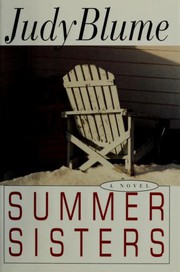
Summer Sisters
Vix and Caitlin share Martha's Vineyard summers from age twelve into adulthood, through first love, grief, marriage, and a disappearance that still haunts Vix.
3,633-word summary · 16 min read

Fathers and Sons
Arkady brings the nihilist Bazarov home to his father's estate, and a generational argument turns into love, a duel, and an early death.
2,192-word summary · 10 min read

The Age of Miracles
A California girl grows up while the Earth's rotation slows, and ordinary adolescence continues alongside slow catastrophe.
2,417-word summary · 11 min read

Peace Like a River
An asthmatic boy in the early 1960s narrates his family's search for his older brother, who is accused of two killings and has escaped custody.
1,969-word summary · 9 min read

We Are Okay
Marin fled San Francisco after her grandfather vanished and stopped answering anyone. When Mabel visits her college dorm, she has to say what happened.
2,253-word summary · 10 min read

The Chosen
A shattered pair of glasses in a 1944 Brooklyn softball game starts a friendship between a Hasidic boy and his Orthodox neighbor, and their fathers pull them…
2,443-word summary · 11 min read

The Second Summer of the Sisterhood
Four friends share the traveling pants through a summer of grandmothers, first loves, and mothers who are learning to let go.
2,209-word summary · 10 min read

Aristotle and Dante Dive into the Waters of the World
Ari and Dante return for senior year in El Paso, navigating first love, AIDS, family grief, and the cost of being openly gay in 1987 Texas.
2,188-word summary · 10 min read

The Story of Edgar Sawtelle
A mute boy on a Wisconsin dog-breeding farm relives Hamlet as his uncle returns, his father dies in the barn, and the dogs inherit what is left.
2,392-word summary · 11 min read

Someone Like You
Halley and her best friend Scarlett face a summer of grief, a surprise pregnancy, and Halley's dangerous first romance in Sarah Dessen's 1998 young adult novel.
2,218-word summary · 10 min read
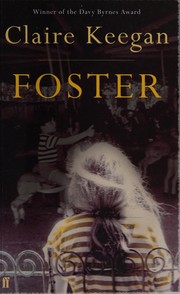
Foster
A girl spends a summer with relatives on a Wexford farm and is cared for properly for the first time. A spare novella about family and what children notice…
2,043-word summary · 9 min read

The Interestings
Meg Wolitzer follows Jules Jacobson from 1974 arts camp into middle age, as friendship with Ethan and Ash turns into envy, money gaps, marriage strain, and…
2,990-word summary · 13 min read
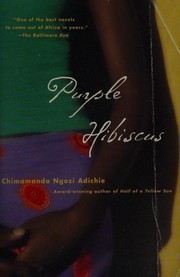
Purple Hibiscus
Kambili, fifteen, watches her devout factory-owner father rule the Enugu house through fear until a Nsukka visit teaches her speech and freedom.
2,595-word summary · 12 min read
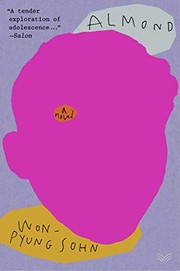
Almond
Yunjae, born with alexithymia, navigates grief and friendship with troubled Gon after losing mother and grandmother.
2,088-word summary · 9 min read
A Tale for the Time Being
A diary by bullied Tokyo teen Nao washes up in Canada, pulling novelist Ruth into her family past.
2,148-word summary · 10 min read
The Story of the Lost Child
Elena and Lila age through motherhood, quakes, and a vanishing.
2,500-word summary · 11 min read

The Humans
An alien borrows Andrew Martin's life to erase a proof, then a dog, peanut butter, and a tired family win him over.
2,959-word summary · 13 min read
So Old, So Young
Six college friends reunite at five parties over twenty years in Ginder's funny, moving novel of millennial friendship.
2,457-word summary · 11 min read

Crux
Two broke Mojave teens chase pro climbing dreams as friendship, class gaps, and family strain pull Dan and Tamma apart.
2,489-word summary · 11 min read

Those Who Leave and Those Who Stay
Elena publishes into Florence salons while Lila labors through Naples factories across the 1970s.
2,034-word summary · 9 min read

The Bean Trees
Taylor Greer flees Kentucky, inherits Cherokee toddler Turtle, and roots with Tucson strays.
2,082-word summary · 9 min read
The DUFF
Bianca Piper hates Wesley Rush for calling her the DUFF, until a secret arrangement during her parents' divorce forces both teens to grow up.
2,323-word summary · 10 min read
The Cider House Rules
Homer Wells grows up in a Maine orphanage under Dr. Larch, who delivers babies and performs illegal abortions.
2,985-word summary · 13 min read

Dear Edward
Twelve-year-old Edward Adler survives a plane crash that kills his family, then learns how to live with grief, letters, and love.
2,903-word summary · 13 min read

Colorless Tsukuru Tazaki and His Years of Pilgrimage
At thirty six, Tsukuru revisits four old friends to learn why they cut him off at twenty.
2,765-word summary · 12 min read

Are You There God? It's Me, Margaret
Twelve-year-old Margaret navigates puberty in New Jersey while trying to choose a religion on her own.
2,178-word summary · 10 min read
Sophie's World
Sophie gets philosophy lessons by mail, then finds she is fiction in a father birthday book for Hilde.
2,013-word summary · 9 min read
The Namesake
Jhumpa Lahiri follows Gogol Ganguli from a hated namesake to adult loss, marriage, and family reckoning between Calcutta and Boston.
2,878-word summary · 13 min read
The God of Small Things
Twins Rahel and Estha grow up in Kerala in 1969, where family rules and caste lines shape a loss that follows them into adulthood.
2,646-word summary · 12 min read
On Earth We're Briefly Gorgeous
A son writes to the mother who cannot read him: war, migration, first love, and loss in one Vietnamese American family in Hartford.
3,113-word summary · 14 min read