
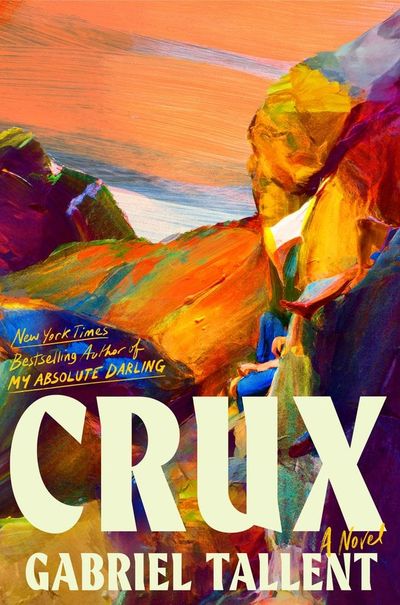
Crux
2,489-word summary 11 min read 416 pages in the book
- First published
- 2026
- Publisher
- Riverhead Books
- Pages
- 416
- ISBN
- 9780593714188
Reading options
What's inside (9 sections)
I came to Crux sideways. I read My Absolute Darling years ago and found it brutal and hard to shake, the kind of debut that makes you wary of the second book. Then I heard Tallent had spent about ten years wrestling with this one, throwing away whole drafts after his son was born, and that hooked me more than any blurb. The Riverhead edition from January 2026 runs 416 pages. I read it over four nights, mostly too late, with chalk dust practically coming off the pages. It is a coming of age story about two broke teenagers in the Mojave who decide climbing will save them, and about what happens when love for a friend runs straight into money, family, and fear.
Dan and Tamma are seventeen, seniors in high school on the scruffy edge of Joshua Tree. Dan is the golden child, tall, handsome, good at school, liked by teachers, the boy parents point to. Tamma, short for Tamarisk, is loud, funny, profane, quick in ways school never rewarded. Teachers call her a burnout. Dan calls her a genius and means it. They have almost nothing between them except time and rock. No crash pads. No ropes at first. Dan climbs in shoes he pulled from a dumpster. They meet at night in trash strewn lots and on pale boulders outside town, holding flashlights for each other so the holds show. Their plan sounds simple and wild at once. Get through the year, get good enough, get out to Canyonlands and Indian Creek after graduation and live as climbers.
Two kids with no money and one plan
What makes the opening work is how clearly Tallent draws the money problem without speeches. These are not kids roughing it for style. Dan's family is financially unstable, his parents stretched thin and arguing about bills. Tamma's family is poorer still, trailer living, shift work, hand me downs, everyone tired. Neither can afford pads to break a fall or a rack worth trusting. So they boulder low and highball anyway, which means if they fall wrong they break. They know it. They go anyway because the alternative feels like sinking.
Dan and Tamma fit the classic split and then break it. Dan looks like he has options, college brochures, teachers offering help, parents pushing hard for applications. He does not want that life. He feels depression settling in the way his mother did, heavy mornings, flat weeks, questions that loop. Tamma looks like she has no options, truant marks, snide comments about trailer trash, no college talk at home. She wants out more fiercely than Dan because she sees the path waiting if she stays, tired waitress work like her mother, early kids, no slack. Climbing is their shared answer. If they can get strong enough to live on the road, camp to camp, crag to crag, they can skip the futures assigned to them. Tamma says it best in her big talk, tales of their misadventures racing across the nation, strong whiskey and brazen runouts and campfire parties. Dan half believes and fully needs to believe.
I liked how physical their friendship feels. They walk out before school in the cold dark. They brush holds clean. They argue about footwork and laugh through fear. Tamma talks nonstop on the rock, daring Dan, daring herself. Dan climbs quieter, thinking three moves ahead, trying to be perfect. Around them the desert sits huge and indifferent, cold nights, white sun mornings, wind through Joshua trees, stone that shreds skin. Tallent writes place like someone who has slept in it. You can feel the grit in shoes and the ache in forearms. You can also feel why they prefer stone to classrooms. On rock the rules are plain. Hold or fall. Try again or walk away.
Climbing on air and nerve
The climbing scenes carry the book, and Tallent had to relearn how to write them. He has said he first tried to record real climbs move by move and bored himself. What unlocked it was a scare he had on a route called the Coffin, stuck on a small edge with the gear he needed out of reach, strength leaking, forced to move up toward safety instead of clinging. That lesson shapes every hard scene here. The interest is not in grade numbers. It is in decisions under pressure, when to commit, when to back off, what fear does to judgment.
Early on they project a highball V4 boulder with no pad, which is reckless enough to make experienced climbers wince. Tallent shows the whole ritual, brushing chalk, testing a smear with a toe, Tamma spotting with her arms up though she could never catch him. Later, after Tamma fishes an ancient rack from a dumpster, old hexes and steel nuts, they start on moderate trad lines, one careful pitch at a time. He explains the gear without lecturing. A nut wedged in a constriction. A hex that may or may not hold. The math of fall distance with marginal pro. At dawn they climb before school with headlamps, taking turns holding the light so the other can see the next crimp. One passage I kept thinking about has them walking into the Wonderland side by side, that tumbled maze of rock near Joshua Tree, feeling wildly alive. It earns the feeling because we know what a fall there would cost.
Fair warning, this is not a manual with a story attached. Tallent keeps terms light enough for non climbers and true enough for climbers. My gripe here is repetition. Many nights blur together, chalk, attempts, resets. The sessions that stand out are the ones where outside life intrudes, a phone with bad news, a mother waiting up, a sore ankle with no time to rest.
The mothers and the old split
Under the climbing story sits a family story that slowly takes over. Dan's mother Alexandra published a bestselling novel at eighteen and has not finished anything since. That fact hangs over the house like weather. She knows what early promise feels like and what it costs when it stalls. She spends days locked in her room, low and withdrawn. His father tries to hold the line, work, bills, college forms for Dan. They both pin their hopes on Dan getting out through school. When Alexandra needs heart surgery later in the year, the money fear sharpens and Dan starts reading her old book, trying to understand how she handled pressure at his age and why she stopped.
Tamma's mother lives a different version of stuck. Years ago she and Alexandra were teenage waitresses and best friends. Then their paths split and something broke between them. Tallent holds that falling out back for a long stretch, letting it color everything. Tamma's mom sees no college future for her younger daughter and says so in ways that wound. She calls Tamma trouble, mouthy, queer, truant, a no hoper in the eyes of everyone except Dan. Some of that is exhaustion. Some is protection turned sour. Tamma loves her mother and refuses to become her, which is a painful place to live. Her older sister has kids and little help. When her brother in law walks out, Tamma steps into the gap, babysitting, cooking, holding toddlers while trying to keep grades above water.
This is where class and talent split them open. Dan is told he wastes gifts. Tamma is told she has none. His teachers offer extensions, hers offer detention. He could choose climbing and still land softly. She has no soft landing, so the same choice feels more urgent and more selfish. Tallent shows it in kitchens and meetings rather than speeches, and the friendship holds until senior year forces names on everything.
Senior year starts taking pieces
The middle of the book is a slow squeeze. Options dwindle. Tamma's family crisis deepens after the brother in law leaves. She becomes a caretaker in a house with too many needs, a role she fears because it eats climbing hours. She is good with the kids in bursts, funny and fierce, then snappish with guilt after. Dan tries to help and mostly gets in the way. Meanwhile his mother's surgery date approaches. His parents press college harder. His mood dips. He asks himself how to conduct a life and whether he trusts himself, questions that sound large until you watch him try to answer them with no sleep and sore hands.
Their dream of Canyonlands starts to wobble. At first it was pure fuel, hidden canyons with wild trad lines, van life, freedom, proof they were meant for more. As spring nears, the practical parts intrude. Gas money. Food. Health care if someone decks. Who watches Tamma's sister's kids if she leaves. What Dan owes parents who spent everything on him. They fight about it without calling it a fight. Tamma accuses Dan of holding back on hard moves, which means holding back on life. Dan accuses Tamma of courting danger to prove a point, which lands because it is partly true. They make up on rock because rock is easier than kitchens. Then they climb harder to prove the makeup, which raises the risk again.
Tallent is good at showing how brave talk curdles. Tamma's speeches about destiny get shorter. Dan's focus cracks. He fixates on one route as a test, telling himself that if he cannot send it he was never a climber anyway. That kind of all or nothing thinking will be familiar to anyone who was seventeen and serious about something. Tamma sees it and names it bluntly, which helps and hurts.
I will not spoil the late climbs in detail. Enough to say the risks get consequential and perilous, as promised, and that a family emergency forces Tamma into choices no teenager should have to make alone. Dan has to decide whether to run toward the desert or toward home. Both choices cost. Tallent stages these scenes with care, weather, rope drag, tired arms, a hold that looks better than it is. He withholds the worst outcomes long enough that you keep turning pages fast. What matters more than who tops what is what the attempts reveal. Who waits. Who pushes. Who admits fear. Who confuses love with rescue.
What crux means here
The title does heavy work and earns it. In climbing the crux is the hardest section of a route, the place where everything in you says to cling and stall yet you must move if you want to live. Tallent uses that as a lens for the whole year. Every major choice in the book has that shape. Tamma deciding whether to stay with the kids or chase the road. Dan deciding whether to sign college papers or burn them in spirit. Both deciding whether to trust a thin placement, in rock and in life. The point he keeps pressing, in interviews and in the text, is that avoiding risk does not keep you safe. People who never take the sharp step still end up hedged into lives they did not choose. That idea could sound like a poster. In context, with tired bodies and real bills, it lands with weight.
I appreciated that the book treats friendship as a serious bet. Our culture has endless stories about couples running off together and few about friends doing it. Dan and Tamma have no script for striking out as friends. Adults around them read their closeness wrong, as romance or as phase or as trouble. They know what it is, something extraordinary, as Tamma puts it, romance aside, each other. Betting a future on that bond looks naive from outside and feels completely rational from inside. Tallent asks what it would take to honor that kind of love in action. He does not give a clean answer. He shows the price of trying.
The nature writing supports all this without showing off. Mojave mornings with cold air and warming stone. Nights with headlamp cones and breath showing. He loves this ground and fears what it can do. If you have ever trusted a small edge with tired legs, you will feel these pages in your calves. If you have not, you will still get the logic, because he ties every technical choice to an emotional one.
What sings and what sags
What sings is character and momentum. Dan and Tamma feel unruly and alive, funny on the page in ways that never feel written for effect. Their banter is barbed and specific to climbing kids with no money. The adults around them avoid caricature. Alexandra could have been a simple failed artist mother. Instead she reads as ill, gifted, ashamed, loving in the wrong sizes. Tamma's mother could have been a simple hard case. Instead she reads as worn out and scared for her daughter. The climbing feels true because Tallent climbs, desert time, scars to prove it.
What sags is length and pressure. At 416 pages this is a big book about a single year, and you feel it in the middle third. Some family scenes repeat their point. Some climbs restate the same fear. The depression thread is handled with care but stays interior in ways that slow pace. Readers who want tight plotting may fidget. Readers who want immersion will forgive it.
I would hand this to anyone who likes coming of age stories with dirt under the nails, or to climbers tired of seeing their sport faked on screen. I would warn off readers who need likable calm or who found My Absolute Darling too intense. Tallent still pushes people until they come apart to see what holds, and he pushes these teenagers hard. There is hurt here, family strain, medical fear, bad falls. It never feels cruel for effect, but it is not gentle. The payoff is a friendship you will carry. I finished caring about Dan and Tamma more than about whether they send their projects. That, I think, is the book winning its own bet. Friendship as plot. Risk as care. A crux on rock and in how to live when both staying and leaving cost.
A note on the edition I am describing
I am retelling the United States edition, Riverhead Books, January 20 2026, 416 pages, ISBN 9780593714188. That matches the Penguin Random House listing, hardcover at thirty dollars, same date as Barnes in a crowded January. Tallent's site and interviews confirm this is his second novel after My Absolute Darling from 2017, written over roughly ten years with heavy revision after 2020. The people and places above, Dan the golden child, Tamma the burnout, the Mojave and Joshua Tree boulders, the dumpster shoes and found rack, the mothers once best friends, the Canyonlands dream, all come from the publisher description and early reviews. Anything about the late choices I have kept general on purpose, to leave the hardest pitches unread.
FAQ
Is Crux about real climbs or places?
It centers fictional teens but roots them in real ground, Joshua Tree, the Wonderland, and Mojave nights, with Indian Creek and Canyonlands as their goal. Tallent draws on his own trad climbing background for gear and decisions.
Do Dan and Tamma stay just friends?
Yes. Their bond is platonic and central, which the book treats as a serious life bet. Adults misread it, but the story keeps romance aside and tests loyalty instead.
Is Crux as intense as My Absolute Darling?
It is intense in a different way, less violence, steady pressure from poverty, illness, and dangerous falls. Readers who need calm or tight plotting may struggle, while fans of immersion will stay.
Similar books
The Interestings
Meg Wolitzer follows Jules Jacobson from 1974 arts camp into middle age, as friendship with Ethan and Ash turns into envy, money gaps, marriage strain, and…
2,990-word summary · 13 min read
Summer Sisters
Vix and Caitlin share Martha's Vineyard summers from age twelve into adulthood, through first love, grief, marriage, and a disappearance that still haunts Vix.
3,633-word summary · 16 min read
So Old, So Young
Six college friends reunite at five parties over twenty years in Ginder's funny, moving novel of millennial friendship.
2,457-word summary · 11 min read
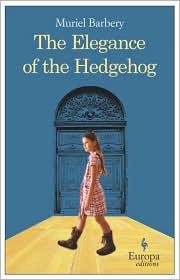
The Elegance of the Hedgehog
A Paris concierge hides her brilliant mind while a gifted girl plans her death, until a new tenant sees through them both.
2,248-word summary · 10 min read
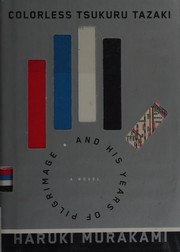
Colorless Tsukuru Tazaki and His Years of Pilgrimage
At thirty six, Tsukuru revisits four old friends to learn why they cut him off at twenty.
2,765-word summary · 12 min read
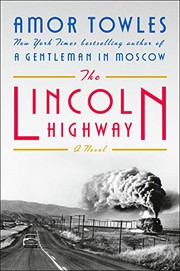
The Lincoln Highway
Emmett and Billy plan California in 1954, but two escapees steal their car and drag them east to New York.
2,954-word summary · 13 min read
A Prayer for Owen Meany
John Wheelwright believes in God because of Owen Meany, the tiny friend whose foul ball killed his mother.
3,046-word summary · 14 min read
The Perks of Being a Wallflower
Chbosky's Perks retold: Charlie's letters, Sam and Patrick, first year of high school in Pittsburgh.
1,951-word summary · 9 min read
The Kite Runner
Khaled Hosseini's The Kite Runner retold: Amir and Hassan in Kabul, the alley, the escape to America, and the return to find Sohrab.
2,584-word summary · 11 min read
The Idiot
A Turkish-American freshman at Harvard falls in love through email with a Hungarian math student and spends a summer in Hungary trying to turn correspondence…
2,019-word summary · 9 min read

Anya's Ghost
A lonely Russian immigrant falls into a well, befriends the ghost trapped there, and discovers that the ghost's help comes with a dangerous price.
2,001-word summary · 9 min read
The Power of One
A boy in apartheid South Africa decides to become welterweight champion of the world, and the novel follows every mentor, fight, and loss that gets him there.
2,145-word summary · 10 min read
The Beach
A young backpacker follows a dead man's map to a hidden island community, then discovers what the people there are willing to do to keep it secret.
2,067-word summary · 9 min read
Less Than Zero
Clay returns to Los Angeles for Christmas and drifts through parties, drugs, and old friends, including one who is selling himself to survive.
1,926-word summary · 9 min read

Dumplin'
Willowdean Dickson enters her town's beauty pageant as a protest and discovers that confidence is harder to keep once she lets someone close.
1,922-word summary · 9 min read
Five Point Someone: What Not to Do at IIT
Three friends at IIT drift to a five-point GPA, mock the system, and break into a professor's office for an exam paper.
2,458-word summary · 11 min read

James
Percival Everett retells Huckleberry Finn from Jim's side, giving him a library, a hidden school, and a voice the novel lets loose.
2,211-word summary · 10 min read
The Age of Miracles
A California girl grows up while the Earth's rotation slows, and ordinary adolescence continues alongside slow catastrophe.
2,417-word summary · 11 min read

Heist Society
A teenage art thief gets expelled from boarding school, then has two weeks to steal five paintings back from a London museum and clear her father.
2,781-word summary · 12 min read
Peace Like a River
An asthmatic boy in the early 1960s narrates his family's search for his older brother, who is accused of two killings and has escaped custody.
1,969-word summary · 9 min read

We Are Okay
Marin fled San Francisco after her grandfather vanished and stopped answering anyone. When Mabel visits her college dorm, she has to say what happened.
2,253-word summary · 10 min read

The Chosen
A shattered pair of glasses in a 1944 Brooklyn softball game starts a friendship between a Hasidic boy and his Orthodox neighbor, and their fathers pull them…
2,443-word summary · 11 min read
Grip of the Shadow Plague
A plague turns Fablehaven's creatures of light into shadows while Kendra hunts an artifact in Arizona and Seth races to find the cause.
2,131-word summary · 9 min read
Starsight
Spensa Nightshade goes undercover aboard the Superiority space station Starsight to steal a hyperdrive, and finds a frightened bureaucracy where she expected…
2,568-word summary · 11 min read
Saving the World and Other Extreme Sports
Max and the flock split in two to take down the lab behind their lives, one half in California and the other in Europe.
2,175-word summary · 10 min read

Ivanhoe
A disinherited Saxon knight, a great tournament, a besieged castle and a trial by combat. Scott's most famous novel, set in England in 1194.
2,834-word summary · 13 min read

Big Swiss
A transcriptionist for a sex coach falls for one of his clients, the tall Swiss gynecologist she calls Big Swiss, in a funny novel about work and secrets.
2,523-word summary · 11 min read
The Sisters Brothers
Two hired killers ride from Oregon to Gold Rush California to murder a prospector, and find their trade, their brotherhood, and the frontier myth coming apart.
2,095-word summary · 9 min read
The Second Summer of the Sisterhood
Four friends share the traveling pants through a summer of grandmothers, first loves, and mothers who are learning to let go.
2,209-word summary · 10 min read
Old Yeller
Travis Coates takes in a stray yellow dog that protects his family on the Texas frontier, and learns about loyalty and loss.
2,165-word summary · 10 min read