
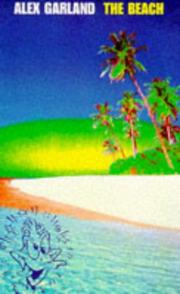
The Beach
2,067-word summary 9 min read 439 pages in the book
- First published
- 1996
- Publisher
- Viking
- Pages
- 439
- ISBN
- 9780670870141
Reading options
What's inside (9 sections)
I read The Beach on a train, which felt appropriate for a novel about people who are always moving toward a place they think will fix them. The book has a reputation as a backpacker thriller, and it is that, but the thriller part takes a while to arrive. Most of the first half is travel logistics, cheap rooms, boat schedules, and the particular boredom of being young and far from home. That boredom is the condition the book is diagnosing, not a flaw.
Richard, the narrator, is an Englishman in his twenties drifting through Southeast Asia. In a Bangkok guesthouse he meets a Scottish man who calls himself Daffy Duck. Daffy is filthy, paranoid, and clearly unwell. He tells Richard about a hidden beach on an island in the Gulf of Thailand, a place with a lagoon, fresh water, and a small community living outside the tourist economy. Then he gives Richard a hand-drawn map and kills himself. Richard does not go to the police. He goes to look for the beach.
That decision tells you almost everything about him. Richard has little interest in morality. He is curious in a way that is closer to appetite than to ethics. He wants to be the kind of person who finds the secret place, and the fact that the secret place killed the man who gave him the map does not slow him down. He teams up with a French couple, Étienne and Françoise, and they travel south together. On the way he meets two Americans, Zeph and Sammy, and casually gives them a copy of the map. It is a small act, almost absent-minded, and it will get people killed.
The journey to the island
The travel section is precise in a way that feels lived in. The overnight train, the bus, the ferry, the cheap guesthouses, the heat, the mosquitoes, the way every traveler is trading information about places that are supposed to be untouched. Garland writes the logistics with the flat efficiency of someone who has done them. The effect is to make the island feel real before it becomes symbolic.
The last stretch is a swim from a neighboring island, then a trek through jungle, then a waterfall. Richard, Étienne, and Françoise jump from the top of the waterfall into the pool below, a moment of pure physical release that the book later poisons. Beyond the waterfall they find a cannabis field guarded by armed farmers, and beyond that, the beach. It is as beautiful as Daffy promised. White sand, clear water, a lagoon, a community of about thirty people living in huts and fishing and swimming and doing very little else.
The community is led by Sal, an American woman, and her South African partner Bugs. They are the founders, along with Daffy, who is now dead. The other residents include Keaty, a Londoner who talks too much, and Jed, a quiet man who acts as the island's guard and spends long stretches alone in the jungle. There are Swedes, Americans, a few other Europeans, and a set of unwritten rules. Nobody talks about the beach to outsiders. Nobody leaves without permission. Nobody questions Sal too closely.
The economy of paradise
The beach is presented as an escape from tourism, but it is not outside the economy. It depends on it. Someone has to do a "rice run" to the mainland to buy supplies. Someone has to deal with the farmers who own the cannabis field. Someone has to decide who is allowed to stay and who has to go. The community's freedom is paid for by people who are not free, and Garland makes that clear without turning the book into a lecture.
The farmers are the most obvious example. They tolerate the beach because it is not worth the trouble to destroy it, but they also demand silence and cooperation. When outsiders find the island, the farmers handle it. The community knows this. Sal knows this. The arrangement is never spelled out in a contract, but everyone understands it. The beach is a closed system, and closed systems always have a price.
The other price is social. The community is small enough that every irritation becomes a crisis. Food poisoning divides the group. A fishing accident kills one man and injures another. The injured man, a Swedish fisherman, loses his mind. He screams at night, wanders into the jungle, and becomes a threat to the group's secrecy. Sal asks Richard to take him into the jungle and kill him. She does not phrase it that way, of course. She phrases it as a necessary mercy, a way to protect everyone. Richard understands what she is asking.
This is the hinge of the novel. Up to this point, Richard has been a observer, a newcomer, a boy enjoying the attention of an older woman and the romance of being let into a secret. Now he is being asked to participate in the violence that keeps the secret intact. He does not do it. He decides to leave instead, and he tries to convince Étienne, Françoise, Keaty, and Jed to come with him. That decision is the closest thing to a moral stand in the book, and it is not a very confident one. Richard is not trying to save the community. He is trying to save himself from becoming the kind of person who would do what Sal asked.
The video game in his head
Richard's narration is strange. He is detached from almost everything, including his own fear. He describes beautiful things and horrible things in the same flat tone. He also imagines himself inside a video game, a first-person shooter where the jungle is a level and the people around him are characters. The game imagery does more than decorate the story. It shows how Richard avoids the weight of what is happening. If the world is a game, then the violence is not real, and he is not responsible.
The book is often described as a Generation X novel, and the label fits in the sense that Richard is ironic, media-saturated, and allergic to sincerity. But Garland is doing something more specific than that. He is showing how a certain kind of traveler turns other people's lives into scenery. The beach community is a group of privileged people who have found a beautiful place and decided that their enjoyment of it matters more than the people who were there first or the people who might want to come later.
The hallucinations begin during Richard's long shifts as a lookout. Daffy appears to him, bloody and accusing. The ghost is not subtle, but it works as a symptom. Richard knows what he is doing. He knows that the map was a death sentence for Daffy, that the copy he gave Zeph and Sammy was a death sentence for them, and that his own presence on the beach is part of the same chain. The ghost is his conscience, and it looks exactly like the man he refused to mourn.
The outsiders and the end
Zeph, Sammy, and a group of German backpackers eventually make it to the island on a makeshift raft. They have the copy of the map Richard gave them. They are excited, sunburned, and completely unaware of the rules. The community's reaction is immediate and cold. Sal and Bugs decide that the newcomers cannot stay. The farmers will see them. The secret will spread. The decision is made in the same tone as a decision about dinner.
The farmers find the outsiders first. They kill them and leave the bodies where the community can see them. The message is clear: the beach is tolerated only as long as it stays invisible. Richard is beaten by the farmers for making the copy, and the community turns on him. Sal blames him for the deaths. The people who were his friends a few days earlier now see him as the reason their paradise is falling apart. It is a brutal inversion, and it is also completely predictable. The community was always held together by exclusion, and Richard was the one who let the excluded in.
The escape is chaotic. Françoise, Étienne, Keaty, and Jed arm themselves with fishing spears and get Richard away from the community. They leave on a raft. The epilogue is quiet. The five of them reach the mainland and split up. Richard stays in contact with Keaty and Jed. He wonders whether anyone else got off the island. He says he is content, though he carries scars. The ending refuses the catharsis a thriller usually provides. There is no final confrontation with Sal, no justice for Zeph and Sammy, no clear accounting of the dead.
What the book gets right
The Beach is very good at atmosphere. The heat, the boredom, the smell of the jungle, the way a beautiful place can become a prison, all of it lands. Garland also understands the psychology of the backpacker. Richard is a young man with money and time, looking for an experience that will make him interesting, not an adventurer in the heroic sense. The book is honest about how much of travel is vanity.
It is also good at showing how communities justify cruelty. Sal does not think of herself as a villain. She thinks of herself as the person who keeps the beach alive. The farmers do not think of themselves as murderers. They think of themselves as protecting a crop. The community does not think of itself as complicit. It thinks of itself as careful. Garland lets every group have its own rationalization, and the result is more disturbing than a simple story about bad people doing bad things.
The prose is another strength, though it is divisive. Garland writes in short, flat sentences. He repeats phrases. He lists brands and songs and movies. The style can feel empty, and that is the point. Richard's voice is the voice of someone who has been numbed by media and by privilege. When he describes a corpse with the same tone he uses for a sunset, the flatness becomes a moral judgment.
Where it strains
The biggest weakness is Richard himself. He is passive for long stretches, and his passivity is not always interesting. He drifts from one scene to the next, letting other people make the decisions, and the book sometimes mistakes his blankness for depth. The female characters are thin. Françoise exists mostly as a love interest and a moral compass, and Sal is a sketch of a charismatic leader rather than a fully realized person. The community members blur together, which may be intentional, but it makes the middle section hard to track.
The ending is also rushed. The farmers' attack, the community's betrayal, and the escape happen quickly, and the book does not give the deaths of Zeph and Sammy the weight they deserve. The epilogue is deliberately anticlimactic, but it leaves several threads dangling. Readers who want a clear resolution will be frustrated.
And then there is the film. Danny Boyle's 2000 adaptation starring Leonardo DiCaprio is a different animal. It softens Richard, changes the ending, and turns the story into a more conventional adventure. The novel is darker and stranger. If you have only seen the movie, you have not really seen what Garland was doing.
Why it lasts
What makes The Beach worth reading now is its argument about paradise. The book understands that the dream of an untouched place is always a fantasy of ownership. Someone is always already there. Someone is always excluded. The beach is beautiful, and that beauty is exactly what makes the violence possible. The community is dangerous because it is full of people who have convinced themselves that their happiness is a sufficient reason for the arrangement, not because it is full of obvious villains.
Richard's final claim that he is content reads less like a happy ending than a confession. He got out, but he did not become a better person. He carries the scars, and he carries the knowledge that he was part of something terrible. The book does not offer redemption. It offers a clear-eyed look at what people will do to keep a beautiful thing for themselves, and it leaves you to decide what to do with that.
FAQ
Is The Beach based on a true story?
No. It is a novel, though Garland wrote it while living in the Philippines and drew on Palawan's landscape. The hidden beach and the community are fictional.
How is the book different from the 2000 film?
The film softens Richard and changes the ending, turning the story into a more conventional adventure. The novel is darker and leaves the community's violence largely unresolved.
When was The Beach first published?
It was first published in the United Kingdom by Viking in October 1996. The edition cited here is the 439-page Viking hardcover.
Similar books
Life of Pi
Life of Pi retold: Pondicherry zoo, ship loss, Pi and Richard Parker in a boat, two stories.
1,936-word summary · 9 min read
The Idiot
A Turkish-American freshman at Harvard falls in love through email with a Hungarian math student and spends a summer in Hungary trying to turn correspondence…
2,019-word summary · 9 min read
The Icebound Land
Captured and enslaved in Skandia, Will fights a drug that erases him while Halt and Horace cut a bloody road through Gallica to bring him home.
2,088-word summary · 9 min read
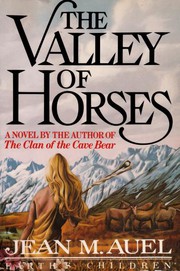
The Valley of Horses
Exiled from the Clan, Ayla survives alone in a hidden valley, tames a horse and a cave lion, and nurses a wounded stranger back to life.
2,311-word summary · 10 min read

James
Percival Everett retells Huckleberry Finn from Jim's side, giving him a library, a hidden school, and a voice the novel lets loose.
2,211-word summary · 10 min read
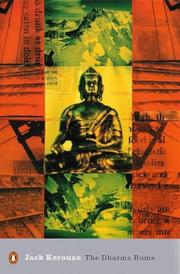
The Dharma Bums
Ray Smith rides freight trains, climbs Matterhorn Peak and argues about Zen with the poet Japhy Ryder in Kerouac's 1958 road novel.
2,729-word summary · 12 min read

Ivanhoe
A disinherited Saxon knight, a great tournament, a besieged castle and a trial by combat. Scott's most famous novel, set in England in 1194.
2,834-word summary · 13 min read
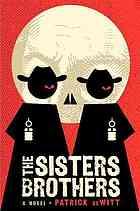
The Sisters Brothers
Two hired killers ride from Oregon to Gold Rush California to murder a prospector, and find their trade, their brotherhood, and the frontier myth coming apart.
2,095-word summary · 9 min read
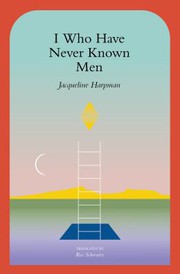
I Who Have Never Known Men
Forty women in a cage, one child who remembers nothing, and a nearly empty world above the bunker. Harpman's quiet, unexplained dystopia.
2,025-word summary · 9 min read
The Orphan Master's Son
Adam Johnson's Pulitzer-winning novel follows Pak Jun Do from a North Korean orphanage to a deadly identity swap, under a state whose loudspeakers never stop…
2,219-word summary · 10 min read
The Lost City of Z: A Tale of Deadly Obsession in the Amazon
David Grann retraces Percy Fawcett's 1925 disappearance in the Amazon and finds that the lost city he sought was not entirely a fantasy.
2,493-word summary · 11 min read

Never Fade
Ruby, now a leader in the Children's League, must track down the boy whose memories she erased, because he holds the only proof of what caused the disease that…
2,188-word summary · 10 min read
Nemesis Games
The Rocinante crew scatters across the solar system just as Marco Inaros and the Free Navy bombard Earth. The Expanse reaches its turning point.
2,506-word summary · 11 min read

Fable
Abandoned on a lawless island at fourteen, Fable spends four years diving for gems to buy passage off it, straight into the cutthroat trade of the Narrows.
2,320-word summary · 10 min read
The Little Paris Bookshop
A Paris bookseller who prescribes novels as medicine finally opens a twenty one year old letter from his lost love and sails south through France to find her.
2,050-word summary · 9 min read
La Belle Sauvage
Philip Pullman's prequel to His Dark Materials follows eleven-year-old Malcolm Polstead as a secret message, a hunted baby, and the flood of the century carry…
2,530-word summary · 11 min read
In the Heart of the Sea: The Tragedy of the Whaleship Essex
The whaleship Essex sunk by a whale leaves men in boats for ninety days.
2,750-word summary · 12 min read
The Perfect Storm
Gloucester's Andrea Gail vanished in the October 1991 nor'easter; Junger joins the crew, storm science, and Tamaroa rescues into a plain and hardworking sea…
2,592-word summary · 12 min read
The Signature of All Things
Botanist Alma Whittaker grows up in Philadelphia trade wealth, studies mosses, marries distant Ambrose Pike, and sails to Tahiti seeking how species change.
2,535-word summary · 11 min read
Seveneves
Stephenson 880-page William Morrow epic, May 2015: the Moon shatters, the Cloud Ark fails, seven women restart humanity, and heirs meet survivors on Earth.
2,389-word summary · 11 min read
The Warded Man
Each night demons rise and humanity hides behind wards. Three young survivors choose to fight back in Brett's 2008 fantasy opener.
2,703-word summary · 12 min read
The Slippery Slope
Violet and Klaus climb icy peaks to rescue Sunny while Quigley and V.F.D. ruins change what they know.
2,678-word summary · 12 min read

Daughter of Fortune
Eliza Sommers flees Chile for California gold rush San Francisco, disguised and searching for her lover, finding freedom with Tao Chi'en.
2,009-word summary · 9 min read
Endurance: Shackleton's Incredible Voyage
Trapped and crushed in Antarctic ice, Shackleton and 28 men survive floes, open boats, and an 800 mile sea crossing. Lansing tells it from their diaries.
2,818-word summary · 13 min read
Crux
Two broke Mojave teens chase pro climbing dreams as friendship, class gaps, and family strain pull Dan and Tamma apart.
2,489-word summary · 11 min read
The Lost World
Malcolm lives after all and returns to Site B where engineered herds eat themselves and Dodgson steals eggs.
2,075-word summary · 9 min read

White Fang
A wild wolfdog grows through hunger and cruelty toward a hard earned trust in one patient man.
2,540-word summary · 11 min read
State of Wonder
A researcher travels into the Amazon to learn what happened to her colleague, and finds her fearsome former teacher guarding a fertility discovery.
2,648-word summary · 12 min read
Dear Edward
Twelve-year-old Edward Adler survives a plane crash that kills his family, then learns how to live with grief, letters, and love.
2,903-word summary · 13 min read