
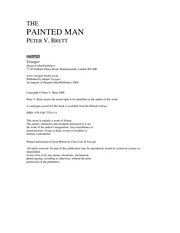
The Warded Man
2,703-word summary 12 min read 416 pages in the book
- First published
- 2008
- Publisher
- Del Rey Books
- Pages
- 416
- ISBN
- 9780345503800
- Series
- The Demon Cycle (#1)
Reading options
What's inside (8 sections)
I came to The Warded Man on a friend's dare, more or less. He said it was the most old fashioned fun he had read in years, demons every night and a hero who tattoos magic on his own skin, and he warned me the first hundred pages read like three different books. He was right on both counts. Peter V. Brett published this as his debut, first in Britain in September 2008 under the title The Painted Man, then in America in March 2009 as The Warded Man from Del Rey Books. Same novel, two titles, which confuses bookshops to this day. If you see The Painted Man on a shelf, that is this book wearing its British coat. It opens The Demon Cycle, a five book series, and it works as a complete story on its own terms even though bigger things are clearly coming.
The pitch is simple and I mean that as praise. Every night when the sun sets, demons called corelings rise out of the ground and hunt people. Humanity survives by hiding behind protective marks called wards. One young man decides hiding is not enough. Around him, two other young people decide the same in their own ways. I read the 416 page Del Rey hardcover across four evenings, and the middle of the book slowed me down in a way I will get to. But the nights in this book, the actual demon nights, are as tense as anything I have read in fantasy.
The night belongs to the corelings
Let me set the table, because the world is the best thing here. Long ago there was a war between men and demons, and men lost most of what they knew. Now the corelings come up from the Core each dusk. Brett gives them varieties the way a naturalist might. Flame demons spit fire. Rock demons are huge and nearly unstoppable. Wind demons fly. There are wood and water and sand demons too, each suited to its ground, and villagers learn which kinds haunt their miles the way we learn weather. By day people farm and trade and marry. By dusk everyone is inside behind warded doors and shutters, listening to claws test the wood.
Wards are the whole technology of survival. They are symbols, circles and lines cut into doorframes, painted on walls, chalked in portable rings travelers can sleep inside. Drawn right and fed a little ambient magic, they turn demons aside. But here is the catch that drives the plot. All the wards anyone knows are defensive. They repel. The old fighting wards, the ones that could harm a demon instead of just blocking it, are lost. Messengers, the hard men and women who carry letters and goods between the scattered hamlets, survive by knowing strong portable patterns and by never, ever being caught out after dark without them. One failed ward, one smudged line, and a village loses a family. Brett never lets you forget the arithmetic of it. Every community in the book is small because the night keeps it small.
What hooked me is how completely this shapes the culture. People plan weddings around travel times. Children learn wardcraft alongside letters. Courage has a specific local meaning. It does not mean fighting. It means going out at all. When the book opens, humanity has been crouching for centuries, and most people have stopped imagining anything else. That is the darkness Arlen Bales is born into, and the book's title tells you he finds an answer.
Three kids the night marks early
The novel follows three children into adulthood, and for a long stretch their stories barely touch. Arlen is a farm boy in Tibbet's Brook, quick and restless, the kind of kid who asks why the wards only push demons away instead of killing them and gets no good answer. When demons cripple his mother on a night when his father freezes instead of acting, something breaks in the family. Arlen stops respecting his father's fear and starts planning a different life. A Messenger named Ragen, who passes through and sees the boy's quality, takes him on as apprentice. That road out of Tibbet's Brook is the hinge of Arlen's life. He learns the routes between towns, the portable circles, the way to read ground for demon signs. More than that, he learns that the world is bigger than one brook and that old ruins sometimes carry ward patterns nobody alive can read.
Leesha grows up in Cutter's Hollow, promised in marriage to a strong, dull boy named Gared, expected to become a wife and mother on the usual schedule. She refuses the schedule. The refusal costs her. Gossip follows her, and her path bends toward the herb hut instead of the marriage bed, apprenticed to Bruna, the Hollow's old Herb Gatherer, a woman with a sharp tongue and standards to match. Bruna works her without mercy and teaches her without flattery. Leesha learns dosage and diagnosis, how to set bone and birth babies and mix the remedies that keep a village alive when the nearest town is a ride through demon country. On the road she lives through a brutal assault that the book does not flinch from, and I want to flag that here because some readers will need the warning. Her survival and her training run together after that. She becomes someone the Hollow cannot do without.
Rojer is the third, and his start is the saddest. As a very small child he loses his parents to a demon attack on the road. Arlen, still young himself and traveling with Ragen's folk, is the one who pulls the boy out of the wreck. Rojer is left with a crippled hand, two fingers gone, which matters in a world where a working hand is a living. He is taken in as a Jongleur's apprentice under a master player called Arrick, and raised among the taverns and courts of a larger town. Rojer learns the fiddle and the tumbler's art and the player's grin. Underneath, he carries the night the way the others do. Late in the book his music turns out to do something unexpected to corelings, and I will leave the details for your reading, except to say Brett lays the ground for it early if you watch Rojer's practice scenes.
I will admit this braided opening tested my patience the first time. Just as one kid's story gathers speed, the book cuts to another. But on reflection the structure earns its keep. You see three answers to the same night taking shape. Arlen will fight it. Leesha will mend what it breaks. Rojer will play against its noise.
Messengers, healers, and players
The middle of the book is really three educations, and readers will each pick a favorite. Mine was Leesha's, though it took a while to flower. Bruna is a great creation, foul mouthed and exact, and the herb lore feels researched without turning into lecture. You learn with Leesha which plants dull pain and which purge and which can kill if the dose slips. The Hollow's politics run through these chapters too. Gared grows into a loud man nursing old shame. The village council pinches and argues. When sickness or childbed crisis hits, Leesha is suddenly the most important person for miles, and Brett is good at showing how competence changes a woman's standing in a place that had smaller plans for her.
Arlen's education is the traveler's one. He rides with Ragen, learns to fight men as well as avoid demons, studies his letters and his maps, and starts copying strange old wards from ruins and records wherever he finds them. The Messengers' craft gets lovely practical detail. How to site a camp, how to layer circles, what to do when a portable ward fails in rain. His time in the great city of Miln, staying with Ragen's household, shows him a world where wealth buys thick walls and the poor still die in the night. It hardens his sense that hiding better is not a plan. Somewhere in these chapters he hears enough about the desert people of Krasia, who face demons with spears rather than shutters, to point his compass south.
Rojer's chapters are shorter and in some ways the most touching. Arrick is a lesser man than Ragen or Bruna, talented and vain and fond of drink, and Rojer has to learn his art while managing his master. The tavern scenes give the book air. Music, jokes, tossed coins. But Brett keeps the night in the frame. Rojer practices while remembering small hands pulling at him in the dark, and his playing carries something extra that even he does not understand yet. I found myself rooting for him out of proportion to his page count, maybe because his wound is the most visible. A player with a ruined hand has to be twice as good, and he knows it.
If this section has a fault, it is length. The apprenticeship chapters run long, and there were evenings when I wanted the book to stop teaching me crafts and get back to demons. Stick with it. Everything taught here gets used later, down to throwaway details about ward paint and herb smoke.
Krasia, a broken friendship, and skin like armor
Arlen's story breaks open in the desert. Krasia is a hard city-state built around nightly war. Where northerners shutter and pray, Krasian warriors go out into a walled maze at dusk with spears and shields and fight the corelings hand to hand, while the women and children wait behind strong wards. Arlen lives among them, learns their tongue and their spear work, and earns the friendship of Jardir, a proud young warrior with his eyes on legend. Together the two find traces of the old fighting wards, the lost offensive patterns, and for a while it looks like the book's great partnership.
It ends badly, over a spear and a claim to glory, with Arlen betrayed and left to die in the deep desert. I will not unpack every turn, because the scene plays best cold, but the shape of it matters. Jardir wants the discovery for his people's story. Arlen wants it for everyone's survival. That difference, plus pride and fear, is enough to snap a bond. Arlen survives by luck and grit and by the very wards he came south to find.
What he does next is the book's famous turn and the reason for its American title. Reasoning that a ward painted on a wall protects the wall, Arlen begins cutting wards into his own flesh, tattooing his body with protective and then offensive patterns until his skin itself is armor. The experiments nearly kill him. The successes change him. He becomes the Warded Man, a figure who walks out at night bare handed and kills corelings that no living man has ever killed. Brett sells the transformation in stages, failed lines that burn, patterns that hold, the strange side effects of carrying magic in scar tissue, and by the time Arlen turns north again he is something between a man and a rumor. Villages whisper about a painted devil fighting demons in the dark. Some swear he is a demon himself.
I believed it, mostly. Arlen learns fast and endures much, and once or twice I raised an eyebrow at how quickly a farm boy becomes a scholar of lost magic and a match for desert spearmen. But Brett grounds each step in supporting detail, teachers, books, scars, years on the road, so the rise feels worked for rather than wished for. And the cost is real. The tattoos set Arlen apart from everyone he wants to save. People fear him. He can barely be touched. Power in this book isolates exactly as much as it protects.
The Hollow holds
All three threads pull together at Cutter's Hollow, and the last hundred pages move like a brushfire. Word of the Warded Man has spread. Leesha, now a full Herb Gatherer of serious reputation, anchors the village's courage. Rojer, grown into his playing, arrives with his fiddle and his own quiet bravery. And the demons come in numbers nobody has seen in living memory, as if the night itself has noticed humanity stirring.
Brett stages the defense with a clarity I admired. Wards are checked and doubled. The wounded are laid out in Leesha's care. Rojer plays, and his music does what music should not be able to do, steadying people and troubling demons in ways the defenders barely understand. Gared, for all his flaws, stands in the line. And Arlen meets the worst of it in the dark beyond the torches, fighting rock demons and flame demons with his bare marked skin, buying minutes with his body. The fight is long, costly, and specific about who stands where and what fails when. By dawn the Hollow has held, at a price, and the survivors rename their home for what happened there. I found the renaming a little grand, but after that night you understand why frightened people would reach for a big name.
What pleased me most is that all three young people matter to the outcome. This could have been the Arlen show with two spectators. Instead the defense needs Leesha's stores and steady hands and Rojer's playing quite as much as Arlen's fists. The book's argument, if it has one, is that no single answer beats the night. Wards plus healing plus nerve, that is the combination. The final chapters leave Arlen riding on toward larger dangers, with hints of minds behind the demon assaults that later books will develop. But the Hollow chapters close their own circle, and I shut the book satisfied.
Who should walk into this night, and what to know first
A fair warning section, because this book asks more of some readers than others. The sexual violence is the main thing. Leesha's assault is direct, and the Krasian chapters treat women in ways that will anger plenty of readers. Brett writes these passages without leer, and Leesha's arc afterward is about competence and standing rather than shame, but the material is there and it is rough. There is also plenty of blood. Demon kills are described at close range. Younger teens should probably wait, and sensitive readers should go in informed.
On craft, my complaints are modest. The middle sags in places, especially one long travel stretch where Arlen moves from town to town collecting lore. A few revelations arrive because the plot needs them rather than because anyone earned them. The demons, for all their variety, are purely evil appetites with no inner life, which suits the siege mood but may leave readers who like complicated villains wanting. And Arlen's rise, as I said, occasionally outruns belief. He is a farm boy, a scholar, a spearman, and a living weapon within one volume. I bought it. You may want a receipt.
Still, I recommend this one warmly to a particular reader. If you like classic quest fantasy where the map grows as the hero walks, where magic has rules and costs, where villagers with names stand on walls together, this will scratch an itch most modern fantasy has stopped scratching. It has the earnestness of older doorstop fantasy with a meaner edge and a better pace. Start it on a weekend, forgive the slow middle, and read the Hollow chapters late at night with the lamps on. When the Warded Man steps past the torches with the marks on his skin beginning to glow, you will remember why people stayed up telling stories about the dark in the first place.
One practical note for shoppers. The American Del Rey edition is titled The Warded Man and runs 416 pages in hardcover. The British Voyager edition is titled The Painted Man. Reviews sometimes split across the two titles online, so if you look up opinions and find a thin page, search the other title. Either way you are getting Brett's 2008 debut, the first volume of The Demon Cycle, followed by The Desert Spear. The night is the same under both names.
FAQ
Are The Warded Man and The Painted Man the same book?
Yes. Brett's debut appeared in Britain in 2008 as The Painted Man and in America in 2009 as The Warded Man from Del Rey. Both open The Demon Cycle as book one.
How long is it and what follows it?
The Del Rey hardcover runs 416 pages. The sequel is The Desert Spear, the second of five Demon Cycle volumes.
Is it appropriate for younger teens?
Probably not for younger teens. The book contains direct sexual violence and close range demon kills, so sensitive readers should go in informed.
Similar books
More from The Demon Cycle first, then related titles.

The Icebound Land
Captured and enslaved in Skandia, Will fights a drug that erases him while Halt and Horace cut a bloody road through Gallica to bring him home.
2,088-word summary · 9 min read

Homeland
Drizzt Do'Urden is born into the cruel drow city of Menzoberranzan, where his father teaches him to fight and to doubt everything his family believes.
2,303-word summary · 10 min read
Nettle & Bone
Marra, a princess in a convent, leaves to save her abused sister, but first she must finish three impossible tasks: a bone dog, a nettle cloak, moonlight in a…
2,061-word summary · 9 min read
Fable
Abandoned on a lawless island at fourteen, Fable spends four years diving for gems to buy passage off it, straight into the cutthroat trade of the Narrows.
2,320-word summary · 10 min read
La Belle Sauvage
Philip Pullman's prequel to His Dark Materials follows eleven-year-old Malcolm Polstead as a secret message, a hunted baby, and the flood of the century carry…
2,530-word summary · 11 min read
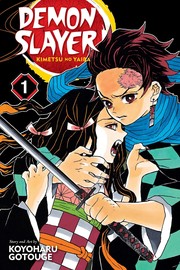
Demon Slayer: Kimetsu no Yaiba, Vol. 1
Tanjiro joins the corps after demons kill his family and turn Nezuko.
2,478-word summary · 11 min read

The Amulet of Samarkand
Boy magician Nathaniel summons djinn Bartimaeus to steal the Amulet and stop Lovelace's coup in London.
2,350-word summary · 10 min read
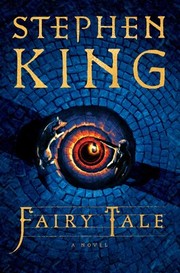
Fairy Tale
A grieving teen cares for a recluse and his old dog, then finds a shed well leading to Empis, a fading world at war.
3,203-word summary · 14 min read

City of Heavenly Fire
Clary and Jace face Sebastian's dark army while Emma and Julian's story begins in Los Angeles.
2,039-word summary · 9 min read

Watership Down
Hazel leads a small band of rabbits from a doomed warren to Watership Down, where survival means facing snares, farms and General Woundwort.
2,550-word summary · 11 min read
City of Glass
Clary follows Jace to Alicante in Idris where Valentine plans to use the Soul-Sword on Shadowhunters and the Clave splits under pressure.
3,645-word summary · 16 min read
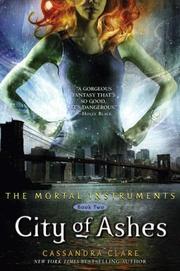
City of Ashes
Clary risks the Clave trial while Valentine raises demons and Jace pulls away in New York.
4,684-word summary · 21 min read

City of Bones
City of Bones retold: Clary sees Shadowhunters, Jace and the Cup, Valentine, and the Institute attack.
2,535-word summary · 11 min read
The Thief
A boastful young thief is pulled from a prison to steal a legendary stone for the king's magus, and the story he tells about himself is not the whole story.
2,514-word summary · 11 min read

The Blinding Knife
Kip trains to join the Blackguard while the Prism hides his true identity, loses his colors, and fights a war against a rogue drafter who wants to birth a god.
2,049-word summary · 9 min read
Ship of Magic
A sentient ship wakes when her captain dies, and the family that owns her starts to come apart over who gets to sail her.
2,026-word summary · 9 min read

Inkdeath
The final Inkworld novel sends Mo into the land of the dead, leaves Meggie choosing between two boys, and ends the Adderhead's immortality with three written…
2,062-word summary · 9 min read
Dawnshard
Rysn sails toward forbidden Akinah to save her dying larkin and finds a Dawnshard guarded by the Sleepless.
3,229-word summary · 14 min read

Bone, Vol. 1: Out from Boneville
Three cartoon cousins are run out of Boneville, separated by locusts, and dropped into a valley where rat creatures and an old grudge are waiting.
2,155-word summary · 10 min read

Vow of Thieves
Kazi and Jase return to Tor's Watch to find it occupied, and their marriage is tested by captivity, betrayal, and a war for the town of Hell's Mouth.
2,059-word summary · 9 min read

The Field Guide
Three siblings move into a creepy Maine estate, anger a brownie, and find a forbidden guide to the fairy world in the first Spiderwick book.
2,033-word summary · 9 min read

The Beach
A young backpacker follows a dead man's map to a hidden island community, then discovers what the people there are willing to do to keep it secret.
2,067-word summary · 9 min read
Year One
A plague released in Scotland kills most of humanity, and the survivors discover magic, build a town, and wait for a child who may save them.
2,029-word summary · 9 min read
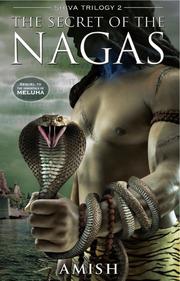
The Secret of the Nagas
Shiva hunts the Naga who attacked Sati, discovers her hidden twin sister and lost son, and follows the trail to the Naga capital of Panchavati.
2,442-word summary · 11 min read

Secrets of the Dragon Sanctuary
Kendra is replaced by a plant copy and held by the Society, while Seth steals a unicorn horn so the family can enter a dragon sanctuary.
2,590-word summary · 12 min read

Lioness Rampant
Alanna searches for the Dominion Jewel with the Shang Dragon, then returns to Tortall to face Duke Roger at Jonathan's coronation.
2,478-word summary · 11 min read

Archenemies
Nova steals for the Anarchists while Adrian hides his Sentinel identity, and a serum that erases prodigy powers puts them both at risk.
2,485-word summary · 11 min read
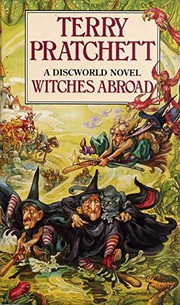
Witches Abroad
Three Lancre witches fly to Genua to stop a fairy godmother from forcing a servant girl into a storybook marriage, and find a city arranged around a happy…
2,651-word summary · 12 min read
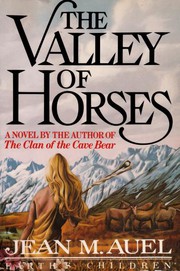
The Valley of Horses
Exiled from the Clan, Ayla survives alone in a hidden valley, tames a horse and a cave lion, and nurses a wounded stranger back to life.
2,311-word summary · 10 min read
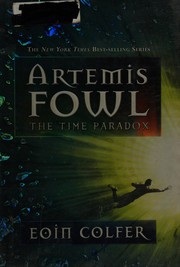
The Time Paradox
When his mother falls ill with a fairy disease, Artemis Fowl travels back in time to find the extinct lemur that can cure her and confronts his younger self.
2,601-word summary · 12 min read