
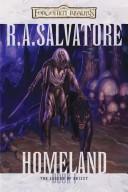
Homeland
2,303-word summary 10 min read 329 pages in the book
- First published
- 1990
- Publisher
- Wizards of the Coast
- Pages
- 329
- ISBN
- 9780786931231
- Series
- The Dark Elf Trilogy (#1)
Reading options
What's inside (10 sections)
The first thing you need to know about Homeland is that it is a book about a city underground. Menzoberranzan is the home of the drow, the dark elves, and it is a place of purple light, stone towers, and constant betrayal. The city is beautiful in the way a knife is beautiful. It is also a society built on a religion of cruelty. Lolth, the Spider Queen, rewards ambition, and ambition in Menzoberranzan usually means murder.
Drizzt Do'Urden is born into this city, into House Do'Urden, one of its noble families. He is the third son, which by drow custom means he should be sacrificed to Lolth. He is saved by an accident of violence: during the assault on House DeVir, his brother Dinin kills his other brother Nalfein, which makes Drizzt the second son and therefore no longer expendable. That is the world he is born into. His life begins with a murder that benefits him, and he spends the rest of the book trying to understand what that means.
R.A. Salvatore published Homeland in 1990. It is the first book of The Dark Elf Trilogy, and it is also the origin story of one of the most popular characters in Dungeons & Dragons fiction. Drizzt is a swordsman who becomes a ranger, a good man in a society that has no use for goodness. Homeland is the book that explains how he became that way.
The house and the family
House Do'Urden is ruled by Matron Malice, Drizzt's mother. She is a priestess of Lolth, and she is as ruthless as her position requires. She has four children who matter to the story: Dinin, the eldest son and a warrior; Vierna, a priestess; Briza, another priestess; and Drizzt. There is also Zaknafein, the house weapons master, who is Drizzt's father.
Zaknafein is the best character in the book. He is a brilliant fighter, a bitter man, and a secret heretic. He hates the drow and their religion, but he has no way out. He trains Drizzt in secret, teaching him swordplay and a way of seeing the world. He tells Drizzt that the drow are not superior, that their cruelty is not strength, and that there is another way to live. He does not expect Drizzt to escape. He expects him to survive, and maybe to remember.
Malice is a villain in the classical sense. She is intelligent, patient, and completely without mercy. She sees her children as tools. She sees Drizzt as a problem to be managed. She sees Zaknafein as a weapon she can use and discard. The scenes between Malice and Zaknafein are the best in the book, because they are a marriage of two people who understand each other perfectly and hate each other for it.
Drow society is matriarchal, and that is not a decorative detail. The women hold the religious power, the men hold the swords, and the whole system is designed to keep everyone afraid. Houses rise by destroying other houses. Children are raised to see siblings as rivals. Lolth rewards treachery, and her priestesses interpret her will through omens that can be read to justify almost anything. The result is a society that is efficient, elegant, and completely poisonous.
Salvatore is careful to show how the system reproduces itself. Drizzt is not born a heretic. He is born into a family that expects him to be a killer, and he is trained by an institution that rewards cruelty. His goodness is not innate. It is a decision he makes over and over, usually at great cost. That is what makes him interesting. He is not a chosen one who is naturally better than his people. He is a person who keeps choosing to be different.
Growing up in the dark
Drizzt's childhood is a series of lessons in violence. He is sent to the Academy, Melee-Magthere, where drow warriors are trained. He is good at it. He is fast, precise, and disciplined. He also hates it. The academy teaches him that killing is a game, that betrayal is a virtue, and that the only law is the will of Lolth. Drizzt learns the skills but not the faith. That gap is the source of his power and his pain.
The book spends a lot of time on drow society, and that is both its strength and its weakness. Salvatore is good at worldbuilding. The city feels real: the houses, the ranks, the politics, the rituals. He is also good at action. The fight scenes are clear and exciting. But the exposition can be heavy. There are long passages explaining drow customs, drow magic, drow politics, and the hierarchy of the city. If you are new to the drow and the wider Dungeons & Dragons setting, it is useful. If you are not, it can feel like a manual.
Drizzt's friendships are few. He has a mentor in Zaknafein, a rival in his brother Dinin, and a companion in Guenhwyvar, a magical panther who is summoned from a figurine. Guenhwyvar is not a pet. She is an intelligent, loyal, and independent creature, and her relationship with Drizzt is one of the few sources of warmth in the book. The scenes where they are alone together are a relief from the politics of the city.
Guenhwyvar, Masoj, and the first real choice
Guenhwyvar does not belong to Drizzt at first. She is Masoj Hun'ett's panther, summoned from a figurine, and Drizzt meets her on patrol in the tunnels around the city. The two become close. Masoj is a wizard, a classmate, and a potential enemy, and he tries to kill Drizzt with a lightning bolt that he passes off as an accident. Later he sends Guenhwyvar to finish the job. The panther finds Drizzt near death and chooses to help him instead. That choice is the emotional hinge of the novel: a creature bound to obey one master decides to follow another.
Drizzt takes the statuette after Masoj and Alton DeVir die in the fight that follows. He also makes a vow never to kill another drow again. The vow is important because it defines him for the rest of the series. He is not a killer who enjoys killing. He is a killer who has decided to stop.
The Academy sections are where Drizzt's skill becomes visible. He is not just good. He is exceptional. Salvatore writes his fighting style as a kind of dance: two scimitars, low stance, quick feet. The action is cinematic, and it is easy to see why Drizzt became a fan favorite. He is a character who is fun to watch.
But the book is not just action. The best scenes are the quiet ones. Drizzt and Zaknafein talking in the training room. Drizzt watching his sisters scheme. Drizzt realizing that his family is not a family. The novel is about a boy discovering that the people who raised him are monsters, and that he does not have to become one.
The fall from favor and the sacrifice
The plot turns on an act of mercy. During a raid on the surface elves, Drizzt cannot bring himself to join the slaughter. He pretends to kill an elf child, smears her with her mother's blood, and hides her body under the corpse. The deception saves the child. It also costs House Do'Urden the favor of Lolth, because the Spider Queen sees everything.
House Hun'ett senses the weakness and prepares to attack. Malice summons a handmaiden of Lolth to find out which house is plotting against her, and the answer is Hun'ett. Then she learns that her own house has lost Lolth's favor. The family is trapped between a rival house and an angry goddess.
Zaknafein and Drizzt finally fight the duel they have been circling for years. It begins as a test and becomes a confession. Zaknafein admits that he is Drizzt's father. Drizzt admits that he spared the elf child. They reconcile, and for a moment they plan to escape together. Malice and her daughters have been scrying the whole time. They now know why the house has fallen.
The sacrifice is the emotional climax of the book. Malice intends to offer Drizzt to Lolth to restore the house's standing. Zaknafein volunteers to take his son's place. Malice accepts, because she has been maneuvering for exactly that. Zaknafein dies to save Drizzt, and he dies knowing that Drizzt will hate him for it and live.
Drizzt returns to find the house preparing for war and learns what his father has done. He is devastated. He is also free. The death of his father is the thing that makes it possible for him to leave. He has no reason to stay. He has no illusion that he can reform the drow. He can only go.
The house war is well staged. There are battles, betrayals, and magical duels. Salvatore is good at writing combat, and the stakes are clear. But the war is also a backdrop for the real story, which is Drizzt's moral education. The fighting matters because it shows what the drow are willing to do to each other. It does not matter as much as the relationship between Drizzt and Zaknafein.
Leaving
The end of Homeland is not a triumphant escape. It is a quiet departure. Drizzt leaves Menzoberranzan with Guenhwyvar, into the tunnels of the Underdark. He does not know where he is going. He does not know if he will survive. He only knows that he cannot stay.
That ending is the beginning of the next two books, Exile and Sojourn, which follow Drizzt as he tries to find a place in the world. Homeland is the foundation. It explains why he is the way he is: why he is lonely, why he is loyal, why he is suspicious of institutions, why he believes in goodness even when he has never seen it rewarded.
The book is also a portrait of an abusive family. Malice is not just a villain. She is a mother who uses her children, a leader who rules through fear, and a person who cannot imagine love. Drizzt's escape is not just a physical escape. It is an emotional one. He has to leave the voice of his mother in his head. That is harder than leaving the city.
What works
The worldbuilding is the main attraction. Menzoberranzan is a fully realized setting, and Salvatore makes it feel alien and plausible. The drow are not just evil elves. They are a culture with rules, rituals, and a theology of cruelty. The book is interested in how that culture shapes people, and how one person can resist it.
Zaknafein is a great character. He is bitter, funny, and tragic. His relationship with Drizzt gives the book its heart. The scenes between them are the reason to read it. Salvatore writes male tenderness without embarrassment, which is rare in fantasy fiction of this era.
The novel also arrived early in the history of Dungeons & Dragons fiction, when the tie-in novels were still figuring out what they could be. Salvatore's contribution was to treat the setting as a place where people lived, not just a map where adventures happened. Menzoberranzan has a food supply, a class system, and a religion that shapes daily life. That attention to ordinary detail is what makes the fantasy feel solid.
The action is strong. The fights are fast, clear, and exciting. Drizzt's dual-scimitar style is distinctive, and Salvatore makes it feel like a real martial art. The book is fun to read, even when it is dark.
What does not work
The prose is not literary. Salvatore writes in a straightforward, sometimes clumsy style. There are repeated phrases, awkward transitions, and a lot of exposition. The book is a tie-in novel, and it reads like one. If you are looking for beautiful sentences or deep psychological realism, you will be disappointed.
The supporting characters are thin. Dinin is a schemer, Briza is a bully, Vierna is a priestess. They are functions more than people. Malice is the most developed, but even she is a type: the evil matriarch. The drow society is painted in broad strokes, and the book does not spend much time on drow who are not noble or villainous.
The pacing is uneven. The first half is slow, with a lot of worldbuilding and training. The second half is faster, with the surface raid, the mage fight, and the sacrifice. The transition between the two is abrupt. Some readers will find the early chapters a slog.
Who should read it
Homeland is for readers who love Dungeons & Dragons, dark elf lore, and classic fantasy adventure. It is also for readers who like origin stories about characters who choose to be good in a world that rewards evil. It is not for readers who want literary fantasy or complex moral ambiguity. The morality of the book is clear: the drow are wrong, Drizzt is right, and the world is better for his refusal to join them.
I read it as a teenager, and it stayed with me. Revisiting it as an adult, I see its flaws more clearly: the exposition, the thin characters, the pulp prose. But I also see why it works. Drizzt is a character who earns his goodness. He is not born good. He is born into a family that wants him to be a killer, and he chooses otherwise. That is a story worth telling, even if it is told in a plain voice.
The city is still underground. The spider queen is still hungry. Drizzt is still walking. The book ends with him heading into the dark with a panther at his side, which is where every hero's story begins.
FAQ
Is Homeland a good starting point for Drizzt Do'Urden?
Yes. It is the first book of The Dark Elf Trilogy and covers Drizzt's birth, training, and departure from Menzoberranzan.
Who is Zaknafein in Homeland?
Zaknafein is Drizzt's father and the weapons master of House Do'Urden, a secret heretic who trains Drizzt and later volunteers to be sacrificed in his son's place.
What is Guenhwyvar?
Guenhwyvar is a magical panther summoned from a figurine, and she becomes Drizzt's loyal companion.
Similar books
More from The Dark Elf Trilogy first, then related titles.

The Blinding Knife
Kip trains to join the Blackguard while the Prism hides his true identity, loses his colors, and fights a war against a rogue drafter who wants to birth a god.
2,049-word summary · 9 min read
Magician's Gambit
Garion and his companions cross haunted Maragor and the caves beneath Rak Cthol to recover the Orb of Aldur.
2,391-word summary · 11 min read
Enchanters' End Game
Garion marches toward Torak while Ce'Nedra leads the West's army in the final Belgariad volume, where prophecy and war meet.
2,557-word summary · 11 min read
Nettle & Bone
Marra, a princess in a convent, leaves to save her abused sister, but first she must finish three impossible tasks: a bone dog, a nettle cloak, moonlight in a…
2,061-word summary · 9 min read

The Queen of the Tearling
Nineteen-year-old Kelsea leaves the woods to take her throne, ends a shipment of human captives, and draws the Red Queen's revenge.
2,357-word summary · 10 min read
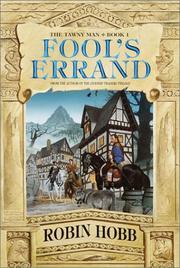
Fool's Errand
FitzChivalry Farseer has lived in exile for fifteen years. When Prince Dutiful vanishes before his betrothal, Fitz returns to Buckkeep to find him, with a wolf…
2,606-word summary · 12 min read
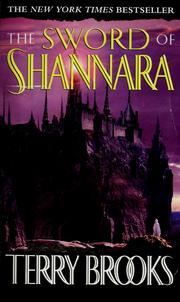
The Sword of Shannara
A young half-Elf and a company of companions set out to recover a magic sword before the Warlock Lord destroys the Four Lands.
2,474-word summary · 11 min read
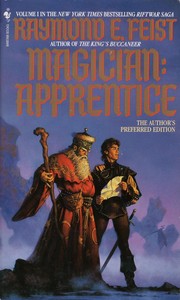
Magician: Apprentice
An orphan kitchen boy and a smith's son grow up in a frontier castle just as invaders from another world open a rift and begin a war that will change both of…
2,114-word summary · 9 min read
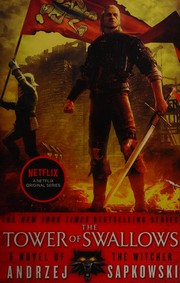
The Tower of the Swallow
Ciri flees as a bandit while Geralt gathers allies to find her.
2,580-word summary · 11 min read
The Emperor's Soul
Forger Shai must stamp a new soul for the dying emperor in 100 days.
2,313-word summary · 10 min read
Shadow's Edge
Kylar fakes death as a king killer while Vi hunts him for the Godking.
2,245-word summary · 10 min read
Pawn of Prophecy
Farm boy Garion learns sorcerers watch him as an old Orb wakes.
2,331-word summary · 10 min read
New Spring
Moiraine and Lan hunt the newborn Dragon before the Black Ajah finds him.
2,475-word summary · 11 min read
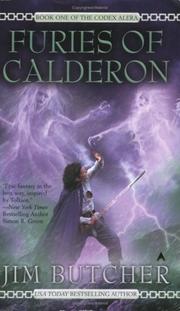
Furies of Calderon
Furyless Tavi defends Calderon Valley when the Marat return and lords scheme.
2,587-word summary · 11 min read
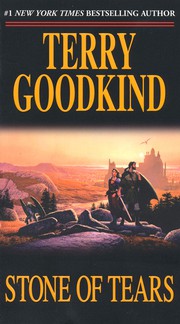
Stone of Tears
After the veil tears, Richard seeks training from the Sisters while Kahlan holds a fracturing Midlands and Zedd hunts the missing Stone.
2,483-word summary · 11 min read
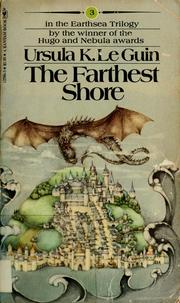
The Farthest Shore
Archmage Ged and Prince Arren sail to the far west to stop Cob, whose bid for endless life drains magic across Earthsea in Le Guin's sad 1972 third volume.
2,800-word summary · 12 min read
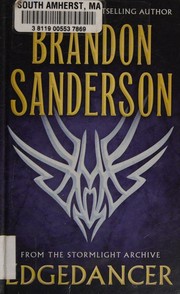
Edgedancer
Hungry street thief Lift and her vine-like friend Wyndle cross the Herald Nale in Tashikk when a child emperor shows Radiant signs and she refuses to step…
2,328-word summary · 10 min read
Dragons of Autumn Twilight
Old friends reunite at the Inn of the Last Home, guard a glowing Blue Crystal Staff, face black dragon Khisanth, and free slaves at Pax Tharkas in this 1984…
2,803-word summary · 12 min read
The Eyes of the Dragon
In the kingdom of Delain, a jailed prince and his younger brother face a magician whose long plot for the throne turns on a napkin clue.
2,018-word summary · 9 min read
The City of Brass
Cairo con artist Nahri summons djinn Dara and is drawn to Daevabad where Ali questions pureblood rule.
1,993-word summary · 9 min read
The Black Prism
Dying Prism Gavin Guile hides a secret son while war brews over color magic in the Seven Satrapies.
2,169-word summary · 10 min read
Gardens of the Moon
Empire, gods, and mages collide over Darujhistan as Bridgeburners bleed for Empress Laseen.
2,188-word summary · 10 min read
Crossroads of Twilight
Rand cleansed saidin and the whole world felt it. Book ten follows each faction as they react, stall, and choose sides.
2,264-word summary · 10 min read
Lord of Chaos
Rand offers amnesty to men who can channel while Egwene is raised Amyrlin in exile. Book six of The Wheel of Time builds toward rescue and reckoning at Dumai's…
2,255-word summary · 10 min read
A Crown of Swords
After Dumai's Wells, Rand holds Cairhien while Egwene besieges Tar Valon and Elayne and Nynaeve hunt relief in Ebou Dar. Book seven crowns kings and queens at…
2,828-word summary · 13 min read
The Hero of Ages
Vin and Elend face ash, mist, and Ruin itself as the prophecies fail and Sazed searches old faiths for answers.
2,559-word summary · 11 min read
Ship of Magic
A sentient ship wakes when her captain dies, and the family that owns her starts to come apart over who gets to sail her.
2,026-word summary · 9 min read

Inkdeath
The final Inkworld novel sends Mo into the land of the dead, leaves Meggie choosing between two boys, and ends the Adderhead's immortality with three written…
2,062-word summary · 9 min read
Dawnshard
Rysn sails toward forbidden Akinah to save her dying larkin and finds a Dawnshard guarded by the Sleepless.
3,229-word summary · 14 min read
The Field Guide
Three siblings move into a creepy Maine estate, anger a brownie, and find a forbidden guide to the fairy world in the first Spiderwick book.
2,033-word summary · 9 min read