

Reading options
What's inside (8 sections)
A small book I kept putting off
I came to The Emperor's Soul late because I assumed a 175 page novella could not do much next to the big Sanderson doorstops. Tachyon put it out in 2012, and the standard paperback runs 175 pages with ISBN 9781616960926. A friend who loves Elantris kept telling me this was the better Sel story, tighter and stranger, and she was right about the tight part. I read it in two sittings on a rainy weekend, first on the couch with tea going cold, then in bed much later than I planned.
The setup hooked me fast. Shai is a Forger, a kind of artist thief who can rewrite the past of objects with stamps carved from soulstone. She is caught after trying to steal from the Imperial palace, or rather after getting caught for it, and she expects execution. Instead the Arbiters of the Rose Empire offer her a job she cannot refuse in any real sense. The emperor Ashravan has been left brain dead after an assassination attempt. His ministers keep him alive in secret while enemies circle. They want Shai to forge a whole new soul for him, complete with memories and habits, in one hundred days. If she succeeds, she goes free with her record wiped. If she fails, she dies.
That is a great pressure cooker. One prisoner, one room, a deadline stamped on every chapter, and a lie that has to pass in front of a whole court. I liked that Sanderson does not waste time pretending Shai is innocent. She is guilty. She knows it. The Arbiters know it. The question is whether skill can buy a life back when everyone in the room hates what you do.
Who Shai is and why Forgery scares people
Shai comes from MaiPon, an island culture looked down on by the Rose Empire, and she carries that history in how she talks about art. Forgery, in her hands, is not cheap copying. It is close study. To change a table from shabby to fine, she has to know where the wood grew, who cut it, how it was stored, what broke it. Then she carves a stamp with that false but careful history and presses it with ink and intent. The object remembers itself differently and becomes that version, at least while the stamp holds.
People in the capital treat this as filthy magic. The official faith of the Rose Empire values order and truth as they define it, and rewriting the past feels like cheating the gods. Bloodsealers, the local imperial magic workers, can do their own frightening things with bodies and bones, and even they look down on Forgers. Shai has lived with that contempt for years. She answers it with pride that is not loud. She keeps her tools clean. She practices lines for hours. She treats a cracked pot with the same care as a palace wall.
I loved the small physical details here. The weight of the soulstone seals. The smell of the ink. The way Shai tests a stamp on a scrap first and watches for the faint glow that means the lie took. The way she keeps a logbook in code because she trusts no jailer. She is in her thirties, tired, funny in a dry way, missing her teacher and her old crew. She steals extra candles not to be difficult but because good light matters for carving. That kind of thief felt real to me, someone whose crime and craft are the same habit.
One fair gripe early on: Sanderson tells us Shai is among the best alive, and for the first twenty pages we mostly have to take his word for it. She talks a good game in chains. I wanted one early scene of her doing impossible work before the arrest, just to earn the reputation. We get stories about past jobs instead, including a famous theft involving a moonlit gallery and a replaced painting, told in summary. It works well enough once the palace job starts, because then we watch her solve hard problems step by step, but the opening leans on tell more than show.
One hundred days in a pretty cell
Most of the book stays in Shai's workroom, and I mean that as praise. The Arbiters give her fine quarters, good food, books, brushes, a window she cannot open far enough to climb through. Guards watch the door. A scribe brings histories of Ashravan's life. A servant changes linens while pretending not to stare. Every day Shai interviews people who knew the emperor, reads diaries, studies his handwriting, his jokes, his fears, his bad knee from a riding fall as a boy.
The time limit shapes everything. One hundred days sounds generous until you see what a soul requires. Shai explains that a large stamp cannot hold a crude lie. She has to build thousands of small true seeming changes that stack into a person. Where he learned to swim. Which tutor bored him. How his mother scolded him for feeding dogs at table. Which poem made him cry at fourteen and which one he pretended to like to please a teacher. Each fact becomes a possible stamp stroke. Miss too many and courtiers will notice the forgery the way you notice a wrong note in a familiar song.
Sanderson handles research as drama, which is harder than it sounds. Shai marks a palace map with places Ashravan lived. She cross checks stories because flatterers lie even about dead men. She finds gaps where the official record skips months, including a period in youth when Ashravan ran wild with friends and then suddenly turned serious. That gap becomes important. I liked watching her get angry at bad sources. She throws a brush once. She keeps going.
The escape thread runs under all this. Shai is carving a second set of stamps in secret, meant to change her own past just enough to slip her guards and run. She knows the Arbiters will probably kill her even if she succeeds, because a woman who can forge an emperor cannot be allowed to walk around. So she plans while she works, and the book keeps both clocks ticking. Will the emperor stamp be ready. Will her own door be ready first.
Gaotona, the honest man in a dishonest room
The best scenes are conversations between Shai and Gaotona, the oldest of the Arbiters and the only one who seems ashamed of the whole scheme. Gaotona is in his seventies, broad, slow moving, famous for incorruptible judgments. He does not like Forgery. He thinks it is lying given tools. He is also the only Arbiter who visits Shai daily, brings her true accounts instead of cleaned ones, and argues with her about what she is doing.
Their talks carry the book. Gaotona asks why a false emperor is better than a council ruling openly. Shai asks why his truth left millions hungry while MaiPon starved under imperial taxes. He says a soul cannot be built from notes. She says every person is built from notes other people keep, parents and priests and clerks, and she is only doing it faster. He watches her reforge a cracked vase to prove a point and cannot hide that he finds it beautiful.
I found myself siding with both of them at different times, which I take as a good sign. Gaotona is not stupid or cruel. He believes order protects ordinary people, and he has spent a life trying to be fair inside a system that rewards flattery. Shai believes skill and care can redeem a shady trade, and she has spent a life proving that street kids from a scorned culture can outwork palace scholars. When Gaotona starts bringing her forbidden diaries at risk to himself, it lands because he has to break his own code to do it.
There is a quiet scene I kept thinking about where Gaotona watches Shai eat. She eats quickly, like someone used to meals being taken away, and he looks away so she will not feel watched. No magic there. Just two tired people from opposite sides noticing manners. The book is full of that kind of noticing, and it keeps the long middle from dragging. Later he asks her to explain a stamp she made for a table leg, and she shows him how the grain had to be read first, how rushing would split it. He listens the way a judge listens, head tilted, and I got the sense he was filing her the way he files witnesses, with care and doubt together.
My criticism of this stretch is that the other Arbiters stay flat. One is openly hostile, one is political, one barely speaks. They function as a wall for Shai to push against, not as people. After Gaotona gets so much care, I wanted at least one more Arbiter with a private doubt or a sharp scene. As it stands, when they threaten Shai, the threats feel generic even if the danger is real.
Blood, stamps, and the Rose Empire
The magic system gets its full workout in the last third, and this is where Sanderson fans will grin. Forgery has rules that feel like craft rules. Distance matters. Familiarity matters. A stamp placed on skin works differently from one placed on wood or stone. An Essence Mark, the deep stamp Shai plans for the emperor and once made for herself, rewrites a person by offering a changed past, like a life where you studied harder or learned a different trade. It does not add years. It trades them. That cost keeps the power from feeling free.
We see Shai test these limits on herself. Years ago she made a stamp that gave her a past where she kept training instead of quitting, and wearing it makes her sharper, colder, lonelier. She keeps it locked away because she dislikes who it makes her. That detail does more work than any lecture about price. Power here changes taste and temper, not only skill. She tries it on once during the hundred days, late at night, to remember what cold focus feels like, and takes it off quickly because the room feels emptier with it on. I liked that she tells no one. Some tools you do not lend, even to friends.
The Rose Empire itself comes through in objects and habits rather than long history lessons, which suits a short book. Clerks who stamp every door. Portraits that flatter the emperor into someone taller. Food served in strict order. A palace built to show that the center holds while provinces pay. The Bloodsealers get a few chilling moments, especially one who can read bodies the way Shai reads pots, and I wished for more of them. They hint at a harsher magic of flesh and obedience that contrasts with Shai's patient paper and ink. Their scenes are short but memorable, a hand on a wrist, a question about pain, a warning left hanging.
Politics stay close and clear. If the emperor is seen as dead, rival factions move, tribute stops, war starts in the outer provinces. The Arbiters need a living emperor at the Grand Reappearance ceremony on day one hundred, walking and talking and remembering childhood friends. Shai has to forge not only memory but manner, the way Ashravan laughed when nervous, the way he tapped a ring against a cup while listening. I liked that the test is social, not a glowing machine. Courtiers who grew up with him will know.
What shines, what creaks, and who should pick it up
What shines is focus. At 175 pages this is Sanderson without bloat, one room, two leads, one impossible job. The forging scenes are tactile and clever without turning into puzzles for their own sake. The debates about lying feel earned because both sides pay for their views. Shai is a great creation, skilled without being smug, wounded without asking for pity. Gaotona is even better, a decent man helping a crime he hates because he sees no cleaner path.
What creaks, for me, is scale. The fate of an empire rests on a trick, and the book sometimes tells rather than shows the millions at stake. We hear about famine and border lords but we never meet a farmer or a soldier who will live or die by the stamp. I missed that ground level ache that his longer books give. The ending also leans on a reveal about Ashravan's past that I half guessed, and while the execution is strong, readers who like surprises may find it familiar. And as noted, the villains around Gaotona could use more shading.
Who should read it. If you bounced off thousand page fantasy, start here. If you like heist stories, locked room puzzles, or books about artists at work, this will scratch that itch. You do not need Elantris first, though both books share the same world of Sel and the same hidden rules about identity and land, and fans will catch small links. I read it as a standalone and lost nothing.
I finished admiring Shai more than liking the empire she saved, and I think that is the point. She gives Ashravan a better past than he had, kinder in spots, braver in one key choice, because she believes a ruler should be the person his people needed, not only the boy he was. Gaotona lets her, knowing it is false and hoping it is good. That uneasy deal stayed with me longer than any battle. For a short book it asks a large question and answers it with hands, ink, and a counted hundred days. I closed it, looked at my own chipped mug, and wondered what careful lie could make it whole.
FAQ
When was The Emperor's Soul published?
Tachyon published it in 2012. The standard edition runs 175 pages and the ISBN is 9781616960926.
Is it part of a series?
No. It stands alone, though it shares the world of Sel with Elantris and uses the same ideas about identity and land.
Can I start with this book?
Start here if you want Sanderson in short form. You need no prior books, and the forging rules are explained on the page.
Similar books

Dawnshard
Rysn sails toward forbidden Akinah to save her dying larkin and finds a Dawnshard guarded by the Sleepless.
3,229-word summary · 14 min read
Edgedancer
Hungry street thief Lift and her vine-like friend Wyndle cross the Herald Nale in Tashikk when a child emperor shows Radiant signs and she refuses to step…
2,328-word summary · 10 min read
The Hero of Ages
Vin and Elend face ash, mist, and Ruin itself as the prophecies fail and Sazed searches old faiths for answers.
2,559-word summary · 11 min read

The Blinding Knife
Kip trains to join the Blackguard while the Prism hides his true identity, loses his colors, and fights a war against a rogue drafter who wants to birth a god.
2,049-word summary · 9 min read

Magician's Gambit
Garion and his companions cross haunted Maragor and the caves beneath Rak Cthol to recover the Orb of Aldur.
2,391-word summary · 11 min read
Homeland
Drizzt Do'Urden is born into the cruel drow city of Menzoberranzan, where his father teaches him to fight and to doubt everything his family believes.
2,303-word summary · 10 min read
Enchanters' End Game
Garion marches toward Torak while Ce'Nedra leads the West's army in the final Belgariad volume, where prophecy and war meet.
2,557-word summary · 11 min read
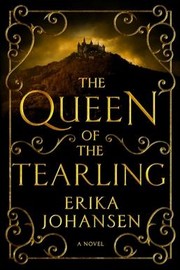
The Queen of the Tearling
Nineteen-year-old Kelsea leaves the woods to take her throne, ends a shipment of human captives, and draws the Red Queen's revenge.
2,357-word summary · 10 min read

Fool's Errand
FitzChivalry Farseer has lived in exile for fifteen years. When Prince Dutiful vanishes before his betrothal, Fitz returns to Buckkeep to find him, with a wolf…
2,606-word summary · 12 min read

The Sword of Shannara
A young half-Elf and a company of companions set out to recover a magic sword before the Warlock Lord destroys the Four Lands.
2,474-word summary · 11 min read
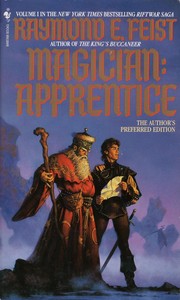
Magician: Apprentice
An orphan kitchen boy and a smith's son grow up in a frontier castle just as invaders from another world open a rift and begin a war that will change both of…
2,114-word summary · 9 min read
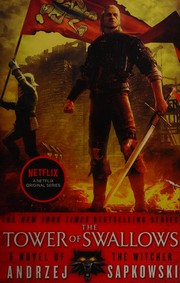
The Tower of the Swallow
Ciri flees as a bandit while Geralt gathers allies to find her.
2,580-word summary · 11 min read
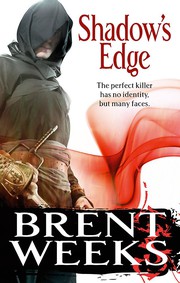
Shadow's Edge
Kylar fakes death as a king killer while Vi hunts him for the Godking.
2,245-word summary · 10 min read
Pawn of Prophecy
Farm boy Garion learns sorcerers watch him as an old Orb wakes.
2,331-word summary · 10 min read

New Spring
Moiraine and Lan hunt the newborn Dragon before the Black Ajah finds him.
2,475-word summary · 11 min read
Furies of Calderon
Furyless Tavi defends Calderon Valley when the Marat return and lords scheme.
2,587-word summary · 11 min read

Stone of Tears
After the veil tears, Richard seeks training from the Sisters while Kahlan holds a fracturing Midlands and Zedd hunts the missing Stone.
2,483-word summary · 11 min read
The Farthest Shore
Archmage Ged and Prince Arren sail to the far west to stop Cob, whose bid for endless life drains magic across Earthsea in Le Guin's sad 1972 third volume.
2,800-word summary · 12 min read
Dragons of Autumn Twilight
Old friends reunite at the Inn of the Last Home, guard a glowing Blue Crystal Staff, face black dragon Khisanth, and free slaves at Pax Tharkas in this 1984…
2,803-word summary · 12 min read
The Eyes of the Dragon
In the kingdom of Delain, a jailed prince and his younger brother face a magician whose long plot for the throne turns on a napkin clue.
2,018-word summary · 9 min read
The City of Brass
Cairo con artist Nahri summons djinn Dara and is drawn to Daevabad where Ali questions pureblood rule.
1,993-word summary · 9 min read
The Black Prism
Dying Prism Gavin Guile hides a secret son while war brews over color magic in the Seven Satrapies.
2,169-word summary · 10 min read
Gardens of the Moon
Empire, gods, and mages collide over Darujhistan as Bridgeburners bleed for Empress Laseen.
2,188-word summary · 10 min read

Crossroads of Twilight
Rand cleansed saidin and the whole world felt it. Book ten follows each faction as they react, stall, and choose sides.
2,264-word summary · 10 min read

Lord of Chaos
Rand offers amnesty to men who can channel while Egwene is raised Amyrlin in exile. Book six of The Wheel of Time builds toward rescue and reckoning at Dumai's…
2,255-word summary · 10 min read
A Crown of Swords
After Dumai's Wells, Rand holds Cairhien while Egwene besieges Tar Valon and Elayne and Nynaeve hunt relief in Ebou Dar. Book seven crowns kings and queens at…
2,828-word summary · 13 min read

The Bands of Mourning
Wax and Wayne hunt a mythical metalmind while southern visitors and the Set close in.
2,461-word summary · 11 min read

Shadows of Self
Wax and Wayne hunt a rogue kandra through Elendel as labor riots rise and old grief returns.
2,643-word summary · 12 min read

The Alloy of Law
Wax and Wayne chase Vanishers by rail in a gunpowder Mistborn city 300 years later.
2,535-word summary · 11 min read
Elantris
A prince thrown into a cursed city, a princess fighting court plots, and a priest on a deadline collide in Sanderson's debut.
4,049-word summary · 18 min read