
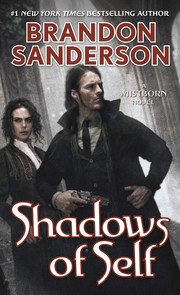
Shadows of Self
2,643-word summary 12 min read 383 pages in the book
- First published
- 2015
- Publisher
- Tor Books
- Pages
- 383
- ISBN
- 9780765378552
- Series
- Mistborn (#5)
Reading options
What's inside (10 sections)
I picked up Shadows of Self because The Alloy of Law left me in an odd spot. I liked Wax and Wayne a lot, but that book felt like a warm-up, a short adventure that introduced a new era and then ended before anything truly broke. I wanted the version where Sanderson actually leaned on these characters. This is that book. Brandon Sanderson published it with Tor Books in 2015, a 383 page novel with ISBN 9780765378552. It is the fifth book in Mistborn and the second in the Wax and Wayne run, set about 300 years after The Hero of Ages in the industrial city of Elendel. It reads as a detective story for most of its length and then turns into something sadder and stranger near the end.
If you have not read The Alloy of Law, you could still follow this, since Sanderson re-explains Twinborn powers and the main players. But you would lose a lot. The weight here comes from knowing who Wax was in the Roughs, what he lost there, and how hard he is trying to be a different man now.
A wedding planner and a lawman sharing one body
The book opens on Waxillium Ladrian trying to live a normal life, and Sanderson makes that funny before he makes it painful. Wax is engaged to Steris Harms. She is practical, literal, endlessly organized, and approaching their wedding the way a general plans a campaign. Guest lists. Seating charts. Contingency plans for relatives who might try to kill the groom, which in Wax's case is not a joke. Wax loves her in his stiff way, but he keeps waiting for the other shoe to drop, as if happiness is a room he walked into by mistake.
Around them, everyone has settled into new roles. Marasi Colms, Steris's half sister, has joined the constables and wants to prove she belongs there on merit rather than family name. Wayne, Wax's old partner from the Roughs, is still Wayne: swapping faces and accents, stealing things for fun and returning them with interest, needling Wax about feelings Wax refuses to name. The arrival of MeLaan, a kandra woman working with the constables, adds a new flavor. She is blunt, curious about human habits, and comfortable in her own skin in a way that makes Wax look wound even tighter.
What I liked about this stretch is how lived-in it feels. Wax attends parties. He argues about railway schedules and house politics. He practices being Lord Ladrian. Then a constable knocks, and the lawman underneath the good coat wakes straight up. Sanderson is good at showing that Wax never really retired. He just changed desks.
A dead noble and a killer who can be anyone
The case starts with a corpse that does not make sense. Winsting Innate, brother of the governor, is found murdered, and the details of the killing point away from any ordinary criminal. Soon more bodies follow, each one connected to power in Elendel, and each one slightly wrong in a way that nags at Wax. Witnesses describe different killers. Locks were passed that should have held. Someone seems able to walk into guarded rooms and walk back out wearing another face.
Marasi does much of the steady police work here, and I enjoyed watching her think. She interviews servants, checks timelines, and notices the small social facts that Wax barrels past. Wayne does what Wayne does, which means disguises, barroom conversations, and casual theft in the name of justice. Wax broods and pushes the case forward through sheer refusal to let it go. The three of them circle the same ugly possibility from different sides until they have to say it out loud. The killer is probably a kandra, one of the shape-shifting servants of Harmony who can digest a body and wear its bones.
That lands hard because of what kandra mean on this world. In the original trilogy they were the Lord Ruler's creatures, bound by spikes and contracts. Now, centuries later, most of them serve Harmony, the god born when Sazed took up both Ruin and Preservation at the end of The Hero of Ages. They are supposed to be allies. They are supposed to be controlled. The idea that one has gone rogue and started murdering nobles shakes the constables badly. If the gods' own servants can break loose, what exactly is holding this society together.
The investigation narrows toward a kandra called Paalm, known on the street as Bleeder. She has done the unthinkable. She pulled out one of her own spikes.
What one missing spike actually means
To follow the middle of the book you need the kandra rules, and Sanderson lays them out through TenSoon, the kandra readers will remember from the original trilogy, and through MeLaan. A kandra's mind and body are held together by Hemalurgic spikes. Those spikes also let Harmony speak to them, guide them, and at need compel them. Removing one spike does not kill a kandra outright, but it changes them. It clouds their mind. It cuts Harmony's voice down to a whisper or nothing. And it leaves them free in a way their kind was never meant to be.
Paalm did it on purpose. She believes Harmony is a liar and a tyrant, a god who treats thinking people as tools. There is history behind her anger, going back to the old days and the things the Lord Ruler built with spikes and blood. Sanderson does not excuse her, but he gives her grievance enough shape that you can see why others might listen. She has also driven a second spike into herself, one that grants her Allomantic power, which makes her far more dangerous than a standard kandra. She can fight Wax on something close to even terms, and she can kill with magic as well as with knives.
I found this the strongest idea in the book. The first Mistborn trilogy asked what happens when a god dies. This book asks what happens when a god stays and keeps giving orders. Paalm's answer is that obedience enforced from inside your own head is still a cage. Harmony's answer, delivered through long pained conversations with Wax, is that he is trying to hold a broken world together with rules he barely understands himself. Neither of them is entirely wrong, which makes every talk between Wax and his god feel loaded. Wax prays. Harmony answers. And the answers are never as comforting as Wax wants.
One fair complaint: the middle chapters circle this theology for a while. Characters explain spikes, blessings, and kandra generations at length, sometimes twice. Readers fresh from the original trilogy will already know half of it. I skimmed a little during the second round of explanations. It pays off later, but the pacing sags around the third or fourth lore conversation.
Elendel starts coming apart at the seams
While Wax chases a killer, Paalm works on the city itself. Elendel runs on a sharp divide between the Basin elite and the laborers, many of them with roots out in the Roughs, who pour into factories and rail yards for low wages. Paalm stirs that pot with sermons and pamphlets and staged outrages, preaching that Harmony is a false god, that the governor is corrupt, that the workers should stop bowing. She murders priests and officials in ways designed to inflame each side against the other. She even frames Wax at one point, so the newspapers that once praised the heroic lawman start calling him a menace.
Sanderson writes the unrest better than I expected. The crowds are not mindless. They have real complaints about pay, safety, and contempt from above. Governor Replar Innate, decent in his way, keeps missing the depth of the anger because his advisers filter everything. His brother's death rattles him. The church leaders split over how to respond. Marasi, who genuinely cares about reform, finds herself caught between her constable's oath and her sympathy for the protesters. Wayne, who grew up with nothing, hears Paalm's speeches and admits some of the charges sting, even as he keeps hunting the speaker.
The set pieces in this stretch are excellent. A formal party turns into a hunting ground, with Wax trying to guard guests while knowing the killer could be any of them. A public rally becomes a slow-motion disaster as Wax, Wayne, and Marasi try to spot an assassin in a swaying crowd. Sanderson's action remains unusually clear for how complicated it is. When Wax Pushes off a railing, drops his weight with Feruchemy, and fires in midair, you always know where his body is and what each choice costs him. The magic has prices: steel runs out, weight must be stored in advance, wounds bleed. That discipline keeps the fights tense even when the powers are wild.
The worst blow lands at one of these public events. Despite everything Wax does, Paalm reaches the governor. Replar Innate is assassinated in front of a crowd, and the city tips toward open fighting. I will not spoil the exact mechanics of the killing, since the reveal of how she managed it is one of the book's best twists. But the effect is shattering. Wax fails in public, at the one job he took on himself, and the failure belongs to him in a way no wedding seating chart can fix.
A lawman argues with his god
Between the action, this is really a book about Wax and Harmony talking past each other. Wax was raised on stories of the Ascendant Warrior and the Survivor, and he converted his frontier faith into something personal out in the Roughs. Then he lost Lessie, the woman he loved, in a botched confrontation with the outlaw Bloody Tan, and the grief hollowed his belief out. He still prays. He still listens. But every conversation with Harmony carries the same buried question. Where were you when I needed you.
Harmony's answers frustrate Wax, and honestly they frustrated me at first, until I realized that was the point. Sazed the god is not Sazed the scholar anymore. Holding two opposed powers has stretched him thin. He sees broadly and acts narrowly. He refuses to override human will, even when humans choose cruelty, because the last time gods forced obedience on Scadrial it ended in ash and slavery. So he nudges. He warns. He sends kandra agents and hopes. To Wax, bleeding in the street, that looks like abandonment. To Harmony, it looks like the only moral choice left.
Steris becomes the quiet anchor of these chapters, and she was my favorite surprise. In the previous book she read as a joke about checklists. Here Sanderson lets her competence shine. She manages the house, handles the press, guards Wax's flank at parties, and tells him plain truths nobody else will say. She knows she is not Lessie. She knows Wax's heart is still bruised. She stays anyway, not from blindness but from decision. There is a scene where she simply takes over a chaotic situation with lists and calm orders while Wax stares, and I thought, all right, I would marry her too.
Wayne gets his own shadows here. His humor stays loud, but the book keeps flashing back to the man he killed years ago, the crime that put him on the path to Wax. Wayne's guilt is the mirror of Wax's grief. Both men did something they cannot undo, and both cope by throwing themselves at other people's problems. Wayne jokes through it. Wax broods through it. Neither method works for long.
The woman waiting in the tunnels
Everything converges beneath the city, in the old tunnels and chambers where the kandra keep their Homeland. Wax goes down there knowing Paalm wants him specifically, knowing she has been leaving him messages, knowing the final trap is shaped like his own past. TenSoon warns him. MeLaan backs him. Harmony goes quiet in a way that frightens Wax more than any threat. And waiting in the dark is the face Wax has seen in every nightmare for years.
Paalm wears Lessie. Not a mask of her, not a resemblance. The kandra who loved Wax from long before, the one assigned to watch him, the one who lived as his wife in the Roughs and died by his bullet when Bloody Tan used her as a shield. That is the reveal the whole book has been winding toward, and Sanderson plays it without flinching. Paalm tells Wax her version: that she truly loved him, that dying by his hand broke something in her, that seeing the world through Harmony's plans afterward finished the job. She blames the god. She blames Wax. She blames herself. All of it is tangled, and none of it is clean.
The last fight is brutal in the way that matters. Wax has to kill the woman he loves a second time, knowing exactly who she is this time, knowing she chose this end as much as he chooses to give it. Sanderson does not let magic solve the moral problem. Bullets and Pushes only create the opening. The choice is Wax's, and he makes it the way a lawman makes the choice he hates: to stop the killing, to protect the city above, to release someone who cannot be saved. I found it genuinely moving, and darker than anything in The Alloy of Law. The wedding that follows does not erase it. Wax marries Steris with open eyes and a wounded heart, which feels honest rather than romantic in the cheap sense.
Afterward the book points clearly at the next volume. The mystery of the Bands of Mourning, the mythical metalminds of the Lord Ruler, surfaces in the closing pages, along with hints that greater powers in the wider universe have noticed Scadrial. Readers who follow Sanderson's connected books will catch the signs. New readers can ignore them and just enjoy the promise of another hunt.
So who is this for. If you want epic war and world-ending stakes, the original trilogy does that bigger. This is smaller, meaner, and more personal: a murder hunt, a city on edge, a man arguing with his god and his dead wife at the same time. The middle drags in spots and the theology lectures repeat. But the characters carry it, the action is crisp, and the ending reframes everything before it. I closed it and immediately wanted the next one, which is about the highest praise I can give a middle volume. Read The Alloy of Law first, then come back here, and give Steris the credit she deserves.
The city guard changes shifts
One thing I appreciated only after finishing: how much this book hands to its younger characters. Marasi solves real pieces of the case and earns her badge rather than inheriting relevance. Steris runs the household and the social defense while the heroes bleed. Wayne confronts the bill for his past instead of joking past it. Even MeLaan, new to the group, gets choices with weight. Wax remains the center, but the constellation around him burns brighter here than in the previous book. That bodes well for wherever Sanderson takes the series next.
What stayed with me
Days later, the scenes I keep replaying are small ones. Steris with her lists, refusing to panic. Wayne trading hats with a stranger and stealing a moment of joy in a grim week. Marasi standing her ground with senior constables who dismiss her. Wax alone, praying to a god who answers in riddles, reloading anyway. The book argues that faith is not the absence of doubt but the decision to act well while doubting. I do not know if Sanderson meant that as comfort or as rebuke. Either way it stuck.
FAQ
When was Shadows of Self published?
Tor Books published it on October 6, 2015. The hardcover runs 383 pages with ISBN 9780765378552.
Is Shadows of Self part of a series?
Yes. It is Mistborn book five and the second Wax and Wayne novel, after The Alloy of Law and before The Bands of Mourning.
Can I start with Shadows of Self?
Yes, though it helps to read The Alloy of Law first. Sanderson re-explains Twinborn powers, but the emotional weight lands harder with book four behind you.
Similar books
More from Mistborn first, then related titles.
The Final Empire
A street thief with rare powers joins a crew planning the impossible: overthrowing the immortal Lord Ruler.
2,150-word summary · 10 min read
The Well of Ascension
After the Lord Ruler falls, Vin and Elend must hold Luthadel against three armies while a mist spirit hunts Vin and the Well of Ascension calls.
2,395-word summary · 11 min read
The Hero of Ages
Vin and Elend face ash, mist, and Ruin itself as the prophecies fail and Sazed searches old faiths for answers.
2,559-word summary · 11 min read
The Alloy of Law
Wax and Wayne chase Vanishers by rail in a gunpowder Mistborn city 300 years later.
2,535-word summary · 11 min read
The Bands of Mourning
Wax and Wayne hunt a mythical metalmind while southern visitors and the Set close in.
2,461-word summary · 11 min read
The Emperor's Soul
Forger Shai must stamp a new soul for the dying emperor in 100 days.
2,313-word summary · 10 min read
Edgedancer
Hungry street thief Lift and her vine-like friend Wyndle cross the Herald Nale in Tashikk when a child emperor shows Radiant signs and she refuses to step…
2,328-word summary · 10 min read
Elantris
A prince thrown into a cursed city, a princess fighting court plots, and a priest on a deadline collide in Sanderson's debut.
4,049-word summary · 18 min read

The Blinding Knife
Kip trains to join the Blackguard while the Prism hides his true identity, loses his colors, and fights a war against a rogue drafter who wants to birth a god.
2,049-word summary · 9 min read
Magician's Gambit
Garion and his companions cross haunted Maragor and the caves beneath Rak Cthol to recover the Orb of Aldur.
2,391-word summary · 11 min read
Homeland
Drizzt Do'Urden is born into the cruel drow city of Menzoberranzan, where his father teaches him to fight and to doubt everything his family believes.
2,303-word summary · 10 min read
Enchanters' End Game
Garion marches toward Torak while Ce'Nedra leads the West's army in the final Belgariad volume, where prophecy and war meet.
2,557-word summary · 11 min read
The Queen of the Tearling
Nineteen-year-old Kelsea leaves the woods to take her throne, ends a shipment of human captives, and draws the Red Queen's revenge.
2,357-word summary · 10 min read
Fool's Errand
FitzChivalry Farseer has lived in exile for fifteen years. When Prince Dutiful vanishes before his betrothal, Fitz returns to Buckkeep to find him, with a wolf…
2,606-word summary · 12 min read
The Sword of Shannara
A young half-Elf and a company of companions set out to recover a magic sword before the Warlock Lord destroys the Four Lands.
2,474-word summary · 11 min read

The Hazel Wood
Alice Proserpine has spent her life running from bad luck. When her mother vanishes, she follows a trail of fairy-tale clues to her grandmother's estate and…
2,064-word summary · 9 min read
Magician: Apprentice
An orphan kitchen boy and a smith's son grow up in a frontier castle just as invaders from another world open a rift and begin a war that will change both of…
2,114-word summary · 9 min read
Ghost Story
Dead but not gone, Harry Dresden returns as a spirit to find his killer, protect the friends he left behind, and learn why the afterlife gave him a second…
1,978-word summary · 9 min read
Beyond the Shadows
Kylar Stern bargains with the Wolf, hunts a legendary sword, and faces a goddess wearing the face of the woman he loves in the Night Angel finale.
2,467-word summary · 11 min read
Cold Days
Back from the dead as the Winter Knight, Harry Dresden must follow Mab's order to kill an immortal and defend Demonreach on Halloween night.
2,361-word summary · 10 min read
Turn Coat
Morgan asks Harry for sanctuary as the Council calls him traitor.
2,590-word summary · 12 min read
The Tower of the Swallow
Ciri flees as a bandit while Geralt gathers allies to find her.
2,580-word summary · 11 min read
Small Favor
Harry owes Mab a favor and must find Marcone while Denarians hunt a holy girl.
2,741-word summary · 12 min read
Shadow's Edge
Kylar fakes death as a king killer while Vi hunts him for the Godking.
2,245-word summary · 10 min read
Pawn of Prophecy
Farm boy Garion learns sorcerers watch him as an old Orb wakes.
2,331-word summary · 10 min read
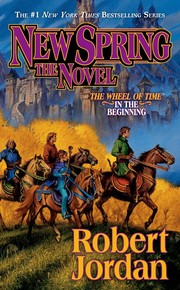
New Spring
Moiraine and Lan hunt the newborn Dragon before the Black Ajah finds him.
2,475-word summary · 11 min read
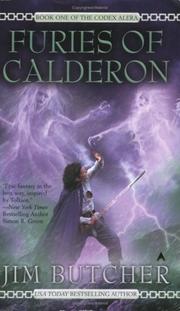
Furies of Calderon
Furyless Tavi defends Calderon Valley when the Marat return and lords scheme.
2,587-word summary · 11 min read
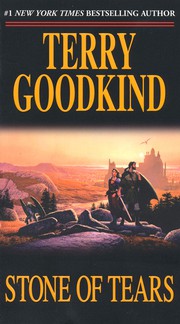
Stone of Tears
After the veil tears, Richard seeks training from the Sisters while Kahlan holds a fracturing Midlands and Zedd hunts the missing Stone.
2,483-word summary · 11 min read
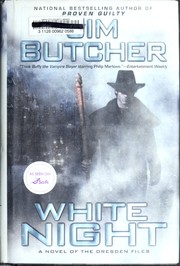
White Night
Wizard Harry Dresden hunts fear-feeding White Court killers preying on Chicago's minor talents, reunites with Elaine Mallory, and faces a coup at Chateau Raith.
2,521-word summary · 11 min read
The Farthest Shore
Archmage Ged and Prince Arren sail to the far west to stop Cob, whose bid for endless life drains magic across Earthsea in Le Guin's sad 1972 third volume.
2,800-word summary · 12 min read