
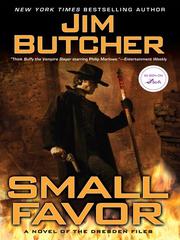
Small Favor
2,741-word summary 12 min read 432 pages in the book
- First published
- 2008
- Publisher
- Roc
- Pages
- 432
- ISBN
- 9780451462008
- Series
- The Dresden Files (#10)
Reading options
What's inside (8 sections)
I read Small Favor right after White Night because book ten leaves threads hanging, and this one pulls them tight. First published in 2008 by Roc Hardcover at 432 pages, it is book ten in The Dresden Files about Harry Dresden, wizard private eye in Chicago. Winter Queen Mab calls in a favor Harry owes. Find John Marcone, mob boss turned freeholding lord, taken by Denarians. Meanwhile goat legged gruffs hunt Harry for Summer, and Ivy, the Archive, a young girl who knows all written things, is targeted. It is winter, bloody, funny, and sad about knights. I loved it even when mythology got dense.
Harry starts attacked. Gruffs, servants of Summer, goat heads and man torsos growing larger like the fairy tale, come to kill him on an island obligation. He is tired, broke, living in a basement apartment with a skull named Bob, a dog named Mouse, an apprentice named Molly. He owes Mab two favors after past deals. She appears in his hospital chapel later, but first sends Gard to demand. Find Marcone. Harry hates Marcone, who is a criminal but also a signatory of the Unseelie Accords, meaning supernatural law protects him. If Denarians took him, war brews. Harry must help a man he despises to prevent worse.
Murphy calls him to a destroyed building that was Marcone's. Clues point to Denarians, fallen angels in coins that tempt hosts with power. Nicodemus, their leader, smooth and cruel, wants Marcone and more. He also wants Ivy, the Archive, neutral arbitrator who holds all human written knowledge in a child's mind. Ivy, called Ivy by Harry, arrives with bodyguard Kincaid, a mercenary Harry distrusts. To get Marcone back, Harry must trade coins from dead Denarians and Fidelacchius, a Sword of the Cross once carried by Shiro. Michael Carpenter, Knight of the Cross, carries another sword and his faith into this mess. Sanya, another Knight, jokes and fights beside.
Mab and debts
Mab calling in a favor defines the book's moral weight. Harry traded with her before to save friends, knowing Winter exacts. She takes his blasting rod and fire memories at the start to keep gruffs from killing him before he can work, without telling. He feels weaker, forgetful, scared he is losing edge. Only later in a chapel does a janitor, who is more than janitor, hint at plan, and Mab return what she took, explaining she protected him the only way allowed. That reveal reframes frustrations. Was she cruel or kind. Both, in Winter way. Help that feels like harm. Harry hates owing, but owes life to many. Michael, Murphy, Thomas, even Marcone after. Debts stack like snow.
Michael's arc broke me. Good man, Catholic knight, father of many, who fights monsters with sword and faith and humor. Here he is shot protecting others during a rescue by helicopter on a Lake Michigan island. He lives, but prospects uncertain. Surgery, chapel prayers, wife Charity fierce and scared. Harry blames himself for involving friends. Uriel, archangel called Watchman, enhances Harry's potential through Mab's return, hinting Heaven watches. The janitor's talk about God having a plan for everyone, leaving a worn Two Towers with marked section, suggests grace in small kindnesses. For a book full of fallen angels, the holiest moments are hospital waiting and soup. Butcher, who is open about faith themes, writes believers with respect without preaching. Michael fights because love demands, not for reward. That clarity shines when Denarians offer power for pain.
Ivy as Archive is heartbreaking. A child who never forgets anything written, used by adults as neutral judge, targeted by Nicodemus to become unstoppable ally if tortured into taking a coin. Harry, who names things to humanize, calls her Ivy and treats her like kid, not tool. He risks coins and swords to free her when negotiations at the Shedd Aquarium turn to kidnapping. The fight there kills many Denarians, but survivors take Ivy. Harry trades all to get her back. Kincaid, her guard and Harry's rival for Murphy's affection, works with Harry despite hate because Ivy matters more. That alliance of rivals for a child moved me. Adults putting kid above feud is the book's best moral.
Gruffs provide fairy tale horror and humor. Small ones attack, larger ones challenge to duels, Eldest Gruff, tiny being of massive power, must kill Harry on the island but is bound by rules. Harry invokes a boon from Summer for a fresh doughnut, knowing fetching it takes time enough to escape to Chicago where pursuit stops. That doughnut trick is pure Dresden. Clever, silly, rule abiding. Magic here runs on bargains, names, debts, hospitality. Murphy invoking law officer duties to pause a duel shows mortal law can check fae. Those rule games delight series fans. New readers may feel lost in Accords and Courts. Stick with it. Rules are stated as needed. Summer versus Winter, Denarians versus Knights, all want Ivy or Marcone for leverage.
Chicago winter war
The middle is battles in snow. Union Station to get blood samples, McAnally's bar as neutral ground, Shedd Aquarium as trap, island as exchange. Gard with helicopter, Thomas distracting gruffs, Sanya with sword, Murphy with gun and Fidelacchius when needed. Butcher stages clearly. Who is where, what magic costs. Harry's fire gone, so he uses force, ice, wits. Losing fire scares him more than gruffs. Fire is identity. Without it he feels less. That loss mirrors Michael losing health, Ivy risking self, Marcone needing rescue by a wizard who hates him. Everyone pays.
Nicodemus as villain impresses because he is polite. He negotiates while planning betrayal, loves his daughter Deirdre in twisted way, wants Ivy not just for power but to corrupt knowledge itself. His double cross on the island feels expected yet tense because Harry expects it too and plans layers. Free Ivy, free Marcone imprisoned nearby, escape by boat, attacked again, saved by Thomas and Murphy returning. No plan survives, but backup plans stack. That competence porn satisfies. Harry is not strongest. He is most stubborn with friends who show up.
Marcone himself gets depth. Crime lord who keeps order, protects his people fiercely, bargains with monsters to keep city stable. Harry warns Helen Beckitt, now Madam Demeter, who betrayed Marcone, not to try again if she wants to keep Marcone from targeting her. That warning shows Harry understands Marcone will kill to keep peace. Respect without liking. Their uneasy alliance defines later books. Order versus justice. Harry chooses justice but uses order.
The end lands tired, not triumphant. Michael alive but broken, Sanya giving Amoracchius to Harry to pass on when right, Luccio and Harry sharing dinner and quiet. No parade. Just survivors eating. That weariness felt right after 432 pages of winter war. Power costs bodies. Even Mab's help costs memories temporarily. Uriel's interest costs attention. Nothing free.
What works and what overwhelms
What works is heart inside lore. Harry's narration, first person, funny, self loathing, loyal. He jokes while bleeding to keep others calm. He names Ivy to protect childhood. He worries about Molly, about Mouse, about rent while facing angels. That mix of mundane and mythic defines Dresden. Chicago feels real. Snow, lake, bars, hospitals. Magic overlays without erasing. You believe a wizard could live in a basement and owe rent while negotiating with queens. Butcher earns it over ten books.
Knights shine. Michael, Sanya, even Gard as Valkyrie. Faith written respectfully across beliefs. Michael Catholic, Sanya agnostic with sword, Harry skeptical with hope. Janitor as Uriel nod does not preach. It suggests Someone notices kindness. That suggestion comforted me more than battles. In a series about debts, grace appears as gift. Mab returns rod. Uriel enhances. Friends return with boats. Debts and gifts tangle. Good.
What overwhelms is continuity. Book ten assumes you know Denarians from Death Masks, Mab's favors, Marcone's signatory status, Ivy from Blood Rites, Kincaid history, Luccio relationship. New readers will drown in names. Akariel, Magog, Rosanna, Thorned Namshiel, Tessa, Urumviel, Varthiel, Chandler. Fallen list long. Gruffs and hobs add. If you start here, you will follow main beats but miss weight. Start with Storm Front or at least Dead Beat. Fans will revel. Every thread pays.
Length at 432 pages feels right for scope, but middle sags with two rescue setups. Aquarium trap then island exchange mirror. Both involve Ivy taken, deals made, fights. I wanted one cut shorter. Still, island doughnut and chapel scenes justify. Pacing picks up last hundred pages and does not stop. Read in chunks to breathe.
Content is adult. Violence, gunfire, torture threat to a child, blood, language strong. No explicit sex here, romance sidelined for war. Good for urban fantasy readers who like Butcher. Teens older with tolerance for dark will manage, but themes of debt and faith land better with age.
Who should read it
Read it if you love Dresden and want Mab, Denarians, and Knights at their best. Read it for Michael, who deserves every page. Read it in winter with soup, because Chicago cold seeps. Have tissues for hospital chapel. That talk with the janitor about plans got me more than battles.
Skip it if you need standalone. This is deep series water. Start earlier. Skip if angels and fae politics bore. Much happens because of Accords and favors. Rules matter more than punches, though punches come.
For me, the image that stays is Harry asking Eldest Gruff for a doughnut to buy time, small and absurd and brilliant, while friends bleed on an island. Then later, in a chapel, a janitor leaving a marked Two Towers, saying God has a plan. Debts and grace side by side. Harry owes Mab, owes Michael, owes Ivy safety. He pays by showing up broke and brave. At 432 pages, Small Favor argues favors small and large bind us, for good and ill. Choose whom you owe carefully, and pay with help, not coins. I closed it grateful for knights who stand in snow for girls who remember everything, for wizards who trade swords to free hostages, for doughnuts that save lives. Silly and holy together, which is Dresden at its best. I will keep reading, even knowing Michael may never fight same again. Some favors cost all. Pay anyway, with friends beside. That is the book in one line, and it holds.
Murphy, Thomas, and found family
I want to say more about Murphy and Thomas, because they carry much while Harry bargains. Karrin Murphy, Chicago cop, small, fierce, loyal to law and friends in that order, which constantly tears her. Here she calls Harry to Marcone's destroyed building, invokes officer duties to pause a gruff duel at McAnally's, sails to an island with Thomas to save Harry, draws Fidelacchius when needed. She does not have magic, only training, guts, and a gun. She stands between wizards and fallen angels anyway. Her friendship with Harry deepens from employer to family. She feeds Mouse, checks on Molly, argues about risks. When she takes up a holy sword briefly, it fits. She is worthy because she chooses to protect without power. That choice defines her more than any badge.
Thomas, vampire brother, beautiful, hungry, funny, distracts gruffs while Harry works, pilots boats into danger, returns when needed despite fear. His hunger for life force makes intimacy dangerous, yet he loves deeply. His banter with Harry lightens snow war. You are late. Traffic was hell, literally. Jokes cover fear. Underneath, Thomas risks himself for a brother who once hated what he is. Their bond, forged over books, holds here without speeches. Show up, drive boat, take hits. Family as action. I appreciated how Butcher lets male friendship be tender without embarrassment. Harry worries about Thomas openly. Thomas teases to ease Harry's guilt. That care balances Mab's cold bargains.
Molly, Harry's apprentice, gets less page time but matters. Young, learning, scared after past mistakes, she watches Harry trade swords and favors and learns what wizardry costs. Harry shields her from island, which frustrates her and protects. His protectiveness is both kind and limiting. She needs training, not shelter. Butcher knows and lets her chafe. Mouse, the big dog, provides warmth and warning, sensing fallen. Bob the skull gives lore dumps with jokes. These home details keep 432 pages human. Basement apartment with wards, McAnally's with strict rules, hospital chapel with cheap coffee. Magic lives among mundane. That mix is Dresden's charm. Even while Mab plots, rent is due.
Luccio and Harry's dinner at the end deserves note. Anastasia Luccio, Warden captain in an older body after mind swap, cares for Harry with weary affection. They eat and enjoy an evening together after horror. No big declarations. Just tired people sharing food. Romance here is adult, scarred, brief. It may not last, but kindness after battle matters. Butcher writes such quiet scenes well. After island noise, a meal restores. Readers who want steamy will find little. Those who want companionship will feel fed.
Denarians and choices
The Denarians as villains work because temptation is specific. Each coin holds a Fallen offering power for partnership. Nicodemus offers Ivy endless knowledge used for evil. Tessa offers strength. Others offer skill. Harry refuses by remembering costs. He saw hosts ruined. He carries no coin, though he touched one long ago and still dreams. His resistance is not purity. It is memory of friends lost and faith in free will. When he trades coins from dead Denarians plus Fidelacchius for Ivy, he gives up holy steel to save a child. That trade looks bad to knights. Swords matter. But Harry chooses living girl over symbol. Michael understands, though it wounds. Sanya gives Amoracchius to Harry to pass on when right, trusting his judgment about next Knight. That trust after loss moved me. Even broken, mission continues through choosing right people, not perfect weapons.
Nicodemus and Deirdre as father daughter evil mirror Harry and Ivy as protector child. Nicodemus loves Deirdre in possessive way, using her as weapon. Harry loves Ivy as person, freeing her to choose. Both fathers of a sort. One controls. One releases. That contrast drives final boat fight. Nicodemus cannot understand why Harry trades advantage for a kid who is not his. Harry cannot explain except that Ivy calls him Harry, not wizard, and trusts. Love without ownership beats power with chains. Simple, not simplistic. Butcher earns it over ten books of Harry choosing strays.
The gruffs and hobs as fae muscle add fairy tale texture. Gruffs, goats who grow larger, bound to challenge and kill on sight on the island, yet honor doughnut boons with literal exactness. Hobs, Winter servants harmed by light, calling darkness. These are not generic orcs. They have rules, histories, Three Billy Goats origins. Eldest Gruff, small and mighty, explaining he must attack as long as they share island, then waiting while doughnut fetched, shows fae law as both cruel and fair. Harry wins by knowing stories, not overpowering. Read tales, remember hospitality, invoke Summer boon. Knowledge saves where fire cannot, especially when Mab took fire to protect. That lesson, that lore matters more than force, rewards long readers who learned alongside Harry.
If the book has a flaw in villains, it is number. Too many Fallen named once, dying fast. Akariel, Magog, McKullen, Ordiel, Rosanna, Tarsiel, Urumviel, Varthiel. Even fans mix them. They function as redshirts with coins, not characters, except Tessa and Nicodemus. That crowd thins tension. Who is who in aquarium fight blurs. I focused on Ivy and Michael and let rest blur, which worked. Butcher could cut three names without loss. Still, scale impresses. War feels big because many fall. Coins recovered matter for future. Pay attention to which coins Harry keeps. They will return.
I closed thinking about favors. Harry owes Mab one more after this. He owes Michael more than he can pay. He owes Ivy safety he cannot guarantee. Yet he also is owed. Marcone owes life. Murphy owes trust. Readers owe Butcher thanks for making debts feel like love, not ledgers. Small favors, doughnuts, rides, meals, add to big rescues. At 432 pages, the book argues no favor is small when given freely in snow. Give anyway. That message warmed me more than fire magic Harry missed most of the book. Fire returns in chapel. Warmth returns sooner, in friends who sail back with boats when you are cornered. Keep such friends. Be such friend. That is Small Favor's real magic, and it holds beyond lore.
FAQ
When was Small Favor published?
It was first published in 2008 by Roc Hardcover at 432 pages. It is book ten in The Dresden Files.
What is the setup?
Winter Queen Mab calls in a favor. Harry must locate John Marcone, taken by Denarians who also want the Archive.
Similar books
More from The Dresden Files first, then related titles.
Storm Front
Wizard PI Harry Dresden hunts heart-explosion killer in Chicago.
2,563-word summary · 11 min read
Fool Moon
Wizard Harry Dresden hunts a full moon killer through Chicago werewolf packs.
2,855-word summary · 13 min read
Grave Peril
Chicago ghosts turn murderous as Harry Dresden faces a vengeful sorcerer and Bianca's vampire trap.
3,484-word summary · 15 min read
Summer Knight
Harry refuses Mab to solve a Summer Knight murder and stop fairy war.
2,147-word summary · 10 min read
Death Masks
Wizard Harry Dresden hunts the stolen Shroud of Turin while dueling a vampire lord and facing fallen angels.
2,979-word summary · 13 min read
Blood Rites
Wizard Harry Dresden guards a porn set from entropy curses while learning brother Thomas and fighting Black Court nest.
2,211-word summary · 10 min read
Dead Beat
Wizard Harry Dresden hunts the Word of Kemmler through necromancers to stop a Halloween godmaking rite.
2,883-word summary · 13 min read
Proven Guilty
Warden Harry defends teen Molly from White Council while fear phages stalk con.
2,068-word summary · 9 min read
White Night
Wizard Harry Dresden hunts fear-feeding White Court killers preying on Chicago's minor talents, reunites with Elaine Mallory, and faces a coup at Chateau Raith.
2,521-word summary · 11 min read
Turn Coat
Morgan asks Harry for sanctuary as the Council calls him traitor.
2,590-word summary · 12 min read
Changes
Harry Dresden learns he has a seven-year-old daughter Maggie, hidden for years. The Red Court seizes her for a bloodline rite, forcing him toward Chichen Itza.
2,855-word summary · 13 min read
Ghost Story
Dead but not gone, Harry Dresden returns as a spirit to find his killer, protect the friends he left behind, and learn why the afterlife gave him a second…
1,978-word summary · 9 min read
Cold Days
Back from the dead as the Winter Knight, Harry Dresden must follow Mab's order to kill an immortal and defend Demonreach on Halloween night.
2,361-word summary · 10 min read
Twelve Months
A grieving Dresden rebuilds Chicago over one year while ghouls gather and Thomas fades.
2,193-word summary · 10 min read
Hounded
A two-thousand-year-old druid runs a bookshop in Arizona, hides from an Irish god who wants his sword back, and talks to his dog.
2,159-word summary · 10 min read

Magic Burns
A magic flare hits Atlanta, and mercenary Kate Daniels must recover stolen maps, find a missing witch, and keep a teenage girl alive while Celtic gods try to…
2,021-word summary · 9 min read

The Golem's Eye
Two years after The Amulet of Samarkand, Nathaniel is a rising bureaucrat, Bartimaeus is his unwilling servant again, and something made of clay is tearing…
2,299-word summary · 10 min read

The Hazel Wood
Alice Proserpine has spent her life running from bad luck. When her mother vanishes, she follows a trail of fairy-tale clues to her grandmother's estate and…
2,064-word summary · 9 min read
Magician: Apprentice
An orphan kitchen boy and a smith's son grow up in a frontier castle just as invaders from another world open a rift and begin a war that will change both of…
2,114-word summary · 9 min read

The Bane Chronicles
Eleven stories across five centuries follow Magnus Bane from a ban in Peru to his first date with Alec in this illustrated Shadowhunter companion.
2,470-word summary · 11 min read
Sourcery
A dying wizard hides his soul in a staff, his eighth son becomes a sourcerer strong enough to break the world, and Rincewind is sent to stop him with a sock.…
2,404-word summary · 11 min read

Magic Bites
A broke Atlanta mercenary takes her murdered guardian's last case and walks into a war between vampires and shapeshifters.
2,272-word summary · 10 min read

Iron Kissed
Mercy repays Zee by hunting a fae killer, clears his name, and finally chooses between Adam and Samuel.
2,944-word summary · 13 min read

Dead Witch Walking
Witch and runner Rachel Morgan quits the agency with a death mark on her head and hunts an untouchable crime lord.
2,709-word summary · 12 min read

Blood Bound
Coyote mechanic Mercy Thompson stands with vampire friend Stefan against a demon driven rival while pack ties strain.
2,636-word summary · 12 min read
The Slow Regard of Silent Things
Auri tends the Underthing through seven days of naming and small rituals.
2,491-word summary · 11 min read
The Bands of Mourning
Wax and Wayne hunt a mythical metalmind while southern visitors and the Set close in.
2,461-word summary · 11 min read
Rivers of London
A London constable takes a statement from a ghost and trains as a wizard, policing river gods and a riot spirit.
2,886-word summary · 13 min read

Hell Bent
Alex Stern risks Yale and Lethe to pull Darlington from Hell through a hidden gate.
2,994-word summary · 13 min read
Shadows of Self
Wax and Wayne hunt a rogue kandra through Elendel as labor riots rise and old grief returns.
2,643-word summary · 12 min read