
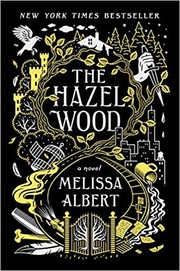
The Hazel Wood
2,064-word summary 9 min read 368 pages in the book
- First published
- 2018
- Publisher
- Flatiron Books
- Pages
- 368
- ISBN
- 9781250147905
- Series
- The Hazel Wood (#1)
Reading options
What's inside (9 sections)
The Hazel Wood is a book about stories that can hurt you. Not metaphorically. In Melissa Albert's novel, the fairy tales are real, the characters can cross into the ordinary world, and the girl at the center of the plot is herself a story that escaped. That premise could have been a gimmick. What makes the book work is the mood. Albert writes like someone who grew up on the darker versions of fairy tales and never quite got over them. The result is a young adult fantasy that feels older and stranger than its category suggests.
Alice Proserpine is seventeen. She and her mother, Ella, have spent most of Alice's life moving from place to place, staying with friends, and leaving before things get bad. The bad luck is not ordinary bad luck. It follows them. Alice has learned to expect it, and she has learned not to ask too many questions. Her grandmother, Althea Proserpine, is a recluse who wrote one book, Tales from the Hinterland, and then disappeared from public life. The book is a cult classic. Copies are rare and expensive. Fans trade theories about it online. Alice has never met her grandmother, and Ella refuses to talk about her.
At the start of the novel, Althea dies. The news changes something in Ella. She becomes restless, then settles. She marries Harold, a wealthy man she meets while working at a party, and moves with Alice into his apartment in New York. Harold has a daughter, Audrey, who is not thrilled about the new arrangement. For a moment, it looks like Alice might get a normal life. Then Ella disappears. Alice comes home to find the apartment empty, a strange smell in the air, and a page from a story called "Alice-Three-Times" left behind. The page has her name on it.
The fan
Alice's only lead is Ellery Finch, a boy from school who is a serious fan of Althea's book. Finch is rich, charming, and a little too eager. He knows the lore, he knows the fan sites, and he knows that Alice is Althea's granddaughter. He agrees to help her find Ella. Their search takes them out of New York and into a version of upstate New York that feels like it belongs in a different world. They visit a fan named Ness, who claims to have found a way into the Hazel Wood, and they learn about a town called Birch, where strange murders have happened.
The middle of the book is a road trip with a growing sense of dread. Albert is good at the small details that make the familiar feel wrong. A rental car fills with seawater. A stranger in a diner knows Alice's name. A song on the radio contains a warning. The Hinterland is leaking into the real world, and Alice is the reason. She does not know that yet, but the reader starts to suspect it early. The book uses that dramatic irony well. Every ordinary scene has a second layer, and the second layer is getting closer.
Finch is the most complicated character in the novel. He is helpful, funny, and clearly infatuated with Alice, but he is also hiding something. When they reach Birch, he admits that he made a deal with the Hinterland. He was supposed to deliver Alice to a character named Twice-Killed Katherine. Katherine is terrifying. She has been killed twice, and she does not stay dead. She wants Alice's blood to open a door. When Alice refuses to cooperate, one of Katherine's companions slashes Finch's throat. It is a brutal scene, and it changes the book's tone. Up to that point, the danger had been eerie. Now it is physical.
The Hinterland
Alice is sent into the Halfway Wood, a borderland between the real world and the Hinterland. She has three objects: a comb, a bone, and a feather. Each one helps her pass a trial. The comb freezes a lake, the bone becomes a sword, and the feather gives her wings. The trials are creepy and inventive, and they read like the darker parts of a fairy tale. Alice survives because she is resourceful and because she is angrier than she looks. That anger is important. It is the part of her that belongs to the story.
She reaches the Hazel Wood, her grandmother's estate, and finds a house that is bigger on the inside than it should be. The rooms shift. The memories of Althea and Ella are embedded in the walls. Althea is there, or something that looks like her. She explains the truth. The Hinterland is real. The stories in Tales from the Hinterland are real. Althea did not invent them. She crossed into the Hinterland, learned them, and brought them back. The book made her famous, but it also created a bridge. The characters in the stories could cross into the real world.
Alice is one of those characters. She is the girl from "Alice-Three-Times," a story about a princess with black eyes who is feared and hated by her mother. Ella stole her from the Hinterland when Alice was a baby. The bad luck that followed them was not bad luck. It was the story trying to get her back. Every move, every lost apartment, every narrow escape was part of a pattern. Alice's entire life has been a flight from a plot she did not know she was in.
The story spinner
The Hinterland is ruled by the Story Spinner, who controls the tales. The Spinner does not want Alice to escape. Alice is a Story, and Stories are supposed to repeat. The Spinner puts her back into "Alice-Three-Times," and Alice relives the role of the frozen princess. The story repairs itself whenever she tries to resist. Finch, who is alive in the Hinterland, and Janet, a traveler who knew Althea, try to help her break out. They fail until Alice realizes that she cannot escape the story by fighting it. She has to change it.
That is the book's central idea, and it is a good one. Alice does not defeat the Story Spinner in a battle. She tells a different ending. She speaks a version of the story in which the girl leaves and finds her mother. The new ending opens a way out. It is a quiet climax, and it fits the novel's interest in narrative. The characters are not freed by strength. They are freed by authorship. Alice takes control of the text that has controlled her.
She returns to New York and discovers that two years have passed. Ella is alive. She had been held by the Hinterland characters and eventually escaped. Althea is dead, and the Hazel Wood is ruined. Alice has lost the ice and the anger that made her a Story, and she has to figure out who she is without them. Finch stays in the Hinterland. He chooses to keep traveling. Janet stays too. The ending is not a clean reunion. It is a beginning, and it is honest about how much was lost.
What the book is good at
Albert's prose is the main attraction. She writes with a sharp, fairy-tale cadence that never becomes precious. The descriptions are specific and strange. A character has hair that moves on its own. A house has rooms that remember. The Hinterland is not a generic fantasy world. It is a place made of stories, and the stories have rules that feel both arbitrary and inevitable. The book is atmospheric in the best sense. You can feel the cold, the smell of the woods, and the pressure of the plot.
The relationship between Alice and Ella is the emotional core. Ella is not a perfect mother. She is secretive, impulsive, and sometimes careless. She also loves Alice fiercely, and she has spent years protecting her from something Alice did not understand. The novel does not resolve their relationship in a single conversation. It leaves them with work to do. That is more interesting than a neat reconciliation.
The book is also good at female anger. Alice is not a sweet heroine. She is prickly, suspicious, and capable of violence. The story does not punish her for it. It treats her anger as a source of power and a source of danger. That is a welcome change from the usual young adult pattern, where girls are allowed to be brave but not really angry.
Althea's theft
The novel's most interesting moral question is not about the villains. It is about Althea. She crossed into the Hinterland, took stories that belonged to someone else, and published them as her own. The book made her famous, but it also damaged the people and creatures she wrote about. The characters in the Hinterland are not metaphors. They are living beings with their own desires, and Althea turned them into material. Her fame came at their expense.
That is a sharp idea for a novel about storytelling. It asks who owns a story, and whether a writer has a responsibility to the people she writes about. Althea is not presented as a simple villain. She is selfish, brilliant, and afraid. She wanted to escape the Hinterland, and the book was her way out. But she left a door open, and the consequences followed her daughter and granddaughter. The Hazel Wood is partly a critique of the kind of author who treats other people's lives as raw material. That is a more adult theme than the cover suggests.
Ella's decision to steal Alice from the Hinterland is the mirror image of Althea's theft. Ella takes a character out of a story to save her, and that act creates its own set of problems. Both women are trying to protect themselves by taking something that is not theirs. The novel does not condemn them outright. It shows the cost. Alice grows up as a person who does not know what she is, and the truth, when it comes, is both a relief and a violation.
What the book gets wrong
The second half is rushed. The Hinterland is the most interesting part of the book, and it goes by quickly. The trials are clever, but they are over in a few pages. The Story Spinner is built up as a cosmic threat, and then the confrontation is resolved through a change in narration. Some readers will find that elegant. Others will find it anticlimactic. I was somewhere in between. The idea is stronger than the execution.
Finch's betrayal is also underdeveloped. He sells Alice out, and then he is killed, and then he is alive again. The book does not spend enough time on what that did to him or to Alice. His choice is a big deal, and the novel moves past it. The same is true of Twice-Killed Katherine. She is a great villain, and she disappears from the story before she is fully explored.
The worldbuilding can be confusing. The rules of the Hinterland are deliberately mysterious, but sometimes they are mysterious in a way that feels convenient. Characters can cross over, stories can be rewritten, and time works differently. The book does not always explain how any of it functions. That is acceptable in a fairy tale, but it makes the plot harder to follow than it needs to be.
Who should read it
I would recommend The Hazel Wood to readers who like dark fairy tales, portal fantasies, and stories about stories. It is a good fit for fans of Holly Black, Neil Gaiman, and anyone who has ever been more interested in the villain's backstory than the hero's quest. It is not a perfect novel, but it is a memorable one. The images stay with you. The premise is strong enough to carry the weaker sections.
It is also a good book for readers who are tired of chosen-one stories that are only about destiny. Alice is chosen, but she does not accept the role. She rewrites it. That is a more active kind of heroism, and it fits the book's fairy-tale logic. The ending is not about defeating an enemy. It is about becoming the author of your own life. That is a familiar theme, but Albert gives it a fresh coat of darkness.
FAQ
Who is Alice Proserpine?
She is the seventeen-year-old protagonist, a girl who discovers that she is a character from a Hinterland fairy tale, stolen and raised in the real world by her mother.
What is the Hinterland?
It is the supernatural world where Althea's stories came from, a place of living fairy tales that can bleed into the ordinary world.
Does The Hazel Wood have a sequel?
Yes. The Night Country continues the story, and a companion collection, Tales from the Hinterland, expands the fairy tales.
Similar books
More from The Hazel Wood first, then related titles.

Inkdeath
The final Inkworld novel sends Mo into the land of the dead, leaves Meggie choosing between two boys, and ends the Adderhead's immortality with three written…
2,062-word summary · 9 min read
House of Salt and Sorrows
Annaleigh Thaumas investigates her sister's death in a cursed island manor where the balls are illusions and the sea god is always listening.
2,025-word summary · 9 min read
Blue Lily, Lily Blue
Blue searches for her missing mother while the Raven Boys wake a sleeper in the caves who is not the king they sought.
2,983-word summary · 13 min read
A Curse for True Love
Evangeline wakes married with no memory of Jacks while Apollo and Jacks hunt.
2,287-word summary · 10 min read
The Ballad of Never After
Evangeline hunts four missing Arch stones with Jacks to free a cursed Apollo and learns what his rescue will cost.
3,690-word summary · 16 min read
Once Upon a Broken Heart
Evangeline trades three kisses with the Prince of Hearts to stop a wedding and dooms herself instead.
2,839-word summary · 13 min read
Harry Potter and the Chamber of Secrets
Chamber of Secrets: Dobby's warning, the flying car, polyjuice potions, and the diary of Tom Riddle. What the second Harry Potter book does differently and how…
2,172-word summary · 10 min read
Harry Potter and the Prisoner of Azkaban
Prisoner of Azkaban, the mature third book: Sirius Black on the run, dementors at the gates, Remus Lupin's secrets, and the time-turner finale that rewrites…
2,053-word summary · 9 min read

Lioness Rampant
Alanna searches for the Dominion Jewel with the Shang Dragon, then returns to Tortall to face Duke Roger at Jonathan's coronation.
2,478-word summary · 11 min read

The Siren
Saved from a shipwreck in 1930, Kahlen becomes a siren who sings men to their deaths for the Ocean, until a boy in a college library makes her want a life she…
2,369-word summary · 11 min read

The Golem's Eye
Two years after The Amulet of Samarkand, Nathaniel is a rising bureaucrat, Bartimaeus is his unwilling servant again, and something made of clay is tearing…
2,299-word summary · 10 min read

Homeland
Drizzt Do'Urden is born into the cruel drow city of Menzoberranzan, where his father teaches him to fight and to doubt everything his family believes.
2,303-word summary · 10 min read
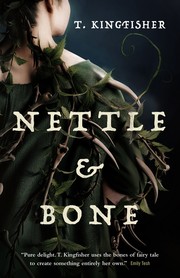
Nettle & Bone
Marra, a princess in a convent, leaves to save her abused sister, but first she must finish three impossible tasks: a bone dog, a nettle cloak, moonlight in a…
2,061-word summary · 9 min read

The Rose & the Dagger
Shahrzad is pulled from her Caliph husband and left in a desert camp of rebels, needing to break his curse and end a war before it ends her.
2,520-word summary · 11 min read

The Queen of the Tearling
Nineteen-year-old Kelsea leaves the woods to take her throne, ends a shipment of human captives, and draws the Red Queen's revenge.
2,357-word summary · 10 min read

We Hunt the Flame
In a fractured Arabia-inspired world, a disguised huntress and a prince-assassin race to find a magic-restoring book and confront an ancient evil.
2,195-word summary · 10 min read
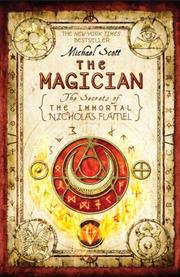
The Magician
Sophie and Josh flee to Paris with Nicholas Flamel, where John Dee, Machiavelli, and an awakened god close in on the missing pages of the Codex.
2,162-word summary · 10 min read

In the Hand of the Goddess
Alanna, still disguised as a boy, survives war, court plots, and a death duel as the Goddess's chosen warrior in the second Song of the Lioness book.
2,018-word summary · 9 min read

Blue Moon
Ever Bloom tries to save her immortal boyfriend, Damen, from a mysterious illness while a new student named Roman quietly takes control of her school and her…
1,998-word summary · 9 min read
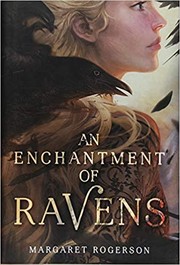
An Enchantment of Ravens
Isobel, a mortal artist in the fairy town of Whimsy, paints a portrait of the autumn prince and falls in love with him, breaking the laws of her craft.
2,087-word summary · 9 min read
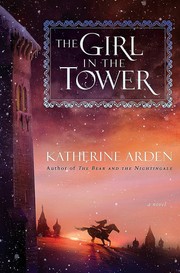
The Girl in the Tower
Vasya rides out disguised as a boy, rescues kidnapped girls, and rejoins her siblings in Moscow, where a hidden sorcerer and the Grand Prince's court close in.
2,801-word summary · 12 min read
Ghost Story
Dead but not gone, Harry Dresden returns as a spirit to find his killer, protect the friends he left behind, and learn why the afterlife gave him a second…
1,978-word summary · 9 min read
The Bane Chronicles
Eleven stories across five centuries follow Magnus Bane from a ban in Peru to his first date with Alec in this illustrated Shadowhunter companion.
2,470-word summary · 11 min read
Cold Days
Back from the dead as the Winter Knight, Harry Dresden must follow Mab's order to kill an immortal and defend Demonreach on Halloween night.
2,361-word summary · 10 min read

The Indigo Spell
Sydney Sage hunts an aging witch, learns forbidden magic, and finally admits she loves Adrian, while the Alchemist tattoo on her cheek may be controlling her.
2,604-word summary · 12 min read
Turn Coat
Morgan asks Harry for sanctuary as the Council calls him traitor.
2,590-word summary · 12 min read
The Last Graduate
El must survive graduation when the school feeds seniors to monsters.
2,232-word summary · 10 min read
Small Favor
Harry owes Mab a favor and must find Marcone while Denarians hunt a holy girl.
2,741-word summary · 12 min read
Rebel Angels
Gemma returns to the realms to bind magic while facing Circe and London season.
2,708-word summary · 12 min read
Furies of Calderon
Furyless Tavi defends Calderon Valley when the Marat return and lords scheme.
2,587-word summary · 11 min read