
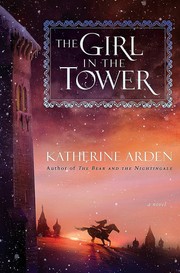
The Girl in the Tower
2,801-word summary 12 min read 384 pages in the book
- First published
- 2017
- Publisher
- Del Rey
- Pages
- 384
- ISBN
- 9781101885963
- Series
- Winternight Trilogy (#2)
Reading options
What's inside (9 sections)
There is a moment about a third of the way into The Girl in the Tower when a rider on a great bay stallion reins up at the gate of the Trinity Lavra with three frightened girls behind him on the horse. The monks and refugees crowding the yard see a slender young man in weather-beaten boy's clothes. The Grand Prince of Moscow sees a hero. Only one person in that crowd looks at the rider and recognizes his own sister, whom he has not seen in eight years. That single image holds the whole novel: Vasya Petrovna, brilliant, disguised, and entirely alone in a city that would destroy her if it learned what she is. Published by Del Rey in 2017, with the hardcover running 384 pages, this is the middle book of the Winternight trilogy, and it does what middle books rarely manage. It takes the fairy tale of the first novel and drops its heroine into history.
The Bear and the Nightingale was a story about a girl in a village, a priest who called the household spirits demons, and a winter that would not end. The Girl in the Tower keeps the same heroine and the same frost-demon, but it moves the action to Moscow, puts a Grand Prince and a Tatar embassy on the page, and turns a private struggle against the dark into a public one over who gets to rule. What was a haunted forest becomes a court full of factions, a river of gossip, and a walled city that can burn. Here Arden stitches Russian folktales into the Moscow of Grand Prince Dmitrii Ivanovich, with the Tatar threat always near. The result is stranger and more ambitious than the first book, and a little less tidy.
A Girl with No Place to Go
Vasya begins the novel exactly where the first book left her: fleeing. After the events at Lesnaya Zemlya, where her father and stepmother died and where she was named a witch for the power she could neither explain nor hide, she has nowhere among people to go. Her older sister Olga is a princess in Moscow. Her older brother Sasha is a warrior monk in the Grand Prince's service. Neither of them knows she is alive. So Vasya does the one thing a girl of her time and place is not permitted to do: she rides out alone on Solovey, the enchanted stallion Morozko gave her, with her hair cut short and a boy's coat on her back.
Her first stop is the frost-demon's own house, a solitary place in a fir grove where Morozko meets her and, for the length of a chapter, tries to be sensible. He tells her a lone girl on the road is prey, and that she should go home and find a place among her people. Vasya will not. She asks instead for the dowry he once dangled before her, the warm clothes and the silver, and he gives it to her with the reluctance of someone who already knows how this ends. Before she leaves, he fastens a sapphire pendant around her neck and makes her promise never to take it off. Anyone who has read a folktale knows the necklace will come off, and that the moment it does, something terrible will follow.
The road itself is the best sustained section of the book. Vasya travels as a boy, which lets her move through spaces a girl could not enter, and Arden is honest about how thrilling and how dangerous that freedom is. She camps with a small demon she calls Midnight, a chyert whose advice keeps steering her toward danger. In the town of Chudovo she has a first, oddly charged run-in with a red-haired boyar named Kasyan, and then she is attacked in a bathhouse and escapes only because the bannik, the bathhouse spirit, and a sudden unnatural snowstorm intervene. She falls desperately ill, and Morozko comes when she is at the edge of dying. He heals her, feeds her, and then teaches her to fight with a dagger, so that next time she can defend herself.
Those lessons are the novel's clearest statement of what it thinks about Vasya and Morozko. He cannot simply rescue her, because rescuing her would only move her from one tower to another. He cannot leave her helpless either. So he arms her and steps back, which is both more respectful and more painful than the soft romance a lesser book would have written. A lesser book would have made him the answer. This one makes him a problem.
The Burned Village
The plot's engine turns on a chain of atrocity. Villages in the countryside are being burned, and girls are being carried off. Sasha brings this news to Moscow, and Vasya, riding on alone, finds the evidence for herself: a smouldering village whose survivors tell her that bandits took three girls away. This is where the fairy-tale heroine becomes something closer to an avenger. The village's domovoi, the house spirit, gives her a glowing coal that will show her the way, and Vasya follows it to the bandits' camp, kills a raider with the dagger Morozko gave her, and hauls the terrified girls onto Solovey's back.
Midnight directs her toward the Trinity Lavra, where Sasha and Dmitrii happen to be, and that is how the rider at the gate comes to be there: a boy who is not a boy, delivering captives to a prince who will canonize him on the spot. Sasha recognizes her almost at once, and from that recognition the middle act is built. He agrees, against every instinct, to help her keep the disguise. She becomes Vasili Petrovich, his supposed younger brother, and the lie grows teeth.
The bandits matter later in a way that is easy to miss on a first read. At a feast in Moscow, Vasya recognizes the new Tatar ambassador, Chelubey, as the surviving bandit leader from the camp, now dressed in finery. The men who burned villages and took girls sit at the Grand Prince's table under a flag of truce, and only Vasya has the sight to know it. Her gift isolates her, and it is also the one thing that makes her useful to a city that would execute her for using it.
Reunion in Moscow
Moscow in this novel is a city of women's towers and men's councils. Olga, Vasya's elder sister and now the Princess of Serpukhov, lives in a terem, the enclosed upper rooms where noblewomen are kept as much as housed. She has two children and a third on the way, and she has learned to survive by making herself essential to the household she cannot freely leave. When Vasya, still dressed as a boy, comes to her, Olga's first reaction is fear, and the fear is correct. Sheltering a witch in the Grand Prince's own capital is not loyalty; it is suicide with extra steps. But Olga helps anyway, because the book is uninterested in easy heroism and very interested in the compromises family demands.
Olga's daughter Marya is one of the novel's best inventions. Marya is a child who sees what Vasya sees: the chyerti in the corners, the spirits of the hearth and the stable, the things everyone else calls nonsense. Here Vasya meets a child who shares her gift, and the tenderness in those scenes complicates the whole story. Vasya does not tell Marya to shut her eyes and pray it away. She tells her to feed the household spirits, to keep them strong, to treat her second sight as a responsibility rather than a curse. It is a quiet scene that sets up the third book and, in a way, the entire argument of the trilogy.
Around the siblings circles Konstantin Nikonovich, the handsome priest from the first novel, whom Sasha finds sick on the road and brings back to Moscow. Konstantin has survived, and in surviving he has soured. He claims to have watched Vasya flee into the frozen forest, and he calls her a witch with a hatred curdled into obsession. He is precisely the kind of man who can do the most damage: charismatic, sincere-sounding, and convinced of his own righteousness.
The Race and the Reveal
Vasya's disguise holds for about as long as disguises in folktales ever do, and the unravelling is spectacular. During Maslenitsa, the festival that says farewell to winter, Morozko appears and takes Vasya on a ride through the empty night streets of Moscow. He warns her that a shadow hangs over the city, and then he kisses her and vanishes, as cryptic about his feelings as ever.
The next day, Kasyan challenges Vasili to a horse race, insisting on his golden mare, Zolotaya. Vasya accepts, certain that Solovey cannot lose. She is right that he cannot lose a fair race, and that turns out not to matter. Kasyan rides up beside her, tears off her hood, and then rips her shirt open in front of the crowd. Her long hair and her body do the rest. The young man the Grand Prince admired is a girl, the whole deception is public, and Dmitrii's response is fury at being fooled. Sasha is arrested for his part in it, and Vasya is shut up in Olga's terem, which is to say she is handed the exact fate she spent the whole book riding away from.
This is the hinge of the novel, and Arden builds it well. With one violent gesture, Kasyan converts Vasya's greatest strength, her ability to move as a boy through a world closed to girls, into proof that she does not belong anywhere in it. The city does not punish her for a crime. It punishes her for having briefly escaped the tower. And Kasyan, now revealed to the reader as far more than a boyar, visits Konstantin and starts assembling a plot from the wreckage.
Kaschei, the Firebird, and the Burning City
What Kasyan really is, Morozko finally admits: Kaschei the Deathless, the immortal sorcerer of Russian folktale, wearing the face of a charming young lord. He is ancient, he is patient, and he is not finished with Vasya. He comes to her in the tower and offers to marry her, and when he sees the sapphire pendant he tells her the truth Morozko would not. The necklace is a talisman that binds the frost-demon's power and memory to whoever wears it, and by wearing it Vasya has been, in Kasyan's word, his slave. Morozko does not deny it when Vasya confronts him. The thing that has protected her was also a leash.
The book's darkest sequence follows. Olga goes into labour, and Morozko comes as the death-god he is, because a birth this difficult sits on the border of his domain. Vasya, feverish, follows her sister onto the twilit road between life and death, and is forced to watch Olga choose to die so that her unborn daughter might live. Then Morozko takes the choice back. The baby is stillborn, and Vasya is left with the knowledge that her own power, reaching where it should not, stripped her sister of the one thing that was still hers. Konstantin, called to the birth chamber to baptize mother or child, seizes the moment to denounce her as a witch. Grieving and used, Vasya destroys the sapphire pendant and severs her bond with Morozko.
From there the novel runs downhill at speed. Kasyan has Konstantin kidnap Marya for her magical sight, and Vasya and Sasha race to Dmitrii's palace, now under siege by Kasyan and Chelubey's forces. In the stables, Vasya pulls the ensorcelled bridle from Kasyan's mare, and the mare turns into the Firebird. Fire sweeps Moscow. Vasya fights her way to the tower, where the ghost of her grandmother Tamara reveals the last secret: Kasyan bound his immortality to Tamara's spirit when they were lovers, so his life is not in his body but in hers. Vasya breaks the jewel that holds their shared life, Kasyan dies, and Tamara is finally at rest.
That leaves only the fire. With the pendant gone, Morozko cannot simply appear and save the city; he can only reach the dying. So Vasya walks into the flames alone to summon him, and on the road between life and death she proves that the bond between them was never really the necklace. She pulls him back into the world by wanting him there, and Morozko raises a snowstorm that smothers the fire, ending winter in the same breath. At dawn he fades, because a frost-demon does not last into spring. Vasya goes home to Olga, and the siblings finally trade secrets instead of lies. The book ends not with a wedding or a throne but with a family deciding, together, to protect a child who has the same dangerous gift.
What the Book Is Really Doing
Strip away the folklore and The Girl in the Tower is a book about the narrowing of a girl's life. Vasya's options in her world are marriage or a convent, both of which the novel explicitly describes as a kind of tower, and the plot is structured to keep testing whether she can hold onto her freedom without losing her family, her honor, or her life. The disguise makes this visible. Everyone respects Vasili. The same person is a scandal as Vasya. Kasyan's attack in the race is ugly precisely because it is not random cruelty; it is the machinery of a society asserting itself, using her body as evidence that she has no claim to the life she built.
Konstantin is the sharpest expression of that theme. His hatred of Vasya is tangled with desire and shame, and he believes every word of it. He is also the most dangerous person in the book, because belief gives him permission to ruin a woman who saved him. Olga is the counterweight: a woman who has made her peace with the tower and still finds ways to be formidable inside it. The scenes between the sisters are the emotional spine, and they are quieter than the battles, which is why they land harder.
The criticism I would make is that the middle act rushes. The Moscow sections stack feasts, a Tatar embassy, a horse race, and a birth crisis into a very short stretch, and a reader who put the book down for a week might lose track of who Chelubey is and why the bandits matter. The payoffs are all there, but several of them arrive faster than they are set up, and the ending in particular pelts the reader with revelations about Kaschei, Tamara, and the pendant in the space of a few chapters. This one is trying to do city politics, a doomed folkloric romance, and a rescue plot at the same time, and it occasionally drops a thread. Some readers also find Morozko's cryptic withholding tiring by the midpoint, though the book clearly intends that exasperation and eventually makes it a plot point.
None of that undoes what works. Vasya remains a heroine who is allowed to be angry, stubborn, and sometimes wrong, and the novel respects her enough to let her fail. If you liked the first book for its atmosphere you will find less forest here and more brick and smoke, and the shift is worth it. If you are the kind of reader who wants a middle volume to deepen rather than merely continue, this one does, mainly by giving Vasya siblings who see her clearly and by turning the love story into a question about power rather than a reward.
The Verdict
The Girl in the Tower is the least self-contained book in the trilogy and the one most dependent on its neighbors, and it is also the one where the series decides what it is about. Arden writes folklore and history with the same hand, so a bathhouse spirit and a Grand Prince can share a chapter without either feeling imported, and she builds a heroine whose gift is inseparable from her danger. The novel is not perfect. Its final act is crowded, and it occasionally mistakes velocity for momentum. But it understands something the first book only implied: freedom for a girl in this world is not a gift anyone hands over, and every time Vasya takes it, someone tries to take it back. That is a story with a spine, and it carries the trilogy into its last, largest volume with the stakes genuinely raised. Read it for the horse race and the firebird if you want spectacle, and read it for the sisters if you want the part that stays with you.
FAQ
Is The Girl in the Tower a sequel?
Yes. It is book two of the Winternight Trilogy, after The Bear and the Nightingale and before The Winter of the Witch. It opens right where the first book ends, with Vasya on the road.
When was The Girl in the Tower published?
Del Rey published it on December 5, 2017. The hardcover runs 384 pages and its ISBN is 9781101885963.
Do I need to read the first book first?
Yes. The plot depends on the events and characters of The Bear and the Nightingale, and it assumes you already know the household spirits, the priest Konstantin, and Morozko.
Similar books
More from Winternight Trilogy first, then related titles.
The Bear and the Nightingale
Wild girl Vasya sees household spirits in medieval Russia while a priest calls them demons.
1,907-word summary · 8 min read

Inkdeath
The final Inkworld novel sends Mo into the land of the dead, leaves Meggie choosing between two boys, and ends the Adderhead's immortality with three written…
2,062-word summary · 9 min read
The Once and Future Witches
Three estranged sisters bring witchcraft back to an 1893 city where magic hides in nursery rhymes and the fight for the vote is also a fight for power.
2,132-word summary · 9 min read

The Hazel Wood
Alice Proserpine has spent her life running from bad luck. When her mother vanishes, she follows a trail of fairy-tale clues to her grandmother's estate and…
2,064-word summary · 9 min read
The Dragon Republic
Rin survives the last war only to join the Dragon Warlord against the Empress, trading one brutal fight for another.
2,810-word summary · 12 min read
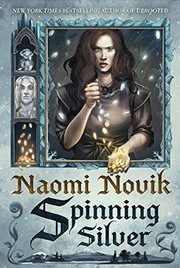
Spinning Silver
A moneylender's daughter says she can turn silver to gold, drawing a winter king, a plain duke's daughter, and a poor servant into one hard bargain.
2,813-word summary · 13 min read

A Curse for True Love
Evangeline wakes married with no memory of Jacks while Apollo and Jacks hunt.
2,287-word summary · 10 min read
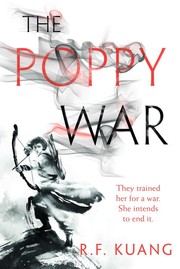
The Poppy War
A war orphan wins a place at Sinegard academy, bonds with a fire god, and faces invasion.
2,977-word summary · 13 min read
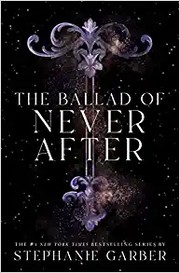
The Ballad of Never After
Evangeline hunts four missing Arch stones with Jacks to free a cursed Apollo and learns what his rescue will cost.
3,690-word summary · 16 min read
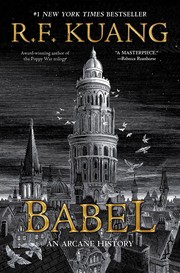
Babel
A Chinese orphan trained in translation magic at Oxford must choose between empire and resistance as Britain drives toward war with China.
3,696-word summary · 16 min read

Once Upon a Broken Heart
Evangeline trades three kisses with the Prince of Hearts to stop a wedding and dooms herself instead.
2,839-word summary · 13 min read
The Tales of Beedle the Bard
Five wizard fairy tales from Hermione book, with Dumbledore notes, including the Three Brothers and the Hallows.
2,663-word summary · 12 min read

The Blinding Knife
Kip trains to join the Blackguard while the Prism hides his true identity, loses his colors, and fights a war against a rogue drafter who wants to birth a god.
2,049-word summary · 9 min read
Hounded
A two-thousand-year-old druid runs a bookshop in Arizona, hides from an Irish god who wants his sword back, and talks to his dog.
2,159-word summary · 10 min read

Dawnshard
Rysn sails toward forbidden Akinah to save her dying larkin and finds a Dawnshard guarded by the Sleepless.
3,229-word summary · 14 min read
The Field Guide
Three siblings move into a creepy Maine estate, anger a brownie, and find a forbidden guide to the fairy world in the first Spiderwick book.
2,033-word summary · 9 min read

Magic Burns
A magic flare hits Atlanta, and mercenary Kate Daniels must recover stolen maps, find a missing witch, and keep a teenage girl alive while Celtic gods try to…
2,021-word summary · 9 min read
Year One
A plague released in Scotland kills most of humanity, and the survivors discover magic, build a town, and wait for a child who may save them.
2,029-word summary · 9 min read
Secrets of the Dragon Sanctuary
Kendra is replaced by a plant copy and held by the Society, while Seth steals a unicorn horn so the family can enter a dragon sanctuary.
2,590-word summary · 12 min read

Lioness Rampant
Alanna searches for the Dominion Jewel with the Shang Dragon, then returns to Tortall to face Duke Roger at Jonathan's coronation.
2,478-word summary · 11 min read

Iron Widow
Wu Zetian enlists to avenge her sister, kills her pilot, and becomes an Iron Widow in a mecha Huaxia where the machines are built to kill women.
2,444-word summary · 11 min read

Blood Bonds
Oleander is chained in a Resistance camp, and her five Bonds have to find her before Silas Davies finishes what he started in this third Bonds that Tie book.
2,018-word summary · 9 min read
Witches Abroad
Three Lancre witches fly to Genua to stop a fairy godmother from forcing a servant girl into a storybook marriage, and find a city arranged around a happy…
2,651-word summary · 12 min read
The Time Paradox
When his mother falls ill with a fairy disease, Artemis Fowl travels back in time to find the extinct lemur that can cure her and confronts his younger self.
2,601-word summary · 12 min read

The Siren
Saved from a shipwreck in 1930, Kahlen becomes a siren who sings men to their deaths for the Ocean, until a boy in a college library makes her want a life she…
2,369-word summary · 11 min read
The Mitten
Jan Brett retells a Ukrainian folktale about a boy, a lost white mitten, and the woodland animals that crowd inside until a bear sneezes.
2,609-word summary · 12 min read

The Golem's Eye
Two years after The Amulet of Samarkand, Nathaniel is a rising bureaucrat, Bartimaeus is his unwilling servant again, and something made of clay is tearing…
2,299-word summary · 10 min read
Magician's Gambit
Garion and his companions cross haunted Maragor and the caves beneath Rak Cthol to recover the Orb of Aldur.
2,391-word summary · 11 min read
Homeland
Drizzt Do'Urden is born into the cruel drow city of Menzoberranzan, where his father teaches him to fight and to doubt everything his family believes.
2,303-word summary · 10 min read
Enchanters' End Game
Garion marches toward Torak while Ce'Nedra leads the West's army in the final Belgariad volume, where prophecy and war meet.
2,557-word summary · 11 min read