
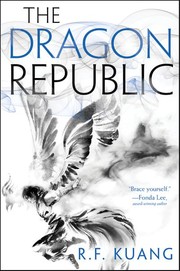
The Dragon Republic
2,810-word summary 12 min read 672 pages in the book
- First published
- 2019
- Publisher
- Harper Voyager
- Pages
- 672
- ISBN
- 9780062662637
- Series
- The Poppy War (#2)
Reading options
What's inside (8 sections)
I finished The Poppy War late at night and ordered the sequel the next morning, which tells you how the first book leaves you. R.F. Kuang does not give Rin a rest or a victory parade. She gives her addiction, guilt, and a new warlord with better slogans. That is the book in one breath. Harper Voyager published it in 2019, and the hardcover runs 672 pages. It is the second volume of The Poppy War trilogy, set after the Third Poppy War, and it follows Rin as she trades one master for another while Nikan tries to decide what kind of country it even is.
If you have not read the first book, stop here and read that one first. This summary assumes you know who Rin is, what the Phoenix did through her at the end of the last war, and why Empress Su Daji is the person Rin blames most. Spoilers for both books follow. I keep the worst violence general, the way the earlier post on this site did, because the details are not the point. The choices are the point.
This is a military fantasy about civil war, and it reads like one. Long marches. River crossings. Siege math. Councils that argue about grain while people starve. Kuang modeled Nikan on China in the early twentieth century, and this volume leans into the warlord era and the fight over republican government. Foreign guns pay for local battles. Old school friends end up on opposite sides of a map. A girl who can call fire learns that fire does not build anything.
The war is over and Rin is falling apart
The book opens with Rin in bad shape. She survived the last campaign and called the Phoenix to burn Mugenese forces at terrible cost. Now the god lives close under her skin and speaks to her in rage and hunger. She quiets it with opium. She quiets the guilt the same way.
She is not alone, though she often acts like it. Kitay is still with her, the funny and steady friend from Sinegard who carried her through school and through the war. The Cike are with her too, or what is left of them. Altan is dead. The remaining shamans hide in the south and take small jobs to eat. Chaghan, pale eyed and cold, watches Rin with open distrust. His sister Qara stays near him and says little. Baji talks too loud and shoots well. Suni is huge and gentle and bonded to a fox god. Ramsa loves bombs and jokes in a way that stops being funny once you see how young he is.
They are hunted. Empress Su Daji holds the throne in Sinegard and wants the Cike dead or chained. Rin wants Daji dead first. Daji gave up pieces of Nikan to the Mugenese to keep power, and Rin counts the dead from that bargain as Daji's work. Revenge is the only plan Rin has that still feels warm. Everything else feels gray.
Kuang writes addiction here without glamour and without lectures. Rin lies about how much she smokes. She steals resin. She promises Kitay she will cut back and means it for about a day. Withdrawal makes her shake and weep. The Phoenix likes her better when she is low, because a low Rin reaches for rage faster. One short scene stuck with me. Kitay counts her pipes while she sleeps. He does not throw them out. He just counts, the way you count money you know you will lose.
A fair criticism starts this early. Rin spends the first stretch making the same error on repeat. She reaches for poppy, hates herself, reaches again. The cycle is honest, and addiction does loop, but on the page it can feel like stalling. I kept wanting Kitay to shake her harder. He tries. She is not ready to hear it.
The Dragon Warlord makes an offer
Relief arrives in the shape of a capture. Yin Vaisra, the Dragon Warlord of Snake Province, takes Rin and her people. Vaisra is the father of Yin Nezha, the handsome Sinegard boy who bullied Rin in year one and fought beside her later. Nezha is with his father now, grown thinner and more formal, and the reunion with Rin and Kitay is awkward in a way I admired. Old jokes land wrong. Rank gets in the way.
Vaisra has a proposal. Help him kill the Empress. Help him unite the provinces. Then help him found a republic with an elected council instead of a throne. No more divine rulers. No more palace shamans pulling strings. Laws, votes, schools, railways. He speaks well. He has maps and lists and foreign advisers who nod at the right moments.
He also has Hesperian backing. The Hesperians are pale foreigners from across the sea, with rifles, cannon, airships, banks, and missionaries. They remind me of the Western powers in China in the nineteenth and early twentieth centuries, and Kuang means that echo. They will lend Vaisra guns and silver. In return they want ports, churches, trade rights, and a say in how the new republic runs. Vaisra calls this a partnership. Rin hears the word and tastes ash.
Rin says yes anyway. She has nowhere else to go, and Vaisra points her at Daji. That is enough.
I should note what Vaisra is selling beyond revenge. He tells the Cike they will be citizens, not weapons. He tells the south it will eat. He tells officers trained under the old Empire that skill will matter more than birth. Some of this is true. His camps run on schedule. His clerks pay on time. Wounded soldiers get care instead of being left by the road. Compared with the Empress, who rules through fear and palace shamans, Vaisra looks like morning.
Nezha believes it fully. That faith is painful to watch because you remember him as a schoolboy showing off on the training ground. Now he stands at his father's shoulder and repeats phrases about the republic the way cadets repeat drill. Kitay believes it halfway. He loves the planning rooms, the clean maps, the idea that math can save lives. Rin barely believes it at all, but she stays for the chance at Daji.
Learning to win a country, not a battle
The middle of the book turns into a campaign diary, and your patience here decides how you feel about the whole novel. Kitay becomes the quiet hero of these chapters. He learns Hesperian arithmetic and surveying. He draws supply lines. He figures out how many boats of rice an army needs to cross a province without stripping villages bare. Kuang gives him room to be brilliant without making him smug. Officers twice his age start asking the boy from the capital what the map says.
Rin trains to kill Daji. The Empress is herself a shaman of great strength, tied to a fox spirit, able to twist minds and slip away from blades. An early attempt to end her goes wrong in a way that shapes the rest of the book. Daji survives, and she shuts Rin's gate to the Phoenix. The seal is not explained with a diagram. It reads like a door slammed and locked from the other side. Rin can still fight with spear and fire powder. She cannot call the god.
Being cut off nearly breaks her. Then it steadies her in a strange way. Without the Phoenix voice screaming, she sleeps a little. She drills with regulars. She eats. She starts to see how much she used the god as an excuse to stop thinking. Kitay helps her study strategy instead of reaching for flame. Chaghan, who never trusted her bond with the Phoenix, treats her a bit more gently during this stretch. Baji teases her for missing. Suni shares food without comment.
This is also where Kuang shows what occupation costs. Vaisra's army moves north province by province. Some cities open their gates. Others hold out and get starved. Rin watches clerks tally grain until a city surrenders its stores and then its pride. She watches prisoners sorted into useful and useless. She tells herself the republic will be kinder once it wins. Kitay writes the tallies and stops sleeping well.
My criticism of this section is simple. There are too many councils. Kuang loves the planning scenes, and some crackle, but after the fourth debate about boats and bridges I started skimming. A friend told me she put the book down for a week in this stretch. I get it. The payoff for the detail comes later in two battles that only work because you learned the rivers. Still, a tighter cut would have helped.
A republic with Hesperian strings
The further Vaisra advances, the clearer the foreign price becomes. Hesperian officers attach to his units and correct Nikara officers in front of their troops. Hesperian priests open chapels beside field hospitals and hand out bread with sermons. Hesperian bankers track every rifle and ask for harbor rights to cover the debt. One scene has a Hesperian adviser explain to Rin, with a patient smile, that Nikan needs guidance the way a child needs a firm parent. Rin nearly kills him on the spot. Kitay talks her down, then admits later the man said aloud what the loan papers say quietly.
Rin has seen this story before. Mugen invaded with ships and fire. Hesperia invades with contracts and pity. The methods differ. The contempt rhymes. Kuang does not hide her view here, and at times the Hesperians talk like villains in a play about empire. A few readers may find that heavy handed. I mostly accepted it because Rin has earned her suspicion. She watched her country trade one set of foreign masters for another pile of foreign guns bought on credit.
The battles in this stretch are strong. Kuang stages a river assault that depends on tide, fog, and a chain boom across the water. She stages a siege where Kitay's math about rice matters more than Rin's spear. She shows Vaisra using airships for spotting and Hesperian cannon to break walls that would have held for months in the last war. The Cike get night work that suits them. Qara scouts where no scout should survive. Suni carries wounded men through mud. Ramsa blows a gate and loses hearing in one ear for days. Baji covers a retreat with arrows until his fingers bleed, then jokes about it because that is what Baji does when he is scared.
Nezha fights well and rises fast. His father's officers praise him. His father's smile seems to cost him sleep. Rin and Nezha spar the way they did at school, and for pages at a time they feel young again. Then Vaisra enters and Nezha straightens into a poster. Rin sees the change and files it away with other warnings she is not ready to face.
Daji, meanwhile, runs. She abandons Sinegard as Vaisra closes in, taking loyal shamans and treasure south toward old allies. The capital falls with less burning than I feared. People cheer in the streets. Someone paints a new flag on a wall. For a night the republic feels real.
When the allies become the enemy
Victory curdles fast. That is the turn the title points at. The Dragon Republic exists on paper. In practice Vaisra rules by decree while the promised council waits for seats that never get filled.
Rin learns what Vaisra does with shamans he catches. He does not recruit them. He locks them in a research house run by Hesperian doctors and Nikara helpers. They measure gates and doses. They try out methods to block gods or to pull power out of bodies without consent. The rooms smell of poppy and bleach. Files list children by bloodline and rating. Rin walks those halls and sees her own future if she had been caught younger. Chaghan goes white. Qara holds his sleeve so hard her knuckles show.
Worse follow. Vaisra orders reprisals against villages that fed Daji's troops. He signs a paper that starves a whole district to punish a few hiding loyalists. He lets Hesperian troops guard his new ministries and looks away when they beat Nikara clerks. When Rin protests, he calls her a soldier and tells her to leave rule to rulers. The man who promised citizens talks about pieces on a board.
Nezha picks his father. The scene where it happens is quiet, which makes it worse than a duel. No shouting. Nezha says his family built this chance and he will not throw it away for old school ties. Rin hears the boy she knew closing like a gate. Kitay takes it hardest. He mapped this republic street by street. He believed the math could be moral. Watching Nezha choose blood over friends hollows him.
Rin tries to free the caged shamans. The attempt fails and costs lives. Ramsa dies in the fighting around this point, and his death hit me harder than the big battle deaths. He was a kid who liked big bangs and acted brave to cover fear. The Cike bury what they can and drink that night without singing. Baji gets drunk and cruel. Suni sits apart with his head in his hands. Chaghan tells Rin plainly that Vaisra will kill them all if they stay. Qara nods once.
Here Kuang earns the grim label reviewers use. Nobody is clean. Daji starved and lied to keep a throne. Vaisra lies to build a republic that looks like a throne with new paint. The Hesperians preach peace while counting ports. Rin, who wanted revenge to feel like justice, finds it feels like paperwork and graves.
What the fire costs this time
The last stretch moves fast after so many councils. Rin breaks with Vaisra in full. She cannot serve a man who cages children and calls it research. She cannot serve Daji either, who returns with Mugenese help and old tricks. She picks the only path left that might stop both. She lets the Phoenix back in.
Kuang handles the return of Rin's fire with care. The seal Daji placed holds firm at first. Rin has to tear through it with pain and poppy and will, and the Phoenix charges its usual price. Rage first. Memory second. Mercy last. The god does not care about republics or empresses. It wants burning, and Rin points it at Vaisra's flagship and the fleet around it during a night action on the water. Masts go up like torches. Powder stores cook off. Men who praised the republic that morning scream its name while swimming.
Rin does not walk away clean. Burns mark her. The voice stays louder after. Friends she meant to shield get hurt anyway. Nezha is aboard during the attack, and his fate is left torn and painful. Kitay pulls Rin out of the water and keeps her alive through the night that follows, and those pages are among the best in the book. No gods. No speeches. A boy keeping a shivering girl breathing by counting breaths and talking about school food.
The book ends with the war unfinished. Daji lives. Mugen waits. The republic Vaisra declared stands exposed as another army with better flags. Rin, Kitay, and the remaining Cike run again, fewer than before and harder than before. There is no concluding lesson spoken over the last fire. There is only the road and the next volume, The Burning God, waiting to settle what this one started.
So who should read it. If the first book hooked you with Sinegard and then shook you with its second half, read on, but clear your schedule and guard your sleep. Readers who love campaign detail, maps, and arguments about grain will eat well here. Readers who need a hero to admire may struggle, because Rin lies, relapses, and burns people she means to save. That is the point of her, I think. She is a weapon trying to become a person while everyone powerful wants her to stay a weapon.
I rate the middle as the weak part and the friendships as the strong part. Kitay carries chapter after chapter with brains and decency. The Cike feel like a real unit, tired and rude and loyal. Nezha's slow split from Rin and Kitay hurts because Kuang built it from school days, not from one speech. The politics stay blunt. Freedom with foreign guns is still servitude. A republic run by decree is still a throne.
Pick it up right after book one while names and debts are fresh. Keep water nearby. Expect councils, rivers, betrayal, and fire. Expect to close the last page angry at almost everyone and worried most about Rin, who wanted revenge and got a mirror instead.
FAQ
Do I need to read The Poppy War before The Dragon Republic?
Yes. This is book two of The Poppy War trilogy and it starts where the first book ends. Characters, debts, and the Phoenix bond will confuse new readers otherwise.
When was The Dragon Republic published?
Harper Voyager published it on August 6, 2019. The first hardcover runs 672 pages and the ISBN is 9780062662637.
Is The Dragon Republic as violent as the first book?
Yes. It includes battle deaths, reprisals against civilians, torture, addiction, and suicide. Readers who found the first book heavy should expect the same here.
Similar books
More from The Poppy War first, then related titles.
The Poppy War
A war orphan wins a place at Sinegard academy, bonds with a fire god, and faces invasion.
2,977-word summary · 13 min read
The Burning God
Rin burns south and bargains with the Phoenix as the Republic splits.
2,381-word summary · 11 min read
Babel
A Chinese orphan trained in translation magic at Oxford must choose between empire and resistance as Britain drives toward war with China.
3,696-word summary · 16 min read

The Blinding Knife
Kip trains to join the Blackguard while the Prism hides his true identity, loses his colors, and fights a war against a rogue drafter who wants to birth a god.
2,049-word summary · 9 min read

The Girl in the Tower
Vasya rides out disguised as a boy, rescues kidnapped girls, and rejoins her siblings in Moscow, where a hidden sorcerer and the Grand Prince's court close in.
2,801-word summary · 12 min read
The Tower of the Swallow
Ciri flees as a bandit while Geralt gathers allies to find her.
2,580-word summary · 11 min read
The Black Prism
Dying Prism Gavin Guile hides a secret son while war brews over color magic in the Seven Satrapies.
2,169-word summary · 10 min read
Gardens of the Moon
Empire, gods, and mages collide over Darujhistan as Bridgeburners bleed for Empress Laseen.
2,188-word summary · 10 min read
Baptism of Fire
Wounded Geralt crosses war country with odd allies to find Ciri after the Thanedd coup.
2,076-word summary · 9 min read

Winter's Heart
Trapped in Far Madding without the Power, Rand baits his betrayers while Mat plots escape from Ebou Dar and Elayne fights for Caemlyn.
2,906-word summary · 13 min read
The Time of Contempt
Geralt and Yennefer shelter Ciri as mages split and war breaks over the Thanedd coup.
2,355-word summary · 10 min read
The Path of Daggers
Rand wields Callandor against Seanchan while Elayne and Egwene maneuver.
2,492-word summary · 11 min read
Knife of Dreams
Rand sets a Seanchan trap while Mat weds Tuon, Perrin storms Malden, Elayne takes Caemlyn, and Egwene defies Elaida.
2,988-word summary · 13 min read

A Memory of Light
Rand faces the Dark One at Shayol Ghul as all armies join the Last Battle.
2,165-word summary · 10 min read

Towers of Midnight
Perrin faces Whitecloak judgment and the wolf dream while Mat enters the Finns' tower for Moiraine.
2,099-word summary · 9 min read
Rule of Wolves
A strained king, storm general, and spy witch face invasion, saints, and old shadows in finale.
2,372-word summary · 11 min read

Rhythm of War
Kaladin breaks, Navani holds Urithiru, and Shallan faces the honorspren as war turns inward.
3,095-word summary · 14 min read
Blood of Elves
Geralt shelters Ciri at Kaer Morhen while Triss and Yennefer train her wild Source talent as Rience hunts her and Northern kings and Nilfgaard plot open war…
3,394-word summary · 15 min read
Oathbringer
Dalinar chases unity in Urithiru while Kholinar falls and an old oath demands payment.
3,513-word summary · 16 min read
Inheritance
Eragon and Saphira march on Uru'baen to end Galbatorix, with hidden hearts and hard goodbyes.
3,160-word summary · 14 min read
Words of Radiance
Kaladin guards Dalinar, Shallan hunts Urithiru, and the Everstorm gathers.
2,754-word summary · 12 min read
Brisingr
Eragon rescues Katrina, backs a dwarf king, and earns a burning sword.
2,214-word summary · 10 min read

House of Flame and Shadow
Bryce lands outside Midgard while Hunt sits in Asteri dungeons and the war for two worlds builds.
2,983-word summary · 13 min read
The Way of Kings
A slave, a warlord, and a scholar thief collide on a storm battered world marching toward an old war.
2,359-word summary · 10 min read
Ruin and Rising
Hiding in the White Cathedral, a weakened Alina hunts the firebird while the Darkling holds Ravka and the Fold widens.
2,775-word summary · 12 min read

Inkdeath
The final Inkworld novel sends Mo into the land of the dead, leaves Meggie choosing between two boys, and ends the Adderhead's immortality with three written…
2,062-word summary · 9 min read
Hounded
A two-thousand-year-old druid runs a bookshop in Arizona, hides from an Irish god who wants his sword back, and talks to his dog.
2,159-word summary · 10 min read

Dawnshard
Rysn sails toward forbidden Akinah to save her dying larkin and finds a Dawnshard guarded by the Sleepless.
3,229-word summary · 14 min read

The Field Guide
Three siblings move into a creepy Maine estate, anger a brownie, and find a forbidden guide to the fairy world in the first Spiderwick book.
2,033-word summary · 9 min read

Magic Burns
A magic flare hits Atlanta, and mercenary Kate Daniels must recover stolen maps, find a missing witch, and keep a teenage girl alive while Celtic gods try to…
2,021-word summary · 9 min read