
Reading options
What's inside (7 sections)
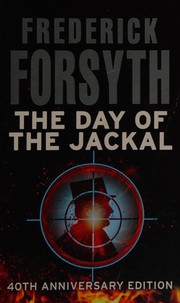
I picked up The Day of the Jackal because I wanted a thriller that actually explains how things work. A friend told me it reads like a manual for an assassination, and that sounded grim but interesting. The copy I am summarizing is the Hutchinson first edition from 1971, the 358 page London hardcover that started everything, though the story is still in print in modern paperback. Frederick Forsyth wrote it in 35 days in early 1970 after years as a Reuters correspondent in Paris and later as a reporter covering the war in Biafra. He was broke, his nonfiction book about Biafra had flopped, and he decided to write a one off thriller to clear his debts. Four publishers turned it down because Charles de Gaulle was still alive and everyone knew no fictional plot to kill him could succeed. Hutchinson took a chance with 8,000 copies. The book won the Edgar Award for Best Novel in 1972 and has stayed in print ever since.
What hooked me right away is that Forsyth tells you the ending in advance and still keeps you tense. You know de Gaulle was never assassinated. You know the date on the cover must pass without the president dying. The pull is not who lives, it is how close a careful professional can get before luck and stubborn police work stop him. The book is split into three parts with plain labels: Anatomy of a Plot, Anatomy of a Manhunt, Anatomy of a Kill. That structure sounds dry on paper. In practice it gives the story a steady drumbeat. First the hiring, then the chase, then one hot day in Paris.
A quick note on what this is. It opens with real history, the OAS war against de Gaulle after Algerian independence, then turns into fiction. Names like Bastien-Thiry, Argoud, Roger Frey and the SDECE belong to the real France of 1962 and 1963. The Jackal, Claude Lebel, Marc Rodin and most of the hunters are invented, placed inside accurate police and political machinery. If you like procedures, fake papers, timetables, checkpoints and small mistakes that snowball, this will suit you.
The OAS hires a stranger
The book starts on 22 August 1962 at Petit-Clamart, outside Paris. OAS gunmen under Lieutenant Colonel Jean-Marie Bastien-Thiry ambush de Gaulle's black Citroen DS on the Avenue de la Liberation. The president and his wife duck as bullets rake the car. The Citroen, with its odd suspension, keeps rolling on shredded tires and gets them clear. Forsyth, who reported from the scene as a young journalist, describes the shooting with reporter habits: road layout, timing, who stood where, how the cars moved.
The aftermath matters more than the shooting. Bastien-Thiry is caught, tried and executed. Antoine Argoud, another OAS leader, is seized and questioned. A later plot around the Ecole Militaire is betrayed. French security has penetrated the OAS so deeply that every French face is known and watched. Marc Rodin, Argoud's deputy, understands the problem. As long as the gunman is French, the police will hear about him before he moves.
Rodin hides with two loyal men in a guarded hotel in Rome and reaches a hard decision. They will hire an outsider nobody in France knows. Through underground contacts they meet a blond English contract killer in Vienna. He listens, names his price at half a million dollars, half now and half on completion, and picks his own code name. He will be called the Jackal. The money will go to a Swiss account after a string of robberies in France raises the cash. The OAS men will stay out of it. They want distance so French informers cannot trace the plan back.
This opening takes its time and I liked that. Forsyth explains OAS anger after the Evian Accords gave Algeria independence, and why de Gaulle's own former supporters wanted him dead. It could have been a dull history lesson. Instead it reads like a briefing. Short scenes, dates, ranks, cities. You finish it understanding why a professional from outside was the only move left.
How the Jackal builds a killing
The middle of Part One follows the Jackal as he prepares, and this is the part people remember. He is not a superman. He is methodical. He gets a real British passport in a false name, Alexander Duggan, by using the birth details of a dead child, a trick that later became known in Britain as the Day of the Jackal fraud. He steals two more passports from tourists in London who look roughly like him, for backup identities he hopes never to use. He opens his Swiss account. He studies de Gaulle's public habits from newspaper cuttings.
Then he goes to Brussels to order a murder weapon. The gunsmith he finds is a master craftsman who asks few questions when the money is right. What the Jackal wants is strange: a very slim rifle that breaks down small, with a silencer, plus a handful of bullets with mercury tips that explode on impact. He wants to be able to hide the parts inside luggage and carry them through borders without notice. The gunsmith builds it. Forsyth describes the measurements, the packing, the test firing in a wood outside the city, without showing off. It feels like watching someone pack a tool kit.
He also buys a set of French identity papers from a forger in Paris. The forger delivers good work, then gets greedy and tries to blackmail his client for more money. The Jackal kills him the same evening, flat and quick, and disposes of the body. It is the first killing in the book and Forsyth handles it without relish. The point is not cruelty. The point is that this man leaves no loose ends, and that every extra person who knows his face is a risk he will remove.
Before returning to London he does research in Paris. He walks the ceremonial routes, watches how crowds are held back, notes where de Gaulle stands in the open car, checks sight lines from upper windows. He picks no date yet. He waits to learn which public appearance will give him a clear shot. I found these pages oddly gripping for material that is basically tourism. You see Paris through a gunman's eyes, all angles and distances.
A small weakness shows here too. The Jackal has almost no inner life. We learn what he eats, what suits he buys, what car he rents, but not what he wants beyond money or why he lives this way. Forsyth keeps him blank on purpose, I think, so he stays frightening. After a hundred pages that blankness can feel thin. You admire the craft and start to wish for one rough edge, one doubt, one memory that was not about logistics.
Lebel gets the impossible job
The French learn about the plot by accident. After the OAS robberies to fund the fee, police lure Viktor Kowalski, a former legionnaire acting as bodyguard and courier for Rodin, back into France with a fake letter. He is arrested and questioned. Under interrogation he babbles. Most of it is noise. Buried in it are two fragments that freeze the room: the OAS has hired a foreigner, and his code name is Jackal. They do not have a description, a nationality, a date or a place. Only a nickname.
De Gaulle refuses to cancel appearances. He also insists the inquiry stay secret so the OAS does not learn how little the police know. Roger Frey, the Minister of the Interior, gathers the heads of all the security services around one table. The SDECE, the DST, the Police Judiciaire, the military intelligence people, all jealous of each other, all promising full help. Someone has to do the actual work. A commissioner from the Police Judiciaire suggests his deputy, a quiet man named Claude Lebel who is good at coordination and has no enemies. Lebel is not glamorous. He is short, balding, tired, devoted to his wife and his files. He gets emergency powers to ask anyone for anything, and a small office to run the hunt.
Lebel starts with the obvious question. Is there a top level assassin for hire anywhere in Western records? He cables liaison contacts abroad. Most answers come back empty. In London the request lands with Superintendent Bryn Thomas of Special Branch at Scotland Yard. Thomas runs routine checks and finds nothing, which makes sense because the Jackal works abroad and stays off British books. One of his younger men makes a useful suggestion. Ask the Secret Intelligence Service informally. If an Englishman kills for money overseas, the spies may have heard a rumor even if the police have not.
That rumor exists. An SIS officer who served in the Dominican Republic recalls talk after the killing of President Trujillo, that an English rifleman stopped the car with one shot so local gunmen could finish the job. The name attached is Charles Calthrop. Thomas pulls what he can on Calthrop, a London resident said to be on holiday. He learns Calthrop was indeed in the right country at the right time. Then a junior detective notices something odd on paper. Take the first three letters of Charles and Calthrop and you get CHA CAL. In French that sounds like Chacal, the French word for jackal. It could be coincidence. Thomas cannot ignore it, especially after the Prime Minister calls him in and tells him plainly that de Gaulle is a friend and the man must be stopped with no limit on men or money.
I love this stretch because Forsyth lets two bureaucracies grind. Lebel in Paris begs for passport records, airline lists, hotel registrations. Thomas in London fights ministries that do not want to help France. Nobody has a computer. Everything is paper, phone calls, favors, late nights. It is slow in the best way, the kind of slow where each small win feels earned.
There is also a leak, and Forsyth plays fair with it. Unknown to Lebel's council, the mistress of a vain Air Force colonel on de Gaulle's staff repeats what her lover tells her after meetings. She passes it to the OAS. So every time Lebel gets closer, the Jackal gets a warning. When Lebel later orders the phones of all the council members tapped, the discovery lands with real force. It explains the near misses without making Lebel look stupid.
Paris in August
Once the Jackal knows France is alerted, he still goes ahead. He drives from Italy in a rented Alfa Romeo with the rifle parts soldered flat to the chassis, crosses in the heat of summer, and settles in the south to wait. In London, Special Branch raids Calthrop's flat, finds his real passport, and realizes their suspect must be traveling as someone else. A trawl of suspicious passport applications turns up Duggan. Lebel rushes south with men and misses the Jackal in his hotel by about an hour, thanks to the OAS warning.
On the run, the Jackal charms a woman at his hotel and talks his way into her chateau for shelter. For a few days he plays the pleasant guest. Then she finds the rifle parts after overhearing a morning phone call and searching his room while he sleeps. He kills her, hides Duggan's effects in a ravine, takes one of his backup identities and catches a train for Paris. Forsyth does not linger on the murder. That restraint makes it colder. The woman is not a villain. She is careless and curious and lonely, and it costs her life.
Paris in the final hundred pages is stifling and empty because half the city is on holiday. The Jackal takes a small hotel room, sheds the first backup identity, and becomes the owner of the second stolen passport. Lebel, back in Paris, works out the likely date. On 25 August de Gaulle will definitely appear in public for the anniversary of the Liberation of Paris. If you want to kill him, that is the day. Frey wants a public warning with a photo. Lebel resists until the killings make secrecy pointless, then agrees to put the latest picture in the papers and flood the streets with police.
The Jackal slips the net again in a way that still shocks. Posing under his new name, he lets himself be picked up in a gay bar, goes home with a middle aged man, and stays in the flat while the manhunt peaks outside. When a television news report names Martin Schulberg as wanted for murder, and that is the name on the passport he is carrying, he kills the man and waits out the last days among the dead man's clothes and tins. Modern readers will flinch at how the gay man is written, lonely and easily used, and at how fast Forsyth disposes of him. It reads as period prejudice as much as plot need. That is worth naming.
On the morning of the 25th the Jackal shaves his head, pads his leg, and becomes a one legged French veteran with papers to match. His rifle hides inside the sections of a crutch. He enters an apartment block overlooking the Place du 18 Juin 1940, in front of the Gare Montparnasse, talks his way past the concierge, shoots the lock off a top floor flat whose owners are away, and sets up at the window. Below, de Gaulle's motorcade arrives for the ceremony.
Lebel is on foot that day, checking posts, asking each CRS guard what he has seen. One guard mentions a veteran with a crutch allowed through earlier. Lebel knows no veteran with that description belongs on the list. He runs for the building with the guard behind him. Inside, the Jackal fires his first silenced shot at de Gaulle's head. The president leans forward at that exact second to kiss the cheek of the old veteran he is honoring, and the mercury bullet misses by a fraction. Lebel and the guard reach the top floor as the Jackal reloads. The guard bursts in and is shot dead. Lebel, unarmed, grabs the dead man's sub machine gun, an MAT-49, and fires before the Jackal can chamber his third round. The assassin dies on the floor of a stranger's flat with no name on him.
What works and what creaks
The last twenty pages are quiet and I admire them. The Jackal is buried in an unmarked Paris grave as an unknown foreign tourist killed in a car crash. Only a priest, a registrar, a policeman and Lebel attend. In London the real Charles Calthrop walks into his flat in the middle of a search, back from a walking holiday in Scotland, baffled and angry, and clearly not an assassin. The British are left with the same question Lebel has. If the dead man was not Calthrop, who was he? Forsyth never answers. That refusal still lands. Some thrillers explain everything. This one lets the center stay empty.
What works best, for me, is the weight of real procedure. Passports applied for in person, hotel cards copied by law, airline manifests checked by hand, gunsmith tolerances, the way a silencer changes sound but not that much, the way a tired detective keeps a wall chart and crosses off possibilities. Forsyth learned this texture as a reporter and it shows. The OAS in Rome, the ministries in Paris, Special Branch in London, all behave like jealous offices rather than smooth machines. When Lebel begs for help and Thomas stalls his own bosses, you believe the delay. The tension comes from work, not gadgets.
The 1973 film with Edward Fox as the Jackal and Michael Lonsdale as Lebel follows this closely for good reason. The story is already visual. You can see the Alfa on the mountain road, the small hotel registers, the Paris rooftops. The newer television version with Eddie Redmayne updates and expands, but the novel remains the cleanest telling because it never leaves the hunt for long.
What creaks is also clear after sixty years. The women get short shrift. The chateau hostess exists to shelter and then expose the Jackal. The colonel's mistress exists to leak. Neither gets much interior view. The gay victim in Paris gets even less. Forsyth is brisk with all secondary lives, men included, but the pattern stands out. If you need rich private lives for every figure, this will feel spare.
The middle can drag if you do not enjoy paperwork. There are long passages where Lebel waits for London to call back, where Thomas waits for a file, where nothing happens except a list getting shorter. I did not mind because I like that kind of hunt, but a reader who wants action every chapter will fidget around page 200. The Jackal's blankness, which frightens early on, also limits late feeling. When he dies I felt relief and admiration for Lebel, not pity or horror. That seems intended, yet part of me wanted one crack in the mask before the roof.
Still, as a friend I'd press it on the right person. If you like Frederick Forsyth's later books like The Odessa File or The Dogs of War, start here where the method is purest. If you like slow chases with maps and timetables, or French history around de Gaulle and Algeria, this gives you both without lectures. Read it in order and do not skip the Rome and London chapters even when they feel quiet. They pay off in Paris. And when you reach the kiss that saves a president, you will understand why this 358 page debut, written fast for money, outlasted so many careful literary thrillers of its year.
FAQ
Is The Day of the Jackal based on a true story?
The opening is real. Bastien-Thiry and the OAS did try to kill de Gaulle at Petit-Clamart in August 1962 after Algerian independence. The Jackal, Lebel and the 1963 hunt are fiction placed inside that accurate machinery.
Who is the Jackal really?
He is never named. British police chase a real Londoner called Charles Calthrop because CHA plus CAL sounds like Chacal, then find him innocent on holiday in Scotland. The dead killer is buried nameless in Paris.
Which edition is this summary based on?
Hutchinson published the 358 page first edition in London in 1971. This summary uses that edition for year, publisher and pages, with ISBN 9780099557364 for the modern Arrow paperback cover.
Similar books

What She Knew
Rachel lets her eight-year-old son run ahead in a Bristol park, and the nine-day search turns her into a suspect in the public eye.
2,952-word summary · 13 min read

The Beach House
A young valet is beaten to death at a Hamptons party, and his law-student brother spends a year building a case against the family that covered it up.
2,049-word summary · 9 min read
The Art Forger
A disgraced Boston painter agrees to copy a Degas stolen from the Gardner Museum, then begins to suspect the original she is copying is itself a forgery.
2,117-word summary · 9 min read

Six Years
A professor who promised to forget the woman he loved sees her husband's obituary and discovers that the wedding, the marriage, and the woman herself may never…
2,076-word summary · 9 min read

Rules of Prey
Minneapolis detective Lucas Davenport hunts a killer who leaves a new rule at every scene and treats murder as a game of wits.
1,914-word summary · 9 min read

4th of July
Lindsay Boxer shoots two armed teenagers in self-defense, faces a wrongful-death trial, and spends her leave chasing a string of throat-slashing murders in…
2,192-word summary · 10 min read
Persuader
Reacher goes undercover in a Maine crime family to find a missing DEA agent and the man he once failed to kill, and Lee Child keeps the whole thing tight,…
2,278-word summary · 10 min read

61 Hours
A bus crash strands Jack Reacher in a snowbound South Dakota town where a drug gang, a corrupt police force, and a single witness are on a collision course.
2,227-word summary · 10 min read

The Chemist
A former government interrogator on the run takes one last job, then learns the case she was handed was built to pit her against him.
2,249-word summary · 10 min read

Still Missing
A realtor is abducted at a Vancouver Island open house and held for more than a year. Told through therapy sessions, the novel follows her escape and the hunt…
2,466-word summary · 11 min read

Bad Luck and Trouble
A deposit of $1,030 summons Jack Reacher back to his old army unit, which is being picked off one name at a time.
2,366-word summary · 11 min read

3rd Degree
The third Women's Murder Club novel follows a San Francisco terror cell and a three-day killing schedule, and it costs the club a member.
2,685-word summary · 12 min read

Worth Dying For
Reacher stops for one night in rural Nebraska and finds a family that runs the county, a missing girl and a shipment worth killing for.
2,021-word summary · 9 min read
Tinker, Tailor, Soldier, Spy
Retired spymaster George Smiley is brought back to find a Soviet mole inside British intelligence, and the trail leads through old friends, old betrayals, and…
2,092-word summary · 9 min read

The Ex
Cassie thinks her new boyfriend's ex is the woman harassing her, but Freida McFadden's thriller keeps rearranging who the ex actually is.
2,103-word summary · 9 min read

Say You're Sorry
A widowed prosecutor defends the teenager accused of killing her babysitter, uncovering a small town's secrets and a killer hiding in plain sight.
2,116-word summary · 9 min read

Echo Burning
Reacher hitches a ride with a Texas woman who wants her abusive husband killed, then has to prove she did not murder him when he comes home.
2,209-word summary · 10 min read
The Drowning Woman
Living in her car in Seattle, Lee saves a wealthy stranger from drowning. The friendship that follows draws her into abuse, murder, and a plan to disappear.
2,578-word summary · 11 min read

Girl, Forgotten
A rookie US marshal guards a judge with a stalker and ends up reopening the 1982 prom-night murder of the judge's pregnant daughter.
2,111-word summary · 9 min read

The Woods
Twenty years after two teenagers were murdered and two vanished at summer camp, prosecutor Paul Copeland identifies a fresh corpse as one of the missing.
2,490-word summary · 11 min read

The Redbreast
Harry Hole chases an ageing sniper through modern Oslo while two Norwegian volunteers on the Eastern Front carry a fifty-year-old betrayal toward a royal…
2,453-word summary · 11 min read

The Boy from the Woods
Wilde, found feral in a New Jersey forest in 1986, hunts for a missing teenager while a senator's secrets tear a wealthy town apart.
2,270-word summary · 10 min read
Gray Mountain
A Manhattan associate furloughed after the financial crash takes a year of unpaid legal aid work in Appalachian coal country, and finds the case of her life…
2,026-word summary · 9 min read
False Witness
A defense attorney is forced to represent the grown son of the man she and her sister killed as teenagers, and he has the tape of the murder.
2,094-word summary · 9 min read

Without Fail
Reacher is asked to test vice presidential security by planning to kill.
2,084-word summary · 9 min read

Things We Do in the Dark
A comedian kills her husband, then a podcaster digs up her teen murder past.
2,427-word summary · 11 min read

The Widow
A widow of a suspected criminal faces reporters and police while hiding what her marriage really cost.
2,599-word summary · 12 min read
The Racketeer
A jailed lawyer trades a judge murder secret for freedom and revenge.
2,434-word summary · 11 min read
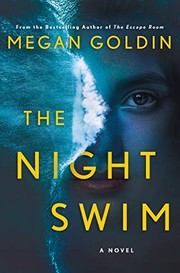
The Night Swim
A true crime podcaster covers a rape trial while probing an old drowning in a small town.
2,260-word summary · 10 min read
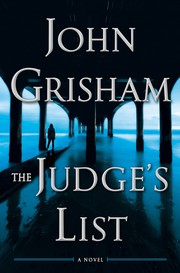
The Judge's List
Lacy Stoltz hunts a sitting judge who murders off his list.
2,513-word summary · 11 min read