
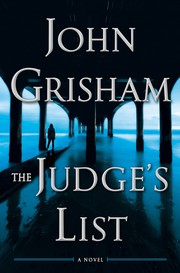
The Judge's List
2,513-word summary 11 min read 368 pages in the book
- First published
- 2021
- Publisher
- Doubleday
- Pages
- 368
- ISBN
- 9780385546027
- Series
- The Whistler (#2)
Reading options
What's inside (9 sections)
I did not plan to read The Judge's List this month. I had finished The Whistler last year and felt done with Lacy Stoltz for a while. That book left me sad about Hugo Hatch and annoyed at how much space Grisham gave to casino accounting. Then a friend who reads only Grisham and nothing else told me the follow up was stranger, about a judge who kills people and keeps track of them. I borrowed her Doubleday hardcover, the 2021 edition that runs 368 pages, and started it on a Tuesday night thinking I would read fifty pages. I read almost two hundred. It is shorter and faster than The Whistler, and meaner in a way I had not expected from this corner of his work.
For shape before detail: this is a story about Lacy, an investigator for the Florida Board on Judicial Conduct, meeting a woman who says a sitting judge murdered her father twenty years ago and kept killing after. There is very little courtroom time. Most of it is complaint files, private detectives, and a killer who knows procedure well enough to stay ahead. I found the first half gripping and the last fifty pages rushed. Still, I turned pages fast, which is what I wanted from it.
Lacy is tired and thinking of quitting
Three years have passed since the events in The Whistler. Lacy Stoltz is approaching forty and feels stuck. She still works for the Board on Judicial Conduct in Tallahassee, the small state office that looks into complaints against judges. The work has gone back to small grievances after the McDover case. A judge who shouts at staff. A judge who shows up late. A judge who may have helped a friend. Lacy is good at interviews and paper, but she misses having a case that matters, and she carries Hugo's death with her. Her brother Gunther still calls and cooks and tries to pull her out of her flat. Her boyfriend situation with Allie Pacheco drifts. Her boss structure shifts. She talks openly about leaving law-adjacent work for teaching or something quieter.
Grisham spends some time here on office life, and I liked it more than I expected. The Board cannot arrest anyone. It cannot tap phones. It gathers grievances, requests records, interviews clerks, and refers matters to police or the FBI when crimes appear. Lacy knows those limits. She also knows Florida judges are elected or retained in ways that make complaints political. A file against a sitting judge needs more than a scared witness. It needs dates, documents, and corroboration. That context matters because the woman who walks in has almost none of that, at least in a form Lacy can file.
The woman uses several names at first. She finally settles on Jeri Crosby. She is frightened in a practiced way, the way people get after years of looking over shoulders. She asks to meet outside offices. She pays cash. She watches doors. Lacy's first instinct is that Jeri may be unwell. Grisham lets that doubt sit for a while, which I thought was fair. Lacy has seen obsessed complainants before. She listens, takes notes, and tries to separate grief from proof.
Jeri and the man she has watched for twenty years
Jeri says her father was murdered twenty years earlier. He taught constitutional law. His death was never solved. She believes the killer was one of his students, a young man named Ross Bannick who is now a judge in Florida, inside Lacy's jurisdiction. The reason, as Jeri tells it, goes back to a classroom humiliation. Bannick was arrogant in class and her father cut him down in front of others. Bannick held onto it.
What makes Lacy keep listening is method more than feeling. Jeri has spent two decades collecting deaths that fit a pattern. Her father was struck on the head, then strangled with a nylon rope tied with a particular knot. Jeri found other dead people with the same injuries and the same cord work. Each one, in her files, had crossed Bannick at some point and angered him. A scout leader from his youth who Jeri believes abused him. A young woman who mocked him at a college party. A reporter who wrote a story that cost Bannick an early judicial race. A lawyer who declined to hire him after a summer clerkship. The most recent one she knows about was about two years back.
I found these chapters chilling because Bannick's guilt is presented early and plainly. Grisham does not treat this as a whodunit. He tells you who did it and asks whether anyone can prove it. Bannick is bright, careful, and versed in forensics and police habits. He also knows law from the inside, what gets suppressed, what needs a warrant, how long labs take. Jeri calls the record he keeps in his head his list, names of people who wronged him and are marked for later. Lacy must decide whether to risk her job on a complaint she cannot yet support without putting her own name on that list.
A note on limits here. Jeri is not a detective. She is a determined amateur with boxes of clippings and timelines. Some of her links are thin. Lacy pushes her on that. How do you know Bannick knew this victim. How do you place him in town that week. What did police keep. Jeri answers some questions well and others poorly. That unevenness felt true to me. People who chase a cold case for years learn a lot and also convince themselves of parts they cannot show.
The Board says no, then the door opens
Lacy takes what she has to her supervisor and gets the answer she expects. The Board will not open a murder inquiry on this basis. If crimes occurred, police or the FBI should handle them. The Board looks at judicial conduct, and a thin amateur file with no physical proof does not clear the bar. Lacy reports that back to Jeri and almost feels relief. She tells Jeri she cannot help through official channels. Jeri asks a simple question in return. If it were up to you alone, would you look. Lacy cannot answer cleanly, and that silence follows her home.
Then office politics shift the math. Her supervisor leaves. The administrative side asks Lacy to step in as interim director while they search for a permanent hire. It is temporary and mostly administrative, budgets and assignments and meetings nobody enjoys. But it gives her authority to accept a complaint and assign it for preliminary review without asking permission from someone who already said no. Grisham handles this without making it heroic. Lacy accepts partly because she wants the Bannick question answered, and she knows that motive is messy. Gunther teases her about wanting power. She tells him she wants room to move.
I thought this stretch was smart about how small agencies work. Nobody gives a speech about justice. People trade favors, delay memos, and worry about press. Filing against a sitting judge draws attention. If Lacy is wrong, she harms an innocent judge and ends her career.
There is also a personal cost woven in. Allie wants more of Lacy's time. Gunther wants her to be careful after what happened to Hugo. Lacy sleeps badly and replays interviews. She knows Bannick, if Jeri is right, studies investigators the way he studies victims. Every request she makes leaves a trace he could find.
A painter, a missing file, and a detective
The case moves when a newer killing surfaces that fits the pattern Jeri described. Lanny Verno, a house painter, was found dead about five months earlier, with head trauma and ligature marks consistent with the older deaths. Years before, Verno had pulled a gun during a dispute with a young lawyer, and the charge went nowhere for lack of proof. That young lawyer, Jeri learns through a private investigator named Rollie Tabor, was Ross Bannick. Verno's supervisor died with him, in the wrong place at the wrong time.
Rollie earns his fee here. He pulls the old court file on the Verno dispute and finds a hole where a name should be. The complainant entry is redacted. The trial record is missing. That absence interests Lacy more than any statement. Files do not redact themselves. Someone with access and knowledge removed links between Bannick and Verno. Rollie tracks down the arresting officer from that old stop, a man named Norris Ozment, who remembers the case because few gun cases simply vanish. Ozment recalls the complainant was indeed a lawyer named Ross Bannick. It is not proof of murder. It is proof of contact and of later cleanup, which is enough to keep Lacy in.
Grisham is good at showing how Bannick learns he is being looked at. Jeri, angry and impatient, sends Bannick an anonymous note saying he is under review and that someone knows his past. She means it as pressure. Lacy thinks it is reckless, and she is right. Bannick reads it the way a judge reads a filing, for source clues. He realizes whoever wrote it must have seen the Verno court papers. He visits the evidence storage himself and reviews the same papers he looked at around the time Verno died, when he blacked out his own name. This time he notes Ozment's name. He finds Ozment, learns a private detective drove a rental there days before, and uses illicit software tools on his home computer to trace the plate through a rental agency to Rollie Tabor. Step by step, he walks back toward Jeri.
I admired this cat and mouse section while also feeling uneasy about the tech. Bannick's spyware does a lot of heavy lifting. He slips into computers and finds cars with speed that felt quick even for a careful man with money. As written, Bannick rarely missteps until late, which makes him scary but also a little smooth.
Letters, a tracker, and the motel
Jeri cannot stop provoking him. She sends two more notes. Bannick cleans house in response, wiping prints from his home and chambers and changing habits. He decides Jeri Crosby is the watcher who has followed him for years. He plants a tracker on her car and hand delivers her own letters to her door to show he knows where she lives. Jeri panics, packs fast, and runs, unaware the car itself betrays her. She holes up in a motel off a main road. Bannick gets into the motel system, learns her room number, and uses ether to knock her out. He moves her to a cabin nearby and starts asking what Lacy and federal agents know.
The forced call is the tensest scene for me. Bannick makes Jeri phone Lacy and ask for a meeting at the motel, trying to sound normal while scared. Lacy hears something off and brings Gunther, which annoys her sense of procedure and probably saves her life. She is having lunch with him when the call comes, and he insists on driving along because he likes excitement and worries about her. At the motel, Lacy steps to the open door of Jeri's empty room. Bannick comes at her from behind with a cloth. Gunther hits him hard. Bannick breaks free and runs back toward the cabin to finish with Jeri before police arrive.
What happens next turns on luck more than planning. While Bannick is gone, two teenagers break into the cabin and find Jeri unconscious inside. Noise brings police. By the time Bannick returns, cruisers surround the place. He slips away unseen rather than fight. I had mixed feelings about that break. After so much careful pursuit, having kids stumble in felt convenient.
The motel fight works better. It is short, clumsy, and physical in a way that fits Gunther, who is large and loyal and not trained for this. Lacy freezes for a second in the doorway, then acts. No long speeches. Just shouting, weight, and a man getting away. I believed it.
Flight west and a print in a truck
Bannick runs. With the FBI now pulling his home and office apart, he drives west to Texas and checks into a quiet rehab facility under a false story. There he burns his fingertips with acid to remove prints and takes a large dose of pain pills. Staff find him dead the next morning. On paper it looks like an addict who hid his past. Lacy knows better but cannot prove much from a body with no prints and a cleaned apartment.
This is where my criticism sharpens. Bannick dies offstage, and the book loses some pressure it had built. We never get a full interview, no charging decision, no trial test of Jeri's files. Grisham tries to replace that with a paper chase. Jeri tracks down a truck witnesses saw near one killing scene. Inside, techs lift usable prints. Those match a partial thumb recovered in the Verno case. At last there is a forensic link tying Bannick to two murders. It is clever and procedural. It also felt fast.
What holds up best is the pairing at the center. Lacy is thorough rather than flashy. She writes things down, knocks twice, and asks clerks the dull questions that open files. Jeri is obsessive and brave and sometimes wrong in tactics, and Grisham does not sand that down. Her letters nearly get them killed. Her files also save the case. Their alliance is uneasy in a good way. Lacy wants rules. Jeri wants results. Gunther gives warmth without taking over, and his cabin cooking and blunt advice break tension when procedure threatens to flood the pages.
What sags for me, besides the quick ending, is Bannick as a person. We see his planning and his anger at slights, but little of his courtroom self that fooled voters for years. A few scenes of him being patient with witnesses would have made his private cruelty land harder. As written he is mostly function, the man ahead of everyone. Readers should know this book shows strangulation, home invasion, and stalking in plain terms.
Who should pick it up. If you liked The Whistler for Lacy and want her back without rereading casino finance, this is a cleaner fit. Readers who enjoy cold cases, complaint files, and killers who know procedure will move fast through the middle. If you need a trial or a twisty reveal of identity, look elsewhere. Grisham names his man early and bets on pursuit. I closed my copy late at night feeling unsettled rather than satisfied, which I think was the aim. It is a tight and dark follow up that gives Lacy a harder choice than bribes and land deals.
A note on facts and place in the set
Grisham published this through Doubleday in 2021 as a follow to The Whistler from 2016. It runs 368 pages in the US hardcover and centers Lacy Stoltz with Jeri Crosby pressing her about Judge Ross Bannick.
FAQ
When was The Judge's List published?
Doubleday published it in 2021. The US hardcover runs 368 pages with ISBN 9780385546027.
Is The Judge's List part of a series?
Yes. It is book 2 with Lacy Stoltz after The Whistler from 2016, filed here under series The Whistler.
Who are the main characters?
Lacy Stoltz of the Florida Board on Judicial Conduct, Jeri Crosby who tracked the killer for twenty years, Judge Ross Bannick, and Lacy's brother Gunther.
Similar books
More from The Whistler first, then related titles.
The Racketeer
A jailed lawyer trades a judge murder secret for freedom and revenge.
2,434-word summary · 11 min read

The Beach House
A young valet is beaten to death at a Hamptons party, and his law-student brother spends a year building a case against the family that covered it up.
2,049-word summary · 9 min read

4th of July
Lindsay Boxer shoots two armed teenagers in self-defense, faces a wrongful-death trial, and spends her leave chasing a string of throat-slashing murders in…
2,192-word summary · 10 min read
Gray Mountain
A Manhattan associate furloughed after the financial crash takes a year of unpaid legal aid work in Appalachian coal country, and finds the case of her life…
2,026-word summary · 9 min read
The Guardians
A innocence lawyer reopens a prison murder where the wrong man waits on death row.
2,564-word summary · 11 min read
The Partner
A Biloxi lawyer fakes his death, steals $90 million, and hides in Brazil until hired muscle drags him home to trial.
2,221-word summary · 10 min read
The Rainmaker
Broke rookie Rudy Baylor sues an insurer over a denied transplant and faces Leo Drummond at trial.
3,040-word summary · 14 min read
The Pelican Brief
Law student Darby Shaw writes a brief on murdered justices and becomes a target, fleeing with a reporter.
2,994-word summary · 13 min read

What She Knew
Rachel lets her eight-year-old son run ahead in a Bristol park, and the nine-day search turns her into a suspect in the public eye.
2,952-word summary · 13 min read

Six Years
A professor who promised to forget the woman he loved sees her husband's obituary and discovers that the wedding, the marriage, and the woman herself may never…
2,076-word summary · 9 min read

Rules of Prey
Minneapolis detective Lucas Davenport hunts a killer who leaves a new rule at every scene and treats murder as a game of wits.
1,914-word summary · 9 min read

61 Hours
A bus crash strands Jack Reacher in a snowbound South Dakota town where a drug gang, a corrupt police force, and a single witness are on a collision course.
2,227-word summary · 10 min read

Still Missing
A realtor is abducted at a Vancouver Island open house and held for more than a year. Told through therapy sessions, the novel follows her escape and the hunt…
2,466-word summary · 11 min read

Bad Luck and Trouble
A deposit of $1,030 summons Jack Reacher back to his old army unit, which is being picked off one name at a time.
2,366-word summary · 11 min read

3rd Degree
The third Women's Murder Club novel follows a San Francisco terror cell and a three-day killing schedule, and it costs the club a member.
2,685-word summary · 12 min read

Worth Dying For
Reacher stops for one night in rural Nebraska and finds a family that runs the county, a missing girl and a shipment worth killing for.
2,021-word summary · 9 min read

Say You're Sorry
A widowed prosecutor defends the teenager accused of killing her babysitter, uncovering a small town's secrets and a killer hiding in plain sight.
2,116-word summary · 9 min read

Echo Burning
Reacher hitches a ride with a Texas woman who wants her abusive husband killed, then has to prove she did not murder him when he comes home.
2,209-word summary · 10 min read

Girl, Forgotten
A rookie US marshal guards a judge with a stalker and ends up reopening the 1982 prom-night murder of the judge's pregnant daughter.
2,111-word summary · 9 min read

The Woods
Twenty years after two teenagers were murdered and two vanished at summer camp, prosecutor Paul Copeland identifies a fresh corpse as one of the missing.
2,490-word summary · 11 min read

The Boy from the Woods
Wilde, found feral in a New Jersey forest in 1986, hunts for a missing teenager while a senator's secrets tear a wealthy town apart.
2,270-word summary · 10 min read
Without Fail
Reacher is asked to test vice presidential security by planning to kill.
2,084-word summary · 9 min read
Things We Do in the Dark
A comedian kills her husband, then a podcaster digs up her teen murder past.
2,427-word summary · 11 min read

The Widow
A widow of a suspected criminal faces reporters and police while hiding what her marriage really cost.
2,599-word summary · 12 min read
The Night Swim
A true crime podcaster covers a rape trial while probing an old drowning in a small town.
2,260-word summary · 10 min read
The Innocent
A government hitman refuses one kill and must protect a teenage girl at the center of a cover-up.
2,403-word summary · 11 min read
The Girl Who Was Taken
A survivor returns alone while a reporter digs for her lost sister.
2,261-word summary · 10 min read

The Club
A luxury island resort for the rich turns deadly when secrets, staff and guests collide.
2,386-word summary · 11 min read
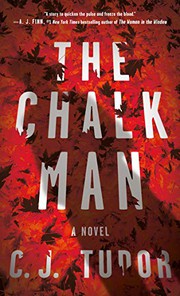
The Chalk Man
Childhood chalk codes lead to a murder that follows friends thirty years later.
2,350-word summary · 10 min read
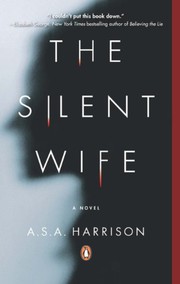
The Silent Wife
A Chicago psychologist watches her twenty-year partnership collapse when Todd leaves for Natasha, then plans murder.
2,591-word summary · 12 min read