
Reading options
What's inside (7 sections)
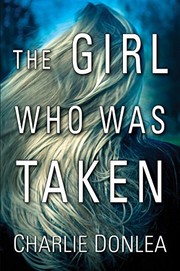
I came to this one after reading Charlie Donlea's Twenty Years Later and wanting more of his forensic procedural style. This earlier book, published in 2017 by Kensington, runs 340 pages in the standard US edition, and it is darker than I expected. Two high school seniors vanish from a beach party. One comes back. One does not. The one who comes back writes a bestseller. The sister of the one who does not becomes a pathologist so she can one day read her sister's autopsy herself.
That premise kept me up. Not the bunker, though that is scary enough, but the guilt. Livia Cutty did not pick up the phone the night Nicole called. Megan McDonald cannot remember clearly what happened in the woods. Both women live with holes where answers should be, and Donlea makes you sit in those holes with them.
Emerson Bay, North Carolina, is the kind of small beach town where everyone knows whose kid you are. Megan is the achiever, varsity basketball, cheer captain, debate lead, top grades, church retreat leader for freshmen girls. Nicole is wilder that summer, dyed black hair, black lipstick, pulling away from her friends Jessica and Rachel, snapping at parties, dating an older guy she will not name. They disappear together in July 2016, five weeks after graduation season talk and college plans. Two weeks later Megan walks out of the woods. Nicole never does.
Megan's escape and the book
Megan says she and Nicole were taken and held in a bunker deep in the woods. She escaped. She does not remember much at first. Trauma, drugs, darkness. Police search. Hope fades for Nicole. A year later Megan publishes a memoir about her ordeal. It sells. She goes from local hero to national name. TV, signings, praise for courage.
Livia hates the book. She reads it once and feels sick. In her view Megan is the heroine and Nicole is an afterthought, the girl who did not make it so the story can inspire. Livia works a boring internship job at the courthouse in Megan's case, no, Livia trains in pathology while Megan works at the courthouse to please her parents. Both are stuck. Megan has nightmares and gaps. Livia has discipline and a plan. She graduates with honors from medical school and enters a forensic pathology fellowship at the Office of the Chief Medical Examiner in Raleigh. She boxes at the gym to burn off anger. She tells herself when Nicole's body is found, she will be the one to seek justice.
Megan, meanwhile, tries therapy and later hypnotherapy with Dr. Mattingly to pull back fragments. She remembers sounds more than sights. Dripping, breathing, a creak. She remembers being drugged and groggy. She remembers shame because her published story smoothed edges that were still jagged in her head. Her parents want normal. Internship equals success. Smile for photos. Megan goes through motions because it is easier than explaining that success feels fake when your friend is still gone.
I liked how Donlea handles fame here. Megan is not vain. She is tired. The book money helps, but every interview asks her to perform survival in three minutes. She cannot say I do not remember without people acting disappointed. So she repeats the clean version until she almost believes it herself.
The body in Livia's morgue
Twelve months after Megan's escape, Livia gets the messy cases because she is new. Overdoses, supposed suicides. One body comes in wrapped in a green tarp tied to cinder blocks. On paper it looks like suicide. Livia sees signs that do not fit. Rope fibers on clothing. Restraint marks. Then Dr. Maggie Larson, the neuropathology expert, helps her look at twelve small holes in the skull. Not gunshot. Not infection. Not birth defect. Dr. Colt suggests a drill but will not call it homicide. He tells her to leave it to police.
Livia does not leave it. She pushes for anthropology and dental help. The teeth match Casey Delevan, reported missing by his landlord back in 2016. No close family except an estranged mother. Alone in life. Livia decides she will not let him be alone in death.
Then Jessica Tanner, one of Nicole's old friends, calls after seeing the news. Nicole and Casey were dating that summer. Secretly. Nicole would not bring him to parties. Called high school parties lame. Said her boyfriend would not fit. Jessica thought Nicole was acting strange, confrontational, flirty in a mean way, like pulling Jessica's bikini top off in the pool as a joke that was not funny. That detail made me wince. It is the kind of cruelty teens excuse until later they cannot.
Livia meets Jessica in person. She learns Nicole changed fast that July. Stayed out. Argued with her mom. Hated being around her aunt Paxie because no one would talk about Paxie's daughter Julie, Nicole's little cousin who went missing at nine and was never found. Nicole dyed her hair, wore black, told friends she was done with lame stuff. Livia realizes she did not really know her sister that last summer. That hurts more than the autopsy work.
The Capture Club
Casey's apartment gives Livia a folder of clippings about missing people. Girls found, girls not found. One name leads to Diana Wells, who agrees to meet. Diana says she met Casey online talking about missing persons cases. He invited her to join a secret club. She thought it was discussion. It was not. She was grabbed one night, bag over her head, by Casey and a female friend she heard him call Nicole.
That is the turn where the book goes from sad to chilling. Casey and Nicole were part of a group calling itself the Capture Club, with Nate Theros and a few others. They were obsessed with abductions, serial killers, crime scenes. They staged kidnappings as initiation. They grabbed Diana from outside a club to scare her badly enough to trauma. After that the club fell apart. Members got scared. They cleared an abandoned brewery they used, burned signs, lay low.
Nate tells Livia that Casey and Nicole ended up running it together. Nicole planned Diana's taking. Nicole liked the control. Livia feels ill. Was her sister a victim, or was she someone who hurt others first. Donlea does not let you settle quickly. Chapters from Nicole's view in July 2016 show her enjoying the club because it felt like doing something about Julie, about all the silence at home. If adults would not talk about missing girls, she would stage it, study it, own it. That logic is twisted and very teen, grief turned into power.
Casey's backstory is sadder and darker. When he was seven he watched his older brother Joshua, nine, get taken by a man with greasy hair while Casey ate cotton candy and said nothing. He never called out. He never told his dad in time. He grew up sure that moment proved he was bad. As an adult he reenacts it, hiring himself out for kidnappings, telling himself Nicole has the same pull inside her. He buys supplies at Goodwill, moves forums every night to avoid trace, plans carefully. Nicole thinks they will just scare Megan, her school rival she called names. Casey has another plan. He was paid by a client to take a new girl, and he picks Megan without telling Nicole the full price.
If this middle sags a little, it is here. There are a lot of interviews, folders, toxicology cross checks, trips to meet examiners in Virginia about a girl named Nancy Dee. Livia learns Nancy had ketamine in her system, same drug Megan described from her own abduction. That link matters, but getting there takes several similar scenes of Livia asking, being brushed off, asking again. I skimmed a little. The payoff is worth it, yet Donlea repeats the pattern of expert says no, Livia insists, new test, small clue, more than strictly needed.
What Megan really remembers
Megan's hypnotherapy sessions are the best written part for me. Not dramatic, just uneasy. Dr. Mattingly does not plant memories. He asks about sound, smell, order. Megan recalls a leather creak that she first thinks is a belt or boot. Then clearer. A gun holster snapping open and shut. Who wears a holster daily in Emerson Bay. Her father, Terry McDonald, chief of police.
That hit me hard because Terry has been the supportive dad throughout. Proud of Megan, wants her near home for college, hugs for cameras, helps with search. Megan remembers being kept not in a deep woods bunker exactly as the book said, but in the basement of an abandoned house nearby. She remembers her father letting her out. Her escape was allowed. He kept her a few weeks drugged so she would not recognize him, then released her to protect his secret. He kept Nicole longer.
Why take his own daughter. Because Casey chose Megan for the client without knowing whose daughter she was. The client was Terry himself. He paid Casey to bring girls. When Casey brought Megan, Terry was furious. He killed Casey, staged things to look like suicide, wrapped him in tarp with blocks, drilled, dumped. Then he chased Nicole when she ran for help. He took Nicole as his new captive. He held Megan short term to cover tracks, then let her go.
Livia pieces the drug link and the car link. Fibers and traces tie Casey to Nicole's car. Police records and autopsy notes line up on ketamine across cases. Livia is still an outsider to Emerson Bay police, and Terry uses that. He is charming when he needs to be. He talks about loveless marriage in the patrol car to deflect. He plays the tired chief who cares. Donlea plants these small domestic details so the reveal feels ugly rather than clever.
I should note Kent Chapple appears in this stretch as a possible suspect to keep you guessing, along with the unnamed man visiting a chained girl he calls love. Those chapters feel intentionally misleading in a way some readers will dislike. I did not mind because they show how many men in this world watch girls, but they do pad the count.
The house and the fire
Livia and Megan go to the abandoned complex to check Megan's memory. Inside they find Elizabeth, held two years, thin and scared, who says another girl named Nicole is kept elsewhere in the house. Livia cannot find Nicole in that search. They call police. Terry hears the call on his radio and drives over to kill Elizabeth and the witnesses and burn the place.
The confrontation is brutal and fast after so much slow work. Terry plans to torch it all. Livia fights him and sets him on fire to stop him. He burns, survives, ends up in hospital along with Megan and Elizabeth. There he confesses. He hired Casey for girls. Casey brought Megan by mistake. Terry killed Casey, chased Nicole, hid both girls, let Megan out, kept Nicole more than a year, killed her only days before Elizabeth was found.
The novel ends with Livia driving to a site where a body has been found, likely Nicole's remains. No big speech. Just the drive, the kit, the job she trained for. After all the clubs and books and TV, it comes down to a sister in gloves doing her work.
That ending landed for me because it refuses comfort. Megan lives but her memoir is exposed as incomplete, her father is a predator, her town knows. Livia gets answers but loses the sister she imagined. Nicole, seen fully, is both victim and someone who helped harm Diana. Paxie's silence about Julie, Livia's missed call, Jessica's gossip, all of it looks different now.
Complaints. The pacing dips in the middle with repeated expert scenes. The bunker versus basement shift is confusing on first read, and Donlea could have marked the memoir lies more clearly earlier. Some dialogue with police brass feels stiff. Terry's ability to hide for so long needs a lot of luck with evidence handling. Still, the forensics feel real, rope fibers, tarp, dental match, ketamine tox, without reading like a textbook. Livia is a strong center, smart, angry, guilty, kind to the dead. Megan's fragmented recall is handled with care, not as a trick but as injury.
What stayed with me after was the quiet cost for both women. Livia keeps boxing, keeps showing up for shifts, keeps answering Jessica's calls even when they hurt, because work is the one place grief has rules. Megan has to face readers who bought her book as truth and decide what to say next, while her mother tries to hold a family that no longer fits its old shape. Neither gets a clean restart. They get scars, some paperwork, and each other, which feels honest for this kind of crime story.
If you want the full shape in one breath, it is this. Two girls are taken after a party. One is allowed to leave and becomes famous for a story that is not quite true. The other's sister studies the dead to find her. A dead boyfriend links to a club that staged abductions for thrills. That club links to a client who paid for real ones. The client is the police chief and the survivor's father. He is stopped, but too late for Nicole. Justice, here, is not rescue. It is identification, documentation, and a sister willing to look.
FAQ
What happens to the two girls taken from Emerson Bay?
Megan McDonald escapes after two weeks and writes a bestseller. Nicole Cutty stays missing, and her sister Livia trains in forensic pathology to find her.
What was the Capture Club?
Casey Delevan dated Nicole and ran the Capture Club with her, staging abductions including Diana Wells. Casey later took girls for hire.
Who was behind the abductions?
Terry McDonald, Megan's father and police chief, paid Casey for victims. He killed Casey, held Megan briefly, kept Nicole over a year, and was stopped at the abandoned house.
Similar books

Still Missing
A realtor is abducted at a Vancouver Island open house and held for more than a year. Told through therapy sessions, the novel follows her escape and the hunt…
2,466-word summary · 11 min read
Twenty Years Later
A TV host reinvestigates a 20-year-old murder after a 9/11 victim ID names the accused, and the case pulls her own hidden past into view.
2,726-word summary · 12 min read

What She Knew
Rachel lets her eight-year-old son run ahead in a Bristol park, and the nine-day search turns her into a suspect in the public eye.
2,952-word summary · 13 min read

The Beach House
A young valet is beaten to death at a Hamptons party, and his law-student brother spends a year building a case against the family that covered it up.
2,049-word summary · 9 min read

Six Years
A professor who promised to forget the woman he loved sees her husband's obituary and discovers that the wedding, the marriage, and the woman herself may never…
2,076-word summary · 9 min read

Rules of Prey
Minneapolis detective Lucas Davenport hunts a killer who leaves a new rule at every scene and treats murder as a game of wits.
1,914-word summary · 9 min read

4th of July
Lindsay Boxer shoots two armed teenagers in self-defense, faces a wrongful-death trial, and spends her leave chasing a string of throat-slashing murders in…
2,192-word summary · 10 min read

61 Hours
A bus crash strands Jack Reacher in a snowbound South Dakota town where a drug gang, a corrupt police force, and a single witness are on a collision course.
2,227-word summary · 10 min read

Bad Luck and Trouble
A deposit of $1,030 summons Jack Reacher back to his old army unit, which is being picked off one name at a time.
2,366-word summary · 11 min read

3rd Degree
The third Women's Murder Club novel follows a San Francisco terror cell and a three-day killing schedule, and it costs the club a member.
2,685-word summary · 12 min read

Worth Dying For
Reacher stops for one night in rural Nebraska and finds a family that runs the county, a missing girl and a shipment worth killing for.
2,021-word summary · 9 min read

Say You're Sorry
A widowed prosecutor defends the teenager accused of killing her babysitter, uncovering a small town's secrets and a killer hiding in plain sight.
2,116-word summary · 9 min read

Echo Burning
Reacher hitches a ride with a Texas woman who wants her abusive husband killed, then has to prove she did not murder him when he comes home.
2,209-word summary · 10 min read

Girl, Forgotten
A rookie US marshal guards a judge with a stalker and ends up reopening the 1982 prom-night murder of the judge's pregnant daughter.
2,111-word summary · 9 min read

The Woods
Twenty years after two teenagers were murdered and two vanished at summer camp, prosecutor Paul Copeland identifies a fresh corpse as one of the missing.
2,490-word summary · 11 min read

The Boy from the Woods
Wilde, found feral in a New Jersey forest in 1986, hunts for a missing teenager while a senator's secrets tear a wealthy town apart.
2,270-word summary · 10 min read
Without Fail
Reacher is asked to test vice presidential security by planning to kill.
2,084-word summary · 9 min read
Things We Do in the Dark
A comedian kills her husband, then a podcaster digs up her teen murder past.
2,427-word summary · 11 min read

The Widow
A widow of a suspected criminal faces reporters and police while hiding what her marriage really cost.
2,599-word summary · 12 min read
The Racketeer
A jailed lawyer trades a judge murder secret for freedom and revenge.
2,434-word summary · 11 min read
The Night Swim
A true crime podcaster covers a rape trial while probing an old drowning in a small town.
2,260-word summary · 10 min read
The Judge's List
Lacy Stoltz hunts a sitting judge who murders off his list.
2,513-word summary · 11 min read
The Innocent
A government hitman refuses one kill and must protect a teenage girl at the center of a cover-up.
2,403-word summary · 11 min read

The Club
A luxury island resort for the rich turns deadly when secrets, staff and guests collide.
2,386-word summary · 11 min read
The Chalk Man
Childhood chalk codes lead to a murder that follows friends thirty years later.
2,350-word summary · 10 min read
The Silent Wife
A Chicago psychologist watches her twenty-year partnership collapse when Todd leaves for Natasha, then plans murder.
2,591-word summary · 12 min read
The Overnight Guest
A snowbound writer shelters a lost boy in Iowa while a twenty-year-old story of neglect closes in.
2,580-word summary · 11 min read
Running Blind
Jack Reacher must catch a killer who murders women with no forced entry and no trace.
2,008-word summary · 9 min read

Keep It in the Family
Mia and Finn renovate a long empty house and find seven children hidden in the attic.
2,270-word summary · 10 min read

Force of Nature
Four women walk out of the Giralang Ranges and Alice Russell does not, leaving Falk to link bush lies to firm fraud.
2,250-word summary · 10 min read