
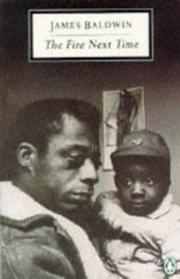
The Fire Next Time
2,463-word summary 11 min read 89 pages in the book
- First published
- 1963
- Publisher
- Dial Press
- Pages
- 89
- ISBN
- 9780140182750
Reading options
What's inside (7 sections)
I picked up The Fire Next Time because I wanted to understand why a book this short still gets assigned, quoted, and argued over more than sixty years later. It was first published in 1963 by Dial Press. The Penguin reprint I checked runs 89 pages, and the ISBN is 9780140182750. It holds two essays written as letters. The first is brief and addressed to Baldwin's teenage nephew. The second is long and autobiographical, moving from Harlem storefront churches to a dinner table with Elijah Muhammad and toward a hard call for love without illusion. I read it in one sitting, then sat with it for days.
Baldwin was thirty-eight when the book appeared, already known for Go Tell It on the Mountain and Giovanni's Room, writing in the middle of the civil rights movement. The essays had first run in magazines, one in The Progressive and one in The New Yorker, and the book became a bestseller that put him on television panels and church podiums he had left years earlier. Knowing that timing helps. This is not a memoir looking back from safety. It is a public bid to change how the country talks while marches and funerals fill the news.
A letter to a fifteen year old
The opening piece is called My Dungeon Shook, subtitled as a letter to Baldwin's nephew on the hundredth anniversary of Emancipation. The nephew, also named James, is fifteen. The Emancipation Proclamation dates to 1863, so the anniversary falls in 1963, and Baldwin uses that gap to frame everything. A hundred years of legal freedom, and a boy in Harlem still told where he can live and work and whom he can marry.
Baldwin writes to the boy directly, with family plainness. He says he has watched him since infancy, that the boy carries the face and temper of his father, Baldwin's brother, tough and guarded because softness feels unsafe. He tells him the country will try to define him from outside, and that the definition is a lie meant to protect other people's comfort. The point is not to make the boy bitter. It is to free him from accepting a verdict he did not earn.
What surprised me is the second move. After naming the lie, Baldwin asks the boy not to hate white people for believing it. He describes many white Americans as trapped in a history they never examined, raised on stories of innocence that collapse the moment they meet Harlem as it is. He urges his nephew to meet that ignorance with something steadier than contempt. Pity sounds cold on the page, but Baldwin means a clear eyed refusal to let another person's fear decide who you are.
He closes that letter with a family charge. Since white people cannot free themselves from the story they built, and Black people cannot be free while that story rules jobs and schools and police, freedom has to be made together or not at all. It is only a few pages, and it reads like a talk given at a kitchen table. I found it moving and almost unbearably demanding. To ask a fifteen year old to carry dignity and mercy at once, while adults fail at both, feels like a lot. Baldwin knows it. He asks anyway.
Harlem, fear, and the pulpit
The second essay, Down at the Cross, runs much longer and starts in childhood. Baldwin grew up in Harlem in the nineteen thirties and forties, the oldest of nine, under a stepfather who worked in a factory and preached on weekends. Home was strict and frightening. The streets added their own lessons. Jobs closed, police watched, older boys offered crime as pay and proof. Baldwin describes a boy learning early how narrow his choices looked, and how hungrily he watched for any door out.
The church was that door. At fourteen he had what he calls a conversion and joined the church, and soon he was preaching himself. For about three years he stood in pulpits, a teenage minister with a real gift for holding a room. He describes the pull honestly. Safety from the street, respect from adults, a place where his voice mattered, plus the music and heat of services that could lift a tired week. He also describes what the faith gave him inwardly. A way to name terror and guilt, a community that claimed him, a sense that his life counted in a scheme larger than Harlem rents.
Then he left, and the reasons matter more than the exit itself. He came to feel that the church as he knew it asked him to love God while accepting humiliation on earth, to wait for heaven while landlords and bosses took their cut now. He watched pious people treat neighbors coldly. He felt his own sermons smoothing over questions he could not answer. He does not write this part with mockery. He writes it as someone who loved the music and the people and could no longer sign the doctrine. When he walked away, he lost both shelter and standing, and he knew it.
I linger on this section because it explains his ear. Baldwin hears how religion sounds to a boy who needs it to work on Monday, not only Sunday. That test stays with him through the rest of the book. Any creed, Christian or otherwise, has to answer for jobs and housing and police, or it is decoration. Readers who grew up in church will recognize the ache here even if their doctrine differs. He is not scoring points. He is reporting an account that would not balance.
School sharpens the same lesson. Baldwin remembers teachers who meant well and still steered Black boys toward menial futures, counselors with forms already filled in their minds. Work means porter jobs and elevator jobs, watched counters and short tempers. Police mean stops that teach a boy to keep his hands visible and his voice flat. His stepfather answers this pressure with scripture and strict rules, love bent through fear. The boy learns to flinch at home and to perform calm outside. By thirteen he can read a room faster than most adults. That skill later makes his essays cut so clean.
The pulpit years cost him, too. Three years of preaching through late teens means funerals and revivals, all night prayer, collection plates, rival ministers, girls watching from pews, older men testing him. He learns how a pause can hold a crowd and how a song can cover doubt. When doubt wins, he does not drift out quietly. He argues himself out, point by point, and the loss leaves him exposed. No badge, no title, no safe place on Sunday. Paris and writing come later. First comes that bare stretch where he has to build a conscience without a congregation.
Dinner with Elijah Muhammad
The middle of the long essay turns to the Nation of Islam. Baldwin sketches its appeal in Harlem with care. Here was a movement that told Black people they were not cursed or inferior but chosen and strong, that white power rested on theft and lies, that separation and discipline could build a dignified life. For people tired of begging for a seat, that message landed. Baldwin admits its force. He also refuses its reversal.
He recounts meeting Elijah Muhammad, the movement's leader, including a long dinner at Muhammad's home in Chicago. The table is generous, the manner warm, the doctrine firm. White people are devils by nature, integration is a trap, the future belongs to Black people who separate and build. Malcolm X is present in this orbit as a driver and aide, sharp and courteous, already a public voice for the movement. Baldwin renders these men as serious and sincere, not cartoons. That fairness makes his refusal hit harder.
His objection is moral rather than tactical. To replace one claim of natural superiority with another leaves the cruelty intact and only swaps who wields it. He has seen what supremacy does to the people who hold it, how it hollows them while they boast. He does not want Black freedom to mean learning the same trick. He also distrusts any scheme that asks ordinary people to hate on schedule. Hate, in his account, is a tax the hater pays daily, in sleep and temper and sight.
There is a smaller scene I keep thinking about. Baldwin describes talking with young Muslims afterward, bright and disciplined, hungry for purpose. He likes them. He fears for them. He worries that a creed built on a fixed enemy will need that enemy forever, and will shrink the lives it claims to save. He poses the same Monday test he posed to the church. Does this make a man freer at work, kinder at home, braver in public. If not, walk past it with respect and keep going.
Love as policy, fire as warning
From there Baldwin widens to the country. He argues that white America built its wealth and its self image on Black labor while insisting the arrangement was natural or temporary or already fixed. Schools, unions, real estate offices, and churches all helped maintain the line, often without using crude words. He is blunt that goodwill statements change little while those habits pay. Northern liberals come in for special scrutiny. Pity from a safe distance, in his view, is another way not to look.
He gives that evasion faces. The landlord who praises Martin Luther King on television and raises the rent on Friday. The union hall that welcomes new members in speeches and guards apprenticeships by custom. The editor who wants a moving story and flinches at anger. The teacher who loves Black children in theory and suspends them faster in practice. Baldwin does not call these people monsters. He calls them comfortable. Comfort, he suggests, can do the work of malice while keeping clean hands.
Short break here. I had to put the book down at this point and walk around the block. Not because the argument confused me, but because it named behaviors I have excused in myself. That is the risk of reading him honestly. He leaves little room for admiration without action.
His answer is love, but not the soft kind. He means a disciplined attention that refuses both flattery and despair. Know the past, tell the truth about the present, act like other people's children matter as much as your own. He asks white readers to accept that their history shaped them more than they admit, and to stop treating that admission as an insult. He asks Black readers to refuse hatred even where hatred would be understandable, because hatred would confirm the very order they mean to end. Both asks cost something real. He does not pretend otherwise.
The warning that gives the book its title comes at the end. The title points to an old spiritual about judgment, water the first time and fire the next. Baldwin uses it to say the country cannot stall forever. If it will not make freedom real in housing and schools and votes and daily respect, violence will fill the gap, and everyone will burn in it. He does not celebrate that outcome. He dreads it. The final pages read like a man trying to pull a car back from a cliff with words, knowing words may not be enough.
One passage about interdependence stayed with me. Baldwin insists the fates are tied. White people will not become themselves while they need Black people to play a lesser part, and Black people cannot live fully while that part is forced on them. Freedom, in this telling, is not a gift one group hands another. It is a shared escape from a shared lie. I found that framing clarifying and uncomfortable, because it leaves no spectator seat.
What dates it and what holds
No honest account should skip the friction. At 89 pages, the book states more than it proves. Baldwin moves from memory to doctrine to national prescription in leaps, and readers who want data or policy detail will not find them here. His Harlem is vivid, but the South gets less texture, and rural Black life barely appears. Women appear mostly as mothers and church sisters rather than as thinkers and actors, which thins his claim to speak for a whole people. A modern reader will notice the absence quickly.
His treatment of religion will also pinch. Committed Christians may feel their faith reduced to its failures, even though Baldwin honors the music and the fellowship. Muslims may feel the Nation of Islam chapter uses a complex movement as a foil for his own humanism. He is fairer than many polemicists, and he names what attracted him before he dissents, yet the verdicts arrive fast. If you come for a careful history of either tradition, look elsewhere. This is testimony, not scholarship.
The tone can exhaust. Baldwin writes in long rolling sentences that build and release, and he rarely jokes or rests. Some paragraphs feel like sermons that assume agreement by rhythm. I admired the control while sometimes wanting air. The nephew letter asks a boy for saintly poise. The long essay asks a nation for instant candor. Both assume words can move people who benefit from not moving. Sixty years on, that assumption reads as both brave and exposed.
Still, much holds. His Monday test for creeds still works. His portrait of Northern goodwill without cost still stings. His refusal to trade one supremacy for another still steadies. And his central story, a bright boy choosing the pulpit to escape the street and then leaving the pulpit to keep his conscience, still explains more about American faith than many longer studies. The book earns its place in classrooms, though it works better discussed than admired alone.
Who should read it now. Anyone who wants the civil rights years from inside a brilliant mind rather than a timeline. Anyone wrestling with faith that comforts on Sunday and fails on Monday. Anyone tempted by clean separations, whether of neighborhood or doctrine, who needs to hear the cost stated plainly. Pair it with a history for facts and dates, because Baldwin will not supply them. A classroom does well to add voices he leaves out, especially Black women who carried churches and movements while men held microphones. Read his nephew letter beside a newspaper from 1963. Read the Chicago dinner beside Malcolm's own account of those years. Come for the letter to James, stay for the dinner in Chicago and the closing warning. Short as it is, it leaves marks that longer books miss. I finished it feeling addressed rather than informed, which seems to be exactly the point.
FAQ
When was The Fire Next Time published?
It was first published in 1963 by Dial Press. The Penguin reprint for ISBN 9780140182750 runs 89 pages.
What is in the book?
Two essays in letter form: My Dungeon Shook, to his fifteen year old nephew, and Down at the Cross, about Harlem, the church, and his meeting with Elijah Muhammad.
Is it part of a series?
No. It stands alone. It pairs well with a civil rights history and with other Baldwin books like Giovanni's Room.
Similar books
So You Want to Talk About Race
Oluo gives plain rules for talking about race at work and home.
2,597-word summary · 12 min read
The DaVinci Code: A Quest for Answers
A short 2006 dialogue in which three friends test Dan Brown's claims about Jesus, Mary Magdalene, Nicaea, and the canon.
2,088-word summary · 9 min read

Infidel
Ayaan Hirsi Ali's memoir of a Somali childhood, a forced marriage, a Dutch asylum claim, and the political fight that followed the murder of Theo van Gogh.
2,041-word summary · 9 min read

The Chosen
A shattered pair of glasses in a 1944 Brooklyn softball game starts a friendship between a Hasidic boy and his Orthodox neighbor, and their fathers pull them…
2,443-word summary · 11 min read

Dear Girls: Intimate Tales, Untold Secrets & Advice for Living Your Best Life
Ali Wong's debut collects fourteen letters to her daughters, covering sex, money, work, marriage, Vietnam, and being a working Asian American mother.
2,266-word summary · 10 min read

Wide Sargasso Sea
Jean Rhys gives the first Mrs. Rochester a Caribbean childhood, a marriage built on money and suspicion, and a voice that Charlotte Bronte left in the attic.
2,021-word summary · 9 min read

Why I'm No Longer Talking to White People About Race
Reni Eddo-Lodge traces black British history and shows how institutions, culture, and everyday assumptions keep producing racial inequality.
2,071-word summary · 9 min read
The Blind Side: Evolution of a Game
Michael Lewis traces how the left tackle became a premium position and tells the story of Michael Oher, a homeless Memphis teenager whose size and speed made…
2,038-word summary · 9 min read

Scrappy Little Nobody
Anna Kendrick's essays trace her path from a Portland childhood and Broadway to Hollywood, with jokes, anxiety, and a refusal to pretend fame fixed her.
2,092-word summary · 9 min read
Native Son
Richard Wright's landmark novel follows Bigger Thomas through one panicked night in Chicago and the manhunt, trial and reckonings that follow, exposing the…
2,265-word summary · 10 min read

Beyond Good and Evil: Prelude to a Philosophy of the Future
A guide to Friedrich Nietzsche's Beyond Good and Evil: its attack on moral prejudice, the will to power, master and slave morality, and the philosopher of the…
2,597-word summary · 12 min read
A Raisin in the Sun
Lorraine Hansberry's 1959 play follows the Younger family as a $10,000 insurance check, a house in a hostile neighborhood, and a stolen investment test their…
2,444-word summary · 11 min read

What the Dog Saw and Other Adventures
Nineteen New Yorker essays on pitchmen, ketchup, Enron, profiling, late bloomers and the limits of prediction, arranged in three parts.
2,049-word summary · 9 min read
The Warmth of Other Suns
Three migrants ride north out of Jim Crow toward Chicago and LA.
2,561-word summary · 11 min read
The New Jim Crow: Mass Incarceration in the Age of Colorblindness
How mass incarceration became a racial caste system after civil rights.
2,413-word summary · 11 min read

My Horizontal Life: A Collection of One-Night Stands
Handler turns dating disasters and family chaos into brash comic essays about single life in Los Angeles.
2,304-word summary · 10 min read

How to Be a Woman
Moran mixes girlhood and work stories into plain feminist advice.
2,600-word summary · 12 min read
Hidden Figures
Black women computers at Langley launch rockets past Jim Crow.
2,385-word summary · 11 min read
God Is Not Great
Hitchens argues religion poisons life across history and texts.
2,545-word summary · 11 min read
Eats, Shoots & Leaves
Truss defends commas with jokes about pandas and posters.
2,423-word summary · 11 min read

A Canticle for Leibowitz
After nuclear war, monks save books across centuries while the world rebuilds and falls again.
2,381-word summary · 11 min read

Song of Solomon
Milkman Dead leaves Michigan to hunt for family gold and finds instead the old song of his ancestor Solomon.
2,465-word summary · 11 min read

How to Be an Antiracist
Kendi blends memoir and history to argue that fair policy, not self fixing, creates an equal society.
2,513-word summary · 11 min read
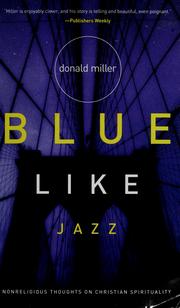
Blue Like Jazz
Donald Miller leaves youth group faith in Texas for Portland and Reed College, where a confession booth and shared house life reshape his view of Christian…
2,366-word summary · 11 min read
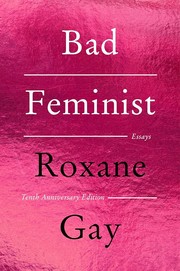
Bad Feminist
Gay mixes memoir and pop culture criticism to argue for imperfect feminism, from Sweet Valley to Django to Fifty Shades.
2,493-word summary · 11 min read

Twelve Years a Slave
Free violinist Solomon Northup tells how Brown and Hamilton lured him south into twelve years of Louisiana bondage until Bass letters brought rescue in January…
2,931-word summary · 13 min read

Brideshead Revisited
At Oxford Charles Ryder befriends Sebastian Flyte and falls into the Catholic Marchmain family, from Brideshead summers to Julia's affair and Lord Marchmain's…
2,353-word summary · 10 min read

Tiny Beautiful Things: Advice on Love and Life from Dear Sugar
Dear Sugar answers letters on love, grief, and work with tough empathy drawn from her own losses.
2,253-word summary · 10 min read

The Girl with the Lower Back Tattoo
Amy Schumer mixes raunchy jokes with frank essays on family, dating, body image, and the shooting that pushed her into gun control advocacy.
2,259-word summary · 10 min read