
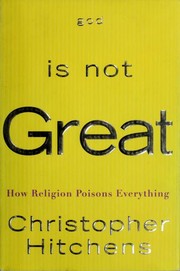
God Is Not Great
2,545-word summary 11 min read 307 pages in the book
- First published
- 2007
- Publisher
- Twelve
- Pages
- 307
- ISBN
- 9780446579803
Reading options
What's inside (8 sections)
I picked up God Is Not Great in a secondhand shop on a rainy afternoon because I wanted to see what the fuss had been about. First published in 2007 by Twelve, in the 307 page edition cited here, it was one of the loud books of the New Atheist years, shelved beside Dawkins and Harris and argued about at dinner tables. The subtitle gives the game away. How Religion Poisons Everything. Hitchens, a British American journalist and essayist known for debate, stretches that claim across history, scripture, and current politics. I expected heat. I got heat plus a surprising amount of memoir, close reading, and old fashioned polemic.
The method is simple. Take religion claim by claim, story by story, and press until something cracks. Does faith make people behave better. Does it explain the world. Does it deserve special respect. Hitchens answers no, no, and no, then piles examples from Judaism, Christianity, Islam, Mormonism, and Eastern movements. He admires individual believers at times, especially dissenters and scientists, but he treats institutions and holy texts as human inventions that keep causing harm. You do not have to agree to find the tour forceful. You do have to be ready for a tone that rarely softens.
Why he thinks religion kills
Hitchens opens with the charge that matters most to him. Religion does not merely get things wrong. It gets people killed. He points to sectarian war in Northern Ireland, to the fatwa against Salman Rushdie, to suicide bombers, to the September 11 attacks, to fighting in Iraq, India, and the Balkans. His point is not that every believer is violent. It is that faith gives violence a ready license. A holy book, a clergy ruling, a promise of paradise, and ordinary cruelty turns into duty.
He leans on personal memory here. He recalls school in England, the damp chapels, the enforced prayers, the teachers who presented biblical stories as fact. He recalls seeing religion used to sort children and to excuse empire. Later, as a reporter, he watched priests and mullahs bless rival sides. Those scenes give the early chapters their bite. He is not writing from a library only. He is writing as someone who stood near funerals and saw clerics jostle for the microphone.
The strongest part of this section is his attack on the idea that religion restrains war. He argues the opposite happens often enough to matter. When Catholics and Protestants in Belfast mark streets by church, when Shia and Sunni militias check names at roadblocks, faith stops being private comfort and becomes a team flag. Even where religion does not start the fight, he says, it makes compromise harder because surrender looks like betrayal of God rather than ordinary politics.
The weaker part is selection. Hitchens picks the worst cases and moves fast past the quiet ones. He gives little time to churches that sheltered refugees, marched for civil rights, or opposed his own side empire. He would answer that good people would be good without faith, and that the harm is specific to faith. That reply has force, but it also lets him skip counting. A critic could fairly ask for a fuller ledger. How often does faith inflame, how often does it calm, compared with nation, tribe, or profit. Hitchens does not run that comparison with care. He prosecutes.
Still, as an opening, it sets the stakes. This will not be a book about private spirituality. It will be about power. Who gets to speak for God, who gets silenced, who pays.
Reading the old books closely
The middle chapters slow down and read like a hostile book club. Hitchens walks through the Hebrew Bible, the Gospels, and the Quran, stopping at passages modern believers tend to skip in services. The creation stories that contradict each other. The flood that drowns the world to fix it. The command to kill Canaanites, Amalekites, witches, disobedient children, gay men. The psalms that bless revenge. He treats these not as metaphors to be smoothed over but as evidence of the minds that wrote them. Fearful, tribal, pre scientific.
He is sharpest on Moses and the Exodus. He doubts the historicity of the mass escape from Egypt, notes the lack of Egyptian records for it, and argues the story works better as a founding myth than as reportage. He does similar work on the nativity accounts, pointing out that Matthew and Luke give different genealogies and different reasons for the family being in Bethlehem. His aim is to show that claims of penciled by God authorship fall apart once you compare pages. Believers have answers to some of this, through textual study and historical context, but Hitchens wants the casual reader to notice how seldom those answers reach the pew.
With the Christian scriptures he mixes admiration and dismissal. He praises parts of the Sermon on the Mount as decent moral teaching, then notes how much of it borrows from earlier rabbis and Stoics. He goes after the virgin birth, the miracles, the resurrection appearances, and the delay of the promised return. He argues Paul, not Jesus, built the church, by adding rules about sex, obedience, and hierarchy that suited an organization. Whether you accept that depends on your view of early Christian history, but Hitchens states it with enough names and dates to force engagement.
On Islam he is harsher and less patient. He calls Muhammad a political and military leader as well as a prophet, cites the turn from Meccan preaching to Medinan rule, the battles, the punishments, the marriage to a young Aisha, and the verses used to justify harsh law. He treats the Quran claim of perfect preservation and inimitable style as a literary boast that collapses on reading. Muslim readers will find this section thin on theology and heavy on polemic. Even sympathetic readers may notice he spends less time on Islamic philosophy, poetry, and law at their best than on the punishments he hates.
What holds these chapters together is a simple test. If a text were truly beyond human error, it would not show human error. Since it shows plenty, read it as human. That argument lands even if you quarrel with his examples. Where it strains is tone. He rarely grants that ancient writers could be both wrong about nature and serious about meaning. He reads parable as failed science, which scores points but misses why stories last.
Prophets, priests, and modern miracles
From scripture Hitchens moves to newer faiths and to holy reputations closer to our time. The Mormon chapter is a set piece. He retells Joseph Smith story with open glee. The golden plates no one else saw. The seer stone in a hat. The shifting revelations that conveniently solved money and marriage problems. The trek to Utah. He presents Mormonism as useful because it is recent enough to check. We have newspapers, court records, rival accounts. If a new religion can grow this fast from such materials, he asks, why trust older ones whose paperwork is gone.
He does similar work on Tibetan Buddhism and on charismatic gurus, which annoyed some reviewers who expected him to spare the East. He does not. He describes the Dalai Lama institution as feudal rule with a kind smile, notes past cooperation with moneyed patrons, and rejects the idea that meditation science excuses theocracy. He treats Sri Sathya Sai Baba claims, materializations and resurrections, as stage tricks that prey on the sick. The point is consistent. Distance and exotic robes do not turn faith into fact.
The Mother Teresa chapter drew the most anger, and it remains the most researched part of the book. Hitchens had followed her work for years. He argues her houses for the dying in Calcutta offered piety and suffering rather than modern care, with reused needles, weak pain relief, and baptisms of the unconscious. He contrasts the vast donations with the thin medical provision. He also attacks her alliance with rich donors and dictators, and her opposition to contraception and divorce even where poverty and disease made those stances costly. Admirers answer that she gave presence where no one else went, and that hospice is not hospital. Hitchens would call that an excuse for low standards. Readers should check later reporting on the order, which is mixed, but his core question sticks. Why did holiness excuse care he would never accept from a secular clinic.
He adds smaller portraits along the way. Messianic rabbis who set dates for the end. Televangelists selling cures. Catholic priests moved between parishes after abuse. Each story supports the same charge. When an institution claims moral authority from heaven, it resists earthly audit.
Design, morality, and living without God
After demolition comes philosophy. Can religion explain nature. Can it ground right and wrong. Hitchens says it fails both.
On design he leans on Darwin. The variety of life, the waste, the cruelty, the blind alleys, all look like evolution, not plan. He mocks the argument that beauty proves a maker by pointing to parasites, birth defects, and extinctions. He notes how often holy books get nature backwards. Bats are not birds. The earth was not made in days. Prayer does not regrow limbs in trials. He is on firm ground here for readers who accept science, though philosophers will note he states the case briskly rather than answering the finer versions of design reasoning.
On morality he flips the usual charge. It is not atheists who lack reasons to be good. It is believers who outsource goodness to threats. He argues we do not need scripture to know murder and theft corrode common life. Human solidarity, sympathy, game theory, law, all push toward cooperation. He cites abolitionists, suffragists, and dissenters, many of them religious, but stresses they succeeded by appealing to conscience against clergy, not through it. He loves Thomas Paine and Thomas Jefferson in these pages, freethinkers who used reason to cut priests down to size while keeping ethics.
This is also where Hitchens gets personal in a better way. He writes about friendship, about Orwell as a model of plain speech, about doctors who work without expecting heaven, about soldiers and reporters who risk life for others with no promise of reward. He insists meaning grows from love, work, curiosity, and argument, not from obedience. You can hear what drew people to him in debate. He makes unbelief sound not empty but crowded, full of books, jokes, and obligations.
The gap is that he engages little with the strongest religious moral thought. He quotes fundamentalists and press releases more than Augustine, Maimonides, or modern theologians who wrestle with doubt. A serious believer could say Hitchens beats a simple version of faith and ignores the harder one that has read Darwin and still prays. That complaint has merit. Hitchens would likely answer that ordinary faith, the kind taught to children and enforced by law, is the simple version, and that is what shapes history. Both points can be true at once.
How the argument holds up
It helps to step back and ask what the book proves and what it only asserts. As a catalog of religious harm, it is vivid and often accurate on facts even when one sided on balance. Forced conversions, witch trials, blasphemy laws, clerical cover ups, opposition to vaccines and condoms, these happened. Hitchens names dates, places, and texts, and he writes with a reporter memory for who said what. Readers who knew little about Joseph Smith plates, or about the Vatican stance on condoms during the AIDS crisis, will learn a lot fast.
As history of ideas, it is thinner. He treats religion as one thing across centuries, which lets him jump from ancient sacrifice to modern televangelism without asking how much changed. He gives short shrift to reform inside traditions, to the priests and imams and rabbis who fought their own hierarchies, to the mystics who doubted literally everything he attacks. He also leans on a narrow view of faith as belief in supernatural claims, which fits his target but leaves out practice, community, music, and mourning that keep people in pews after belief thins.
Style is part of the problem and part of the pleasure. Hitchens writes periodic sentences full of allusion, Latin tags, and sudden insults. At his best he is funny and exact. At his worst he sneers. Catholics become a criminal syndicate. Believers become sheep. Opponents become pygmies. That swagger thrilled fans and confirmed enemies. It also dates the book. The confident 2007 voice, sure that reason was winning and that Iraq showed faith danger rather than Western error, reads differently now. Hitchens supported the Iraq war, and critics were quick to note the tension. A book against holy war that backed a secular war needed a fuller reckoning than it gives.
There are also specific overreaches worth flagging. He sometimes states disputed history as settled, especially on early Israel and early Christianity, where scholars argue more than he admits. He sometimes treats bad priests as proof of bad doctrine, which is a leap. He sometimes credits science with moral progress that owed much to law, labor, and yes, churches. A careful reader can grant his best hits while holding these doubts. The harm stories stand. The leap from some harm to all poison needs more than assertion.
Even so, the book keeps value as a stress test. Bring your strongest reasons for faith to these chapters and see what survives. Many readers find their ethics do survive, but their literalism does not. That is not nothing. Hitchens clears brush even when he burns good timber with it.
Who should read it now
Almost twenty years on, God Is Not Great reads like a time capsule with live wires. Some wires have cooled. The New Atheist moment passed. Dawkins and Harris moved on to other fights. The internet filled with calmer conversations between believers and skeptics. Some wires still spark. Blasphemy punishments, abortion bans rooted in doctrine, school battles over evolution and books, clergy abuse settlements, holy land claims that block peace, all keep his examples current.
I would recommend it with conditions. Read it if you want a forceful tour of the case against religion, told by a skilled stylist who never bores. Pair it with a serious defender, or with history that shows both harm and help. Do not read it as a neutral survey. It is advocacy, proud of it. Expect selection, sarcasm, and speed. Expect also moments of real moral clarity, especially on free speech, on the right to leave a faith, on the duty to protect children from indoctrination and harm, on the need to test miracle claims like any other claim.
Hitchens died in 2011, and the later chapters on mortality read differently knowing that. He did not soften. He asked for evidence, thanked doctors, kept arguing. You can admire that steadiness while rejecting his conclusions. I finished the book less certain that religion poisons everything, which is too wide a net, and more certain that any claim to untouchable authority deserves the kind of pressure he applies. That feels like a fair place to land. Argue hard, check sources, protect dissent, feed the living before flattering the dead.
FAQ
What is the main claim of God Is Not Great?
Hitchens claims religion poisons everything by causing violence, spreading false explanations, and blocking moral progress, with cases from scripture to modern sects.
Which religions and figures does he discuss?
He discusses Judaism, Christianity, and Islam in detail, plus Mormon founder Joseph Smith, Mother Teresa, and Eastern teachers, alongside writers like Thomas Paine and Thomas Jefferson.
When was God Is Not Great published and how long is it?
It was first published in 2007 by Twelve, and the edition cited here runs 307 pages.
Similar books
On the Origin of Species
Darwin's 1859 case for evolution by natural selection, from Beagle finches and breeding pigeons to fossils and anatomy.
2,589-word summary · 12 min read
In Defense of Food
Pollan argues we stopped eating food and started eating nutrients, and offers a plain way back.
2,320-word summary · 10 min read
Blue Like Jazz
Donald Miller leaves youth group faith in Texas for Portland and Reed College, where a confession booth and shared house life reshape his view of Christian…
2,366-word summary · 11 min read
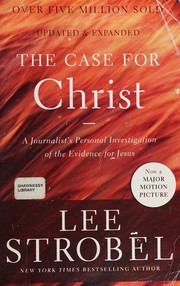
The Case for Christ
An atheist journalist cross-examines scholars on the Gospels, the tomb, and the resurrection to test the evidence for Jesus.
2,882-word summary · 13 min read
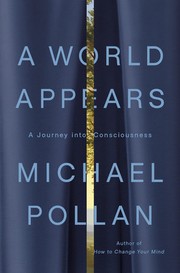
A World Appears
Pollan traces consciousness from plant sentience to AI feeling and the self, with gardens, labs, trips and hard questions along the way.
3,108-word summary · 14 min read
The God Delusion
Dawkins argues a personal God almost certainly does not exist, then traces religion and morals to evolution.
3,426-word summary · 15 min read
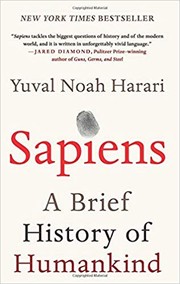
Sapiens: A Brief History of Humankind
Harari's Sapiens from cover to cover: the cognitive revolution, the agricultural bargain, shared fictions like money and nations, and the scientific centuries…
2,145-word summary · 10 min read
The DaVinci Code: A Quest for Answers
A short 2006 dialogue in which three friends test Dan Brown's claims about Jesus, Mary Magdalene, Nicaea, and the canon.
2,088-word summary · 9 min read

The Courage to Be Disliked: The Japanese Phenomenon That Shows You How to Change Your Life and Achieve Real Happiness
A philosopher and an angry young man argue over five nights about Adlerian psychology, trauma, approval, and the freedom to be disliked.
2,054-word summary · 9 min read
Same Kind of Different as Me
An art dealer and a formerly homeless sharecropper tell the story of the friendship that began at a Fort Worth mission and the woman who insisted on it.
2,023-word summary · 9 min read

Moonwalking with Einstein: The Art and Science of Remembering Everything
A journalist spends a year training for the U.S. Memory Championship and discovers that extraordinary memory is mostly technique, attention, and a lot of…
2,027-word summary · 9 min read

Infidel
Ayaan Hirsi Ali's memoir of a Somali childhood, a forced marriage, a Dutch asylum claim, and the political fight that followed the murder of Theo van Gogh.
2,041-word summary · 9 min read
Love Does
A lawyer and activist tells stories of saying yes, showing up, and loving people through ordinary, often ridiculous actions.
2,411-word summary · 11 min read
Four Thousand Weeks: Time Management for Mortals
Oliver Burkeman turns the whole productivity project on its head, arguing that a human lifespan of roughly four thousand weeks is not a problem to optimize…
2,447-word summary · 11 min read
Breath: The New Science of a Lost Art
Journalist James Nestor investigates how modern humans learned to breathe badly, and what researchers, athletes, and breathwork practitioners have found about…
2,011-word summary · 9 min read

The Chosen
A shattered pair of glasses in a 1944 Brooklyn softball game starts a friendship between a Hasidic boy and his Orthodox neighbor, and their fathers pull them…
2,443-word summary · 11 min read

The Magnolia Story
How Chip and Joanna Gaines met, closed their first shop, nearly lost everything in a housing development, and built Fixer Upper.
2,994-word summary · 13 min read
The Road Less Traveled: A New Psychology of Love, Traditional Values and Spiritual Growth
M. Scott Peck argues that maturity begins with accepting difficulty, then builds discipline, love, and spiritual growth through honest, often painful work.
2,200-word summary · 10 min read
The Elegant Universe: Superstrings, Hidden Dimensions, and the Quest for the Ultimate Theory
Brian Greene explains relativity, quantum mechanics, and the promise of string theory without requiring a physics degree.
2,110-word summary · 9 min read

Attached
A psychiatrist and a psychologist explain adult attachment styles and show how anxious, avoidant, and secure patterns shape dating, conflict, and the search…
2,157-word summary · 10 min read
Letters to a Young Poet
Rilke's ten letters to a young officer cadet refuse easy criticism and ask whether he must write, offering patience and solitude as a way of life.
2,530-word summary · 11 min read
Beyond Good and Evil: Prelude to a Philosophy of the Future
A guide to Friedrich Nietzsche's Beyond Good and Evil: its attack on moral prejudice, the will to power, master and slave morality, and the philosopher of the…
2,597-word summary · 12 min read
90 Minutes in Heaven: A True Story of Death and Life
A pastor declared dead at a 1989 crash scene describes ninety minutes he says he spent in Heaven, then thirteen months of surgeries, depression, and recovery.
2,246-word summary · 10 min read
By the River Piedra I Sat Down and Wept
Pilar, 29, meets her childhood friend again in Madrid and finds a rumored miracle worker. One winter week through the Pyrenees to the river Piedra, and the…
2,845-word summary · 13 min read
The Fire Next Time
Baldwin writes his nephew and faith on race in America.
2,463-word summary · 11 min read
The Emperor of All Maladies
A biography of cancer from Galen to chemo through one doctor cases.
2,255-word summary · 10 min read
Hidden Figures
Black women computers at Langley launch rockets past Jim Crow.
2,385-word summary · 11 min read
A Canticle for Leibowitz
After nuclear war, monks save books across centuries while the world rebuilds and falls again.
2,381-word summary · 11 min read
The Hot Zone
Ebola and Marburg move from African outbreaks to a Virginia monkey house and an Army response in suits.
2,291-word summary · 10 min read
The Black Swan
Taleb argues rare shocks shape history more than models admit, and urges safer exposure over prediction.
2,588-word summary · 12 min read