
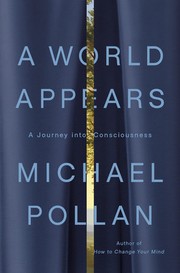
A World Appears
3,108-word summary 14 min read 320 pages in the book
- First published
- 2026
- Publisher
- Penguin Press
- Pages
- 320
- ISBN
- 9781984881991
Reading options
What's inside (9 sections)
I picked up A World Appears because How to Change Your Mind had left me with a question I could not shake. That book, from 2018, made psychedelics sound less like an escape and more like a tool for looking at the mind from the side. When I heard Pollan had spent six years reporting on consciousness itself, and that the result was coming from Penguin Press on February 24, 2026 as a 320 page hardcover, I preordered it. I wanted to know what he would do with a subject where even the experts admit they are stuck.
The short version is that this is a tour book. Pollan traces what he calls an unmapped continent, consciousness, by walking through four of its regions in order. Sentience comes first, then feeling, then thought, then self, with a short introduction he calls The Wager and a closing section called The Cave. He talks to neuroscientists, philosophers, novelists, meditators, and people trying to build feelings into machines. He also reports on his own altered states, in gardens and on cushions, the way he did in his last two books. If you liked his habit of trying things himself and then checking what he felt against the science, you will feel at home here.
The wager
The opening sets the terms plainly. Consciousness feels like something from the inside. Scientists, philosophers, and artists agree on that much. How three pounds of spongy gray matter gives rise to a point of view, with feelings and thoughts and a sense of being someone, remains unsolved. Pollan leans on an old image to make the difficulty vivid. Studying consciousness is like asking fish to study water. We have almost no distance from the thing we are trying to describe.
He gives a quick history to show why the field woke up late. In the early 1990s a small group of neuroscientists decided to treat consciousness as a proper research topic instead of a mystery to leave to poets. They started by hunting for neural correlates, which is a careful way of saying they looked for brain activity that lines up with reported experience. That work produced progress on vision and attention. It did not answer why those processes feel like anything at all. The philosopher David Chalmers named this gap in 1994. The easy problems link functions to brain areas. The hard problem asks why there is experience attached in the first place.
Pollan is fond of a line from screenwriter William Goldman about Hollywood, that nobody knows anything, and he borrows it for this science. By one recent count there are around two dozen theories of consciousness on offer. He does not survey them all. He says he picked the ones that helped him see each stage more clearly. That choice shapes the whole book. This is not a textbook. It is one curious reporter placing bets on which ideas throw light, then showing his work.
He also names his own starting point. Two kinds of experience pushed him toward the topic. One was psychedelics, which he describes as smudging a windowpane that is usually clear. When the glass gets smudged you notice the glass. The other was meditation, which has a way of making thoughts look strange. You sit, you try to follow the breath, and within seconds some odd memory or plan barges in. Where did that come from. Who was thinking it. Once you start asking, he says, it is hard to stop.
Pollan blames part of our confusion on an old split. Galileo and Descartes helped divide mind from body, and humans from the rest of nature, in ways that made it normal to treat consciousness as something that happens only in fancy brains like ours. He suggests that split still guides lab design and funding, even when researchers claim to have dropped it. One aim of the book is to loosen that habit without replacing science with fog. He wants a science that takes experience seriously, and he is open about the chance that our current tools may not be enough.
Sentience and the plants that stared back
The first full chapter is about sentience, which Pollan treats as the simplest form of consciousness. The ability to register sensation and respond in a way that helps the organism get on. He starts with plants because their otherness forces the question. If we only look at animals with faces, we will keep finding ourselves.
The scene that starts the inquiry is specific and a little funny. One afternoon in his garden at the house in Connecticut, after taking magic mushrooms, Pollan became convinced that a stand of plume poppies was conscious. He describes them as tall, pale, almost architectural plants, and says they seemed to return his gaze with a benevolent air. He is careful to add that he knew the feeling came with chemical help. He quotes the William James idea of noetic certainty, the sense on psychedelics that you have learned something true, and admits that certainty proves nothing. He asked scientists what you do with an insight like that. Their answer, test it against other ways of knowing, gave him the chapter.
What follows is a fair minded report from the edge of plant science. He visits people sometimes called plant neurobiologists, a label many of them dislike, who study signaling, memory like processes, and problem solving in roots and shoots. He describes a pea plant learning to find light in a simple maze, and work on electrical signaling that travels through plant tissue when leaves are hurt. He reports claims that plants may have sleep like states and may register harm in ways that look, at least functionally, like pain. He also talks to skeptics who say words like learning and pain stretch too far when applied to organisms without neurons.
I liked how he handles this. He does not claim that a poppy feels the way we feel. He concludes that plant sentience, if we grant the term, is goal directed and tuned to the plant world of light, water, gravity, and attack. It suggests a kind of cognition about surroundings without implying a rich inner movie. He cites a 2022 study that found a single psychedelic experience makes people more likely to attribute consciousness to other beings, living and not, which helps explain his own afternoon. The point is not that the drug showed him the truth. The point is that it made the question harder to dismiss.
This section also asks how widespread consciousness might be. If sentience solves problems for rooted organisms that cannot run away, then our habit of tying awareness to brains looks narrow. Neuroscience, he notes, has yet to name the structures that must be present for consciousness to appear. Without that list, saying only brains can do it is a guess. He does not push this into mysticism. He keeps returning to experiments you could repeat, and to the gap between behavior that looks smart and proof of felt life.
Feeling, the old brain, and machines
The second chapter moves to feeling, which many researchers now treat as the root of consciousness in animals like us. The older story put reason first and located awareness in the neocortex, the wrinkled outer sheet that is newest in evolutionary terms. Pollan reports a shift. A growing group argues that feelings generated deep in the brainstem, in ancient structures we share with many animals, come first. Signals from the gut and heart and lungs arrive constantly. The brain has to mind the body, tracking thirst and hunger and threat, and feelings may be how that minding shows up.
He makes this concrete with simple examples. Thirst is not an abstract report. It moves you. So does dread before a talk, or the lift after good news that you feel in the chest before you can name it. He interviews scientists who study interoception, the sensing of inner states, and who argue that Cartesian duality falls apart down there. You cannot cleanly separate a thought about the body from the body state itself. If they are right, we are less special than the cortex story implied. A great many animals share the plumbing that gives rise to basic feelings.
The second half of the chapter follows a stranger project. Labs are now trying to engineer feelings into AI, a field sometimes called synthetic phenomenology. Pollan talks to neuroscientists and psychoanalysts who advise machine groups, and to critics who think the whole effort rests on a thin metaphor of computer as brain. He retells the warnings we know from fiction, Mary Shelley with Frankenstein in 1818 and the calmly murderous computer in 2001, without treating fiction as proof. His interest is practical. What would it mean to say a system feels something, and who gets to decide the test.
He is blunt about the setting in which this work happens. In Silicon Valley he finds impatience with what engineers call magical thinking, which is often just a name for doubts from the humanities. He says his own humanist worries sometimes landed flat there. He also connects the lab story to ordinary life. Social feeds learned to monetize attention years ago. Now chatbots invite attachment. He cites survey numbers about teens turning to AI for company, including a widely quoted figure that nearly three quarters of American teens in one poll said they had done so, and he treats that as a warning about lonely minds meeting skilled mimics. A system does not need to feel for us to start treating it as if it does.
I found this the most unsettling part of the book. Pollan does not claim machines are conscious. He claims we are building the conditions for mass confusion about the question, while doing little to teach what he later calls consciousness hygiene. He is skeptical of reducing awareness to information processing, and he borrows from phenomenology to say why. Edmund Husserl called the lived world the lifeworld. Maps of signals are not the territory of a morning with tea and light. Mistaking the schematic for the felt, he argues, is a habit our tools encourage.
Thought and the stream
The third chapter turns to thought, the chatter we notice most. Pollan notes a paradox. The stream of consciousness fills our days, yet lab science has paid it less attention than vision or memory, in part because researchers are still arguing about simpler features like perception. To fill the gap he leans on philosophy and fiction. Novelists, he says, have spent a century trying to catch the slipperiness of inner life on the page, while psychologists have built small clever probes.
He walks through familiar landmarks with fresh eyes. William James gave us the stream image for a reason. Moments of thought are not discrete pings. They flow and braid. Total objectivity is out of reach because we study mind from inside mind. The painter Cezanne gets a nice cameo here for saying color is where the brain meets the universe, a line the brain scientist Christof Koch picks up after his own ayahuasca nights on a beach in Brazil with shamanic help. Koch came away convinced that consciousness reaches beyond the brain. Pollan reports the claim without signing on to it. He uses it to show how even committed materialists can be moved by experience.
There are two details I kept thinking about after. One is how rare inner speech may be. In one survey he cites, fewer than a quarter of people reported talking in their heads in the sampled moments. Many of us assume everyone narrates like we do. They may not. The other is the study of spontaneous thought by Kalina Christoff and colleagues. Put an experienced meditator in a scanner, ask them to press a button when a thought intrudes, and activity in the hippocampus, a memory area, shows up about four seconds before the person notices the thought. The finding fits daily life. Thoughts arrive. We meet them late and then claim we made them.
Pollan pairs this with a distinction between spotlight and lantern awareness. Spotlight is the narrowed focus school rewards. Lantern is the wide, wandering take of early childhood, full of stray input and wonder. Psychedelics, he suggests, can briefly restore a lantern mode in adults. Everything comes in at once and focus gets hard. Meditation can do something similar with more work. Neither state is better in all cases. A surgeon wants the spotlight. A stuck writer may need the lantern.
This chapter is where his literary side shows most. He is good on why attempts to copy thought in novels often fail in interesting ways, and why those failures teach something about science. A lab that counts reports will miss texture. A novel that chases texture will miss mechanism. He wants both, and he admits neither gives the whole.
The self that will not sit still
The last full chapter takes on the self, which Pollan calls the apotheosis of consciousness in humans. The feeling that somewhere behind the eyes sits a stable I who sees and chooses. Many scientists, philosophers, and Buddhists say this I is a fabrication, though a useful one. Pollan tries to test the claim in himself.
He starts with David Hume, the 18th century philosopher who tried to look inside for the thinker and found only perceptions, feelings, and thoughts passing by. No owner. No perceiver standing apart. Pollan then interviews Matthieu Ricard, the French monk and writer in his eighties who lives in Nepal, about how one might check this without just taking it on faith. Ricard answers in the practical way of long meditators. Look again. Keep looking.
Pollan does. He tries a guided exercise meant to reveal the absence of a single self and gets the opposite. Going room to room in memory, he keeps finding versions of himself. The thirteen year old at a bar mitzvah. The twenty two year old arriving in New York. The thirty two year old father with an infant. Different clothes, different worries, all recognizably him. The exercise fails in a way he finds instructive. Multiplicity does not disprove continuity. It complicates it.
He also reports a longer experiment with solitude. He spends several days mostly alone at a retreat place, meditating four or five hours a day and filling the rest with simple chores. Chopping wood. Sweeping. Making tea. With no one to react to, the edges soften. Rituals replace decisions. There is less need to announce who he is because there is no audience. When he finally sits with Zen teacher Joan Halifax at Upaya in Santa Fe, she deflects his search for a clean theory. She tells him she has divested from fixed meanings. He calls the meeting an experiential koan. It does not solve the problem. It changes the temperature around it.
Other threads fill out the picture. Why do we cling to a stable self while also paying to escape it through drugs, meditation, fasting, hard sport, art, and awe. What to make of short acting psychedelics like 5 MeO DMT from the Sonoran Desert toad, which some users describe as self erasure followed by return. How to hold the Buddhist view that the self is empty alongside the plain fact that responsibility needs an owner. Pollan does not force these into one answer. He suggests the self may be a process that tightens and loosens, useful for planning and care, costly when it locks.
What the book does well, and where it wobbles
The coda, called The Cave, pulls the threads toward practice. If awareness is a gift that can be trained and also polluted, how should we treat it. Pollan writes about attention as a commons that feeds on sleep, nature, ritual, and limits around phones and feeds. He prefers walks to hacks. He likes regular hours and plain rooms. He argues for teaching kids how their tools shape what they notice, the same way we teach food or sleep. Readers who came for policy may want more detail here. Readers who came for orientation may find enough.
As a piece of reporting, the book has clear strengths. Pollan is a patient explainer who can carry a hard idea in plain sentences. He is honest about his priors as a gardener and eater of plants. He names the theories he skipped. He lets skeptics speak at length. The plant chapters feel the freshest because the examples are tactile. Soil, mazes, signals after wounding. The thought chapters feel the most humane because novelists get equal time with scanners.
There are wobbles worth naming. The AI section, though lively, covers a lot of ground fast. The Atlantic review made a similar point, praising Pollan for scenting where culture is headed while noting the book touches AI only in passing in places. If you want a full account of machine minds, you will need another book beside this one. The theory sampling can also frustrate specialists. With so many models in play, focusing on a handful keeps the story moving but leaves obvious gaps. Pollan admits this. It still stings when a favorite rival gets a paragraph.
A second caution is about repeat moves. Readers of his plant and psychedelic books will recognize the shape. Personal puzzlement, history, lab visits, self experiment, modest synthesis. The shape works, but at times the book feels like a third panel in a triptych rather than a fresh start. I did not mind, because consciousness is the right roof for the earlier books to sit under. Others may want more surprise.
Who is this for. If you enjoy science writing that stays close to experience, and you do not need equations, this will suit you. If you want a verdict on whether plants or machines are conscious, you will leave without one, and Pollan would say that is the honest result. The closing line of his wager is that we may end knowing less than we thought we knew, with better questions. I finished with exactly that feeling, plus a stronger urge to guard my attention. For a book about awareness, that seems like the right effect.
A note on the edition
I read the U.S. hardcover from Penguin Press, published February 24, 2026, 320 pages, ISBN 9781984881991. The subtitle on the jacket is A Journey into Consciousness. Pollan announced the book in September 2025 after about six years of reporting, and preorders listed the same date and page count. The large print edition runs longer, which is normal for that format and not the edition cited here.
FAQ
When was A World Appears published and which edition is cited here?
Penguin Press published the U.S. hardcover on February 24, 2026. It runs 320 pages and the ISBN is 9781984881991. The jacket subtitle is A Journey into Consciousness.
Does Pollan claim that plants or machines are conscious?
No. He reports plant signaling and maze work, and interviews teams trying to build feelings into machines, but he concludes that behavior that looks smart does not prove felt life.
Do I need to read How to Change Your Mind first?
No. It stands alone. Readers of How to Change Your Mind will recognize the first person reporting shape, but no prior book is needed.
Similar books
In Defense of Food
Pollan argues we stopped eating food and started eating nutrients, and offers a plain way back.
2,320-word summary · 10 min read
God Is Not Great
Hitchens argues religion poisons life across history and texts.
2,545-word summary · 11 min read
On the Origin of Species
Darwin's 1859 case for evolution by natural selection, from Beagle finches and breeding pigeons to fossils and anatomy.
2,589-word summary · 12 min read
Sapiens: A Brief History of Humankind
Harari's Sapiens from cover to cover: the cognitive revolution, the agricultural bargain, shared fictions like money and nations, and the scientific centuries…
2,145-word summary · 10 min read
The Omnivore's Dilemma
Four meals traced from corn fields to foraging show what industrial food costs and what else is possible.
1,918-word summary · 9 min read
The Courage to Be Disliked: The Japanese Phenomenon That Shows You How to Change Your Life and Achieve Real Happiness
A philosopher and an angry young man argue over five nights about Adlerian psychology, trauma, approval, and the freedom to be disliked.
2,054-word summary · 9 min read
Moonwalking with Einstein: The Art and Science of Remembering Everything
A journalist spends a year training for the U.S. Memory Championship and discovers that extraordinary memory is mostly technique, attention, and a lot of…
2,027-word summary · 9 min read
Four Thousand Weeks: Time Management for Mortals
Oliver Burkeman turns the whole productivity project on its head, arguing that a human lifespan of roughly four thousand weeks is not a problem to optimize…
2,447-word summary · 11 min read
Breath: The New Science of a Lost Art
Journalist James Nestor investigates how modern humans learned to breathe badly, and what researchers, athletes, and breathwork practitioners have found about…
2,011-word summary · 9 min read
The Road Less Traveled: A New Psychology of Love, Traditional Values and Spiritual Growth
M. Scott Peck argues that maturity begins with accepting difficulty, then builds discipline, love, and spiritual growth through honest, often painful work.
2,200-word summary · 10 min read
The Elegant Universe: Superstrings, Hidden Dimensions, and the Quest for the Ultimate Theory
Brian Greene explains relativity, quantum mechanics, and the promise of string theory without requiring a physics degree.
2,110-word summary · 9 min read

Attached
A psychiatrist and a psychologist explain adult attachment styles and show how anxious, avoidant, and secure patterns shape dating, conflict, and the search…
2,157-word summary · 10 min read

Letters to a Young Poet
Rilke's ten letters to a young officer cadet refuse easy criticism and ask whether he must write, offering patience and solitude as a way of life.
2,530-word summary · 11 min read

Beyond Good and Evil: Prelude to a Philosophy of the Future
A guide to Friedrich Nietzsche's Beyond Good and Evil: its attack on moral prejudice, the will to power, master and slave morality, and the philosopher of the…
2,597-word summary · 12 min read

The Emperor of All Maladies
A biography of cancer from Galen to chemo through one doctor cases.
2,255-word summary · 10 min read
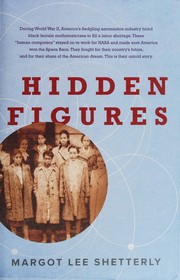
Hidden Figures
Black women computers at Langley launch rockets past Jim Crow.
2,385-word summary · 11 min read
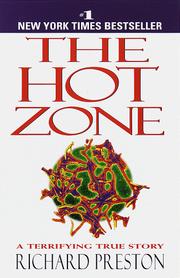
The Hot Zone
Ebola and Marburg move from African outbreaks to a Virginia monkey house and an Army response in suits.
2,291-word summary · 10 min read
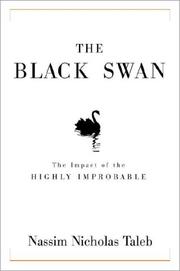
The Black Swan
Taleb argues rare shocks shape history more than models admit, and urges safer exposure over prediction.
2,588-word summary · 12 min read

The Untethered Soul
Singer names the noisy inner voice and shows how watching thoughts, loosening old hurt, and keeping the heart open through surrender can ease daily suffering…
2,752-word summary · 12 min read
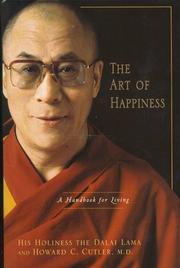
The Art of Happiness
The Dalai Lama and psychiatrist Howard Cutler link lasting happiness to training the mind, human warmth, compassion, and basic spiritual values for daily life.
3,394-word summary · 15 min read
The Tao of Pooh
Hoff explains Taoism through Pooh, Piglet, and Eeyore in gentle chats.
2,006-word summary · 9 min read
Predictably Irrational
Behavioral economist Dan Ariely shows why we overpay, procrastinate, and misjudge through simple experiments.
2,183-word summary · 10 min read
Invisible Women: Data Bias in a World Designed for Men
Data treating men as default harms women in medicine, work, transit, and design, with fixes from studies worldwide.
2,316-word summary · 10 min read
Emotional Intelligence
Goleman argues self awareness and empathy shape success more than IQ alone.
2,026-word summary · 9 min read
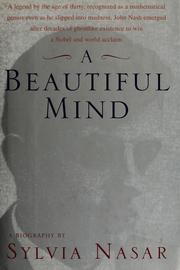
A Beautiful Mind
Mathematician John Nash's brilliant game theory rise, schizophrenia collapse, and Nobel return, with wife Alicia's care.
2,142-word summary · 10 min read
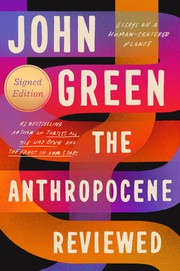
The Anthropocene Reviewed: Essays on a Human-Centered Planet
John Green reviews ordinary parts of human life on a five-star scale, turning geese, keyboards, and sunsets into a warm memoir about attention.
2,982-word summary · 13 min read
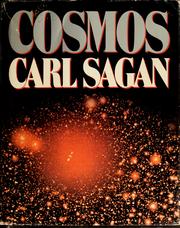
Cosmos
Sagan tours galaxies, evolution, and Alexandria to argue for science.
2,416-word summary · 11 min read
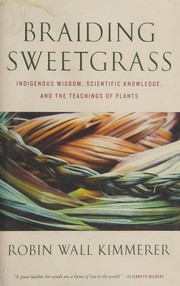
Braiding Sweetgrass
A Potawatomi botanist braids plant science with family stories to argue for gratitude and return gifts to the living world.
2,410-word summary · 11 min read
Tao Te Ching: Annotated & Explained
Eighty one brief verses on the Way and effortless action, with Lin's translation and facing notes.
2,140-word summary · 10 min read
21 Lessons for the 21st Century
Twenty one essays on work, liberty, truth, and meaning when algorithms flood the world with noise.
2,101-word summary · 9 min read