
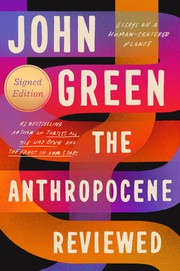
The Anthropocene Reviewed: Essays on a Human-Centered Planet
2,982-word summary 13 min read 304 pages in the book
- First published
- 2021
- Publisher
- Dutton
- Pages
- 304
- ISBN
- 9780525555216
Reading options
What's inside (8 sections)
I picked up The Anthropocene Reviewed because a friend kept sending me voice notes about Diet Dr Pepper. Not about the drink as a drink, but about a chapter where John Green gives it four and a half stars and somehow ends up talking about thirst, habit, and being a person who wants things he knows are bad for him. That sounded strange enough to try. Green published the book with Dutton on May 18, 2021, and the hardcover runs 304 pages. It grew out of his podcast of the same name, and it reads like the project of someone who got tired of hiding inside fictional characters and wanted to speak plainly for once.
The setup is simple. Green reviews different parts of the human-centered planet on a five-star scale. Some subjects are large, like sunsets or the capacity for wonder. Some are small and oddly specific, like the QWERTY keyboard, Canada geese, or Penguins of Madagascar. The joke is that everything gets a rating, as if you could rate a comet the way you rate a sandwich shop. The point is that the rating forces him to say what he actually feels, and then to explain why he feels that way, with stories from his own life attached.
If you know Green from The Fault in Our Stars or Looking for Alaska, this is a different mode. He has said he started having trouble writing fiction because readers kept mixing up his characters with him. A novelist told him she seemed to be writing her own life story but in code, and he decided he did not want to write in code anymore. So the essays here are first person and direct. They move roughly in the order of his life, from childhood through school and early jobs to marriage, kids, sickness, and the pandemic year when much of the book was finished. You get a full account of a sensibility, rather than a set of detached opinions.
Where the project started
Green worked at Booklist in the early 2000s, reading and rating hundreds of books. That kind of work trains you to make quick judgments and then defend them in a short space. Years later, on a book tour with his brother Hank after Turtles All the Way Down came out, the two of them killed time by reading absurd online reviews of roadside places. A one-star review of a national park can be very funny when you are tired in a van. Somewhere in that trip, John mentioned he had once wanted to write a review of Canada geese, and Hank said something like, that is the Anthropocene reviewed. The name stuck.
The podcast began in January 2018. Each episode usually covered two topics, and Green treated the five-star scale with mock seriousness. Canada geese got three stars. Diet Dr Pepper got four and a half. Halley’s Comet got the full five, while cholera got one, which tells you the scale is moral as much as aesthetic. He likes what lets people live with more kindness and curiosity. He dislikes what spreads pain without meaning.
His wife Sarah gave him the line that unlocked the whole thing. He had written a couple of early reviews in a flat, distant voice, and she pointed out that reviews are often secret memoirs. In a time when people shape almost everything, she said, there are no neutral observers left, only participants. So Green started putting himself into the pieces on purpose. An essay about Kentucky bluegrass becomes an essay about lawns, suburbia, and what his family wanted to look normal. An essay about whispering becomes an essay about hospital rooms and trying not to wake a sleeping child.
He paused the show in the summer of 2020 to turn it into a book, then came back for a short run around publication. The book keeps many podcast favorites but rewrites them, adds new pieces, and lines them up so childhood comes first and adult life comes later. He also signed every tip-in sheet for the first printing, all 250,000 of them for the United States and Canada, then wrote a review of the signing experience itself. That tells you a lot about his stamina and his sense of humor about his own earnestness.
How the reviews actually work
Every essay follows a loose shape. Green introduces a subject, gives some history or science in plain language, tells a personal story connected to it, and then lands on a rating. The history is never a lecture. When he writes about the QWERTY keyboard, he explains how the layout survived from early typewriters even though it was not designed for speed in the way people assume. Then he talks about his own typing, his work habits, the feeling of answering too much email. The object opens a door. He walks through it.
The range is wide on purpose. You get Lascaux cave paintings in one stretch and a Taco Bell breakfast menu in another. You get Tetris and the seed potatoes saved during the siege of Leningrad. You get pennies and Piggly Wiggly, Hawaiian pizza and viral meningitis, teddy bears and penalty shootouts. The whiplash is part of the pleasure. One minute you are learning something about Staphylococcus aureus and antibiotics, the next you are hearing about a family road trip or a grocery store parking lot in Indianapolis.
Indianapolis matters a lot here. Green lives there with his family, and the city appears again and again as home base. He writes about loving a place that visitors often pass through without noticing. He notices the canal, the museums, the sports rituals, the flat light in winter. A reader who wants grand travel writing might get restless. A reader who likes attention paid to ordinary streets will feel at home.
The ratings themselves do two jobs. Sometimes they are sincere. A sunset earns its stars because it stops him cold and reminds him that beauty does not need his permission. Sometimes they are comic or sad. A disease that has killed millions cannot get more than one star, and saying so out loud feels both obvious and necessary. The scale lets him be tender without sounding vague. He has to commit.
What holds the collection together is time. Because the essays follow his life, patterns build. You see a nervous kid become a nervous adult who has learned a few tricks. You see early fascination with facts turn into a job reviewing books, then into making videos with his brother, then into writing novels, then into this book. The through line is attention. He keeps asking what deserves his care and what he has been ignoring.
Childhood, wonder, and learning how to look
The early essays have a particular sweetness because Green remembers being a kid who collected facts the way other kids collected cards. He loved eclipses and space and strange animals. Halley’s Comet gets five stars in part because it gave him a way to think about time. It comes back on a schedule longer than a childhood, so waiting for it teaches patience. He writes about looking up with his father or with friends and feeling small in a way that felt good rather than scary.
School stories come with self-mockery. He was not the cool kid. He was anxious, eager to please, hungry for approval from teachers and crushes. An essay about handwriting or keyboards might drift into memories of term papers, of trying to sound smart, of the specific shame of getting something wrong in front of people you admire. He is generous toward his younger self without pretending that version of him had much perspective.
Kentucky bluegrass sounds like a joke subject until he starts pulling at it. Why do Americans plant a grass that needs so much water and cutting? What does a perfect lawn say about control and belonging? He connects it to moving around as a kid, to wanting a stable home, to the way suburbs promise order and then quietly demand endless upkeep. It is one of those pieces where the rating almost does not matter. The fun is watching a boring topic turn interesting because someone bothered to stare at it.
The Lascaux paintings get a warmer treatment. He loves that people thousands of years ago crawled into dark caves to paint animals by torchlight. He wonders what they wanted to remember or to honor. He links that urge to his own work, to podcasts and novels and now essays, and asks whether making things helps anyone live better. He does not answer with a slogan. He says the paintings move him, gives them high marks, and admits the mystery stays intact.
Sports show up too, often through failure. He writes about penalty shootouts and about the yips, that sudden loss of basic skill that hits athletes. He is not a great athlete in these stories. He is the kid who overthinks a free throw or a putt. The point is not athletics. The point is pressure and how the mind can jam at the worst moment. Anyone who has frozen during a test or a presentation will recognize the feeling at once.
Sickness, worry, and other people’s pain
A large middle part of the book deals with bodies breaking down, including his own mind. Green has talked for years about living with obsessive-compulsive disorder and anxiety, and those essays are among the strongest here. He describes intrusive thoughts as stuck loops, worries that arrive uninvited and refuse to leave. He describes compulsions as short-term relief that keeps the loop alive. He is careful to say what helps him without prescribing it for everyone, which is harder than it sounds when you have a big platform.
Illness essays sit beside those personal ones. Cholera gets one star for reasons no one will dispute. He sketches how the disease spreads through dirty water, how it has shaped cities and wars, how much suffering comes down to infrastructure rather than fate. Viral meningitis gets a low mark too, tied to fear he felt as a parent when a child spikes a fever. Staphylococcus aureus earns a serious, respectful treatment because antibiotics changed human life and resistance now threatens to undo some of that gain. He likes science that saves lives. He distrusts the idea that progress moves in one direction.
Hospitals appear often because Green once worked as a student chaplain at a children’s hospital. He does not tell those stories to make himself look noble. He tells them to admit how helpless he felt around dying kids and grieving parents. One memory leads to another about prayer, about what to say when there is nothing useful to say, about sitting quietly instead of filling silence. Those pages are plain and short. They work because he resists big claims.
The pandemic hangs over the later essays since he revised the book while locked down. He writes about isolation, about video calls, about watching numbers climb and feeling guilty for being safe at home. Some readers will find those passages dated now, like reading old news alerts. I found them honest about a specific spring when no one knew how long it would last. He keeps returning to care workers and teachers and grocery clerks, people whose jobs suddenly looked both ordinary and vital.
His marriage and kids anchor this section. Sarah appears as a sharp reader and steady partner, someone who calls out his evasions. His son Henry and daughter Alice appear as themselves at certain ages, gaming beside him or asking blunt questions. A piece about playing Super Mario Kart turns into a piece about losing to your kids on purpose versus losing for real, and what kids can tell about the difference. Parenthood gives him a new scale for fear and delight. A fever matters more. A sunset shared on a walk matters more too.
Small joys that earn their stars
For all the sickness and worry, this is a cheerful book. Green loves Diet Dr Pepper with an enthusiasm that borders on devotion. He knows it is artificial and probably unwise. He drinks it anyway and gives it high marks because it has accompanied writing sessions, road trips, and late edits. The essay works because he does not defend the drink as healthy or important. He defends pleasure itself, the right to like a fizzy, chemical thing that reminds you of good hours.
Fast food gets similar affection. The Taco Bell breakfast essay could have been snide. Instead he treats the menu as a small American invention, salty and clever in its packaging, tied to mornings after long drives. Piggly Wiggly, the grocery chain, becomes a way to talk about abundance and choice and the weird comfort of familiar aisles. Pennies get a low rating as currency and a higher one as objects full of memory, heavy in a jar on a dresser. He enjoys arguing with himself in public.
Games matter because play is one of his main ways of connecting. Tetris earns praise as a clean system where failure is clear and restart is instant, unlike most of life. Super Mario Kart earns praise as a family ritual, all blue shells and shouting and rematches. He is not trying to prove games are art in some grand sense. He is saying they taught him about fairness, luck, and losing without sulking, which feels more useful.
Then there are the quiet pieces. Whispering gets a loving review because hospitals, libraries, and bedtime all need a soft voice. Sunsets get high marks because they ask nothing and still change the day. The Indianapolis 500, which might mean nothing to outsiders, becomes a story about sound and crowd and summer heat, about belonging to a place through its rituals even if you do not care who wins. These are the essays people quote back to each other. They give language to fondness that usually goes unspoken.
The wonder essays tie this together. Green keeps using the phrase human capacity for wonder, and he means it as a skill you can practice. He worries that phones and feeds train attention toward outrage and envy. He suggests small repairs, like looking closely at geese at a pond or learning the name of a tree. That advice could sound preachy in other hands. Here it feels lived in because he admits how often he fails at it. He gets distracted. He doomscrolls. He apologizes to himself and starts again.
What drags, and who will love this most
No collection this varied hits every time. The star device sometimes strains. When Green reviews something truly awful, like a deadly disease, the rating feels forced, and he knows it. He makes a joke about it, moves on, but the joke repeats across essays. After a while you can predict the pivot from history to memory to rating. Readers who like surprise may wish he broke his own pattern more often.
The memoir weight is another issue. If you came for a science book about the Anthropocene as geologists use the term, this is not that book. He does not litigate start dates for the epoch or weigh stratigraphy debates. He uses the word in a loose, human sense to mean the planet shaped by people. That choice keeps things warm and readable, but it means some essays lean on personal anecdote where harder reporting might have helped. A piece about lawns or geese gestures at ecology without staying long enough to satisfy a reader who wants data.
A few pandemic passages feel stuck in 2020 in a way later readers may skim. The uncertainty was real when he wrote them, and the feeling comes through, yet references to specific routines and headlines already read like time capsules. That is not a flaw so much as a cost of writing fast about the present. The same goes for a couple of internet-era subjects that aged quickly. The emotions last longer than the examples.
Tone can also grate if you are allergic to earnestness. Green cries fairly often in these pages, or comes close, and he says so. He loves things out loud and asks you to love them too. Most of the time I found that brave rather than cloying because he pairs it with self-mockery. Now and then, though, I wanted a sharper edge, a willingness to sit with dislike without converting it into a lesson. His generosity is real. It sometimes smooths over conflict that might have been worth keeping rough.
Who should read it then. Anyone who liked the podcast will feel at home, but you do not need to have heard a single episode. Anyone who likes personal essays with a research streak, in the vein of writers who mix memoir with history, will find plenty to enjoy. It suits short sittings before sleep or over lunch, one or two reviews at a time. It does not suit readers who want a single argument carried from start to finish. It wanders by design.
I ended up giving my own private ratings as I went, which seems to be the intended side effect. My kitchen tap water got five stars one morning because it was cold and clean and I had just read about cholera. My phone got two stars that same day because I had wasted an hour on it without meaning to. That responsiveness is the book’s best trick. It sends you back into your day with your attention slightly adjusted, noticing geese, keyboards, paint on walls, the particular way light falls at dusk. Green would probably give that feeling high marks. I would too, with the small complaint that I wanted a few more essays to argue with him harder.
FAQ
Is The Anthropocene Reviewed only for John Green fans?
No. The book stands alone, and most essays explain their subjects from scratch, so new readers can start cold.
Does the book teach the geology of the Anthropocene?
Not in a technical sense. Green uses the term loosely for a planet shaped by people, and focuses on personal essays rather than stratigraphy.
Should I read the print book or listen to the audiobook?
Both work. Green narrates the audiobook himself, and it includes three essays exclusive to audio, while print suits short sittings.
Similar books
Braiding Sweetgrass
A Potawatomi botanist braids plant science with family stories to argue for gratitude and return gifts to the living world.
2,410-word summary · 11 min read

Dear Girls: Intimate Tales, Untold Secrets & Advice for Living Your Best Life
Ali Wong's debut collects fourteen letters to her daughters, covering sex, money, work, marriage, Vietnam, and being a working Asian American mother.
2,266-word summary · 10 min read

Scrappy Little Nobody
Anna Kendrick's essays trace her path from a Portland childhood and Broadway to Hollywood, with jokes, anxiety, and a refusal to pretend fame fixed her.
2,092-word summary · 9 min read
My Horizontal Life: A Collection of One-Night Stands
Handler turns dating disasters and family chaos into brash comic essays about single life in Los Angeles.
2,304-word summary · 10 min read
How to Be a Woman
Moran mixes girlhood and work stories into plain feminist advice.
2,600-word summary · 12 min read
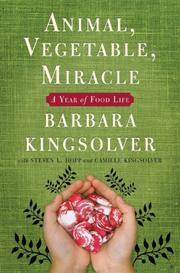
Animal, Vegetable, Miracle: A Year of Food Life
A family eats only local for a year from their Virginia farm.
2,270-word summary · 10 min read
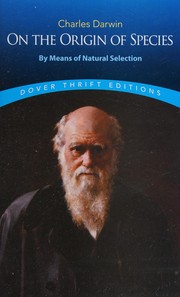
On the Origin of Species
Darwin's 1859 case for evolution by natural selection, from Beagle finches and breeding pigeons to fossils and anatomy.
2,589-word summary · 12 min read
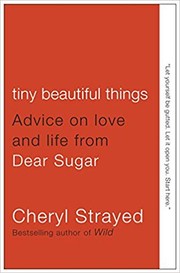
Tiny Beautiful Things: Advice on Love and Life from Dear Sugar
Dear Sugar answers letters on love, grief, and work with tough empathy drawn from her own losses.
2,253-word summary · 10 min read

The Girl with the Lower Back Tattoo
Amy Schumer mixes raunchy jokes with frank essays on family, dating, body image, and the shooting that pushed her into gun control advocacy.
2,259-word summary · 10 min read
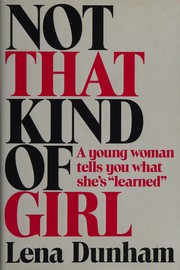
Not That Kind of Girl: A Young Woman Tells You What She's Learned
Girls creator Lena Dunham's essays on work, bodies, love, and family, frank and funny with uneven edges.
2,156-word summary · 10 min read
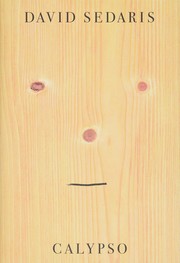
Calypso
Sedaris buys a Carolina beach house, grieves his sister Tiffany, tends his aging father, and turns illness and marriage into dry family comedy.
2,835-word summary · 13 min read
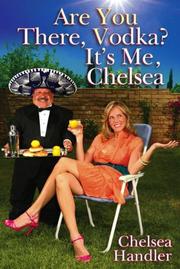
Are You There, Vodka? It's Me, Chelsea
Handler mines family, jail, dating, and travel for brash essays where oversharing is both joke and shield.
2,186-word summary · 10 min read
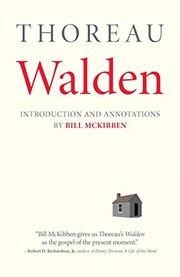
Walden
Thoreau builds a cabin at Walden Pond and spends two years testing what a person really needs to live well.
2,986-word summary · 13 min read
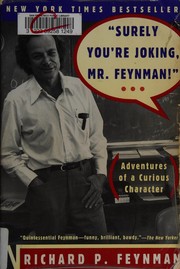
Surely You're Joking, Mr. Feynman!
Feynman drums, cracks safes, and learns by doing from Los Alamos to Caltech classrooms.
1,946-word summary · 9 min read
Naked
Growing up odd in Carolina, working bad jobs, and learning to watch people closely and kindly.
2,020-word summary · 9 min read
Dress Your Family in Corduroy and Denim
Sedaris on snow days, rental houses, Dutch Christmas, and the family that made him funny.
3,098-word summary · 14 min read

Long Walk to Freedom
Mandela's account of a Thembu childhood, a law practice, a banned movement, twenty-seven years in prison, and the negotiation that ended apartheid.
2,454-word summary · 11 min read

In Order to Live: A North Korean Girl's Journey to Freedom
A young North Korean girl crosses the Yalu, survives trafficking in China, and rebuilds her life in Seoul in this unsparing memoir.
2,027-word summary · 9 min read
Too Much and Never Enough: How My Family Created the World's Most Dangerous Man
Mary L. Trump's 2020 memoir traces how a cold, zero-sum Queens household shaped her uncle, and uses family tax documents to challenge his self-made story.
2,059-word summary · 9 min read
Same Kind of Different as Me
An art dealer and a formerly homeless sharecropper tell the story of the friendship that began at a Fort Worth mission and the woman who insisted on it.
2,023-word summary · 9 min read

Moonwalking with Einstein: The Art and Science of Remembering Everything
A journalist spends a year training for the U.S. Memory Championship and discovers that extraordinary memory is mostly technique, attention, and a lot of…
2,027-word summary · 9 min read

Infidel
Ayaan Hirsi Ali's memoir of a Somali childhood, a forced marriage, a Dutch asylum claim, and the political fight that followed the murder of Theo van Gogh.
2,041-word summary · 9 min read
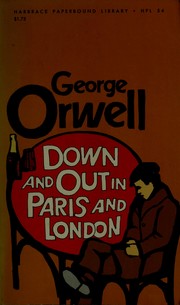
Down and Out in Paris and London
Orwell's account of washing dishes in Paris hotels and tramping through London does not ask for pity, only for a clear look at how poverty actually works.
2,282-word summary · 10 min read
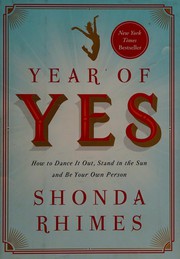
Year of Yes: How to Dance It Out, Stand in the Sun and Be Your Own Person
Shonda Rhimes takes her sister’s accusation seriously and spends a year saying yes to the things that frighten her, from live television to her own reflection.
2,585-word summary · 11 min read
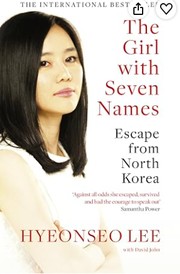
The Girl with Seven Names: A North Korean Defector's Story
Hyeonseo Lee crossed the frozen Yalu River at seventeen, spent years hidden in China, escaped to South Korea, and later returned to rescue her family.
2,404-word summary · 11 min read
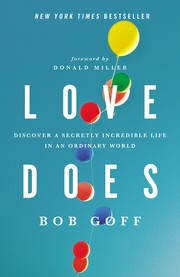
Love Does
A lawyer and activist tells stories of saying yes, showing up, and loving people through ordinary, often ridiculous actions.
2,411-word summary · 11 min read
Breath: The New Science of a Lost Art
Journalist James Nestor investigates how modern humans learned to breathe badly, and what researchers, athletes, and breathwork practitioners have found about…
2,011-word summary · 9 min read
Beautiful Boy: A Father's Journey Through His Son's Addiction
David Sheff recounts watching his son Nic slide into meth addiction, and his own desperate, humbling search for how to help without destroying them both.
2,076-word summary · 9 min read
The Magnolia Story
How Chip and Joanna Gaines met, closed their first shop, nearly lost everything in a housing development, and built Fixer Upper.
2,994-word summary · 13 min read
Lone Survivor: The Eyewitness Account of Operation Redwing and the Lost Heroes of SEAL Team 10
Marcus Luttrell's account of the 2005 SEAL mission in Afghanistan that killed three of his team and left him alone.
2,144-word summary · 10 min read