

Long Walk to Freedom
2,454-word summary 11 min read 638 pages in the book
- First published
- 1994
- Publisher
- Little, Brown and Company
- Pages
- 638
- ISBN
- 9780316545853
Reading options
What's inside (9 sections)
The first thing that struck me about this book is how much of it happens before the famous part. We know the ending, the release, the election, the gray-haired man in the blue shirt. But Mandela spends more than a third of the book on a boy herding cattle in a green valley, and he does it with real care. That choice tells you what kind of memoir this is. It is not a victory lap. It is an argument about how a person gets made, and it wants you to see the raw material first.
He was born in 1918 in Mvezo, a small place in the Transkei, into the Thembu royal line. His father, Gadla Henry Mphakanyiswa, was a chief and a counselor to the Thembu regent. His mother was Nosekeni Fanny. The name on his birth was Rolihlahla, which is often translated as pulling the branch of a tree and, more colloquially, as troublemaker. A teacher at the Methodist mission school gave him the name Nelson. He notes this without drama, but the detail sits there: an English name handed to an African child at a mission desk, and the child grows up to negotiate with the empire that named him.
Qunu, the veld, and the making of a boy
The Qunu chapters are the warmest writing in the book. He describes cattle, sticks, the open veld, swimming in streams, the taste of maize, the games of boys pretending to be men. He was raised partly in the household of the regent Jongintaba after his father died, and that court education matters more than it first appears. He watched elders settle disputes by talking until everyone had spoken. He learned that a chief does not announce a decision at the start of a meeting. He speaks about this later as a governing method, and you can see him using it in the negotiations of the 1980s and 1990s.
There is a temptation to read these chapters as nostalgia. They are not only that. The Transkei he describes was already inside a system that would narrow his life. He grew up in a world where black South Africans had land and status in a particular place, and he was groomed for a position at court, which meant a life inside the traditional structure rather than against it. The book is honest that he could have had a comfortable, limited life. He chose the other thing.
His schooling ran from Clarkebury to Healdtown to the University of Fort Hare. Fort Hare was one of the few places where a black South African could get a degree, and it was also a hothouse of politics. He was expelled after a student protest. That detail matters because it shows the pattern early: he was not a natural rebel in the dramatic sense, but he would not accept a rule he thought was stupid, and he paid for it.
Then he ran away to Johannesburg to avoid an arranged marriage. This is one of the best passages in the book, because it is so ordinary and so consequential. A young man steals away from a guardian's plan, gets on a train, and arrives in a city that is loud and dirty and full of possibility. He had no money and no plan beyond escape. The reader knows what he does not: that this train ride is the hinge of the whole story.
Johannesburg, law, and the education of a politician
In Johannesburg he worked as a mine guard, which was a brutal job, and then as a clerk at a law firm, Witkin, Sidelsky and Eidelman. That clerk job is where the book becomes a political education. He met people from the Communist Party and the ANC, argued with them, read seriously for the first time, and began to understand that his personal grievances were part of a system. He studied law by correspondence and then at the University of the Witwatersrand, where he was one of very few black students. He describes the loneliness of that, and also the usefulness of it: he was learning the language of the people who ran the country.
He joined the ANC in 1944 and helped found the ANC Youth League with Walter Sisulu and Oliver Tambo. The Youth League was impatient with the older leadership, which had spent decades petitioning and getting nothing. Mandela's account of that internal fight is instructive. He is candid that they were young men who thought the old men were too cautious, and that they pushed for mass action, strikes, boycotts, defiance. He is also candid, later, that the old men had kept the organization alive through terrible years. The book is good on this kind of institutional gratitude, which is rare in political memoirs.
The 1952 Defiance Campaign against apartheid laws made him a public figure. Thousands of volunteers broke laws on purpose and went to jail. It was disciplined, theatrical, and effective as a signal. The government responded with bans and arrests. Mandela was banned, which meant he could not attend meetings or travel freely, and he was arrested repeatedly. He and Tambo opened the first black law partnership in the country. That practice is one of the great underrated sections of the book: two men in a small office, handling cases for people who had nowhere else to go, while the state watched them.
The Treason Trial ran from 1956 to 1961 and ended with acquittals. Four years of courtrooms, of preparing a defense, of watching the state try to prove that demanding rights was a conspiracy. Mandela writes about the trial as a school in patience and in the law. He also writes about the toll: the travel, the separation from family, the way a political case consumes a life.
Sharpeville and the turn to arms
March 1960 is the break. Police killed protesters at Sharpeville, the government banned the ANC and the PAC, and the movement went underground. Mandela's description of that moment is restrained, but you can feel the floor give way. Legal protest had been answered with bullets. The organizations that had pursued it were illegal. What was left?
He helped found Umkhonto we Sizwe, the armed wing, and traveled secretly abroad for military training and meetings. The book is careful here. He insists that the armed struggle was a last resort, that it was aimed at symbols and infrastructure rather than people, and that the decision was made collectively. He also admits the obvious: once you start, you do not control where it goes. This is one of the places where the political framing is visible. He wants you to understand the choice as moral and constrained, and he does not spend much time on the costs of the campaign or on the civilians who were hurt.
He was arrested in 1962 and sentenced to five years for incitement and for leaving the country without a passport. The arrest was almost accidental, a roadblock, a tip. He had been traveling in disguise, sometimes as a chauffeur, and the image of him in a worker's cap is one of the book's small ironies. The most wanted man in the country was caught because a car was recognized.
Rivonia and the speech from the dock
The Rivonia Trial, 1963 to 1964, is the center of the first half. He and his co-accused were charged with sabotage and conspiracy. The state wanted death. Mandela made a statement from the dock about democracy and the armed struggle, and the book includes the famous closing lines about having fought against white domination and black domination, and about a free society in which all persons live together in harmony. I had read those lines before, in excerpts, and they are different in context. The context is a courtroom where the outcome is uncertain and the men are prepared to hang. The speech is not a slogan. It is a defense of a life.
They were sentenced to life rather than death. Mandela describes the moment with the flatness of a man who had prepared for the other verdict. There is no triumph in the passage, only a kind of relief that the work could continue in another form. That tone is the book's signature. He rarely lets himself go, and when he does, it is in a sentence or two, not a paragraph.
Robben Island and the long discipline
Prison is where the book becomes something more than a political chronicle. Robben Island for 18 years, then Pollsmoor, then Victor Verster. He describes the limestone quarry, the tiny cell, the guards, the censorship of letters, the hunger strikes, the gradual negotiation of small privileges. The quarry damaged his eyes. The cell was smaller than a parking space. The letters were read and cut. And yet the chapters are not a catalogue of suffering. They are a study in how to keep a self intact.
He writes about learning Afrikaans, which was partly a practical move and partly a way to understand the jailers. He writes about the humanity of individual guards, and he does it without sentimentality. Some guards were cruel, some were bored, some were decent in small ways. He learned their names and their histories. He argues that this was not weakness but strategy: if you can make a man see you as a person, you have changed the terms of the relationship. It is also, I think, a way of surviving. Hatred is exhausting over eighteen years.
The prison chapters also show how politics continued inside. The men organized, argued, taught each other, and negotiated with the authorities over conditions. Mandela describes the long, boring work of committees, of drafting demands, of deciding who would speak to whom. This is the part of the book that most surprised me. We think of prison as isolation, and it was, but it was also an institution, and he treated it like one.
He says prison taught him patience and control. He also says it cost him his family, and he does not soften that. His first marriage to Evelyn Mase ended in divorce. His second marriage to Winnie Madikizela-Mandela, who became a public figure in her own right and endured her own persecution, did not survive the pressure. He writes about his children with a grief that is real but brief. The book is better on institutions and strategy than on private feeling, and he knows it. There is a sentence or two of regret, and then he moves on. That reticence is both the book's dignity and its limitation.
Release, negotiation, and the presidency
The release in 1990 is the moment the book has been building toward, and Mandela handles it with surprising modesty. He describes the walk out of the gate, the crowd, the heat, the noise, and the strangeness of being free after so long. He had rehearsed the moment in his mind and it was nothing like the rehearsal. He was 71. He had been in prison for 27 years. The country was on the edge of something.
The negotiations with the National Party are the second great subject of the book, and they are told as a series of meetings, compromises, and calculated risks. F. W. de Klerk is a counterpart, not a villain. Mandela is careful to give him credit for the decision to legalize the ANC and release prisoners, and careful to note the violence that continued while they talked. The 1993 Nobel Peace Prize was shared with de Klerk. The 1994 election gave the ANC a mandate. The presidency followed.
And then the book thins out. The presidency chapters are short compared with the prison years. He covers the Government of National Unity, the reconciliation project, the Truth and Reconciliation Commission, and the business of governing, but he does not go deep. Part of that is timing: the book was published in 1994, and he was still in office. Part of it is temperament: he was a movement leader, not a memoirist of administration. The result is that the most powerful sections are about endurance, not power.
What the book does and does not do
The book was drafted in prison in secret and edited afterward. That origin explains a lot. The voice is controlled and often formal, and it withholds as much as it reveals. It was shaped by editors and by the political needs of 1994, when the ANC was asking the country to trust it. Mandela avoids settling scores. He is generous to opponents in ways that sometimes feel strategic. He does not tell us much about his inner life, and when he does, it is in the register of a public man explaining a private cost.
That is the fair criticism. The political account is careful to the point of evasion in places. The armed struggle is framed as a last resort, and the book does not linger on its consequences. The personal material is present but thin. The later sections on the presidency are sketchy. And the voice, for all its discipline, is a constructed voice: the patient elder, the reconciler, the man who has already forgiven. The historical Mandela was more complicated, and the book knows it without saying so.
What survives the criticism is the moral seriousness. There is no self-pity in this book. There is no claim that suffering made him special. He treats his own courage as a decision that anyone might make, which is both modest and a little untrue. The prison chapters, the portrait of the ANC as a coalition of very different people, the discipline of the prose: these are the strengths. He shows politics as work, not as theater. He shows patience as a skill. He shows that a person can be shaped by a system and still act inside it.
The ending is a short account of his government and the line about the long walk continuing, since he has walked a long way but there are still hills to climb. It is a modest ending for a large book, and it is the right one. He does not claim to have arrived. He claims only to have kept walking.
I finished the book thinking about the boy in Qunu more than the president in Pretoria. That is the trick of the structure. The man who negotiated with the state was made by cattle and elders and a mission school and a train ride he took without permission. The book wants you to see the continuity. It mostly succeeds. Where it fails, it fails in the direction of discretion, which is a very Mandela way to fail.
FAQ
How long was Nelson Mandela in prison?
Twenty-seven years. He served eighteen on Robben Island, then moved to Pollsmoor and Victor Verster before his release in 1990.
Does Long Walk to Freedom cover his presidency?
Only briefly. The book ends with the 1994 election and the first months of his government, with most of its length on his childhood, the ANC, and the prison years.
Was the book written in prison?
Mandela drafted much of it secretly on Robben Island and the manuscript was smuggled out. It was edited and completed after his release.
Similar books

Infidel
Ayaan Hirsi Ali's memoir of a Somali childhood, a forced marriage, a Dutch asylum claim, and the political fight that followed the murder of Theo van Gogh.
2,041-word summary · 9 min read

Down and Out in Paris and London
Orwell's account of washing dishes in Paris hotels and tramping through London does not ask for pity, only for a clear look at how poverty actually works.
2,282-word summary · 10 min read

The Girl with Seven Names: A North Korean Defector's Story
Hyeonseo Lee crossed the frozen Yalu River at seventeen, spent years hidden in China, escaped to South Korea, and later returned to rescue her family.
2,404-word summary · 11 min read

The Letters of Vincent van Gogh
Vincent van Gogh's letters to his brother Theo, in a Penguin Classics selection edited by Ronald de Leeuw, trace a decade of work, faith, and obsession.
2,611-word summary · 12 min read
Wild Swans
Three generations of women survive warlords, revolution, and the Cultural Revolution in Jung Chang's family memoir.
2,356-word summary · 10 min read
Cleopatra: A Life
Pulitzer winner Schiff restores Cleopatra as a capable ruler, from Ptolemy debts and Caesar to Antony, Actium, and her death in 30 BC, built from coins and…
3,586-word summary · 16 min read
American Sniper: The Autobiography of the Most Lethal Sniper in U.S. Military History
Navy SEAL sniper Chris Kyle recounts Texas roots, SEAL training, four Iraq tours, and the strain combat placed on his marriage and health.
2,011-word summary · 9 min read
A Promised Land
First-volume memoir from Iowa 2008 through the 2011 bin Laden raid, crisis management and doubt.
2,243-word summary · 10 min read
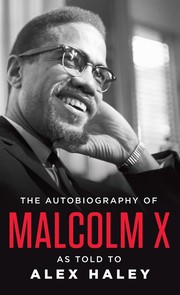
The Autobiography of Malcolm X
Malcolm X traces his life from Michigan childhood through Harlem, prison, and the Nation of Islam to Mecca in this 1965 memoir told to Alex Haley.
2,816-word summary · 13 min read
Between the World and Me
Coates writes to his son about the Black body in America, from Howard to the loss of Prince Jones.
2,234-word summary · 10 min read
Nothing to Envy
Barbara Demick follows six defectors from Chongjin through the North Korean famine, showing how ordinary people lived, believed, and finally left.
2,068-word summary · 9 min read
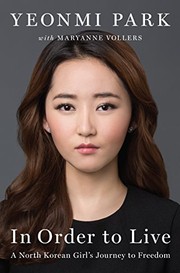
In Order to Live: A North Korean Girl's Journey to Freedom
A young North Korean girl crosses the Yalu, survives trafficking in China, and rebuilds her life in Seoul in this unsparing memoir.
2,027-word summary · 9 min read

Too Much and Never Enough: How My Family Created the World's Most Dangerous Man
Mary L. Trump's 2020 memoir traces how a cold, zero-sum Queens household shaped her uncle, and uses family tax documents to challenge his self-made story.
2,059-word summary · 9 min read
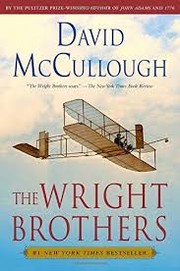
The Wright Brothers
David McCullough tells the story of two self-taught Ohio brothers, working largely alone and out of a bicycle shop, who solved the problem of flight before…
2,027-word summary · 9 min read
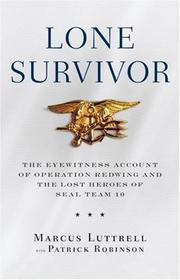
Lone Survivor: The Eyewitness Account of Operation Redwing and the Lost Heroes of SEAL Team 10
Marcus Luttrell's account of the 2005 SEAL mission in Afghanistan that killed three of his team and left him alone.
2,144-word summary · 10 min read
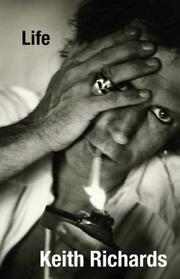
Life
The Rolling Stones guitarist tells his own story: a Dartford childhood, the band's first gigs, the drug raids, the tax years and Patti Hansen.
2,761-word summary · 12 min read

Why I'm No Longer Talking to White People About Race
Reni Eddo-Lodge traces black British history and shows how institutions, culture, and everyday assumptions keep producing racial inequality.
2,071-word summary · 9 min read
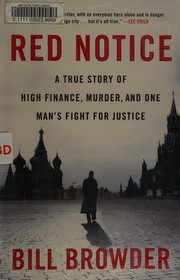
Red Notice
An American financier in Moscow exposes a $230 million tax fraud, watches his lawyer die in prison, and turns the case into an international human rights law.
2,008-word summary · 9 min read
Prisoners of Geography: Ten Maps That Tell You Everything You Need to Know About Global Politics
Tim Marshall explains how mountains, rivers, coasts, and resources shape the choices of nations, from Russia's flat borders to the chokepoints of the South…
2,328-word summary · 10 min read
The World Is Flat: A Brief History of the Twenty-first Century
Thomas L. Friedman's 2005 bestseller argues that technology, trade, and open borders leveled the global playing field, and it names the ten forces that did it.
2,369-word summary · 11 min read
The Stranger Beside Me
Ann Rule's classic memoir of her friendship with Ted Bundy, written by the true-crime author who knew him long before the world learned what he had done.
2,481-word summary · 11 min read
Catherine the Great: Portrait of a Woman
A German princess survives a miserable marriage and a coup to rule Russia for thirty-four years, torn between Enlightenment ideas and absolute power.
2,065-word summary · 9 min read
The Warmth of Other Suns
Three migrants ride north out of Jim Crow toward Chicago and LA.
2,561-word summary · 11 min read
The New Jim Crow: Mass Incarceration in the Age of Colorblindness
How mass incarceration became a racial caste system after civil rights.
2,413-word summary · 11 min read
The Emperor of All Maladies
A biography of cancer from Galen to chemo through one doctor cases.
2,255-word summary · 10 min read
Killing Lincoln
Booth plots as Lincoln pushes war end and reunion in 1865.
2,486-word summary · 11 min read
Hidden Figures
Black women computers at Langley launch rockets past Jim Crow.
2,385-word summary · 11 min read
How to Be an Antiracist
Kendi blends memoir and history to argue that fair policy, not self fixing, creates an equal society.
2,513-word summary · 11 min read
Empire of Pain: The Secret History of the Sackler Dynasty
How the Sackler family sold OxyContin and shaped an overdose crisis while giving to museums.
2,048-word summary · 9 min read
Twelve Years a Slave
Free violinist Solomon Northup tells how Brown and Hamilton lured him south into twelve years of Louisiana bondage until Bass letters brought rescue in January…
2,931-word summary · 13 min read